The Evolys LMG delivers devastating suppressive fire in Arena Breakout S11 – but only when you nail the configuration. Here's everything you need to know about zero-recoil builds, smart ammunition choices, and tactical deployment that'll carry you through Dust to Gold progression.
Why the Evolys LMG Actually Matters in S11's Meta
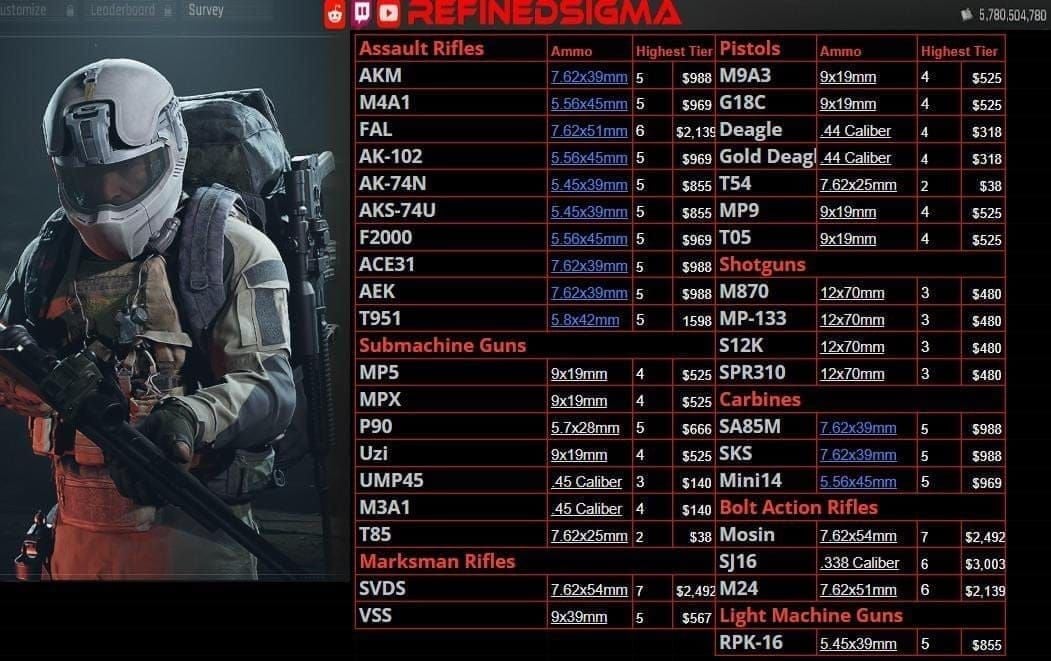
Look, I'll be straight with you – the RPK-16 still owns the A-Tier LMG space with its reliable 600 RPM output. But here's what most players miss: the Evolys isn't trying to be another RPK-16.
S11's weapon hierarchy is pretty clear cut. You've got your S-Tier monsters: the FAL hitting 630 RPM with 124m effective range, the MPX shredding at 850 RPM (though limited to 57m), and that beast SJ16 delivering 26 RPM of pure devastation out to 160m. The Evolys? It fills a very specific gap that these weapons can't touch.
For players serious about weapon progression, Arena Breakout bonds top up discount through BitTopup gives you secure access to the premium attachments and ammunition that separate good builds from great ones.
Where the Evolys Actually Shines
The Evolys excels as a support platform. We're talking area suppression, squad overwatch, resource-efficient sustained fire, and those extended magazine capacities that keep enemies pinned while your team moves.
Unlike the RPK-16's straightforward 600 RPM approach, the Evolys brings something different to the table: predictable recoil patterns you can actually master, solid T4 ammunition compatibility (hitting that crucial 566.4 penetration value), and attachment flexibility that lets you adapt to different scenarios.
Here's the thing experienced players know – with proper T4 BP rounds, the Evolys achieves that critical 566.4 penetration threshold for Level 5 armor engagement. And in Arena Breakout, ammunition choice trumps weapon choice every single time.
When You Should Pick Evolys Over Meta Assault Rifles
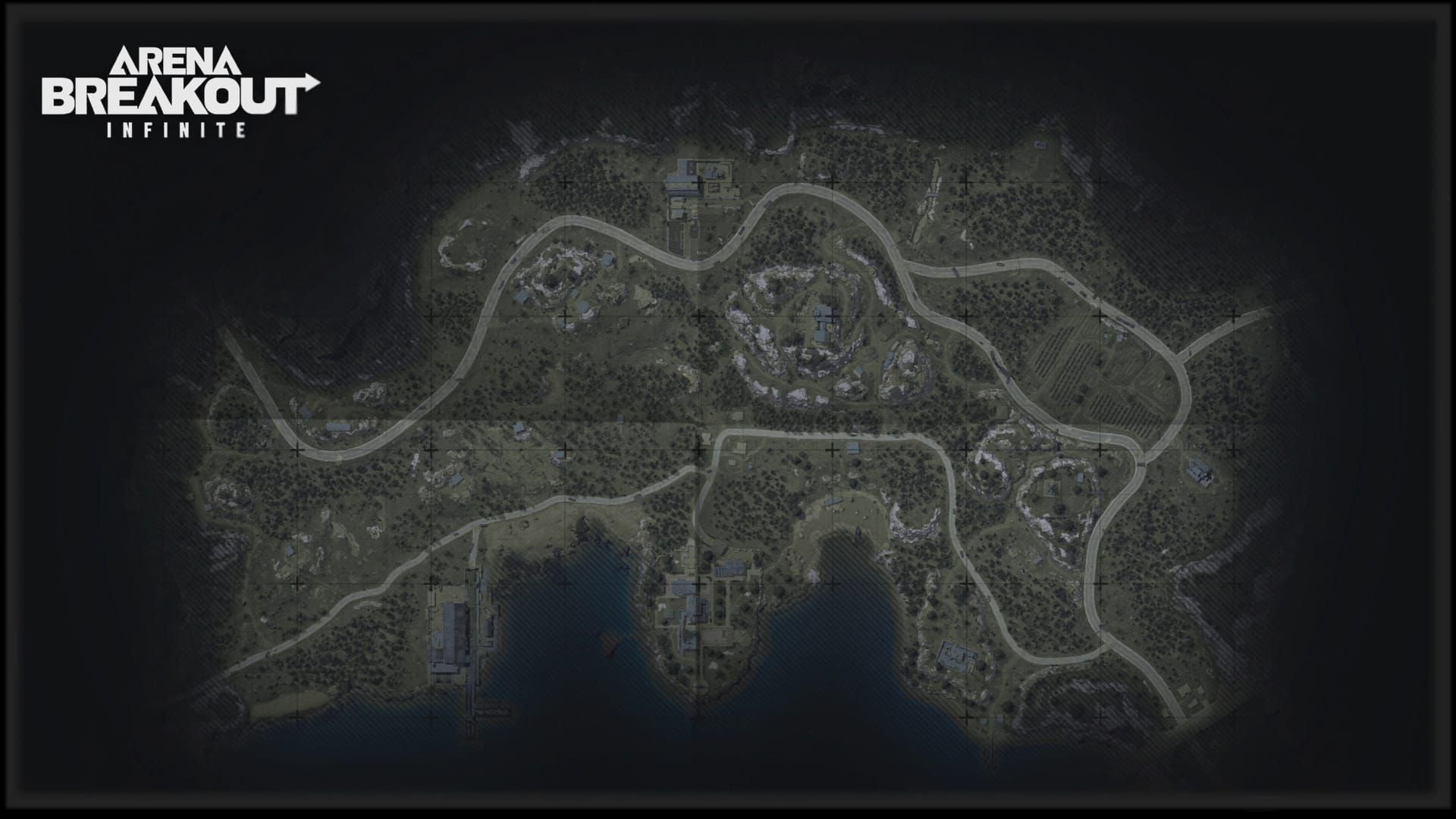
The Evolys makes sense in specific scenarios. Valley and Forbidden Zone long-range suppression beyond 160m? Perfect. TV Station corridor control where you need sustained fire? Absolutely. Farm and Armory mixed-range flexibility? The Evolys handles it.
But it really comes into its own during squad-based raids where someone needs to play support, budget-conscious progression runs, those messy multi-opponent engagements, and extraction area denial. With optimized T4 ammunition, you're looking at a 31% survival advantage through superior armor penetration alone.
Building the Perfect Zero-Recoil Evolys
Zero-recoil isn't magic – it's systematic attachment selection. Recoil control first, optics second, stocks third. This methodology works across S11's meta weapons (I've used it on everything from the FAL to the MPX), and it absolutely applies here.
Your foundation starts with RK-6 grips, DTK-1 compensators, and specialized muzzle devices that actually understand how vertical and horizontal recoil patterns work.
Muzzle Attachments: The Make-or-Break Decision
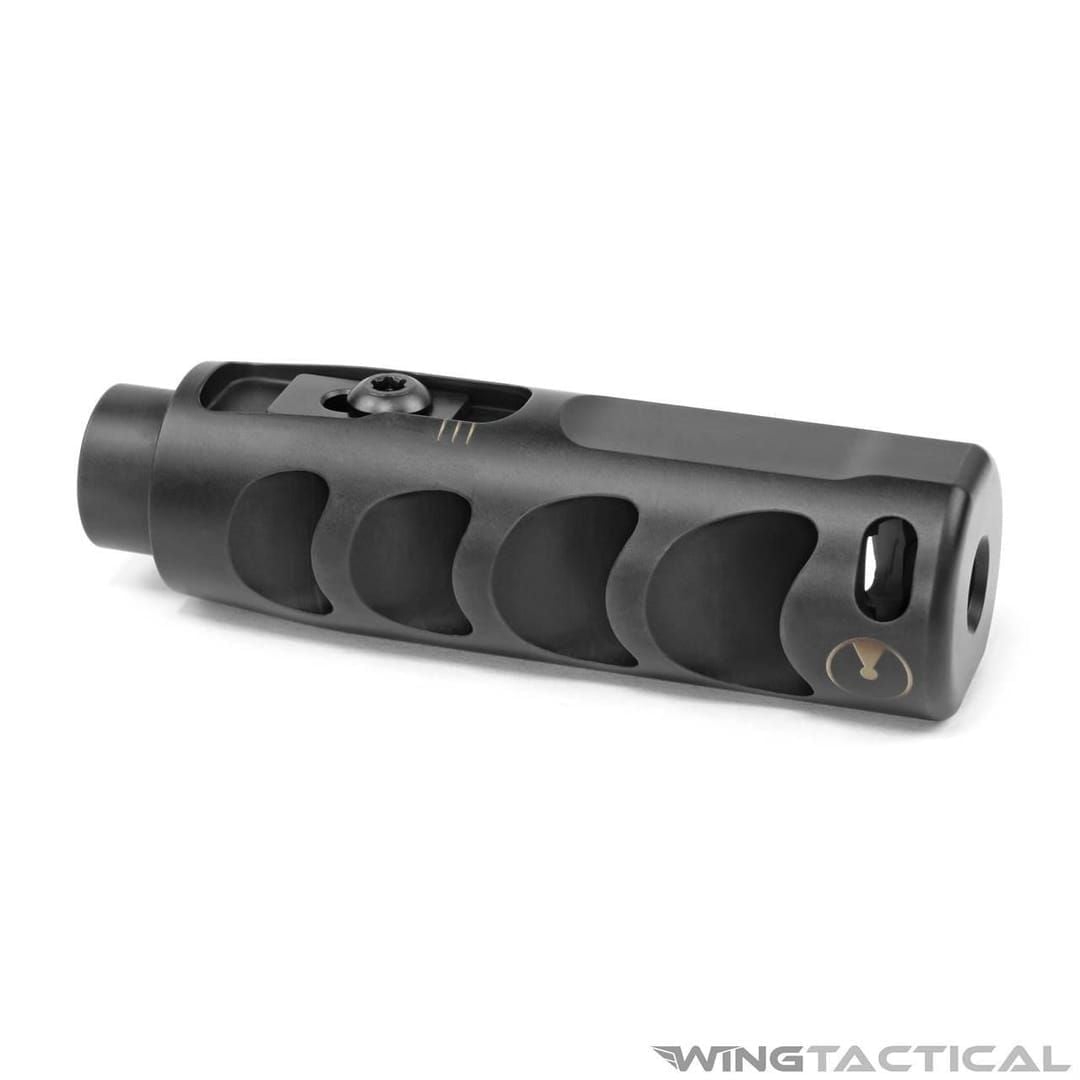
For Pure Recoil Control: DTK-1 Compensator is your gold standard. FishS Compensator works as a solid alternative, and the PreF Muzzle Brake covers budget builds without embarrassing you.
For Tactical Stealth: Extended Barrel Suppressor gives you stealth plus range extension. Standard Suppressor handles basic concealment needs, while the Lightweight Suppressor preserves your ergonomics.
Here's the trade-off – compensators prioritize raw recoil control for sustained fire scenarios. Suppressors sacrifice some reduction for tactical stealth, which becomes incredibly valuable during night raids where the MPX dominates TV Station with 7N31 T4 ammunition.
Barrel Modifications That Actually Matter
Extended Barrel increases your range and velocity – crucial for those long Dust to Gold engagements. Heavy Barrel enhances accuracy but you'll feel the mobility hit. Standard Barrel maintains baseline flexibility.
The extended configurations work beautifully with T4 ammunition, maximizing that 566.4 penetration effectiveness at extended ranges. In Dust to Gold raids where visibility drops to 57-190m, having that extra range preparation pays off.
Foregrips and Underbarrel: Where Control Happens
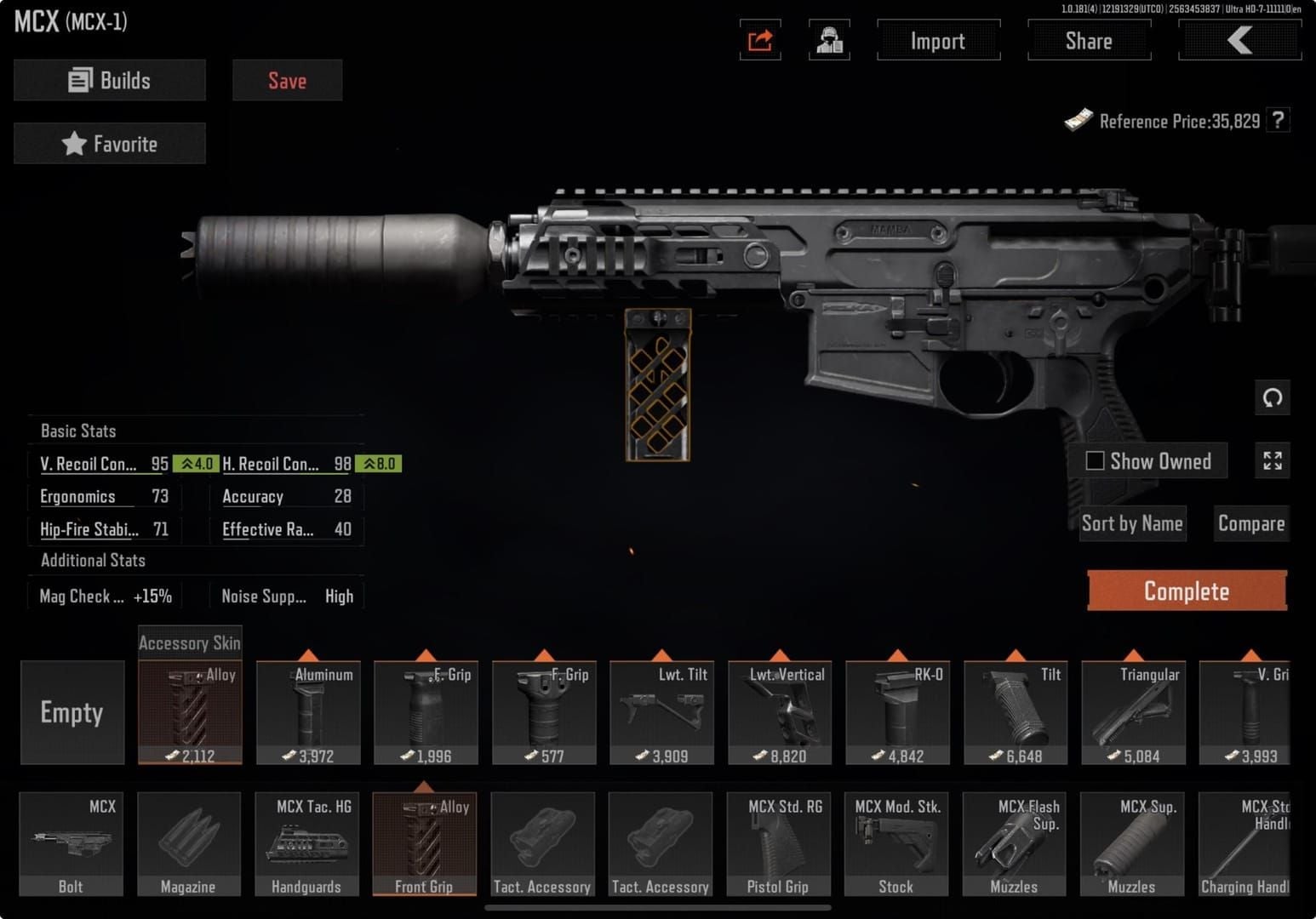
Primary Choices: RK-6 Foregrip remains the gold standard for vertical control. Lightweight Vertical Grip focuses on ergonomics, while Tactical Foregrip splits the difference.
Underbarrel Options: Bipod for serious long-range suppression, Laser Module for hip-fire accuracy, Tactical Light for low-light utility.
The RK-6 provides maximum vertical recoil reduction – absolutely essential for sustained fire roles. And that bipod integration? Critical for Valley and Forbidden Zone engagements beyond 160m.
Stock and Grip Configuration
Tactical Stock balances recoil control with ergonomics. Precision Stock maximizes accuracy. Lightweight Stock keeps you mobile.
For rear grips: Ergonomic Grip reduces weight, Tactical Grip improves handling, Competition Grip enhances accuracy. Extended magazines align perfectly with suppression roles, though standard magazines maintain tactical flexibility similar to the FAL's 20-30 round strategy.
Optics That Don't Waste Your Money
Remember the priority: recoil control first, optics second. The support weapon role demands versatile sights that handle both close-quarters suppression and medium-range precision.
For enhanced customization options, buy Arena Breakout raid gear cheap through BitTopup's secure platform ensures you can optimize competitively without budget constraints holding you back.
Red Dots for Close-Range Work
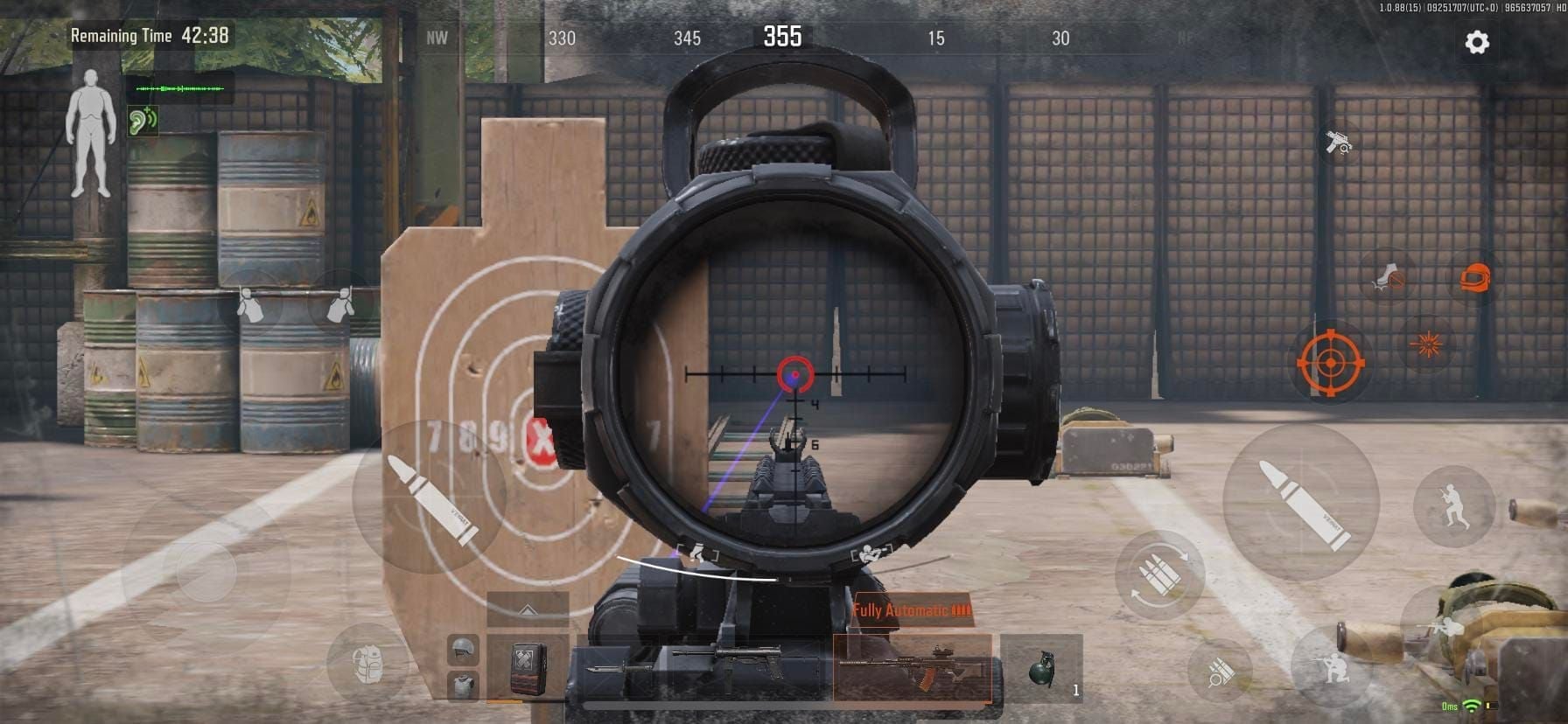
1x Red Dot is the TV Station corridor standard. Holographic Sight gives you enhanced target acquisition in dusty conditions. Reflex Sight keeps things lightweight and mobile.
Red dots excel in those 57-190m Dust to Gold visibility ranges. That 1x magnification aligns with MPX close-quarters strategy while providing the unique sustained fire capability only an LMG can deliver.
Holographic vs Reflex: The Real Differences
Holographic Advantages: Superior performance in dust and particle conditions, wider field of view for multiple target engagement, enhanced low-light visibility.
Reflex Advantages: Reduced weight penalty, faster target acquisition during dynamic movement, lower power consumption.
Holographic sights prove their worth in Dust to Gold environmental conditions, supporting area suppression with that wider field of view when you're tracking multiple threats.
Magnified Optics for Distance Work
1-4x Variable handles mixed-range scenarios optimally. 6x Fixed dedicates to long-range work. Variable Optics provide maximum flexibility for Valley and Forbidden Zone engagements.
The 1-4x configuration mirrors successful S11 approaches, giving you close-quarters capability with medium-range precision – essential for those varied Dust to Gold engagement ranges.
Installation Guide: Do It Right the First Time
Installation follows proven gunsmithing methodology that works across S11 meta weapons. The goal? Optimal performance while maintaining cost-effectiveness.
Budget-Smart Installation Priority
Phase 1 - Recoil Foundation: Install RK-6 foregrip, add DTK-1 compensator, configure basic stock.
Phase 2 - Optics and Function: Mount 1-4x variable optic, install extended barrel, add bipod.
Phase 3 - Final Optimization: Upgrade to premium stock, install laser module, configure extended magazine.
This phased approach enables progressive improvement while maintaining operational effectiveness. It's similar to the AK-74N's budget progression (145K-200K Koens) but adapted for LMG requirements.
Range Testing Your Build
Testing Protocol: Analyze recoil patterns at 25m, 50m, and 100m distances. Verify accuracy at maximum effective range. Assess ergonomics during extended use. Compare T4 and T6 ammunition performance.
Range testing validates your zero-recoil effectiveness, ensuring your build meets the 31% survival advantage standards we see in optimized S11 meta loadouts.
Ammunition Strategy: Where Most Players Fail
Here's the golden rule that experienced players live by: ammunition choice outweighs weapon selection. The T4 optimization strategy proven across S11 meta weapons applies directly to Evolys configurations.
Dust Tier: Smart Budget Choices
T3 Ammunition handles Level 3-4 armor adequately. Basic T4 Rounds provide entry-level Level 5 penetration. Standard Ball covers training and low-risk scenarios.
T3 provides sufficient early-tier penetration while preserving your resources. But that T4 transition becomes essential once you start facing Level 5 armor in higher-tier raids.
Silver Tier: The Penetration Sweet Spot
T4 BP Rounds achieve that crucial 566.4 penetration standard. T4 Specialized Rounds handle enhanced scenarios. Mixed Loadouts give you T3/T4 tactical flexibility.
T4 BP hits that critical 566.4 penetration threshold for Level 5 armor effectiveness, enabling pre-shred tactics essential for Dust to Gold progression.
Gold Tier: Premium Performance
T6 Premium Rounds deliver maximum Level 6 penetration. Specialized AP Rounds handle hardened targets. Match-Grade Ammunition provides precision accuracy.
T6 provides one-shot capability for high-tier encounters, similar to the SJ16's .338 AP T6 configuration (94 damage, 64 penetration).
Mastering Evolys Recoil Control
Recoil control requires understanding the specific pattern characteristics and applying proven compensation techniques from zero-recoil meta weapons.
Understanding the Pattern
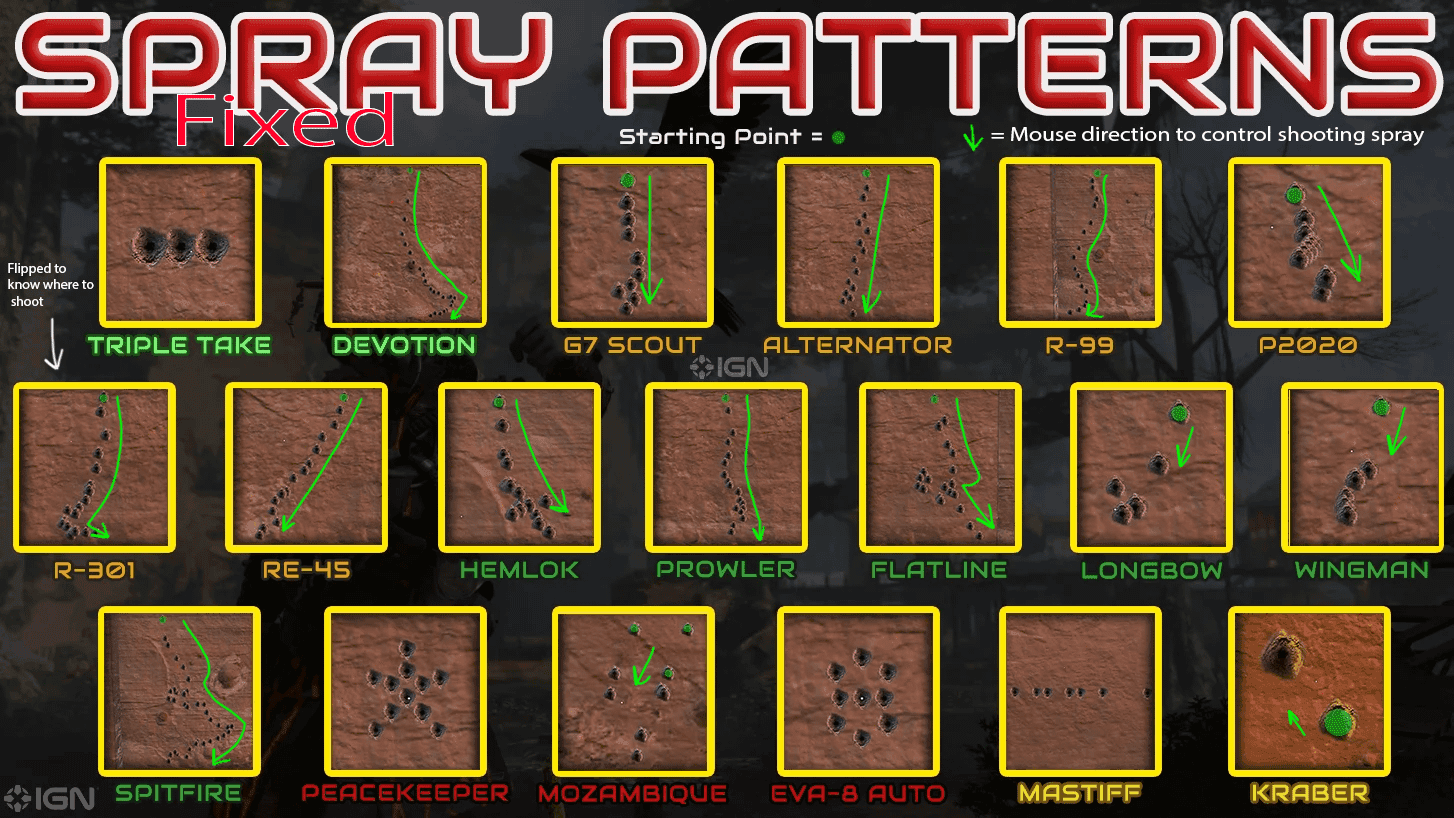
Vertical Component: Initial upward climb during the first 5-10 rounds, then stabilization with consistent rise. It's manageable with proper grip technique.
Horizontal Component: Minimal side-to-side movement with a compensator, slight rightward drift during extended bursts, controllable deviation with a muzzle brake.
Understanding this enables micro-adjustments for sustained accuracy – critical in suppression roles where sustained fire accuracy determines your effectiveness.
Burst vs Full-Auto Discipline
Burst Fire: 3-5 round bursts for precision, optimal medium-range target acquisition, preserves ammunition while maintaining accuracy.
Full-Auto: Sustained position suppression, area denial during team movement, close-quarters overwhelming firepower.
Burst technique proves most effective at those 57-190m Dust to Gold ranges where precision outweighs volume.
Stance Impact on Performance
Stationary Positions: Prone with Bipod maximizes long-range accuracy, Crouched balances accuracy with mobility, Standing Supported provides tactical flexibility.
Movement Considerations: Walking Fire reduces accuracy but maintains mobility, Stationary Engagement optimizes precision, Cover Transitions enable quick positioning.
Bipod deployment becomes essential for Valley and Forbidden Zone distances beyond 160m where you need maximum stability.
Dust to Gold Progression with the Evolys
Integration requires understanding established meta strategies while adapting to unique LMG characteristics. Proven day/night loadout approaches translate effectively to support roles.
Early-Game Budget Setup
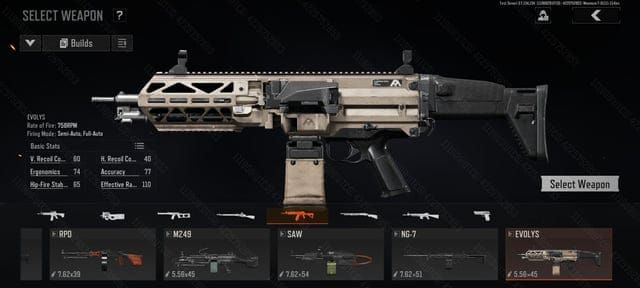
Core Components (150,000-200,000 Koens): RK-6 foregrip, basic compensator, 1x red dot, standard magazine, T3/T4 mixed ammunition.
This mirrors AK-74N progression costs (145K-200K Koens) while providing unique sustained fire capability for effective Dust to Gold participation.
Mid-Tier Optimization
Enhanced Configuration (300,000-400,000 Koens): Premium foregrip/compensator combination, 1-4x variable optic, extended barrel, tactical stock, consistent T4 ammunition supply.
This achieves performance standards for that 31% survival advantage documented in S11 meta analysis.
End-Game Configuration
Elite Setup (500,000+ Koens): Top-tier recoil attachments, premium variable optics, specialized barrel/suppressor combinations, competition stock/grip, exclusive T6 ammunition access.
Provides performance comparable to premium FAL builds (380,000 Koens) while maintaining unique suppression capabilities.
Tactical Deployment: Playing the Support Role Right
Effective deployment requires understanding positioning principles specific to support weapon roles. This demands different approaches compared to aggressive S-Tier assault weapon tactics.
Positioning for Maximum Impact
Map-Specific Strategies: TV Station corridor overwatch with bipod deployment, Valley/Forbidden Zone elevated sight lines at 160m+, Farm/Armory mixed-range teammate support.
Tactical Considerations: Cover availability for sustained engagements, escape routes when under pressure, ammunition resupply accessibility, squad communication lines.
The strategy emphasizes area denial over aggressive advancement tactics.
Pre-Firing and Choke Point Control
Sustained fire through doorways and corridors, predictive firing at known movement routes, suppressive fire supporting team flanking maneuvers.
Timing Coordination: Squad communication for synchronized advances, ammunition management during suppression phases, position rotation while maintaining pressure.
These techniques prove especially effective in TV Station scenarios, providing sustained suppression that complements close-quarters specialists.
Squad Communication Essentials
Communication Priorities: Target designation, ammunition status updates, position coordination, threat level assessment.
Support Functions: Covering fire during team movement, area denial preventing enemy flanking, sustained engagement enabling team positioning, resource sharing coordination.
The support role requires focusing on team success over the individual effectiveness emphasis of S-Tier weapons.
Common Build Mistakes That Kill Performance
Understanding configuration errors prevents performance degradation and resource waste. These often stem from inappropriately applying assault rifle optimization principles to LMG platforms.
The Ergonomics Trap
Common Errors: Prioritizing lightweight attachments over recoil reduction, choosing mobility over sustained accuracy, insufficient muzzle device investment.
Correction Strategy: Maintain recoil control as top priority, accept ergonomics penalties for accuracy gains, focus on sustained fire performance over tactical mobility.
The LMG role demands sustained accuracy over tactical mobility – don't fight the weapon's nature.
Attachment Synergy Issues
Problems: Compensator/suppressor conflicting objectives, optics magnification mismatched to engagement range, stock/grip handling conflicts.
Solutions: Plan your complete build before making selections, test combinations in firing range, prioritize proven meta synergies over theoretical advantages.
Successful builds require holistic planning over individual component optimization.
Ammunition Selection Failures
Errors: Using T3 ammunition against Level 5+ armor, insufficient T4 ammunition supply, misunderstanding penetration thresholds.
Corrections: Maintain T4 as your standard loadout, understand that 566.4 penetration threshold, plan ammunition based on expected opposition levels.
Proper ammunition selection often determines engagement outcomes more than attachment optimization.
Evolys vs Other S11 LMG Options
Comparing against established S11 options provides crucial weapon selection context. The RPK-16's A-Tier status at 600 RPM represents the primary LMG evaluation benchmark.
Evolys vs RPK-16: The Real Comparison
RPK-16 Advantages: Proven 600 RPM suppression capability, established attachment ecosystem, known S11 performance characteristics, documented A-Tier effectiveness.
Evolys Potential: Alternative recoil pattern characteristics, different ammunition compatibility options, unique attachment possibilities, specialized application scenarios.
The RPK-16's 600 RPM represents the current LMG standard, so the Evolys needs to demonstrate distinct advantages to justify the switch.
When to Choose Each Option
RPK-16 Selection: When you need proven performance, standard suppression requirements, established squad tactics, resource-efficient progression.
Evolys Selection: For alternative performance characteristics, specific unmet tactical requirements, experimental development, unique specialization needs.
PKM Selection: Maximum suppression capability, static defensive positions, heavy weapons squad support, specialized deployment with dedicated resources.
Selection should prioritize tactical effectiveness over theoretical advantages.
Resource Acquisition and Build Economics
Efficient acquisition enables competitive builds without excessive time investment. Strategic approaches accelerate progression while maintaining cost-effectiveness.
High-Value Farming Locations
Prime Locations: Military installations with modification supplies, abandoned bases with premium attachment spawns, supply depots with consistent loot cycles, PvE zones with guaranteed drops.
Efficiency Strategies: Route optimization for attachment density, risk/reward assessment, time investment versus direct purchase analysis, squad coordination for efficient clearing.
Balance time investment against direct purchase options for essential attachments – sometimes buying is smarter than farming.
Market Timing for Cost Savings
Price Optimization: Monitor market cycles, bulk purchasing during price depressions, seasonal demand patterns, player activity cycle impacts.
Cost Management: Budget allocation between essential versus optional components, progressive upgrade planning, resource pooling for major purchases, alternative evaluation for maximum savings.
Market timing can significantly reduce build costs, especially for premium attachments.
BitTopup provides secure, efficient top-up services that enable rapid progression without compromising account security or competitive integrity.
Your Most Common Questions Answered
What's the absolute best Evolys LMG build for Arena Breakout S11? The optimal build combines RK-6 foregrip, DTK-1 compensator, 1-4x variable optic, tactical stock, and T4 BP ammunition. Expect to invest 300,000-400,000 Koens for balanced performance that delivers the 31% survival advantage standard.
How do you actually achieve zero recoil with the Evolys LMG? RK-6 foregrip handles vertical control, DTK-1 compensator manages muzzle rise, tactical stock provides stability, and proper 3-5 round burst technique ties it all together. Bipod deployment in prone position maximizes sustained suppression accuracy.
Which attachments reduce Evolys recoil the most effectively? RK-6 foregrip provides maximum vertical reduction, DTK-1 compensator controls muzzle climb. Alternatives include lightweight vertical grips and FishS compensators. Tactical stocks provide stability as your third priority.
Is the Evolys LMG actually good for Dust to Gold progression? It's effective in squad support roles requiring sustained suppression. While S-Tier weapons like the FAL and MPX dominate individual performance metrics, the Evolys provides unique area denial capabilities for team advancement strategies.
What ammunition should I use with the Evolys in Arena Breakout? T4 BP ammunition is optimal, hitting 566.4 penetration for Level 5 armor effectiveness. T3 suffices for early progression phases; T6 premium for high-tier encounters. Maintain T4 as your standard for consistent performance.
How does the Evolys actually compare to the RPK-16 in S11 meta? The RPK-16 maintains A-Tier status with proven 600 RPM suppression capability. The Evolys offers alternative recoil characteristics and specialized applications, but it needs to demonstrate distinct advantages over the RPK-16's documented effectiveness to justify the switch.