

This guide examines how VPN protocols impact Chamet video call quality, focusing on reducing lag during private calls. While no specific VPN protocols were identified for Chamet optimization, you'll learn network requirements, latency benchmarks, and proven app-level techniques to achieve smooth calls through device settings, resolution adjustments, and network configuration.
Understanding Video Lag on Chamet: Technical Foundation
Video lag on Chamet appears as frozen frames, delayed audio sync, or choppy motion during private calls. The platform requires 1 Mbps minimum for basic calls and 3 Mbps recommended for optimal performance.
For uninterrupted premium experiences, Chamet Diamonds Recharge through BitTopup provides instant delivery with secure transactions.
Latency benchmarks:
Same-city video calls: 45 ms
Cross-continent connections: 110 ms
Audio latency: 80 ms locally, 60 ms viewer-to-streamer
What Causes Lag During Private Calls
Network congestion is the primary culprit. Multiple devices competing for bandwidth compromise the 2 Mbps upload/download speeds needed for stability. Background apps, automatic updates, and simultaneous streaming directly impact call quality.
Hardware limitations create secondary lag. Chamet requires 2 GB RAM minimum, consuming 150-250 MB during active calls. Devices near memory capacity experience processing delays that manifest as stuttering.
Storage constraints compound issues when space drops below recommended levels:
Android: 112 MB required
iOS: 300 MB required
Optimal performance: 500 MB to 1 GB available
Version 4.3.7 (Dec 11, 2025): 178.5 MB
Latency vs. Bandwidth in Video Quality
Latency measures time delay between sending and receiving data. Bandwidth determines data volume transmitted per second. Both matter, but affect different aspects:
High latency: delays in conversation flow
Insufficient bandwidth: pixelation and frame drops
Human perception detects latency above 150 ms as disruptive. Chamet's 110 ms cross-continent performance stays within acceptable ranges.
Bandwidth scales with resolution:
Default: 720p adaptive on 5G (24-30 fps)
Reducing to 480p cuts data usage 50-60%
Measuring Your Performance Baseline
Open Chamet Settings (gear icon)
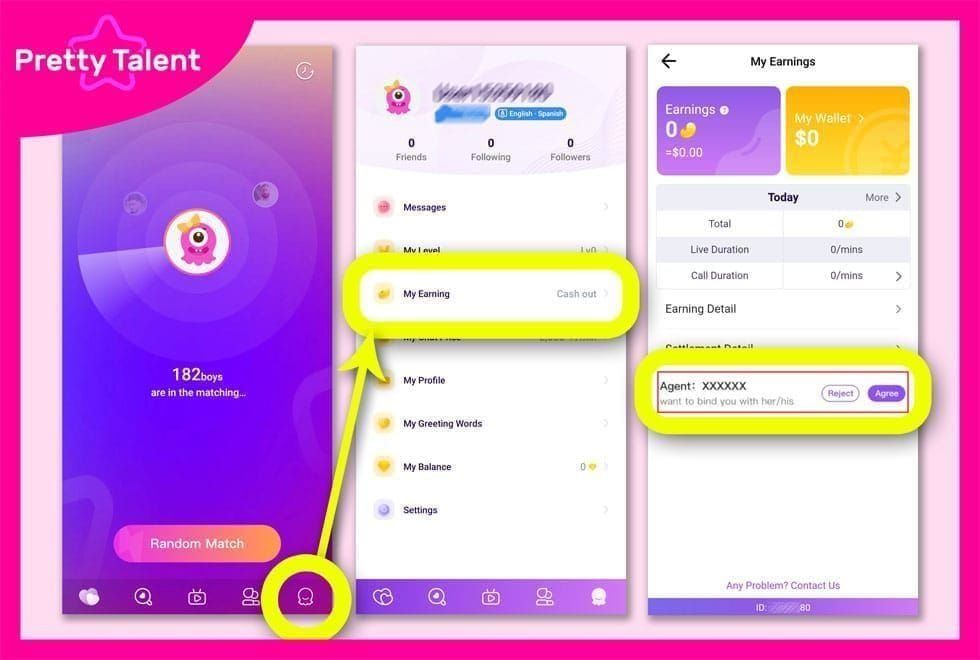
Select Network Settings or Data Usage
Enable Auto Quality Adjustment to observe dynamic scaling
Monitor RAM usage during calls (should stay 150-300 MB)
VPN Protocol Fundamentals for Chamet Users
VPN protocols determine how data packets travel between your device and servers, affecting security and performance. Each implements different encryption methods and routing strategies impacting video streaming.
No specific VPN protocols were identified in sources as tested for Chamet optimization. VPNs can theoretically optimize routing if ISPs throttle connections, but they also introduce encryption overhead and additional hops that may increase latency.
How VPN Protocols Impact Video Streaming
Encryption overhead: Modern protocols like WireGuard minimize CPU usage through streamlined cryptography. Older protocols consume significant processing resources on mobile devices, affecting video encoding/decoding.
Packet routing efficiency: Some protocols prioritize connection stability through aggressive retransmission, others prioritize low latency by accepting occasional packet loss. Video streaming benefits from protocols that tolerate minor packet loss.
Connection establishment speed: Fast handshake processes reduce delay when initiating calls or recovering from interruptions.
UDP vs. TCP for Real-Time Video
UDP (User Datagram Protocol):
Prioritizes speed over reliability
No confirmation of receipt
Occasional lost packets cause minor artifacts
Chamet likely uses UDP (evidenced by 45 ms same-city performance)
TCP (Transmission Control Protocol):
Guarantees packet delivery through retransmission
Retransmission delays problematic for live video
Single lost packet can stall entire stream
For Chamet optimization, UDP-based VPN connections minimize additional latency when VPN usage is required.
Optimizing Chamet Performance Without VPN Protocols
Since no specific VPN protocols were identified, app-level and device-level adjustments deliver the most reliable improvements.
Resolution and Quality Settings
Set maximum resolution to 480p in Chamet settings to reduce bandwidth 50-60% compared to 720p while maintaining acceptable visual quality.
Enable Data Saver Mode in settings for aggressive compression and quality scaling that prioritizes stability over maximum fidelity.

Device-Level Network Configuration
iOS Wi-Fi restriction:
Settings > Cellular > Chamet
Disable Cellular Data
Enable Low Data Mode under Cellular Data Options
Android data control:
Settings > Network & Internet > Data Saver (enable)
Settings > Apps > Chamet > Mobile Data
Disable background data
Disable automatic Wi-Fi switching to prevent mid-call network transitions.
Cache Management and App Maintenance
Weekly cache clearing:
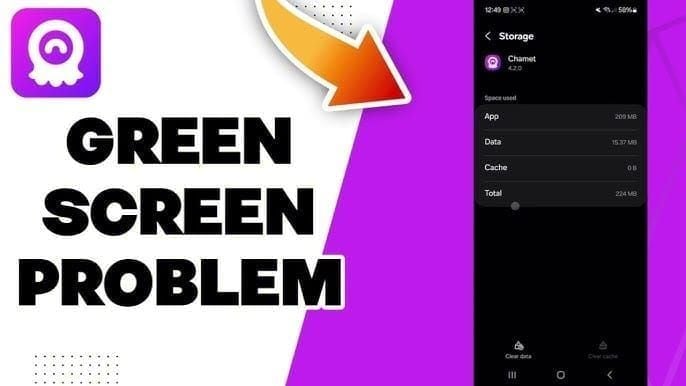
Settings > Apps > Chamet > Storage > Clear Cache
Force stop reset:
Settings > Apps > Chamet > Force Stop
Wait 15 seconds before reopening
Permission cycling:
Toggle Chamet permissions off
Wait 5 seconds
Select Allow all the time
Advanced Android Developer Options
Enable developer options:
Settings > About Phone
Tap Build Number seven times
Performance adjustments:
Toggle Hardware Acceleration Off (resolves codec compatibility issues)
Disable HW overlays (eliminates frame timing issues)
Force GPU rendering (optimizes rendering pipeline)
Chamet Network Requirements and Performance Optimization
Compatibility:
Android 5.0+ (version 4.3.7)
iOS 10.0+ to 12.0+ (device-dependent)
Storage management:
2 GB available storage recommended minimum
Provides buffer for temporary files and cache
Prevents delayed file operations
RAM availability:
2 GB minimum requirement
150-300 MB usage during active calls
Close background apps before calls
Resolution and Frame Rate Strategies
720p adaptive on 5G: Excellent quality but demands consistent bandwidth. Networks with fluctuations benefit from manual 480p cap.
Frame rate balance:
Standard 24-30 fps: natural motion
Reduced 15-20 fps: cuts bandwidth for struggling networks
Auto Quality Adjustment: Works best on predictable networks. Highly variable connections may experience distracting quality shifts.
Mobile Data Management
Buy Chamet Diamonds through BitTopup for competitive pricing and instant delivery.
Background data restrictions:
Android: Settings > Apps > Chamet > Mobile Data
iOS: Settings > Cellular > Chamet
Low Data Mode (iOS):
Pauses automatic updates
Reduces streaming quality
Limits background activities
Data Saver Mode (Android):
System-wide restrictions
Allow Chamet unrestricted access
Prioritizes video streaming
Troubleshooting Persistent Lag Issues
Systematic diagnosis:
Test on different networks (Wi-Fi vs. mobile data)
Consistent problems across networks = device-level issues
Network-specific problems = connection optimization needed
Connection stability testing:
1 Mbps minimum supports basic calls
Fluctuating connections more disruptive than consistently lower quality
3 Mbps optimal recommendation
Device resource monitoring:
RAM usage climbing toward capacity = hardware bottleneck
High CPU utilization = processing limitations
Close background apps or upgrade hardware
Common Configuration Mistakes
Excessive background apps: Social media, email, cloud sync consume bandwidth and processing. Close before calls.
Outdated app versions: Version 4.3.7 (Dec 11, 2025) includes latest performance improvements. Update regularly.
Incorrect quality settings: Default 720p on 3 Mbps threshold networks causes preventable lag. Match settings to network capabilities.
Emergency Fixes
Frozen calls:
Toggle airplane mode off/on (5-second network reconnection)
Network switching:
Disable Wi-Fi to force mobile data if cellular offers better performance
Persistent connection problems:
Force stop Chamet
Wait 15 seconds
Restart app
Diagnostic Steps
Systematic elimination:
Test on known-good network with adequate bandwidth
Poor performance = device-level issues (cache, updates, hardware)
Improved performance = network optimization needed
Bandwidth monitoring:
Usage approaching capacity = reduce quality or upgrade network
Ample unused bandwidth = routing efficiency or device processing issues
Latency testing:
Same-city: 45 ms benchmark
Cross-continent: 110 ms benchmark
Significantly higher = routing inefficiencies or congestion
Maximizing Your Chamet Experience
Maintain sufficient diamond balance to prevent mid-call interruptions when time-limited features expire.
BitTopup advantages:
Secure, instant recharges
Competitive pricing
Fast delivery for spontaneous conversations
Excellent customer service
FAQ
What network speed does Chamet require? 1 Mbps minimum for basic functionality, 3 Mbps recommended for optimal performance. Stable 2 Mbps upload/download supports most scenarios.
How much storage does Chamet need? Android: 112 MB, iOS: 300 MB. Optimal performance needs 500 MB to 1 GB available. Version 4.3.7 occupies 178.5 MB.
What causes video freezing? Insufficient bandwidth, excessive background apps, or device memory constraints. Requires 2 GB RAM minimum, consumes 150-300 MB during calls. Close background apps and reduce resolution to 480p.
How to reduce mobile data usage? Enable Data Saver Mode, set max resolution to 480p (reduces usage 50-60%), disable background data in device settings.
Why more lag on international connections? Geographic distance increases latency. Same-city: 45 ms, cross-continent: 110 ms. Additional delay noticeable but acceptable.
What device settings improve performance? Clear cache regularly (Settings > Apps > Chamet > Storage), enable Auto Quality Adjustment, toggle Hardware Acceleration Off (Android developer options), disable HW overlays.
Don't let connection issues interrupt premium conversations. Keep your account topped up through BitTopup for instant, secure transactions ensuring smooth, uninterrupted private calls. Visit BitTopup now for best rates and immediate delivery!