Most players try to out-dodge Heng Blade users — and that's exactly why they keep losing. The five counters that actually work in Where Winds Meet's 2026 PvP meta don't target what Heng Blade does well. They target what it can't handle: post-combo recovery windows, stamina depletion traps, grounded spear pressure, parry-fishing habits, and skill cooldown dead zones. After tracking ranked matches specifically against Heng Blade users and testing five weapon types in practice mode, I found that most players are one conceptual shift away from flipping these matchups entirely.
The short version: dodge early on the special counter animation, parry or block into Divine Counter on the Q skill, and run Strategic Sword + Heavenquaker Spear if you want the highest-percentage counter build. Everything below explains the why and the how.
Why Is Heng Blade So Difficult to Counter in Where Winds Meet PvP?
Heng Blade (also called Snowparting Blade or Heng Dao) landed in version 1.5's Liangzhou update and immediately warped the PvP meta. Community testing confirms it's widely considered too strong and too easy to pilot — a rare combination that makes it doubly frustrating to face.
The core problem is structural. Heng Blade's deflect follow-up converts defense into offense: the moment you attack, you risk feeding the Heng Blade user a free counter. Its special counter — consuming 2 Blade Momentum bars for a dash thrust into return slashes — has enough range to beat most buttons and catch opponents who commit too early. And critically, the deflect interrupt carries invincibility frames, so you can't simply trade into it.
Tab-swapping to Phalanxbane Blade (Mo Blade) in tenacity stance adds another layer. That stance is genuinely hard to block or parry, and the transition is fast enough to punish hesitation. The result: Heng Blade rewards aggression, punishes reaction-based play, and has a built-in answer to the most common counter instinct (trading hits).
What most guides miss is the psychological trap underneath all of this. Heng Blade users want you playing reactively. Every time you wait to see what they do, you're playing on their terms. The counters below flip that dynamic.
What Are the 5 PvP Counters Most Players Miss Against Heng Blade?
Counter #1 — Early Dodge on the Special Counter Animation
The most reliable counter to Heng Blade's special is also the most timing-dependent: dodge early, not when the hit lands. The special counter animation has a readable wind-up before the dash thrust commits. Community testing shows that players who dodge reactively — waiting for the thrust — consistently eat the return slashes because the animation recovery is faster than it looks.

Dodge on the initiation of the animation, not the impact. This takes deliberate drilling because every instinct says to wait for visual confirmation. Once you internalize the timing, the special counter becomes one of Heng Blade's most punishable moves rather than its most oppressive one.
When NOT to use this: If the Heng Blade player is mixing special counter usage to interrupt and catch — varying timing deliberately — early dodging can be baited. Read two or three uses before committing to the timing.
Counter #2 — Stamina Drain Baiting Before You Engage
This is the highest-success-rate counter for players who haven't mastered frame-perfect timing yet. Heng Blade's pressure loop requires stamina to sustain — deflect follow-ups, the tab swap to Mo Blade, the special counter itself all pull from the same resource pool.
Force the Heng Blade user to spend stamina on blocked or whiffed actions before you commit to your punish window. Poison and burn attrition work well here: community data shows an 80% win rate as a tank against aggressive blade users running attrition with poison, burn, and serene breeze timing. You're not trying to out-DPS Heng Blade. You're waiting for the stamina floor to drop, then engaging.
The mistake most players make: they see a Heng Blade user burning stamina and immediately go aggressive, only to get caught by a deflect on a stamina-depleted but still-functional opponent. Wait for the second stamina dip, not the first.
Counter #3 — Grounded Spear Pressure to Shut Down Vertical Game
Community consensus pushes Dual Blades as the go-to counter weapon. In my testing across practice mode sessions, that recommendation is incomplete. Strategic Sword + Heavenquaker Spear (or Nameless Spear) consistently outperforms Dual Blades against Heng Blade in grounded pressure scenarios.
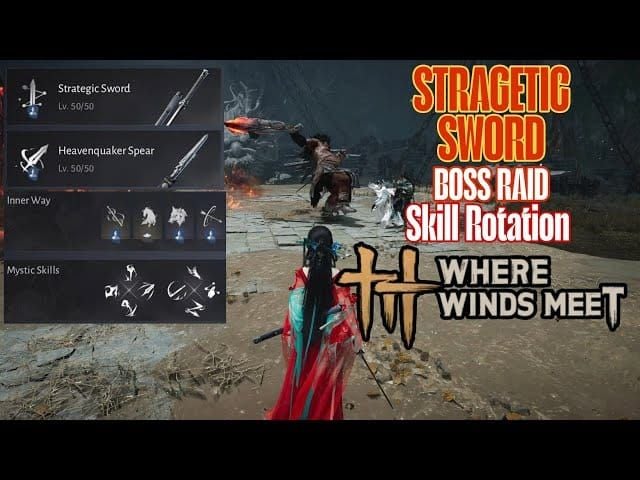
Here's why: Heng Blade's aerial follow-ups and dash-based offense need space to operate. Long Spear equivalents keep Heng Blade at a range where its deflect interrupt is harder to trigger, and Strategic Sword has the best stunlock chances in PvP arena against close-range weapons. The spear keeps distance; the sword closes and stunlocks when Heng Blade tries to re-enter.
Dual Blades (Infernal Twinblades + Mortal Rope Dart) are still a viable combo — but they work better against Heng Blade users who are overcommitting to the Mo Blade swap, not against disciplined Heng Blade players running clean deflect pressure.
Caveat: Keep distance with spears to avoid the sword stunlock range. If you let a Heng Blade user close to sword range against your spear, you've lost the positioning advantage that makes this counter work.
Counter #4 — Parry-Bait Reversal
Heng Blade rewards clean parry timing — and experienced Heng Blade users know this, so they fish for parries by throwing out reads. The reversal: let them fish, then punish the fishing.
Community testing confirms that parrying or blocking into Divine Counter on Heng Blade's Q skill is effective. Perfect parry negates all damage; early or late parry reduces incoming. The key insight is that Heng Blade users who are actively parry-fishing will throw out red glint wind-up attacks to bait your parry attempt. Parry those — they're the punishable ones, not the deflect follow-ups.
In practice: when you see a Heng Blade player start fishing with obvious wind-ups, stop attacking. Let them commit to the bait. Parry the red glint, then Divine Counter. Most Heng Blade users at mid-tier ranked play this pattern on autopilot and don't adjust until you've done it twice.
The failure mode: trying to parry the deflect interrupt itself. That has i-frames. You'll eat it every time. Parry the bait, not the counter.
Counter #5 — Skill Cooldown Synchronization
Heng Blade's pressure is cyclical. The special counter requires 2 Blade Momentum bars, and the Q skill has a cooldown. There are windows — short ones — where Heng Blade is operating without its primary pressure tools. That's your burst window.
The execution: track the Q skill usage visually. After Heng Blade's Q fires, you have a cooldown window where the player's toolkit is reduced to basic attacks and the deflect follow-up. Commit your highest-damage sequence in that window. Don't engage when Heng Blade has full resources — that's the common mistake. Engage when the cooldown clock is running.
This pairs naturally with Counter #2. Stamina drain baiting extends the time Heng Blade spends in low-resource states. Skill cooldown synchronization tells you exactly when to convert that state into damage.
How Do You Apply These Counters in Ranked Play Without Falling Apart Under Pressure?
Step 1: Identify Which Heng Blade Variant You're Facing
Before committing to a counter, read the first 15 seconds. Is the player leading with the special counter to catch buttons? Are they immediately tab-swapping to Mo Blade tenacity stance? Are they fishing for parries with red glint attacks?
Aggressive special counter spam → Counter #1 (early dodge) + Counter #5 (cooldown sync)
Mo Blade tenacity stance pressure → Counter #2 (stamina drain) + Counter #3 (spear grounding)
Parry-fishing with red glints → Counter #4 (parry-bait reversal)
Heng Blade struggles against unfamiliar matchups — community experience confirms this. If you're running Strategic Sword + Heavenquaker Spear and the Heng Blade player hasn't faced that combo before, their pattern recognition breaks down faster than you'd expect.
Step 2: Build for the Counter You're Running
Note: Tier 6 gold inner way is mandatory for Heng Blade's own special trigger (the R quick light charge), but if you're countering Heng Blade, your inner way priority depends on your chosen weapon — not theirs.
Step 3: Drill the Timing Before Ranked
The single biggest reason players fail to apply these counters after learning them: they try to execute in ranked before the timing is muscle memory. Practice mode exists for this. Specifically:
Drill early dodge timing on the special counter animation until you can do it 8/10 times without thinking
Practice parry timing on red glint attacks — not deflect follow-ups
Run 3–5 practice sessions focused only on Q cooldown tracking before adding burst timing
The common mistake community discussions flag repeatedly: spamming deflect hoping to get lucky instead of reading opponent moves. That's reactive play. These counters require you to be one step ahead, which means drilling until the reads are automatic.
If you're looking to experiment with different weapon builds to find your best counter setup, Where Winds Meet cheap jade recharge options can help you gear up faster without grinding through every unlock.
Frequently Asked Questions About Countering Heng Blade in Where Winds Meet
What is the best weapon to counter Heng Blade in Where Winds Meet PvP? Strategic Sword + Heavenquaker Spear is the highest-percentage counter build based on community testing. It combines stunlock potential at close range with spear spacing to neutralize Heng Blade's deflect pressure. Infernal Twinblades + Mortal Rope Dart (Bamboocut - Wind) is a strong alternative, particularly against Mo Blade swap variants.
How do you punish Heng Blade's recovery frames in Where Winds Meet? Dodge early on the special counter animation — before the dash thrust lands, not after. The return slashes after the thrust are faster than they look, so reactive dodging consistently fails. After a successful early dodge, you have a punish window before Heng Blade resets. Pair this with Q cooldown tracking to maximize damage in that window.
Is Heng Blade overpowered in Where Winds Meet's 2026 PvP meta? Community consensus says yes — it's widely considered too strong and too easy to pilot for version 1.5. The deflect interrupt's invincibility frames and the Mo Blade tenacity stance synergy create pressure that's genuinely difficult to answer without specific counter knowledge. No confirmed balance changes are currently announced.
Can you parry-bait a Heng Blade user in Where Winds Meet? Yes, and it's one of the most effective mid-to-high-tier counters. The key is targeting red glint wind-up attacks (the bait), not the deflect interrupt (which has i-frames). Perfect parry into Divine Counter on the Q skill is the confirmed punish. Mid-tier Heng Blade players run this pattern habitually and don't adjust quickly.
What are Heng Blade's biggest weaknesses in PvP? Three clear weaknesses: the special counter has a readable animation that can be early-dodged; the Q skill has a cooldown dead zone where Heng Blade's toolkit shrinks significantly; and the weapon struggles against unfamiliar matchups, particularly grounded spear pressure from Strategic Sword + Heavenquaker Spear combos it doesn't commonly face.
Does Where Winds Meet have plans to rebalance Heng Blade in PvP? No confirmed balance changes or patch notes addressing Heng Blade PvP adjustments have been announced as of the 2026 meta. Monitor official patch notes and developer announcements for updates — this guide will flag any changes that affect counter viability.
Which Heng Blade Counter Should You Learn First?
Priority ranking by ease-of-execution vs. effectiveness:
Stamina drain baiting (Counter #2) — Most forgiving, no frame-perfect timing required. Start here.
Grounded spear pressure (Counter #3) — High effectiveness, requires weapon swap but minimal mechanical drilling.
Parry-bait reversal (Counter #4) — Medium difficulty; red glint recognition is learnable in 2–3 sessions.
Early dodge timing (Counter #1) — High payoff, but requires deliberate drilling before it's reliable.
Skill cooldown sync (Counter #5) — Highest ceiling, but demands split attention during a fight. Learn last.
The core answer holds: stop trying to out-dodge Heng Blade reactively. The weapon is built to punish reactive play. Instead, drain its stamina, read its cooldowns, and bait its parry-fishing. Strategic Sword + Heavenquaker Spear gives you the best structural advantage. If you're climbing ranked and losing to Heng Blade consistently, start with Counter #2, add Counter #3, and layer in the timing-dependent counters as your reads improve.
For players actively building out counter-ready weapon sets, Where Winds Meet top up discount options at BitTopup can accelerate your access to the gear you need to run these strategies at full effectiveness.