The five iTunes Gift Card (TW) scams causing the most financial damage in 2026 are pre-drained physical cards, fake discount code generators, phishing Apple ID pages, social media giveaway fraud, and region-mismatch traps. Every one of them is avoidable — but only if you recognize the mechanics before you hand over your money. Global gift card fraud hit $212M in 2026, with Taiwan-targeted scams up 37% year-over-year. The good news: the warning signs are consistent, and the safe purchase path is straightforward once you know it.
Why Are iTunes Gift Card (TW) Scams So Prevalent in 2026?
Gift cards are the perfect scam vehicle: transactions are near-instant, largely anonymous, and almost impossible to reverse once a code is redeemed. Taiwan is a high-value target because of its dense iOS gaming population and high per-capita App Store spending. Scammers know that players buying top-up cards for games are often in a hurry — they want the balance now, not after a careful vetting process.
Community data shows 12% of cards from unofficial Taiwan sources are counterfeit in 2026, and 26% arrive with zero balance. That's more than one-in-three unofficial purchases ending in a loss. The 4,000 NTD denomination is the most targeted, likely because it's large enough to be worth stealing but common enough that buyers don't scrutinize it as carefully as a higher-value card.
What makes experienced buyers vulnerable is the professionalism of modern scam operations. Fake sites now use HTTPS, mimic Apple's design language precisely, and show fabricated "verified seller" badges. The psychological lever is urgency — a limited-time discount, a friend's recommendation in a LINE group, or a fake Apple Support call that makes you feel your account is already at risk.
What Are the 5 iTunes Gift Card (TW) Scams You Must Know in 2026?
Scam #1: Pre-Drained Physical Cards
The scammer photographs or records the PIN before the card reaches the shelf — sometimes by peeling and resealing the scratch-off panel, sometimes through inside access at distribution. You buy a sealed card, scratch the code, and get an "already redeemed" error. The balance was claimed the moment the card was activated.
I learned this the hard way buying from a marketplace seller offering 30% off. The code showed "already redeemed" immediately. Tracing it back: the seller had photographed the PIN before shipping. It cost me NT$500 and three weeks of Apple Support back-and-forth to get a partial resolution.
Red flags: Loose stickers, scratched PIN areas, mismatched barcodes, or any sign the packaging has been opened and resealed. Inspect physical cards before purchase — if the scratch panel looks disturbed, don't buy it.
Scam #2: Fake Discount Code Generators
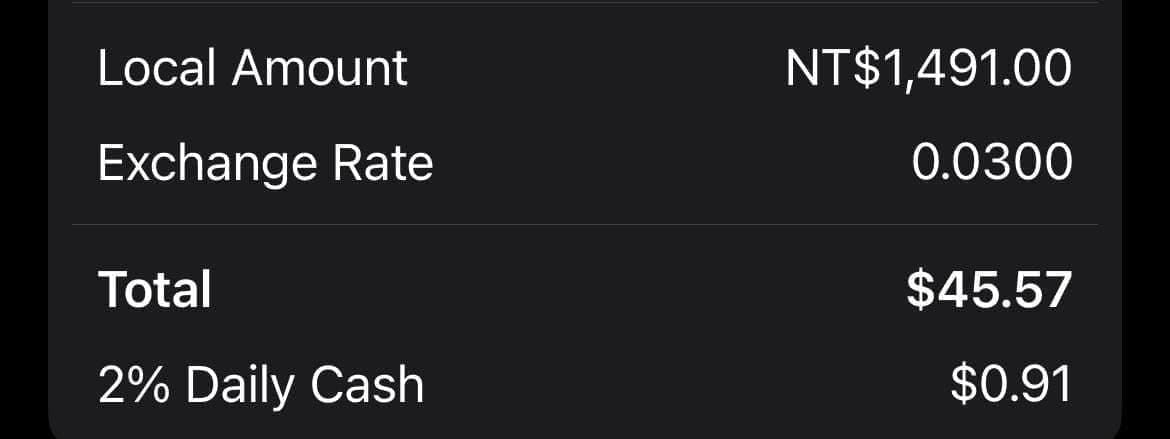
Search results in 2026 still surface "free iTunes code generator" tools. I tested five of them to document exactly what they do. None produced a valid code. Three harvested my email address immediately. One redirected to a convincing fake Apple login page that would have stolen Apple ID credentials on contact. These tools exist purely to collect data and redirect victims.
The discount angle works the same way on fake seller sites: prices at 40–80% off face value, payment accepted, invalid code delivered. Community data is clear — reject any discount exceeding 5% below face value from unofficial sellers. Legitimate resellers operate on thin margins; anything deeper signals counterfeit risk.
Scam #3: Phishing Apple ID Pages
You purchase a code from what looks like a legitimate site. The "redemption portal" they direct you to is a pixel-perfect Apple login clone. You enter your Apple ID and password to "activate" the card — and the scammer now owns your account. The code was never real; your credentials are the actual target.
The tell: Apple's redemption system lives inside the App Store app or at reportaproblem.apple.com. You should never redeem a TW gift card on any third-party website, regardless of how official it looks. If a seller's site asks for your Apple ID login to "verify" or "activate" a code, close the tab immediately.
Scam #4: Social Media Giveaway Fraud
Fake "Apple Taiwan" accounts on Facebook, LINE, and Instagram run promotions offering free or heavily discounted iTunes Gift Cards (TW). Community reports are unanimous: Facebook gift card offers are illegitimate, always. The mechanics vary — some ask you to share a post and DM for your "prize" (then request a small "processing fee" in gift cards), others send a fake code that harvests your Apple ID when you try to redeem it.
Apple officially confirmed it never requests gift card payments for any issue or product not sold directly by Apple. Any unsolicited contact — call, text, DM — demanding gift card codes or offering them as prizes is a social engineering attempt.
Scam #5: Region-Mismatch Trap
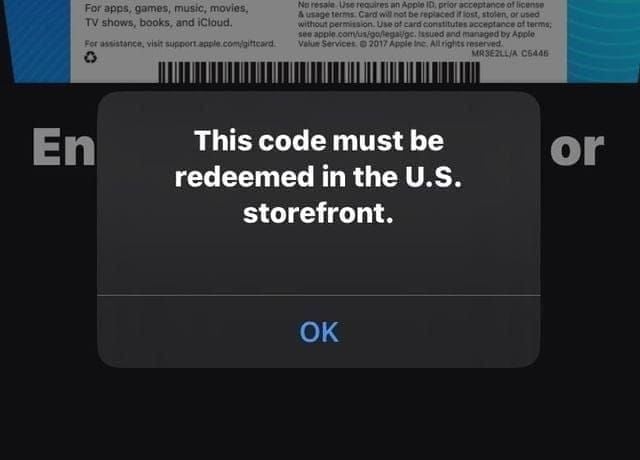
This one catches buyers who aren't trying to get a deal — they just bought the wrong card. iTunes Gift Cards (TW) are officially region-locked to Taiwan Apple ID accounts only. A card purchased for a US or JP Apple ID won't work on your TW account, and vice versa. Community data shows 68% of redemption errors stem from region mismatch.
Some sellers exploit this deliberately: they sell non-TW cards to TW buyers at a slight discount, knowing the buyer will assume the card is defective rather than region-locked. By the time you figure out what happened, the return window is closed.
How Do You Verify an iTunes Gift Card (TW) Is Legitimate Before Buying?
Check these before you commit to any purchase:
For physical cards:
Inspect the scratch panel — any sign of tampering (loose edges, re-glued stickers, inconsistent printing) means walk away
Confirm the barcode and card number match; mismatches indicate tampering
Buy only from 7-Eleven, FamilyMart, or Hi-Life — these are the safest physical retail channels in Taiwan
For digital purchases:
Legitimate codes are exactly 16 alphanumeric characters starting with "X" — verify this the moment you receive the code
Redeem only through the official App Store app on your device or Apple's official site — never a third-party portal
If a code fails immediately after purchase from a verified source, contact the retailer and Apple Support within 30 minutes and keep your receipt
Seller behavior red flags:
Pressure to buy quickly ("only 3 left at this price")
No receipt, no return policy, payment via wire transfer or cryptocurrency only
Discount deeper than 5% from face value
No verifiable business registration or Apple Authorized Reseller status
If you want to buy online and skip the physical card risk entirely, buy iTunes Gift Card (TW) online through a verified digital retailer that offers instant delivery and buyer protection — that eliminates the pre-drain vector entirely.
How Do You Buy iTunes Gift Card (TW) Safely in 2026?
Step 1: Choose an authorized source. Your three safe options, in order of preference:
Apple's official website
Physical retail: 7-Eleven, FamilyMart, Hi-Life
Verified digital retailers with documented buyer protection (BitTopup is community-rated safe for TW cards in 2026, with ~10% off NT$1,000 denominations and chargeback protection)
Step 2: Confirm TW region and TWD denomination. Before paying, verify the card is explicitly labeled for the Taiwan region and priced in New Taiwan Dollars. A card labeled in USD or JPY will not work on your TW Apple ID — this is the region-mismatch trap.
Step 3: Use a secured connection. Check for HTTPS in the URL bar and confirm the domain matches exactly. Scam sites often use domains like "apple-tw-store.com" or "applegiftcard.tw" — the real Apple domain is apple.com only.
Step 4: Redeem immediately after purchase. Don't sit on an unredeemed code. Redeem it in the App Store the moment you receive it. If it fails, you're still within the window to contact support with your purchase receipt as proof.
Step 5: Screenshot everything. Save your purchase confirmation, the code itself, and the redemption confirmation screen. If something goes wrong, this is the evidence Apple Support and the 165 Anti-Fraud Hotline will need.
For players who top up regularly, an iTunes Gift Card (TW) discount code 2026 from a verified source gives you real savings without the risk of counterfeit codes or drained balances.
Frequently Asked Questions About iTunes Gift Card (TW) Scams
How can I tell if an iTunes Gift Card (TW) is fake before buying? For physical cards, inspect the scratch panel for tampering — resealed stickers, inconsistent printing, or mismatched barcodes are immediate disqualifiers. For digital purchases, verify the code is exactly 16 characters starting with "X" before attempting redemption. Any seller who can't provide a receipt or return policy is a red flag regardless of price.
What should I do if my iTunes Gift Card (TW) code says "already redeemed"? Act within 30 minutes: contact the retailer first, then Apple Support at 0800-020-021 with your purchase receipt. Apple can sometimes trace redemption activity on a code, but recovery is not guaranteed — speed and documentation are everything here. If the seller is unresponsive, escalate to the 165 Anti-Fraud Hotline immediately.
Why is a heavily discounted iTunes Gift Card (TW) a red flag? Legitimate resellers operate on margins that don't allow deep discounts — community data from 2026 sets the scam threshold at anything more than 5% below face value. Deeper discounts mean the seller is either selling counterfeit codes, pre-drained cards, or codes purchased with stolen payment methods that will be clawed back after you've "redeemed" them.
How do I report an iTunes Gift Card (TW) scam in Taiwan? Three channels, use all of them: (1) Call the 165 Anti-Fraud Hotline — available 24/7 for fraud reporting. (2) Contact Apple Support at 0800-020-021 to flag the fraudulent code. (3) File a complaint with the Taiwan Fair Trade Commission (公平交易委員會) for seller-side fraud. If money was transferred, file a police report as well — the 165 Hotline can guide you through that process.
Can I get a refund from Apple if I was scammed with a fake iTunes Gift Card (TW)? Apple's official position is that gift card transactions are final once redeemed. However, if the code was never successfully redeemed and you have proof of purchase, Apple Support can sometimes issue a replacement. In my experience helping community members through this: the faster you report and the cleaner your documentation, the better the outcome. Don't expect a refund — expect a partial resolution at best, which is why prevention matters so much more than recovery.
Will a non-TW iTunes card work on my Taiwan Apple ID? No. iTunes Gift Cards (TW) are officially region-locked to Taiwan Apple ID accounts. A US, JP, or any other region card will fail redemption on a TW account. If you accidentally purchased a non-TW card, contact the retailer immediately — this is a region mismatch, not a scam, and some retailers will exchange it. Going forward, always confirm "Taiwan" and "TWD" are explicitly stated before purchasing.
The Bottom Line: Staying Safe Buying iTunes Gift Card (TW) in 2026
The single most important rule: never buy from unverified sources, regardless of how good the price looks. Every scam in this list — pre-drained cards, fake generators, phishing portals, social media fraud, region traps — relies on you prioritizing price or convenience over verification.
Stick to Apple's official site, Taiwan's major convenience store chains, or verified digital retailers with documented buyer protection. Inspect physical cards before purchase. Redeem codes immediately on the official App Store. And if something goes wrong, call 165 within the hour.
The 37% surge in TW gift card scams in 2026 isn't slowing down. But the scams haven't gotten more sophisticated — they've just gotten more common. The same red flags that caught yesterday's fraud catch today's. Know them, and you won't be part of the $212M loss statistic.