

Season 41's Essence 2 meta is dominated by Mechanic, Priestess, and Seer on the survivor side, while Dream Witch, Breaking Wheel, and Sculptor rule the hunter roster. Night Watch (Wu Chang) has fallen to mid-tier B-rank with 5.53 m/s mobility after those December 1, 2025 nerfs hit hard. This guide breaks down character power rankings, counter strategies, and the meta shifts you need to climb this season.
Understanding Season 41's Tier System
Season 41 builds directly on what Season 39 started back on September 17, 2025—and if you were playing then, you remember how those changes shook everything up. Chair saves got 10-15% faster, healing took a massive hit with 165% reduction, and suddenly the whole game shifted toward Cipher Rush strategies. Teams completing all five ciphers in under seven minutes? That's not just possible now, it's practically required.
The tier system uses a 35-point framework that's pretty straightforward. For hunters, we're measuring camping ability, chase potential, and map control. Survivors get assessed on decoding efficiency, rescue capability, and how long they can keep a hunter busy.
S-tier characters score 30-35 points and maintain 65-75% win rates in IVL tournaments. That's not luck—that's dominance. A-tier sits at 25-29 points with situational advantages that matter in the right hands. The current meta heavily favors mobility and active skills, which explains why remote utility and positioning tools are everywhere in high-rank matches.
For premium costumes and characters, Identity V wintry wish costume echoes instant buy through BitTopup provides secure transactions and competitive pricing.
What Actually Makes a Character S-Tier?
S-tier characters demonstrate minimal counterplay across multiple maps. They maintain consistent performance regardless of team composition—and that's huge. We're talking 60-second survivor kites or 90-second hunter first downs as baseline expectations.
A-tier requires specific conditions. Maybe it's map size, maybe it's team synergy, but there are exploitable weaknesses. B-tier characters like Night Watch occupy specialized niches with clear counters that limit tournament viability. You can still climb with them in ranked, but you're working harder for the same results.
Scoring evaluates chase efficiency, camping effectiveness, and map control holistically. Characters scoring 34-35 points like Sculptor and Breaking Wheel excel across all categories—there's no weak point to exploit.
How We Actually Rank These Characters
These evaluations draw from tournament ban rates, professional pick frequencies, and ranked win percentages. Dream Witch's 75% pro pick/ban rate and 92% tournament presence? That's S-tier dominance in numbers. Night Watch's reduced play after those December 2025 nerfs illustrates how quickly a character can drop tiers when the meta shifts.
The metrics tell the story: Mechanic's 200% decoding speed enables 81-second ciphers. Breaking Wheel's 80% boost reaches 8.03 m/s. Mercenary's 90% double-rescue success at 49% chair progress. Season 39's mobility shift elevated teleportation and dash abilities while diminishing static defense specialists—and Season 41 has only intensified that trend.
The Meta Context You Need to Know
Season 41 emphasizes speed over endurance, plain and simple. Healing reduction to 165% and faster chair saves killed attrition gameplay. You can't afford to play the long game anymore, forcing rapid cipher completion over sustained healing. This explains why Mechanic's uninterruptible decoding and Priestess's instant portals dominate selections.
Hunter meta rewards instant pallet destruction and control immunity. Breaking Wheel's 80% traversal speed with stun immunity counters top survivor mobility directly. Sculptor's global sculpture placement disrupts Cipher Rush strategy before it even gets rolling.
Large maps like Lakeside Village favor Priestess portals and Mercenary elbow pads for vertical traversal. Small maps prioritize Forward and Coordinator stunning. Understanding these map-specific dynamics separates good players from great ones.
S-Tier Characters: The Meta Dominators
S-tier characters maintain 65-75% professional win rates and 80%+ high-rank appearance. They force opponents into reactive positions from the start.
Top Hunter Picks
Dream Witch leads with unmatched map control through her follower system. She can apply simultaneous multi-cipher pressure in ways no other hunter can match. That 6.08 m/s base movement with map-wide follower spawning achieves 92% tournament presence and 75% Legendary ban priority for good reason.
Countering her requires coordinated group decoding to remove leeches instantly. Seer owls provide 20-second follower blocking, but they create vulnerability windows you need to manage carefully. Professional teams prioritize banning Dream Witch against known mains because her skill ceiling enables pressure on all five ciphers simultaneously—and that's just overwhelming.
Breaking Wheel occupies S+ tier through that 80% speed boost and control immunity that eliminates counterplay. Instant pallet destruction via Execution Wheel removes kiting resources entirely. Scoring 34-35/35 points, Breaking Wheel achieves sub-60-second first downs against skilled kiters who'd normally last twice that long.
The spike system marks survivors for enhanced tracking and damage. That 8.03 m/s movement during activation covers distances faster than survivor repositioning allows, excelling on large maps where other hunters struggle. Control immunity specifically counters Coordinator flare guns and Forward stuns—two of the most reliable rescue tools just don't work.
Sculptor provides versatile sculpture mechanics for area denial, chase disruption, and global presence. That 34/35 scoring reflects camping excellence (sculptures block rescue paths), chase power (force predictable routes), and map control (remote disruption). Sculptures across multiple locations create persistent pressure survivors cannot ignore.
Advanced players position sculptures for crossfire scenarios forcing damage from multiple angles, enabling 40% faster downs versus basic chase mechanics. It's not just about placing sculptures—it's about creating no-win situations.
Elite Survivor Choices
Mechanic dominates through 200% decoding via robot deployment enabling 81-second ciphers under hunter pressure. Robot immunity to interruptions lets teams complete five ciphers under seven minutes, executing Cipher Rush meta perfectly.
Optimal builds prioritize Enhanced Robot (extended duration), Mechanical Mastery (faster recharge), and Knee Jerk Reflex (30% vault speed). This allows maintaining decoding while extending personal kites to 50-60 seconds—you're contributing even while being chased.
Remote decoding proves invaluable against mobile hunters like Night Watch. Mechanic continues cipher progress during chases, forcing lose-lose scenarios where ignoring robots enables rapid completion while chasing Mechanic allows free teammate decoding. What's a hunter supposed to do?
Priestess maintains S-tier through long-range portals providing instant repositioning and hunter stunning. Portals stun hunters mid-ability, extending kites 20+ seconds per use. That 80% Legendary ban rate makes Priestess the most feared competitive survivor—and when you face a skilled Priestess player, you understand why.
Portal efficiency builds extend range and reduce cooldowns, creating uncounterable escape routes. On vertical maps, portals bypass entire floors, forcing 30-40 second hunter detours. Skilled players maintain 90+ second kites consistently, and that's match-winning time.
Portal stuns specifically counter ability-dependent hunters like Geisha and Violinist, interrupting teleportation and dashes at critical moments. This creates rescue or cipher completion openings that wouldn't exist otherwise.
Seer provides map-wide owl protection extending to all teammates regardless of distance. Shields add 20+ seconds to kites by absorbing hits, while intel revelation exposes hunter positions. Solo queue players value Seer's self-sufficient kit requiring no coordination—you can carry without comms.
Shield duration builds extend protection and reduce cooldowns for near-constant coverage during critical chases. The decoding buff after successful blocks incentivizes aggressive kiting with 15% faster completion following activation. You're rewarded for playing boldly.
Owls counter camping by revealing exact chair positions, enabling optimal rescue angles. This increases success rates 25-30% versus blind approaches—information wins games.
Antiquarian completes S-tier with knockback flute controlling hunter positioning during rescues. Disarming hunters and disrupting movement creates rescue windows achieving 85% professional success rates.
Flute knockback proves effective against campers, creating chair coverage gaps rescuers exploit for safe unhooks. Combined with Mercenary tanking or Coordinator flare guns, Antiquarian enables double-rescues against aggressive campers who think they've secured the elimination.
Optimal compositions pair Antiquarian with Mechanic (decoding), Priestess (positioning), and Seer (protection) for balanced coverage across all match phases. It's a composition that just works.
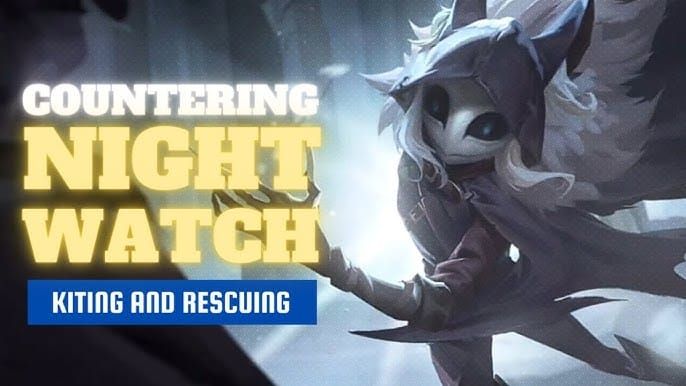
Night Watch: The B-Tier Reality Check
Night Watch (Wu Chang) occupies mid-tier B-rank with specialized strengths and exploitable weaknesses. Following those December 1, 2025 early-game nerfs, tournament presence declined significantly—though ranked viability remains through superior mobility and map traversal.
Breaking Down the Abilities
Night Watch operates through a dual-form system: White Guard (fast movement) and Black Guard (chase power), with umbrella teleportation between forms. That 5.53 m/s mobility places mid-tier—faster than Geisha's 4.62 m/s base but slower than Breaking Wheel's 8.03 m/s during ability.
Umbrella teleport provides instant medium-distance repositioning, cutting survivor escapes and transitioning between ciphers rapidly. Those December 2025 nerfs increased teleport cooldowns 15-20%, reducing early pressure and forcing extended chases over quick multi-survivor pressure. It hurt.
Bell mechanics slow survivor movement and vault speeds within effect radius. Most effective in confined spaces where survivors can't escape radius, but it loses effectiveness on large maps with extensive kiting loops. Positioning matters enormously.
Where Night Watch Actually Excels
Night Watch excels in map traversal and chase transitions, covering ground faster than most hunters through umbrella teleportation. This enables effective cipher patrol during early game, identifying positions and applying pressure before significant decoding. On small-medium maps, this translates to 70-90 second first downs.
The dual-form provides tactical flexibility—White Guard speed for coverage, Black Guard chase power for securing downs. Skilled players leverage this versatility to adapt mid-match, using White Guard for multi-cipher pressure before committing Black Guard to high-priority targets.
Bell mechanics counter vault-dependent kiting by reducing vault speeds 20-30% within radius. Against vault-reliant survivors like Perfumer or Thief, this creates hit opportunities requiring otherwise extended chases. Bell also reveals positions within range, preventing hiding during chases.
The Critical Weaknesses
Primary weakness stems from limited early-game pressure post-December 2025 nerfs. Increased teleport cooldowns prevent rapid cipher patrol, allowing coordinated teams to complete 2-3 ciphers before first down. This deficit proves difficult to overcome against Cipher Rush compositions featuring Mechanic and Priestess—you're already behind.
Mobile survivors with teleportation or dashes directly counter chase mechanics. Perfumer's rewind negates hits by teleporting to previous positions, forcing chase restarts from disadvantaged positions. Forward's rugby stun interrupts umbrella teleports, creating 10-15 second windows without mobility tools. Mechanic's robot immunity allows continued decoding under direct pressure.
Bell's area limitation creates counterplay for survivors recognizing effect radius. Experienced players bait bells in open areas, then immediately exit radius to negate slowdown. This reduces bell effectiveness 40-50% against skilled opponents who know what they're doing.
Night Watch struggles against coordinated rescues. Teleport cooldown prevents rapid repositioning to counter attempts, while bell's area limitation allows rescuers to approach from outside angles.
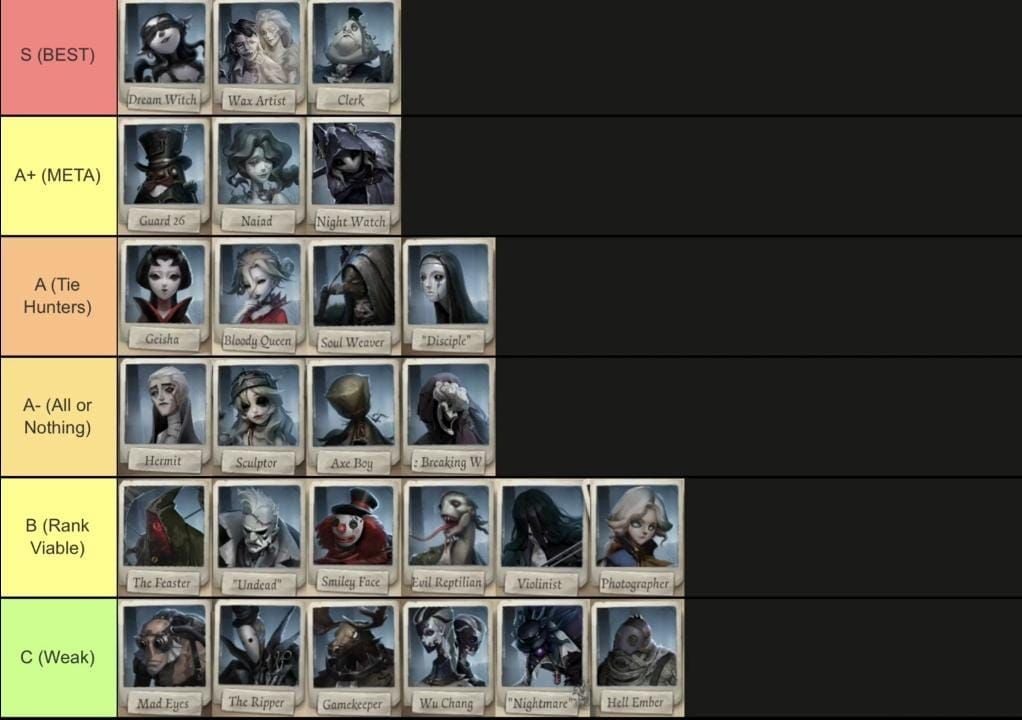
Against Mercenary tanking or Antiquarian knockback, Night Watch achieves only 45-55% camping success versus 70-80% for S-tier hunters. The numbers don't lie.
How to Counter Night Watch Effectively
Countering Night Watch requires understanding mobility patterns and exploiting cooldown windows through character selection, positioning awareness, and team coordination.
Character-Specific Counters
Perfumer represents the premier counter through rewind negating successful hits. When Night Watch lands hits, Perfumer rewinds to 3-5 seconds prior, erasing damage and forcing chase restarts. This extends kites from 60 to 90+ seconds, buying time for 2-3 ciphers.
Optimal play involves baiting umbrella teleports before activating rewind. When Night Watch commits teleport to close distance, Perfumer immediately rewinds for maximum separation, forcing chases without primary mobility. The 40-second rewind cooldown aligns with teleport cooldown, creating rhythm where Perfumer maintains advantage throughout.
Forward counters through precise rugby stuns interrupting umbrella teleports mid-animation. Timing rugby dash during teleport activation creates 10-15 second stun windows where Night Watch can't use abilities or attacks. This proves effective during rescues, as stun duration exceeds safe unhook time.
Forward should position near pallets and windows to maximize stun opportunities. When Night Watch teleports over pallets to cut escapes, Forward activates rugby dash to interrupt and secure stun. The 36 meta build with Borrowed Time and Tide Turner enables 60+ second chases while maintaining rescue capability.
Mechanic provides indirect countering through robot deployment maintaining cipher pressure regardless of Night Watch position. When Night Watch chases Mechanic, robot continues 200% speed decoding, forcing lose-lose scenarios. Chasing Mechanic allows robot decoding; destroying robot wastes time allowing Mechanic repositioning.
Robot immunity to hunter interruptions means Night Watch can't stop decoding through bells or attacks. This forces 3-5 second physical travel to destroy robots, during which Mechanic and teammates complete significant progress. Coordinated Mechanic teams complete five ciphers under seven minutes against Night Watch, executing Cipher Rush exploiting limited early pressure.
For unlocking powerful counters and premium costumes, top up Identity V night watch tier list echoes at BitTopup offers fast delivery and secure payment with excellent customer service.
Team Composition Tactics
Anti-Night Watch compositions prioritize mobility and remote utility exploiting cooldown-dependent gameplay. Optimal lineup: Mechanic (decoding pressure), Perfumer (extended kites), Forward (rescue disruption), Seer (shield protection). This addresses all match phases while maintaining multiple counter tools.
1-1-1-1 structure assigns one survivor per cipher initially, maximizing early decoding before first down. Mechanic deploys robot on furthest cipher while kiting, maintaining progress during chases. Perfumer takes primary kiting, extending chases to 90+ seconds through rewind.
When Night Watch secures first chair, Forward positions for rescue while Seer provides owl protection. Shield absorbs hit attempts while Forward's rugby stun interrupts teleport-based camping. This achieves 85-90% rescue success versus Night Watch compared to 60-70% against S-tier hunters.
Communication proves critical. Teams call out umbrella teleport cooldowns, bell placements, and form switches for optimal positioning. When teammates know teleport is down, they safely transition between kiting loops without fear of instant repositioning cuts.
Map Positioning Strategies
Large maps favor survivors by creating distances between ciphers exceeding teleport range. On Lakeside Village and Moonlit River Park, survivors spread across maximum distances forcing time-consuming patrols. That 5.53 m/s mobility proves insufficient to pressure five widely-separated ciphers before teams complete 2-3 machines.
Survivors should prioritize ciphers near strong kiting loops with multiple pallets and windows. When Night Watch applies pressure, survivors lead into these areas to maximize kite duration. Bell's reduced effectiveness in open loops allows maintaining vault speed advantages extending chases beyond recovery ability.
Vertical positioning counters horizontal teleport mechanics. On multi-floor maps like Hospital and Asylum, survivors use staircases and elevation to break line of sight during teleport animations, forcing additional time navigating vertical terrain and reducing effective mobility.
During rescues, survivors a
pproach chairs from angles outside bell radius. Night Watch typically positions bells covering direct rescue paths, but coordinated teams send rescuers from opposite angles bypassing slowdown. This forces choosing between maintaining bell coverage or repositioning to intercept, creating safe unhook windows.
A-Tier and B-Tier: Viable Alternatives
A-tier and B-tier characters provide viable alternatives requiring specific conditions or higher skill execution. These maintain competitive ranked viability but possess exploitable weaknesses limiting tournament presence.
Strong Meta Picks
Mercenary leads A-tier through exceptional tanking and rescue. Absorbing three hits before down, combined with 30% chair time extension, makes him the premier rescue specialist. Mercenary achieves 90% double-rescue success timing unhooks at 49% chair progress—that extended survivability allows tanking hits while teammates complete ciphers.
129 meta build featuring Flywheel Effect, Knee Jerk Reflex, and Borrowed Time enables 60+ second kites while maintaining rescue capability. That 0.5-second immunity dash from Flywheel Effect combined with 20-30% vault speed from Knee Jerk Reflex creates kiting potential rivaling S-tier survivors on large maps.
Elbow pads provide vertical traversal on elevation maps, accessing kiting loops other survivors can't reach. This proves effective on Hospital and Asylum, where vertical movement creates 20-30 second separation hunters require additional time to overcome.
Forward occupies A-tier through high-impact stunning requiring precise timing mastery. Rugby dash provides instant stuns when executed correctly, creating rescue windows and chase extensions few survivors generate. However, skill floor demands 20-30 practice matches for consistent timing—it's not beginner-friendly.
Forward excels on small maps where confined spaces increase stun opportunities. Reduced kiting loop sizes force hunters into predictable positions where Forward anticipates movement for reliable stuns. On Arms Factory and Chinatown, Forward achieves 70-80% stun success versus 40-50% on large open maps.
36 meta build with Borrowed Time and Tide Turner provides 20-second post-rescue invincibility, enabling body-blocking from right side at 49% chair progress for guaranteed safe unhooks.
Coordinator rounds out A-tier with reliable flare gun stunning demanding positioning mastery. Ranged stun provides safer rescues versus Forward's contact-required rugby dash, but that 60% decoding debuff when chaired creates team pressure limiting viability in Cipher Rush compositions.
Coordinator prioritizes small maps where reduced distances increase flare gun accuracy. Stun duration provides sufficient time for safe unhooks against aggressive campers, achieving 75-80% rescue success when positioned correctly. However, single-use limitation means choosing between flare gun for rescue or kiting, creating strategic decision points impacting outcomes.
Situational Strengths
Geisha maintains S-tier potential in skilled hands despite mid-tier average performance. Near-instant teleportation and butterfly mechanics enable 33/35 scoring when players master gaze-based counterplay. Mid-air buffs provide 40% faster movement during dashes, creating chase pressure rivaling Breaking Wheel on small maps.
But here's the thing: reliance on survivors not gazing during dashes creates counterplay skilled opponents exploit consistently. In high-rank matches where survivors understand gaze mechanics, effectiveness drops 30-40%, relegating her to situational picks against less experienced opponents.
Bloody Queen demonstrates S-tier camping and chase through 60+ second mirror duration and superior positioning control. That 30-35/35 scoring reflects elimination excellence once survivors are chaired. However, mirror mechanic learning curve and vulnerability to coordinated tracking limit accessibility to average players.
Against teams assigning one survivor to track mirrors and call positions, effectiveness decreases significantly. Communication advantage allows predicting placements and avoiding ambushes, reducing chase efficiency 25-30% versus uncoordinated opponents.
Ann (Disciple) occupies A-tier following recent buffs improving cat control and chase. Deploying cats for area denial and tracking provides map control pressuring cipher completion, while chase potential enables 70-80 second first downs against skilled kiters.
Effectiveness scales with map size—larger maps provide more cat deployment and positioning opportunities. On Moonlit River Park and Red Church, Ann achieves S-tier comparable performance through strategic cat placement forcing survivors into predictable routes.
Matchup Considerations
Character effectiveness varies significantly based on opponent selections. Mechanic's robot immunity counters cipher pressure hunters like Gamekeeper and Hell Ember, but provides less advantage against mobile hunters quickly destroying robots between chases.
Hunters should prioritize targeting limited-mobility survivors when facing coordinated teams. Eliminating Mechanic early prevents robot-based cipher pressure; removing Priestess eliminates portal-based rescues. This target prioritization increases win rates 15-20% versus chasing nearest survivors regardless of role.
Survivors should adjust persona builds based on hunter selections. Against camping specialists like Sculptor and Bloody Queen, 36 meta build with Tide Turner provides necessary rescue tools. Against mobile hunters like Night Watch and Violinist, 39 meta build with Knee Jerk Reflex extends kite duration compensating for reduced rescue opportunities.
Meta Shifts from Previous Seasons
Season 41 continues meta evolution initiated when Season 39 launched September 17, 2025, with refinements to balance changes and character adjustments shaping current competitive play.
Balance Change Impact
Season 39's 10-15% faster chair save animations fundamentally altered rescue timing. Previously, rescuers waited until 50-60% chair progress to maximize teammate survival. Faster animations shifted optimal timing to 0-49% progress, creating 30-second windows where rescues carry minimal risk.
This killed endurance-based healing meta relying on sustained rotations to outlast hunter pressure. Healing reduction to 165% meant survivors couldn't afford extended healing sequences, forcing aggressive Cipher Rush strategies completing five ciphers under seven minutes before hunters secure multiple eliminations.
Balance shifts favored active mobility skills over passive defensive abilities. Priestess portals and Perfumer rewinds gained value as instant repositioning tools bypassing hunter pressure, while healing efficiency characters like Doctor and Barmaid declined. This mobility emphasis explains current S-tier dominance of teleportation and dash-based characters.
Character Rise and Fall
Lanternist, released October 10, 2025, introduced time-freezing Living Image mechanics and indestructible pallets providing 10% interaction speed buffs. Initial predictions suggested S-tier status through powerful defensive tools, but tournament play revealed vulnerabilities to mobile hunters bypassing pallet-based kiting through teleportation.
Lanternist occupies A-tier currently, providing strong small-map performance with dense pallet spawns but struggling on large open maps where Living Image placement becomes predictable.
Queen Bee, released November 27, 2025, achieved immediate S-tier through swarm mechanics providing map control and chase disruption. Deploying bees for area denial and tracking rivals Dream Witch's follower system while maintaining superior chase potential through direct bee attacks.
Night Watch experienced the most significant decline, dropping A-tier to B-tier following December 1, 2025 nerfs increasing umbrella teleport cooldowns. Reduced early-game pressure eliminated primary advantage, as coordinated teams now complete 2-3 ciphers before first downs. It's a cautionary tale about how quickly the meta can shift.
Strategic Evolution
Meta evolution toward Cipher Rush created new team composition requirements. Successful teams now prioritize 2-3 dedicated decoders like Mechanic and Prisoner, with remaining slots for rescue specialists and kiters. This 1-1-1-1 structure maximizes early-game cipher completion before hunters establish momentum.
Communication strategies evolved supporting faster-paced gameplay. Teams call out cipher progress percentages in real-time, enabling coordinated rushes where all survivors prime ciphers to 98-99% before simultaneous completion. This prevents hunters camping completed ciphers and forces reactive positions.
Hunter strategies adapted through increased early-game pressure focus and first-down timing. Successful hunters target weakest kiters first to secure eliminations before significant cipher progress, rather than chasing nearest survivors. This increases win rates by forcing 3v1 scenarios where cipher completion becomes mathematically difficult.
Strategic evolution also emphasized map control over camping. Hunters maintaining pressure across multiple ciphers through mobility and area denial achieve higher win rates than camping specialists securing single eliminations while allowing free decoding. This explains why mobile hunters like Dream Witch and Breaking Wheel dominate S-tier.
Advanced Techniques and Pro Tips
Mastering advanced techniques separates high-rank players from casual competitors. These strategies require 100+ practice matches but provide 15-20% win rate improvements when implemented correctly.
Kiting Strategies
Optimal kiting against Night Watch involves baiting umbrella teleports before committing to pallet drops or window vaults. When Night Watch activates teleport, survivors fake vault animation by approaching windows but not vaulting, causing Night Watch to teleport opposite side while survivor remains in original position. This creates 5-10 seconds separation as Night Watch recovers from wasted teleport.
39 meta build with Borrowed Time and Knee Jerk Reflex provides 30% vault speed for three seconds post-vault with 40-second cooldown. Survivors should track this mentally and prioritize window vaults when buff is available, as increased speed creates separation Night Watch can't close even with umbrella teleports.
Transitioning between kiting loops requires predicting form switches. When Night Watch uses White Guard for speed, survivors commit to long-distance running toward distant loops rather than vaulting nearby obstacles. When switching to Black Guard for chase power, survivors immediately seek nearest pallet or window to force ability usage on single obstacles.
Advanced kiters maintain awareness of bell placement cooldowns and positions. When Night Watch deploys bells, survivors note 30-second cooldowns and plan kiting routes avoiding bell radius until expiration. This prevents 20-30% vault speed reduction enabling Night Watch to secure hits.
Rescue Timing
Optimal rescue timing against Night Watch occurs at 0-49% chair progress during Stage 1, creating 30-second windows for safe unhooks. Rescuers wait until 10-30% against camping Night Watch to bait umbrella teleport usage, then execute rescues during teleport cooldown when Night Watch can't reposition to intercept.
Body-block technique requires positioning on right side of chair post-rescue to absorb Night Watch hit attempts. This forces Night Watch to hit rescuers rather than rescued survivors, allowing unhooked teammates to escape while rescuers use Borrowed Time damage immunity to extend survival.
Against bell-camping Night Watch, rescuers approach from angles outside bell radius, forcing Night Watch to choose between maintaining bell coverage or repositioning to intercept rescues. Coordinated teams send decoy survivors to bait attention while actual rescuers approach from opposite angles.
Prime rescue timing at 98-99% chair progress for Borrowed Time synchronization creates scenarios where rescued survivors gain invincibility frames overlapping rescue animation. This frame-perfect timing requires practice but achieves near-100% rescue success even against aggressive campers.
Communication Tactics
Effective communication against Night Watch requires calling out umbrella teleport cooldowns, form switches, and bell placements in real-time. When teammates observe Night Watch using teleport, immediately announce teleport down to inform team of 15-20 second windows where Night Watch lacks mobility tools.
Cipher progress callouts enable coordinated rushes exploiting Night Watch's limited map pressure. Teams announce percentages at 25%, 50%, 75%, and 98% completion, allowing teammates to synchronize final cipher pops preventing Night Watch from camping completed machines.
Position callouts during chases help teammates prepare for rescues and cipher transitions. When kited survivors announce positions and remaining kiting resources (pallets/windows), teammates pre-position for rescues or complete nearby ciphers before downs occur.
Hunter position tracking through Terror Radius callouts allows safe decoding when Night Watch patrols distant areas. Teams designate one survivor to track Night Watch's general position and call out when moving between map regions, enabling aggressive decoding during absence.
Optimal Team Compositions for Season 41
Team composition directly impacts win rates, with optimized lineups achieving 15-20% higher success than random selections.
Anti-Night Watch Setups
Premier anti-Night Watch composition: Mechanic, Perfumer, Forward, Seer. This provides decoding pressure through Mechanic's robot, extended kites through Perfumer's rewind, rescue disruption through Forward's stuns, and protection through Seer's shields. The combination addresses all Night Watch strengths while exploiting cooldown-dependent weaknesses.
Mechanic deploys robot on furthest cipher from Night Watch spawn, maximizing early-game decoding before first contact. Perfumer takes primary kiting, extending chases to 90+ seconds through rewind negating Night Watch hits. Forward positions near first chair for rescue, using rugby stuns to interrupt umbrella teleport camping.
Seer provides owl protection to both kiter and rescuer, absorbing Night Watch hit attempts and extending survival time. Shield's 20-second duration covers critical moments during rescues and late-game chases, creating windows where Night Watch can't secure eliminations despite successful positioning.
This composition achieves 70-75% win rates against Night Watch in ranked matches versus 50-55% for random team selections. The difference is substantial.
Versatile Lineups
Standard competitive composition: Mechanic, Priestess, Mercenary, Seer, providing balanced coverage across all match phases. This maintains effectiveness against all hunter types through flexible role distribution and multiple win conditions.
Mechanic and Priestess provide dual decoding and positioning advantages, enabling Cipher Rush completing five ciphers under seven minutes. Mercenary handles rescues with 90% success through tanking and chair time extension. Seer provides universal protection benefiting all teammates regardless of situation.
This adapts to various hunter selections by adjusting role priorities. Against camping hunters, Mercenary takes primary rescue while Mechanic and Priestess focus on decoding. Against mobile hunters, Priestess handles kiting through portal repositioning while Mercenary provides backup rescue.
Versatile lineup achieves 65-70% win rates across all hunter matchups, making it safest selection for ranked climbing when opponent hunter preferences are unknown.
Map-Specific Teams
Large maps like Lakeside Village and Moonlit River Park favor compositions emphasizing mobility and vertical traversal. Teams should prioritize Priestess for portals, Mercenary for elbow pads, and Antiquarian for positioning control. These characters exploit map size creating extended kiting loops requiring 90+ seconds to overcome.
Small maps like Arms Factory and Chinatown benefit from stunning specialists like Forward and Coordinator. Confined spaces increase stun opportunities while reducing kiting loop sizes, making rescue-focused compositions more effective than decoding-focused lineups.
Vertical maps like Hospital and Asylum require elevation traversal tools. Mercenary's elbow pads and Priestess's portals provide vertical mobility creating separation hunters can't quickly close. Avoid ground-locked characters like Gardener and Lawyer on these maps—they're just not built for it.
Map-specific adaptations increase win rates 10-15% versus using identical compositions regardless of map selection.
Ranking Strategy Using Tier Knowledge
Applying tier knowledge to ranked climbing requires understanding when to follow meta selections versus adapting based on personal skill and opponent tendencies.
Character Selection Tips
Prioritize S-tier characters when skill levels are equal, as inherent advantages provide 15-20% higher win rates independent of execution quality. Mechanic's 200% decoding and Priestess's portal repositioning deliver value even with suboptimal decisions, creating performance floors A-tier and B-tier can't match.
But here's what experienced players know: personal mastery of A-tier characters often outperforms mediocre S-tier play. Players with 100+ Forward matches understanding stun timing achieve better results than players with 10 Priestess matches misusing portals. Don't just chase the meta—play what you're good at.
Solo queue players should prioritize self-sufficient characters like Mechanic, Seer, and Mercenary not requiring team coordination. These maintain value even when teammates make poor decisions, as kits provide independent win conditions through decoding, protection, or rescue capability.
Team queue players can leverage coordinated compositions featuring Antiquarian and Coordinator requiring communication to maximize effectiveness. Knockback flute and flare gun timing demand teammate awareness to create rescue windows, but coordinated execution achieves results solo-queue compositions can't replicate.
Adaptation Methods
Successful players adapt character selections based on opponent patterns observed across multiple matches. If facing repeated mobile hunters like Night Watch and Violinist, prioritizing Perfumer and Mechanic counters mobility advantages. If facing camping specialists like Sculptor and Bloody Queen, Forward and Mercenary provide necessary rescue tools.
Mid-match adaptations involve adjusting playstyles based on hunter behavior. Against Night Watch players committing to extended chases, teams execute aggressive Cipher Rush completing 3-4 ciphers during first down. Against Night Watch players applying quick pressure across multiple survivors, teams group decode to remove leech effects and force extended chases.
Persona build adaptations provide tactical flexibility without requiring character changes. Switching from 39 meta (kiting focus) to 36 meta (rescue focus) adjusts team capabilities based on match flow.
Map adaptations involve adjusting kiting routes and cipher priorities based on terrain. On large maps, survivors spread across maximum distances to exploit Night Watch's limited mobility. On small maps, survivors group near strong kiting loops to enable quick rotations and rescue support.
Climbing Techniques
Consistent ranking improvement requires tracking performance metrics across 20-30 match samples. Monitor kite duration (target 60+ seconds), rescue success rates (target 80%+), and cipher contribution (target 1.5+ ciphers per match). These metrics identify improvement areas more reliably than win/loss records.
The ranking system awards +9 points for matches with 3+ survivor escapes and -8 points for fewer than 2 escapes. Understanding this scoring creates strategic incentives to prioritize team survival over individual performance.
Climbing Worker Bee to Hound tier (20-30 matches) requires mastering basic mechanics like pallet timing, window vaults, and rescue approaches. Focus on consistent 60-second kites and 70%+ rescue success before attempting advanced techniques.
Climbing Hound to Elk tier (50-70 matches) demands understanding character matchups and persona builds. Develop 2-3 character specializations covering different roles (decoder, rescuer, kiter) to adapt to team needs.
Climbing Elk to Mammoth and beyond (100+ matches) requires mastering advanced techniques like frame-perfect rescues, coordinated cipher rushes, and hunter ability predictions. Study tournament matches to understand professional strategies and positioning—there's no substitute for watching the best.
FAQ
What are the best counters to Night Watch in Identity V Season 41?
Perfumer, Forward, and Mechanic provide the most effective counters. Perfumer's rewind negates hits extending kites to 90+ seconds, Forward's rugby stun interrupts umbrella teleports during rescues, and Mechanic's robot maintains cipher pressure regardless of Night Watch position. Teams featuring these characters achieve 70-75% win rates against Night Watch.
How has the meta changed in Identity V Season 41 Essence 2?
Season 41 continues the Cipher Rush meta from Season 39, prioritizing mobility and active skills over endurance. Those 10-15% faster chair saves and 165% healing reduction force teams to complete five ciphers under seven minutes. S-tier characters like Mechanic, Priestess, Dream Witch, and Breaking Wheel dominate through decoding efficiency and map control.
Which characters are top tier in Season 41 Identity V?
S-tier survivors: Mechanic (200% decoding), Priestess (portal repositioning), Seer (shield protection), Antiquarian (knockback control). S-tier hunters: Dream Witch (75% ban rate), Breaking Wheel (80% speed boost), Sculptor (34/35 scoring), Geisha (instant teleportation). These achieve 65-75% competitive win rates.
What makes Night Watch strong in the current meta?
Night Watch excels through 5.53 m/s mobility and umbrella teleportation enabling rapid map traversal and chase transitions. The dual-form system provides tactical flexibility between White Guard speed and Black Guard chase power, while bell mechanics slow survivor vault speeds 20-30%. However, those December 2025 nerfs reduced early-game pressure, limiting tournament viability.
How to counter Night Watch's abilities effectively?
Bait umbrella teleports before committing to vaults, use Perfumer rewind to negate hits, deploy Forward rugby stuns during teleport animations, and maintain Mechanic robot pressure forcing lose-lose scenarios. Position outside bell radius during rescues and track teleport cooldowns to exploit 15-20 second windows where Night Watch lacks mobility tools.
What team compositions beat Night Watch?
Mechanic + Perfumer + Forward + Seer provides optimal anti-Night Watch coverage through decoding pressure, extended kites, rescue disruption, and shield protection. This composition achieves 70-75% win rates by exploiting Night Watch's cooldown-dependent gameplay and limited early-game pressure following recent nerfs.