

Understanding frame data separates average players from competitive ones in Blood Strike. Ethan's Protection Matrix shield features 400 HP with a 30-second base duration, but specific timing windows create disadvantages against Blast's Drill Bomb. This guide breaks down exact activation sequences, damage thresholds, and tested counter-strategies to help you dominate matchups where milliseconds determine victory.
Understanding Frame Data in Blood Strike
Frame data represents precise timing of ability activation, active duration, and recovery periods measured in game frames. These timing windows determine who lands damage first during simultaneous engagements.
For players seeking ability upgrades, Blood Strike Gold top up services at BitTopup provide secure, instant access to in-game currency with 24/7 support.
What Frame Advantage Means
Frame advantage occurs when your ability completes its active phase before your opponent's, allowing you to act first during recovery. In Ethan vs Blast matchups, this advantage shifts based on engagement distance, ability activation timing, and positioning.
The player with frame advantage controls engagement tempo. When Ethan's Protection Matrix deploys slower than Blast's Drill Bomb cast, Blast gains initiative to damage the shield or reposition during Ethan's vulnerability window.
Startup, Active, and Recovery Frames
Startup frames: Delay between activation and when effect becomes active
Active frames: How long the ability remains functional
Recovery frames: Period after expiration before you regain full combat capabilities
Ethan's Protection Matrix doesn't appear instantly upon activation, creating a startup window where you remain vulnerable. The 30-second active duration provides defensive coverage, but recovery after expiration leaves you exposed if you've committed to aggressive positioning.
Why Frame Data Matters More Than Raw Stats
The Protection Matrix's 400 HP appears substantial, but frame timing determines whether that health pool matters. If Blast's Drill Bomb activates before your shield deploys, those 400 HP become irrelevant as you absorb full damage during startup frames.
Competitive players exploit these timing gaps. A Blast player who understands Ethan's startup delay will initiate Drill Bomb the moment they see shield activation animation, landing damage before the barrier becomes active.
Ethan Shield Complete Frame Data

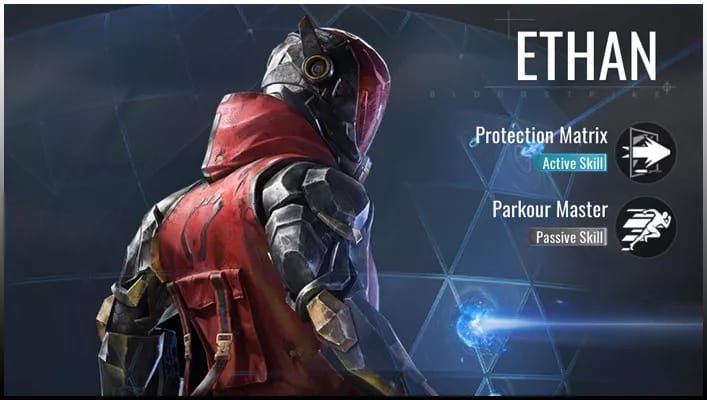
Ethan functions as a Defensive Striker with Protection Matrix as primary ability, complemented by Power Slide for mobility and Parkour Master passive granting 25% movement speed boost.
Shield Duration and Active Window
Protection Matrix maintains 30-second base duration, providing extended defensive coverage. This active window allows Ethan to control objectives, revive teammates, or force opponents into unfavorable rotations.
Level 3 upgrades extend duration by 10 seconds, reaching 40 seconds total. This significantly impacts frame advantage by reducing vulnerability window frequency during recovery periods.
Shield Health and Damage Threshold
Protection Matrix features 400 HP as a one-way bullet barrier, blocking incoming fire while allowing your team to shoot outward. This directional property creates strategic depth—positioning determines whether the shield protects or exposes you.
Blast's Drill Bomb inflicts 125 base damage within 8-meter radius. A single Drill Bomb consumes ~31% of shield health. At Level 5, Blast's Drill Bomb gains 25% additional damage, increasing to 156.25 damage per explosion—nearly 40% of total HP.
Protection Matrix Upgrade Priority
Level 5 upgrades provide critical enhancements: double length and 40% increased height. These dimensional improvements expand the shield's protective zone, allowing better team coverage and reducing angles where enemies bypass the barrier.
The height increase particularly matters against elevated positions. Standard Protection Matrix height leaves upper body exposure against opponents on elevated terrain; the 40% boost mitigates this vulnerability.
Power Slide and Mobility Integration
Power Slide increases your next slide speed after charging. This mobility tool allows rapid repositioning during shield cooldown, helping you disengage when frame disadvantage becomes critical.
Combined with Parkour Master's 25% speed boost, Ethan maintains competitive mobility despite defensive focus. This movement capability enables pre-emptive positioning before engagements, reducing reliance on reactive shield deployment where startup frames create vulnerability.
Blast Ability Frame Data and Timing
Blast operates as an Attack Striker specializing in area denial through explosive damage.
Drill Bomb Activation and Impact
Drill Bomb delivers 125 base damage across 8-meter radius, with critical advantage of penetrating walls thinner than 5.5 meters. This penetration capability bypasses cover-based counterplay, forcing Ethan into open engagements where frame timing becomes decisive.
The ability also applies 2-second Color Mark highlight on affected enemies, providing Blast's team with information advantage. This marking effect compounds Ethan's disadvantage—even if you survive the initial explosion, your position becomes known to the entire enemy team.
Area of Effect and Damage Application
The 8-meter radius creates substantial threat zone. Most Blood Strike engagement distances in objective areas fall within 10-15 meters. Blast can position safely outside immediate combat range while still threatening Ethan's position.
Level 3 upgrades grant an additional bomb, doubling Blast's area denial capability. This fundamentally changes the matchup—Ethan's single shield cannot effectively counter two sequential explosions, each dealing significant damage to the 400 HP barrier.
Cooldown Comparison
Blast's Drill Bomb cooldown allows multiple casts during Ethan's Protection Matrix active duration. A 30-second shield duration means Blast can potentially deploy 2-3 Drill Bombs against a single shield deployment, systematically breaking the barrier through accumulated damage.
Why Ethan Loses 1v1s Against Blast
The matchup disadvantage stems from multiple frame-related factors that compound during typical engagement sequences.
Shield Activation Delay vs Instant Explosion
Protection Matrix requires deliberate activation with visible startup animation. Experienced Blast players recognize this animation and immediately cast Drill Bomb, ensuring damage lands before the shield becomes active.
This timing gap creates a no-win scenario: activate shield pre-emptively and waste the ability if Blast doesn't engage; activate reactively and absorb damage during startup frames.
Recovery Frame Exploitation
After Protection Matrix expires, Ethan enters recovery before shield cooldown begins. Skilled Blast players track this timing, positioning aggressively as the 30-second duration nears completion.
The moment the shield disappears, Blast holds frame advantage—Ethan cannot immediately redeploy protection, while Blast's Drill Bomb remains available if cooldown management was proper during the shield's active phase.
Hitbox Interaction During Simultaneous Use
When both abilities activate simultaneously, Drill Bomb's area-of-effect damage applies before Protection Matrix's barrier fully establishes. The explosion damage calculation occurs during Ethan's startup frames, resulting in full damage application despite shield activation input.
This interaction explains why reactive shield deployment feels inconsistent—the game's damage calculation prioritizes abilities already in active frames over abilities still in startup.
Damage Breaking Points
With 400 HP total, Protection Matrix withstands approximately three Level 5 Drill Bombs (156.25 damage each = 468.75 total). However, this assumes no additional damage sources. In realistic scenarios, Blast's teammates contribute gunfire, accelerating shield break timing.
Once the shield breaks mid-duration, Ethan loses both defensive advantage and the ability's full value. The cooldown timer likely started at initial deployment, meaning you cannot redeploy even though the shield failed to provide its full 30-second protection.
Tested Counter-Strategies for Ethan vs Blast
Overcoming frame disadvantage requires strategic adaptation rather than mechanical execution alone.
Pre-Emptive Shield Activation
Deploy Protection Matrix before entering Blast's effective range. This eliminates startup frame vulnerability by ensuring the shield reaches active frames before engagement begins.
Position the shield to cover your approach angle, using the 30-second duration to close distance while protected. This forces Blast into a decision: waste Drill Bomb on a full-health shield or concede positioning.
Optimal Engagement Distance
Maintain distance beyond Drill Bomb's 8-meter effective radius while your shield remains on cooldown. Use Parkour Master's 25% speed boost to control engagement range, closing distance only when Protection Matrix becomes available.
This spacing discipline prevents Blast from exploiting your vulnerability windows. If Blast advances to bring you into Drill Bomb range, your team gains opportunities to punish the aggressive positioning.
Baiting Blast's Ability
Force Blast to expend Drill Bomb through positional pressure without deploying Protection Matrix. Peek from cover, simulate aggressive movement, then retreat before Blast's explosion lands.
Once Drill Bomb enters cooldown, deploy your shield and press the advantage. This timing reversal grants you frame advantage—your defensive ability remains active while Blast's primary tool recharges.
Cover Usage to Reset Frame Advantage
Never rely solely on Protection Matrix for defense. Position near solid cover that blocks Drill Bomb penetration (walls thicker than 5.5 meters). Use the shield to control open angles while maintaining cover access for recovery periods.
This hybrid approach mitigates frame disadvantage by providing defensive options during shield cooldown. Blast cannot exploit recovery frames if you've already repositioned behind impenetrable cover.
Advanced Frame Manipulation Techniques
Movement Tech During Shield Active Frames
Protection Matrix remains stationary after deployment, but Ethan retains full mobility. Use Power Slide during the shield's active duration to reposition while maintaining defensive coverage for your team.
This mobility creates confusion about your actual position. Opponents focusing on the shield's location may lose track of your movement, granting surprise angles when you emerge from unexpected positions.
Weapon Swap to Reduce Recovery Frames
Weapon switching during ability recovery can mask animation delays. While this doesn't eliminate recovery frames, it maintains offensive threat during periods where you'd otherwise appear vulnerable.
Select weapons with fast draw times to maximize this technique's effectiveness. Submachine guns and pistols typically feature shorter equip animations than sniper rifles or light machine guns.
Server Tick Rate Considerations
Blood Strike's server tick rate affects how precisely the game registers ability activation timing. On lower tick rate servers, the gap between input and effect widens, making reactive shield deployment even less reliable.
Compensate by activating abilities earlier than feels necessary. The server delay means your visual feedback lags behind actual game state—what appears simultaneous on your screen may show you activating after Blast's Drill Bomb in server-side calculations.
Weapon Selection Impact
Best Primary Weapons for Ethan
Assault rifles provide optimal balance for Ethan's defensive role. Their medium-range effectiveness allows you to apply pressure while positioned behind Protection Matrix, forcing enemies to respect the shield's threat zone.
Weapons with high magazine capacity prove particularly valuable. The 30-second shield duration enables sustained fire without reload vulnerability, maximizing damage output during your defensive window.
How Weapon Draw Time Affects Post-Shield Offense
After Protection Matrix expires, your ability to threaten opponents depends on weapon readiness. Weapons with lengthy draw animations create additional vulnerability beyond standard recovery frames.
Maintain your primary weapon equipped as shield duration nears completion. Avoid grenade throws or equipment usage in the final seconds of Protection Matrix's active phase—these actions extend your vulnerability window when the shield disappears.
Common Mistakes That Cost You 1v1s
Panic Shield Activation Without Frame Awareness
Deploying Protection Matrix reactively after taking damage wastes the ability's strategic value. The startup frames mean you'll absorb additional damage before the shield activates, and the recovery period begins immediately after the 30-second duration.
Calm, pre-emptive deployment based on game state awareness outperforms reactive panic activation. Monitor Blast's position and cooldown status, deploying shield when engagement becomes inevitable rather than after damage confirms the fight.
Overcommitting During Recovery Frames
Aggressive positioning during Protection Matrix's active phase becomes a liability when the shield expires. If you've pushed beyond your team's support range, recovery frames leave you isolated and vulnerable.
Maintain positioning that allows retreat to cover or teammate support as the 30-second duration nears completion. The shield's value extends beyond its active frames if it enables favorable positioning for the subsequent engagement phase.
Ignoring Blast's Cooldown Timer
Blast's Drill Bomb cooldown represents critical information for timing your shield deployment. Engaging immediately after Blast uses Drill Bomb grants you a window where frame disadvantage becomes irrelevant—Blast cannot cast the ability regardless of frame advantage.
Track ability usage through visual and audio cues. The distinctive Drill Bomb sound and explosion effect provide clear indicators that Blast's primary threat has entered cooldown.
Poor Positioning That Nullifies Frame Advantage
Deploying Protection Matrix in open areas without cover access wastes the ability's potential. Even with the shield active, Blast can reposition to angles where the one-way barrier doesn't protect you, or simply wait for expiration while maintaining safe distance.
Position shields to control specific angles while maintaining cover access for other directions. The barrier protects one facing; your positioning must account for threats from other angles.
Practical Training Drills
Custom Match Setup for Frame Practice
Create custom matches with a partner playing Blast. Practice shield deployment timing against Drill Bomb casts at various distances. Record sessions to review frame-by-frame, identifying exactly when damage applies relative to shield activation.
Focus on recognizing Blast's casting animation. The visual cue provides your reaction window—the faster you identify the animation start, the more frames you have for decision-making.
Reaction Time Benchmarks
Competitive Ethan play requires recognizing threats within 200-300 milliseconds to activate Protection Matrix before damage application. Test your reaction time using online tools, then translate that benchmark to in-game scenarios.
If your reaction time exceeds this threshold, compensate through predictive deployment rather than reactive activation. Anticipate Blast's positioning and ability availability, deploying shield before visual confirmation of Drill Bomb cast.
Daily Drills to Internalize Frame Windows
Spend 10-15 minutes daily in training mode practicing shield deployment timing. Focus on consistent activation speed rather than perfect accuracy—muscle memory develops through repetition.
Gradually increase difficulty by adding movement during deployment. Practice activating Protection Matrix while sliding, jumping, or transitioning between cover positions. Combat scenarios rarely allow stationary ability usage.
Ability Upgrade Priority
For players looking to accelerate progression and unlock competitive advantages faster, recharge Blood Strike cheap options at BitTopup deliver instant currency with secure transactions.
Which Stats Affect Frame Data
Protection Matrix upgrades focus on duration and coverage rather than activation speed. Level 3's +10 second duration extension provides the most immediate value, reducing vulnerability window frequency by extending time between shield deployments.
Level 5's double length and 40% height increase expand the protective zone, allowing better team coverage and reducing angles where Blast can bypass the barrier. These dimensional improvements don't affect frame data directly but improve the shield's strategic value during its active phase.
Optimal Upgrade Path for Ranked
Prioritize Level 3 duration upgrade first. The extended active window provides more value across all matchups, not just against Blast. The additional 10 seconds represents a 33% increase in shield uptime, significantly improving objective control and team fight presence.
Progress to Level 5 for dimensional improvements once you've maximized duration. The expanded coverage becomes more valuable as opponents improve their positioning and angle exploitation.
Resource Management
Balance ability upgrades with weapon and equipment improvements. While Protection Matrix upgrades provide clear value, your offensive capability during shield downtime depends on weapon performance.
Invest in weapons that complement Ethan's playstyle—medium-range options that allow you to apply pressure while positioned behind Protection Matrix. Upgrade weapon stability and magazine capacity to maximize damage output during the shield's 30-second active window.
FAQ
What is frame advantage in Blood Strike? Frame advantage occurs when your ability completes its active phase before your opponent's, allowing you to act first during recovery periods. In Ethan vs Blast matchups, this determines who controls engagement tempo and damage application timing.
How long does Ethan's shield last in Blood Strike? Ethan's Protection Matrix lasts 30 seconds at base level, extending to 40 seconds with Level 3 upgrades. This duration represents the active frame window where the 400 HP barrier blocks incoming damage.
Can Blast's explosion break Ethan's shield? Yes. Blast's Drill Bomb deals 125 base damage (156.25 at Level 5), and Protection Matrix has 400 HP. Three Level 5 Drill Bombs will break the shield, and Level 3 Blast gains an additional bomb for increased pressure.
How to counter Blast as Ethan? Deploy Protection Matrix pre-emptively before entering Drill Bomb's 8-meter range, bait Blast's ability before committing your shield, maintain positioning near cover thicker than 5.5 meters to block penetration, and track Blast's cooldown timing to engage during vulnerability windows.
What is the cooldown for Ethan's shield? The cooldown begins after the 30-second (or 40-second with upgrades) active duration expires. Manage this timing by positioning conservatively as shield expiration approaches.
How much HP does Ethan's shield have? Protection Matrix features 400 HP as a one-way bullet barrier. This health pool blocks incoming damage while allowing your team to shoot outward, but breaks after absorbing 400 total damage from all sources.
Master Ethan's full potential by upgrading abilities faster. Top up your Blood Strike account instantly at BitTopup for exclusive in-game currency bundles and unlock competitive advantages today. Secure payment, instant delivery, 24/7 support.