

Delta Force queue abandon penalties impose a -15 rank reputation hit per violation, while matchmaking errors stem from skill-based prioritization over server proximity, causing 120-180ms ping spikes and 10-30 minute queues in Colonel+ ranks. This guide delivers proven network fixes, penalty prevention strategies, and cross-region troubleshooting based on 2025 anti-cheat data showing 2,376 bans issued between December 27, 2025 and January 2, 2025. Learn to diagnose connection failures, optimize router settings, and navigate SBMM mechanics across 917k players on 3,663 servers.
Understanding Delta Force Queue Abandon Penalties
Penalty System Overview
Let's be clear about this: Delta Force doesn't mess around with queue discipline.
The game enforces strict penalties through a reputation-based system that hits hard and asks questions later. Drop out of a queue or bail on a match early? You're looking at a -15 rank reputation penalty every single time. And here's the kicker—it doesn't matter if you left because some sniper seemed suspiciously accurate (wallhacks, anyone?) or because your internet decided to take a coffee break. The system treats all abandonments the same.
What's interesting is how this penalty structure operates independently from the merit system. Merit reductions only kick in when you combine early departures with genuinely terrible score-per-minute performance. So if you're consistently healing teammates, distributing ammo with Stinger guns, and actually playing objectives, your merit status stays intact even if connection issues force you out occasionally.
For players experiencing frequent penalties due to matchmaking instability, recharge Delta Force matchmaking fix credits through BitTopup ensures uninterrupted access to premium features with secure transactions and 24/7 customer support.
Types of Queue Violations
Not all abandonments are created equal—at least in terms of how they happen, even if the penalties feel identical.
Early match abandonment is the most straightforward. Leave within the first 3-5 minutes and boom—immediate -15 reputation loss. No warnings, no grace period. The system assumes you're rage-quitting or dodging a match you don't like.
Then there's repeated queue dodging. Cancel multiple queues within a short timeframe and you'll start flagging the system for escalating penalties. It's watching for patterns, not just individual incidents.
Mid-match disconnections get slightly more nuanced treatment. Unintentional disconnects receive grace periods initially, but here's where it gets complicated: the G.T.I. cheat detection system sometimes creates false positives that look exactly like queue penalties. Between December 27, 2024 and January 2, 2025, this system blocked 12,443 real-time cheat attempts and removed 2,185 players mid-match. Impressive numbers, sure—but when you're on the receiving end of a false positive, it feels like getting punished for the system's overzealousness.
Duration and Escalation Mechanics
The penalty system operates on an escalating scale that can go from annoying to absolutely devastating.
First-time offenders face a 1-hour queue restriction. Not terrible—grab a snack, touch some grass, come back refreshed. But the escalation gets serious fast: 24-hour bans, then 72-hour bans, and eventually 10-year hardware ID bans for persistent abuse. Yes, you read that right. Ten. Years.
The system does track violations across sessions, which means it's not just counting incidents in a single day. However, sustained clean gameplay eventually resets your escalation tier, so redemption is possible if you can maintain good behavior.
Here's where recent anti-cheat efforts created an unexpected side effect: the massive ban wave targeting VT/DMA cheats resulted in 1,394 DMA cheater bans and 1,241 device blacklists lasting up to 10 years. This reduced cheater populations in Colonel+ ranks by approximately 25%—great news for game integrity. But it also shrank the SBMM player pool so dramatically that queue times jumped from under 2 minutes to 10-30 minutes for legitimate players. Fewer cheaters means better matches, but it also means waiting forever to actually play one.
Common Delta Force Matchmaking Errors in 2025
Connection Timeout Issues
Connection timeouts have become the bane of Delta Force's matchmaking experience, and the root cause is actually pretty frustrating when you understand it.
The SBMM system prioritizes player statistics—your K/D ratio, accuracy percentages, win rates—over something as basic as server proximity. In practice, this means the algorithm would rather match you with similarly-skilled players on a server halfway across the world than connect you to a local server with slightly less balanced teams. It's evaluating 917k players to create perfect matches while completely ignoring the fact that you're getting assigned to servers with 120-180ms ping instead of local options under 60ms.
The geographic disparities are wild. North American East Coast players report 120-140ms ping as standard (as of December 6, 2024). Hong Kong servers fluctuate between 10-260ms—that's an insane range (December 7). South American connections see 50-200ms variations (December 8). And by January 4, 2025, ping exceeding 150ms had become common enough that players were reporting input delays and desync issues, with 300ms spikes appearing regularly versus the 60-70ms standard in competing titles.
What makes this particularly maddening? The complete absence of manual server region selection. You can't just choose to play on your local server. The automatic assignment frequently places European players on non-EU servers, creating 300+ms unplayable conditions. It's like the system is actively working against smooth gameplay.
Server Communication Failures
Server communication breakdowns manifest in ways that make absolutely no sense until you dig into the specifics.
Certain maps—Layali Grove on Easy/Normal difficulty, for example—show prolonged queue times exceeding 10 minutes despite the game having 100,000+ concurrent players. Meanwhile, Zero Dam map queues resolve much faster. Same player population, wildly different queue times. This points to map-specific server allocation issues rather than any actual shortage of players.
Post-console crossplay launch, matchmaking has been labeled broken by significant portions of the community, and honestly? That's not hyperbole. These inconsistencies suggest coding-level issues rather than infrastructure limitations. We know the server capacity exists—queue times dropped under 2 minutes off-peak after the December 27-January 2 ban cleanses, demonstrating that when the algorithms function properly, the infrastructure can handle the load.
Server instability compounds these failures through packet loss. Players report rubberbanding at 120-140ms ping and complete unplayability at 180ms. And here's something counterintuitive: lag compensation actually favors higher-ping players in many situations, which creates its own frustrations for those with good connections.
The December 27 patches somehow made things worse, degrading hitreg and time-to-kill consistency. That's server-side processing degradation, plain and simple.
Cross-Platform Connectivity Problems
Crossplay between PS5, Xbox, and PC introduces connectivity disparities that trigger matchmaking errors in predictable ways.
Console input lag averages 16.7ms versus PC's 6.9ms. That might not sound like much, but it creates timing mismatches in server synchronization that compound other connection issues. Platform-specific optimizations reveal these connection quality differences clearly:
PS5/Series X run 1440p Quality Mode at 60 FPS with recommended deadzone 10/80, hipfire sensitivity 450/300, ADS 200/150. Series S outputs 1080p with identical sensitivity settings but reduced visual fidelity. PC varies wildly based on configurations—NVIDIA Reflex On + Boost, V-Sync Off, FOV 105-115 are the typical optimization targets.
You can disable crossplay in Settings to create console-only lobbies, which reduces lag and cheater exposure while optimizing matchmaking speed. But here's the trade-off: this fragments the player pool, potentially increasing queue times during peak hours. The 250k concurrent players post-KernelBase upgrades provide sufficient population for platform-segregated matching in theory, but SBMM constraints in Colonel+ ranks still produce those brutal 10-30 minute waits.
Immediate Fixes for Queue Abandon Penalties
Emergency Reconnection Methods
When matchmaking errors trigger unintended queue abandons, speed is everything.
Here's what actually works in practice: (1) Do not close the game client—maintain that active session even when error messages appear, (2) Wait 30-45 seconds for automatic reconnection before you start frantically clicking things, (3) Press the reconnect prompt if it appears within that 60-second grace window, (4) Restart the game launcher if no prompt appears within 90 seconds, (5) Requeue immediately after restart to signal this wasn't an intentional abandonment.
For network-related disconnections, you need rapid diagnostics. Executeping[gateway IP]-t to verify local network stability—you're looking for normal 15ms responses with 4-5ms jitter. If gateway ping exceeds 50ms or shows any packet loss, restart your modem and router before attempting reconnection.
Cross-region matchmaking mismatches causing disconnects? Requeue 5-10 times to force server reassignment. Just be aware this risks temporary queue dodge flags if you do it excessively within 5-minute windows. It's a calculated risk.
Session Recovery Techniques
Session recovery focuses on preserving rank reputation when technical issues interrupt matches—because let's face it, sometimes disconnections are inevitable.
The merit system tolerates occasional disconnections if your overall score-per-minute remains positive. So prioritize these in-match actions before a forced disconnect: Earn minimum 500 XP through healing teammates, ammo distribution, or objective captures. Survive at least 5 minutes to register meaningful participation. Avoid zero-kill matches which flag accounts for potential AFK behavior.
If disconnection appears imminent, communicate via voice chat to explain technical difficulties. This reduces the likelihood of frustrated squadmates reporting you, which can compound penalty issues.
For persistent session drops, enable Performance Parameters in Settings to monitor real-time FPS, latency, and packet loss. Latency spikes above 200ms or packet loss exceeding 3% for more than 10 seconds justify preemptive match exits before forced disconnects—though this still incurs the -15 reputation penalty, at least you're controlling the timing.
Temporary Workarounds
Sometimes you just need to minimize penalty exposure while troubleshooting deeper issues.
Queue during off-peak hours (2-8 AM local time) when server loads decrease significantly. Limit party size to 4 players maximum to reduce matchmaking complexity—larger groups exponentially increase the algorithm's difficulty finding suitable matches. Use console-only lobbies by disabling crossplay to avoid PC cheater-induced disruptions. Skip Operations mode temporarily if experiencing frequent disconnects, focusing on more stable Warfare modes instead.
Players seeking consistent performance can top up Delta Force stash reset credits cheap at BitTopup for fast, secure transactions with competitive pricing and excellent customer service.
Test your network setup offline before queuing. Runping137.221.105.2-t to test server connectivity independent of ISP routing. Consistent responses under 100ms with zero packet loss indicate you'r
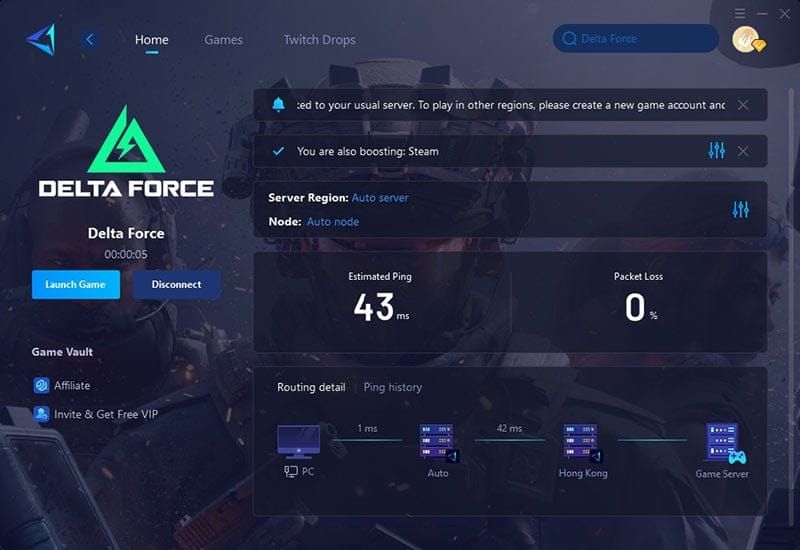
e ready for ranked queues. Fluctuations above 150ms? Delay competitive play until you've resolved the underlying issues.
Network Configuration Solutions
Router Port Forwarding Setup
Port forwarding eliminates NAT-related matchmaking failures by creating direct communication channels—and yes, this actually makes a measurable difference.
Access your router admin panel (typically 192.168.1.1 or 192.168.0.1) and configure these specific ports: (1) TCP Ports 27015-27030, 27036-27037 for Steam integration, (2) UDP Ports 3478, 4379-4380, 27000-27031 for game traffic, (3) Platform-specific ports per console manufacturer documentation.
Critical detail here: set port forwarding rules to your gaming device's static IP address. Dynamic IPs change periodically, breaking your carefully configured settings. Assign static IPs through router DHCP reservation using your device's MAC address.
Quality of Service (QoS) prioritization complements port forwarding by allocating bandwidth priority to game traffic. Configure QoS to High for Delta Force executable files and associated ports. This reduces jitter to 0% and targets under 5ms variance—this exact configuration resolved those brutal 1100ms spike issues reported in Poland on December 4, 2024.
Firewall Exception Rules
Windows Defender Firewall and third-party security software frequently block Delta Force matchmaking packets, causing connection timeouts that look identical to server-side issues.
Create explicit allow rules for: Inbound connections (Delta Force game executable), Outbound connections (Steam client, platform launchers, anti-cheat services), Network discovery (enable for private networks to facilitate lobby discovery).
Navigate to Windows Security > Firewall & Network Protection > Allow an app through firewall. Add Delta Force and related services to both Private and Public network lists—yes, both are necessary.
Verify anti-cheat components (G.T.I. detection services) have unrestricted access to prevent false positive bans appearing as queue penalties. Add Delta Force installation directories to antivirus exclusion lists: game installation folder (typically C:\Program Files\Delta Force), user data directory (AppData\Local\DeltaForce), temporary file cache locations.
And here's something critical: avoid SOCD keyboards, overlays, and monitor crosshairs during gameplay. These trigger G.T.I. detection resulting in bans ranging from hour-long suspensions to 10-year hardware bans. Not worth the risk.
DNS Server Optimization
Default ISP DNS servers introduce latency through inefficient routing and outdated cache entries—switching to high-performance alternatives provides immediate improvements.
Switch to these DNS servers in your network adapter settings: Primary DNS 8.8.8.8 (Google Public DNS), Secondary DNS 1.1.1.1 (Cloudflare DNS), Alternative 208.67.222.222 (OpenDNS).
Flush DNS cache after configuration changes using Command Prompt:ipconfig/flushdns. This clears outdated server address mappings causing connection failures to recently updated infrastructure.
Force IPv4 connections to avoid IPv6 routing issues. Many ISPs provide incomplete IPv6 implementations that introduce packet loss and routing delays. Disable IPv6 in network adapter

properties or router settings, prioritizing stable IPv4 pathways instead.
Reboot your modem and router after DNS changes—minimum 30 seconds power-off to clear temporary routing tables and establish fresh connections to optimized DNS servers.
Advanced Troubleshooting Methods
Network Diagnostic Tools
Professional-grade diagnostics identify root causes beyond basic connectivity tests, and you don't need expensive software to run them.
The Tab scoreboard displays real-time ping during matches, but comprehensive analysis requires command-line tools. Executeping[gateway IP]-t continuously during gameplay to monitor local network stability. Normal performance shows consistent 15ms responses with 4-5ms jitter. Spikes above 50ms or packet loss above 1% indicate local network congestion requiring QoS configuration or hardware upgrades.
Test ISP routing quality withping137.221.105.2-t targeting Delta Force server infrastructure. Consistent responses under 60ms confirm ISP quality, while fluctuations between 100-300ms suggest contacting your provider for routing optimization.
Enable Performance Parameters in game Settings for real-time FPS, latency, and packet loss monitoring during matches. This reveals correlation between performance drops and connection instability that you might otherwise miss.
Connection Stability Testing
Sustained stability testing under load conditions reveals intermittent issues that brief diagnostics completely miss.
Run extended ping tests during peak gaming hours (6-11 PM local time) when network congestion peaks: (1) 30-minute continuous ping to gateway and game servers, (2) Packet loss tracking (acceptable threshold under 0.5% for competitive play), (3) Jitter measurement (target under 5ms variance for consistent hitreg), (4) Bandwidth saturation tests (verify upload/download speeds meet minimum 10 Mbps up/50 Mbps down).
Switch to wired Ethernet connections for stability testing. Wireless introduces variable latency from interference, signal strength fluctuations, and competing device traffic. I can't stress this enough—if you're experiencing connection issues and you're on Wi-Fi, that's probably your problem right there.
Background application bandwidth consumption sabotages connection stability in ways that aren't immediately obvious. Close streaming services, cloud backup software, and automatic update processes before gaming sessions. Task Manager's Network tab identifies bandwidth-consuming processes requiring termination or scheduling outside gaming hours.
Packet Loss Analysis
Packet loss manifests as rubberbanding, hit registration failures, and sudden disconnections during matchmaking—and it's often the hidden culprit behind issues players blame on bad servers.
Runpathping137.221.105.2 for comprehensive route analysis showing packet loss at each network hop between your device and Delta Force servers. This 5-minute test reveals whether loss occurs at your ISP, intermediate backbone providers, or game server infrastructure.
Acceptable packet loss thresholds for competitive play: 0% loss (ideal performance, no connection-related gameplay impact), 0.1-0.5% loss (minimal impact, occasional minor desync), 0.5-1% loss (noticeable rubberbanding, reduced hitreg consistency), Above 1% loss (severe gameplay disruption, frequent disconnections).
ISP-level packet loss requires provider intervention. Document pathping results showing loss percentages and affected network hops when contacting technical support. Request routing optimization or infrastructure upgrades if loss consistently exceeds 0.5% during peak hours. Be persistent—first-tier support often dismisses these complaints, but the data doesn't lie.
Platform-Specific Matchmaking Fixes
Steam Integration Issues
Steam client conflicts cause matchmaking authentication failures and lobby connection errors that can look deceptively like game-side problems.
Verify game file integrity through Steam Library > Delta Force > Properties > Local Files > Verify integrity of game files. This replaces corrupted files preventing proper server authentication—and it's surprising how often this simple step resolves unfixable connection issues.
Steam overlay interference triggers false positive cheat detection. Disable overlay for Delta Force specifically in Steam Settings > In-Game > Enable Steam Overlay while in-game (uncheck). This prevents the G.T.I. system from flagging overlay hooks as unauthorized memory access, avoiding those hour-long to 10-year bans.
Clear Steam download cache to resolve authentication token corruption: Steam > Settings > Downloads > Clear Download Cache. This forces fresh authentication handshakes with Delta Force servers, eliminating stale session data causing connection rejections.
Launch Steam as administrator to ensure proper network permissions: right-click Steam shortcut > Properties > Compatibility > Run this program as administrator. Windows permissions can block network operations in subtle ways that don't generate obvious error messages.
Console Network Settings
Console-specific network configurations optimize matchmaking performance in ways that differ significantly from PC setups.
PlayStation 5 Optimization: Connection Type (Wired LAN, disable Wi-Fi), MTU Settings (Automatic, typically 1500), Proxy Server (Do Not Use), DNS Settings (Manual: 8.8.8.8 primary, 1.1.1.1 secondary).
Xbox Series X/S Optimization: Network Transfer (Wired connection), DNS Settings (Manual: 8.8.8.8, 1.1.1.1), Alternate MAC Address (Clear to force network reset), Port Forwarding (Enable UPnP in router settings).
Test NAT type after configuration changes. Open NAT provides optimal matchmaking connectivity, while Moderate NAT introduces minor delays and Strict NAT causes frequent connection failures. If you're stuck on Strict NAT, port forwarding is mandatory—there's no workaround.
Console input lag of 16.7ms versus PC's 6.9ms creates synchronization challenges in crossplay matches. Disable crossplay in Delta Force Settings to create console-only lobbies with uniform input timing, improving hit registration consistency and reducing desync-related disconnections.
Mobile Connection Optimization
Mobile platform matchmaking faces unique challenges from cellular network variability and device performance limitations—and the anti-cheat system watches mobile connections more closely.
The 552 mobile bans issued during the December 27-January 2 anti-cheat wave (compared to 1,786 PC bans) indicate heightened scrutiny of mobile connections. The system seems more suspicious of mobile players, probably due to higher rates of connection instability and emulator usage.
Optimize mobile matchmaking: Wi-Fi over cellular (use 5GHz Wi-Fi networks for reduced interference and higher bandwidth), Background app restrictions (close all non-essential apps to maximize available RAM and network resources), Battery optimization exceptions (disable battery saving for Delta Force to prevent CPU throttling), Graphics settings reduction (lower visual quality to maintain stable frame rates and reduce processing overhead).
Mobile VPN usage carries ban risks post-June 15, 2025, when developers began issuing 7-day bans for security abuse. Avoid VPNs that add routing overhead and trigger anti-cheat flags—it's just not worth the risk.
Preventing Future Queue Penalties
Pre-Game Connection Checks
Systematic pre-game diagnostics prevent mid-match disconnections triggering queue penalties—and honestly, this 5-minute investment saves hours of frustration.
Implement this checklist before entering ranked queues: (1) Gateway ping test (ping[gateway IP]-t for 60 seconds, verify under 20ms with zero packet loss), (2) Server connectivity test (ping137.221.105.2-t for 60 seconds, confirm under 100ms responses), (3) Background process audit (close bandwidth-consuming applications via Task Manager), (4) Network adapter reset (disable/enable network adapter to clear temporary routing issues), (5) Game file verification (run platform-specific integrity checks if experiencing recent crashes).
Monitor official Team Jade social media and Discord channels for server maintenance announcements. The game remains in alpha testing on PC, with Q1 2025 global launch and December 5 beta milestones indicating ongoing infrastructure changes. What works today might break tomorrow during updates.
Check server status through official channels before extended gaming sessions. High-traffic events like Luck's Favors (December 4-10, 2025) and potential November 18 Ahsarah downtime impact matchmaking stability in predictable ways.
Stable Network Maintenance
Long-term network stability requires proactive maintenance—think of it as preventive medicine for your connection.
Schedule these monthly tasks to prevent gradual performance degradation: Router firmware updates (check manufacturer websites for security patches and performance improvements), Ethernet cable inspection (replace cables showing physical damage or exceeding 5-year service life), Dust removal from networking equipment (overheating routers introduce packet processing delays), ISP speed verification (run bandwidth tests confirming contracted speeds, contact provider if consistently underperforming).
Implement Windows Ultimate Performance power plan to prevent CPU throttling during intensive matchmaking periods. This configuration maintains maximum processor states, eliminating performance dips causing temporary connection instability during server handshakes.
NVIDIA Reflex On + Boost settings steady netcode processing and provide +2-3 FPS improvements. Combined with V-Sync Off and FOV 105-115 configurations, these optimizations reduce client-side processing delays that compound network latency issues.
Optimal Gaming Environment Setup
Environmental factors beyond network configuration impact matchmaking stability in ways most players completely overlook.
Physical Setup: Direct Ethernet connection from modem to gaming device (eliminate intermediate switches when possible), dedicated electrical circuit for gaming equipment to prevent power fluctuations, Uninterruptible Power Supply (UPS) for protection against brief power interruptions.
Software Environment: Disable automatic Windows updates during gaming hours (reschedule to 3-6 AM), configure antivirus scans for off-peak periods (avoid 6-11 PM), close Discord, streaming software, and browser tabs before competitive queues.
Party Composition: Limit parties to 4 players maximum to reduce matchmaking complexity, verify all party members have stable connections before queuing, establish communication protocols for reporting connection issues mid-match.
Playing during off-peak hours (2-8 AM local time) provides sub-2-minute queue times with reduced server load. The 917k player base across 3,663 servers ensures sufficient population for fast matching outside peak congestion periods while maintaining SBMM quality through flexible skill pools. It's not the most convenient timing, but if you're serious about avoiding queue penalties, it's the most reliable approach.
Server Status and Communication
Official Server Monitoring
Real-time server status awareness prevents queuing during infrastructure issues that guarantee disconnect penalties—because there's nothing more frustrating than getting penalized for problems completely outside your control.
Monitor these official sources before gaming sessions: Team Jade Discord (real-time announcements of server issues and emergency maintenance), Official social media (Twitter/X accounts posting scheduled downtime windows), In-game notifications (client-side alerts appearing on main menu during active incidents).
The Code of Conduct update on December 12, 2024, coincided with KernelBase upgrades contributing to queue changes in high ranks. These infrastructure modifications produced those brutal 10-30 minute Colonel+ queues despite 250k concurrent players, demonstrating how backend changes impact matchmaking independent of player population. Server-side validation improvements and upcoming dynamic memory scans (ChaCha20/AES-128 encryption) aim to restore sub-2-minute off-peak queues while maintaining anti-cheat effectiveness.
Community Status Updates
Community-driven status reporting supplements official channels with real-time player experiences—but you need to filter signal from noise.
Cross-reference community reports for accuracy: Multiple independent reports (3+ players reporting identical issues suggests legitimate server problems), Geographic correlation (region-specific complaints indicate localized infrastructure issues), Timestamp clustering (issues reported within 15-minute windows confirm active incidents versus isolated problems).
The December 27-January 2 ban wave removing 2,376 players generated community reports of improved high-rank queue quality despite longer wait times. This 25% reduction in cheater populations validated anti-cheat effectiveness while highlighting SBMM pool constraints—fewer players to match with means better match quality but longer waits.
Community consensus on optimal settings provides practical guidance beyond official documentation. Those recommended deadzone 10/80, hipfire sensitivity 450/300, and ADS 200/150 configurations emerged from collective player testing across console platforms, not from developer recommendations.
Maintenance Schedule Awareness
Predictable maintenance patterns allow strategic queue timing to avoid disconnect penalties—and the patterns are more consistent than you might think.
Historical analysis reveals maintenance scheduling tendencies: Tuesday/Wednesday 2-6 AM UTC (primary maintenance window for backend updates), Post-major event (24-48 hours after events like Luck's Favors conclude on December 10, 2025), Monthly patch cycles (first Tuesday of each month for routine updates).
Season 6 (September 23) and Season 7 (November 18) patches refined SBMM fairness and potentially affected queue penalty mechanics. These major updates typically require 2-4 hour maintenance windows with extended post-patch instability periods.
Avoid queuing during the first 6 hours following major patches. Server load spikes from returning players combined with potential undiscovered bugs create high disconnect risk. Let the early adopters be the guinea pigs.
Alternative Matchmaking Strategies
Custom Game Options
Custom games bypass public matchmaking infrastructure entirely, eliminating queue penalties and connection timeout risks—and sometimes that's exactly what you need.
Host private lobbies with controlled parameters: Friend-only sessions (invite trusted players with verified stable connections), Regional restrictions (manually select participants from your geographic area for optimal ping), Flexible team sizes (adjust player counts to available participants rather than waiting for public matchmaking).
Custom games sacrifice SBMM balancing for connection reliability. Skill disparities may produce unbalanced matches, but guaranteed sub-60ms ping and zero queue penalty risk provide valuable practice environments during public matchmaking instability.
Bot fill options address player shortage in custom sessions. While AI opponents lack human unpredictability, they maintain gameplay flow during troubleshooting periods when public queues prove unreliable.
Friend Lobby Systems
Coordinated friend lobbies leverage social connections for stable matchmaking experiences—and in my experience, this is one of the most underutilized strategies for avoiding penalties.
Establish regular gaming groups with members demonstrating consistent connection quality: (1) Vet participants (require voice communication and connection stability demonstrations before permanent group inclusion), (2) Schedule sessions (coordinate gaming times to ensure full party availability, reducing reliance on public matchmaking), (3) Rotate hosts (distribute hosting responsibilities to members with optimal network infrastructure).
Four-player party limits optimize matchmaking speed while maintaining social gameplay. Larger groups exponentially increase matchmaking complexity, contributing to those 10-30 minute Colonel+ queue times. Restrict parties to 4 members maximum for balance between social experience and queue efficiency.
Regional Server Selection
Despite lacking manual server region selection in standard matchmaking, alternative approaches can force regional assignment—though they require some persistence.
Cross-Region Matchmaking Fix Process: (1) Select target server/region through VPN or routing software (use cautiously post-June 15, 2025 ban risks), (2) Boost route and restart game launcher (Steam or platform client), (3) Requeue 5-10 times if assigned to mismatched servers, (4) Contact support with server selection, match time (including timezone), in-game server screenshot, and error symptoms.
This method resolves Europe-Frankfurt assignment issues where players receive wrong server allocations causing 300+ms ping. While requiring multiple requeue attempts, it eventually forces appropriate regional assignment through matchmaking rotation.
Expand server zone awareness for Southeast Asian players experiencing long queues. Japan, Hong Kong, Australia, and China servers provide alternative options when primary regional servers show extended wait times. Sometimes the solution is just trying a different region entirely.
FAQ
How long do Delta Force queue abandon penalties last?
Queue abandon penalties start at 1 hour for first offenses and escalate to 24 hours, 72 hours, and up to 10-year hardware ID bans for repeated violations. Each abandonment incurs a -15 rank reputation penalty that persists until earned back through successful match completions.
Why does Delta Force keep disconnecting during matchmaking?
Disconnections primarily result from skill-based matchmaking prioritizing player statistics over server proximity, causing 120-180ms ping assignments to distant servers. Network issues like packet loss above 1%, firewall blocking game ports, or ISP routing problems compound these SBMM-related connection failures.
Can you appeal Delta Force queue penalties?
Yes, submit appeals through game launcher tickets after filing in-game reports. False positives from VPN usage, overlays, or monitor crosshairs can be resolved in days, even for 10-year HWID bans. Close all third-party software, disable VPNs, and provide detailed incident descriptions when appealing.
What causes Delta Force connection timeout errors?
Connection timeouts stem from automatic server assignment without manual region selection, firewall blocking required ports (TCP 27015-27030, UDP 3478, 4379-4380), DNS server inefficiencies, or ISP routing issues. The absence of regional server choice forces players onto distant servers exceeding 150ms ping thresholds.
How to fix Delta Force unable to join match error?
Verify game files through platform clients, configure router port forwarding for required game ports, create firewall exceptions for Delta Force executables, switch to public DNS servers (8.8.8.8, 1.1.1.1), and use wired Ethernet connections. Test connectivity withping137.221.105.2-t to confirm server accessibility under 100ms.
Does VPN affect Delta Force matchmaking?
VPNs introduce routing overhead increasing latency and trigger anti-cheat detection resulting in 7-day to 10-year bans post-June 15, 2025. Avoid VPN usage during matchmaking to prevent false positive flags and connection instability from additional network hops adding 50-150ms latency.