

The Bigo Live Global Family Tournament runs December 6-14, 2026, featuring three competitive tracks where whale spenders with 50,000+ diamonds budgets can secure top-tier rankings. This guide breaks down phased budget allocation, peak-hour spending optimization with DER rates of 1.4-1.5, and coordinated deployment tactics across Promotion, Group, Semifinal, and Finals stages.
Understanding Whale Strategy in Bigo Live Family Battle 2026
Whale strategy means coordinated high-budget approaches where individual contributors deploy 50,000+ diamonds to secure top family rankings. Tournament phases: Promotion Matches (December 6-7), Group Matches and Revival Matches (December 8-10), Semifinals (December 11-12), Regional Finals plus Intercontinental/Global Finals at midnight GMT+8 on December 13.
Three competitive tracks: Beyond Self, Best Partner, Unstoppable Spirit. Combat Point (CP) system: 1 Bean received = 1 CP, 1 Diamond sent = 1 CP. Diamond Efficiency Ratio (DER) = Total CP ÷ Diamonds Spent.
Rank 1-3 positions require 800,000-1,200,000 Diamonds total. Buy bigo live diamonds for family battle through BitTopup at $0.0196 per Diamond vs in-app $0.0314, maximizing budget efficiency.
Core whale contributors: 10-member nucleus, each committing 50,000+ Diamonds for 500,000+ combined total.
Defining Whale Status: 50,000+ Diamonds Threshold
50,000 diamonds = minimum whale-tier influence, positioning contributors in top 5-10% of participants. Rank 4-10 families need 400,000-800,000 Diamonds total.
Whale responsibilities: coordinate with mid-tier contributors (30 members at 10,000-20,000 Diamonds each) and grassroots supporters (60+ members at 1,000-5,000 Diamonds each) for synchronized spending waves maximizing DER during peak windows.
Strategic value: deployment flexibility, sustained presence across phases, psychological pressure, critical reserve capacity for final-hour surges.
December 2026 Tournament Format and Rule Changes
Tournament Structure:
Promotion Matches (Dec 6-7): Qualification rounds
Group Matches (Dec 8-10): Revival Match opportunities
Semifinals (Dec 11-12): Intensified spending phase
Finals (Dec 13, midnight GMT+8): Decisive final-hour tactics
Leaderboard updates every 15 minutes create tactical deployment windows.
Eligibility Requirements:
Level 10+ family leader
5 initial same-region members
30 consecutive days with 10+ members
5+ family events monthly
Maximum 100 members
Why Strategic Planning Matters for Large Budgets
Unplanned whale spending creates three vulnerabilities: premature budget exhaustion, suboptimal DER capture, psychological disadvantage during final hours.
DER variance: peak hours (19:00-23:00 GMT+8) yield 1.4-1.5 vs off-peak 1.0-1.2 = 20-40% CP differences from timing alone.
Common failure pattern: front-loading 60-70% budget during Promotion/Group stages, leaving insufficient reserves for Semifinals/Finals when competitive intensity peaks.
Expected ROI and Family Ranking Objectives
Tournament offers 200,000 Beans per track prize pool. Rank 1-3 families investing 800,000-1,200,000 Diamonds secure disproportionate shares.
Ranking Requirements:
Rank 1-3: 10 whales at 50,000+ each
Rank 4-10: 6-8 core whales + robust mid-tier
Rank 11-50: 3-4 whales (150,000-400,000 total)
Beyond prizes: broadcaster loyalty, family reputation, BIGO Awards Gala 2026 recognition (Seoul, January 23, 2026).
Complete 50,000+ Diamonds Budget Allocation Framework
Phased Distribution:
Promotion stage: 15-20% (7,500-10,000 diamonds)
Group stage: 30-35% (15,000-17,500 diamonds)
Semifinals: 20-25% (10,000-12,500 diamonds)
Finals: 25-30% (12,500-15,000 diamonds)
Emergency reserves: 10-20% (5,000-10,000 diamonds)
Phase 1: Pre-Tournament Preparation (10% - 5,000 Diamonds)
Allocate 5,000 diamonds for practice during Host Championship (November 22-30, 2026). Test communication protocols, gift combo timing, broadcaster support rotation patterns.
Functions: technical system validation, psychological team building, competitor intelligence gathering.
Document broadcaster streaming schedules, peak performance hours, audience engagement patterns.
Phase 2: Opening Days Momentum Building (25% - 12,500 Diamonds)
Promotion Matches (Dec 6-7): Deploy 12,500 diamonds, 60% concentration on December 7.
Target peak hours (19:00-23:00 GMT+8) for 70% of Phase 2 spending. 100-diamond gift during peak = 140-150 CP vs 100-120 CP off-peak.
Coordinate with mid-tier contributors for synchronized spending waves. High-value gifts: Love Carriage (29,999 Diamonds), Gala Dragon (9,999 Diamonds).
Phase 3: Mid-Tournament Sustained Pressure (35% - 17,500 Diamonds)
Group Matches (Dec 8-10): 17,500 diamonds across three days. Daily distribution: 30%-35%-35% (5,250 / 6,125 / 6,125 diamonds).
Top up bigo diamonds cheap web recharge through BitTopup ensures sufficient balance with fast delivery.
Track competitor spending every 2-4 hours. If competitors decline, reduce deployment 10-15%. If intensify, activate emergency reserves selectively.
Multi-guest streaming (max 12 users): Rotate whale support among 3-4 primary broadcasters.
Phase 4: Final Push Emergency Reserves (30% - 15,000 Diamonds)
Semifinals/Finals: 15,000 diamonds combined. Semifinal allocation: 8,000 diamonds (Dec 11-12). Finals: 7,000 diamonds (Dec 13).
Finals Day T-6 Hours Framework:
T-6 hours: 40% (2,800 diamonds)
T-3 hours: 30% (2,100 diamonds)
T-1 hour: 30% (2,100 diamonds) in 15-minute waves
Final 6 hours require 20-30% of total tournament budget concentration.
Maintain 10-20% emergency reserves throughout tournament.
Daily and Hourly Diamond Distribution Battle Plan
Daily baseline: 5,500 diamonds average across 9-day tournament. Hourly caps: 1,500-2,000 diamonds peak hours, 500-800 diamonds off-peak.
Real-time adjustment triggers: If ranking drops 3+ positions within 1 hour, activate 10% emergency reserve. If improves 5+ positions, reduce hourly spending 15%.
Peak Hours vs Off-Peak Spending Efficiency Analysis
Peak hours (19:00-23:00 GMT+8): DER 1.4-1.5 = 140-150 CP per 100 diamonds. Off-peak DER 1.0-1.2 = 100-120 CP. 20-40% efficiency differential.
Optimal allocation: 65-70% daily budget during peak 4-hour window. For 5,500 daily allocation, deploy 3,500-3,850 diamonds during 19:00-23:00 GMT+8.
Off-peak spending: 200-500 diamonds per hour for continuous leaderboard presence.
Weekend Finals (Dec 13-14): 15-20% higher hourly allocation vs weekday Group Matches.
Hourly Spending Caps to Maintain Budget Discipline
Strict Hourly Caps:
Peak hours: 2,000 diamonds maximum
Off-peak: 800 diamonds maximum
Three-Tier Allocation:
Tier 1 (Promotion/Group): 1,200-1,500 peak, 500-600 off-peak
Tier 2 (Semifinals): 1,500-1,800 peak, 600-700 off-peak
Tier 3 (Finals): 2,000-2,500 peak, 800-1,000 off-peak
When approaching limits, pause 15-30 minutes to reassess leaderboard dynamics.
Coordinate caps across whale team. Rotate primary deployment responsibility when individual reaches hourly cap.
Real-Time Adjustment Triggers Based on Leaderboard Position
Leaderboard updates every 15 minutes create tactical windows.
Three Triggers:
Position Drop: Ranking declines 3+ positions within 1 hour → activate 10% emergency reserve over next 2 hours
Position Surge: Ranking improves 5+ positions within 1 hour → reduce hourly spending 15%
Stagnation: Ranking unchanged 2+ hours during peak → rotate broadcaster support, adjust gift selection
Weekend vs Weekday Spending Pattern Optimization
Weekend Finals (Dec 13-14): 40% higher daily allocation vs weekday. For 50,000 total budget: 8,000-10,000 diamonds weekend days vs 4,000-6,000 weekdays.
Weekday Distribution (Dec 6-12):
Monday-Tuesday: 4,000 diamonds daily
Wednesday-Thursday: 5,000 diamonds daily
Friday: 6,000 diamonds (weekend transition)
Weekend peak hours: 18:00-24:00 GMT+8 (extended from standard 19:00-23:00).
Competitor spending intensifies 25-35% weekends. Anticipate proportional allocation increases.
Gift Combo Multipliers and Point Maximization Tactics
Combo multipliers amplify CP values 1.2x to 1.8x based on sequential gifting within 30-60 seconds.
High-value anchors: Love Carriage (29,999 Diamonds), Gala Dragon (9,999 Diamonds). Coordinate anchor timing with mid-tier follow-up for synchronized waves.
Establish combo windows during peak hours (typically :00, :15, :30, :45 minutes each hour).
Understanding 2026 Gift Combo Calculation Mechanics
Multiplier Variables:
Gift value concentration
Sequential timing precision (30-second windows)
Contributor diversity
Base multiplier: 1.0x individual gifts, increasing 0.1x per additional gift within 30 seconds, max 1.8x for 8+ sequential gifts from different contributors.
10,000+ diamond anchors achieve full 1.8x max. 1,000-5,000 diamond anchors cap at 1.5x.
Gaps exceeding 30 seconds reset multiplier to 1.0x.
High-Value Gift Selection for Whale Budgets
Love Carriage (29,999 Diamonds): Optimal whale anchor for Rank 1-3 families. With 7 follow-up gifts at 1.8x multiplier = 53,998 CP vs 29,999 CP isolated (80% efficiency gain).

Gala Dragon (9,999 Diamonds): Secondary anchor for Semifinals/Group stages. 1.8x multiplier yields 17,998 CP.
Mid-range gifts (1,000-5,000 diamonds): Combo chain extenders for off-peak hours.
Align gift selection with broadcaster preferences and audience engagement patterns.
Timing Gift Chains for Maximum Multiplier Effects
Target :15 and :45 minutes each hour during peak (19:00-23:00 GMT+8), aligning with 15-minute leaderboard updates.
Pre-announce combo windows 5 minutes advance. Designated combo caller initiates countdown (10-5-GO).
Execute 2-3 major combo chains per peak-hour period (8-12 daily during Group/Semifinals, 15-20 during Finals). Space 45-60 minutes apart.
Monitor competitor combo patterns for counter-timing opportunities.
Coordinating Combo Chains with Family Members
Three-Tier Structure:
Whale Anchors: 10 core contributors, 10,000+ diamond gifts
Mid-Tier Extenders: 30 contributors, 1,000-5,000 diamond gifts
Grassroots Amplifiers: 60+ contributors, 100-500 diamond gifts
Whale Anchors: 5-minute advance notice, precise timing. Mid-Tier Extenders: 3-minute notice, 30-second windows. Grassroots: General encouragement, spontaneous participation.
Multi-guest streaming (max 12 users): Distribute whale anchors across 3-4 simultaneous broadcaster streams (2-3 per stream).
Post-combo analysis: Review multiplier achievement, timing precision, contributor participation. Document successful patterns.
Multi-Broadcaster Support Rotation Strategy
Distribute support across 3-5 primary broadcasters vs single talent concentration. Prevents diminishing returns, maintains comprehensive CP generation, builds strategic flexibility.
Selection Criteria:
Streaming schedule consistency during peak hours
Audience engagement generating organic support
Performance under competitive pressure
Balance: Promotion/Group favor 60-40 distribution (60% primary, 40% across 2-3 secondaries). Semifinals/Finals shift to 70-30 or 80-20 concentration.
Identifying Primary vs Secondary Support Targets
Primary Target Characteristics:
Peak-hour availability (19:00-23:00 GMT+8) 5+ days per week
Established audience (20%+ organic CP contribution)
Proven coordination capability
Evaluate during Host Championship (Nov 22-30, 2026). Document streaming schedules, audience metrics, responsiveness.
Secondary targets: 3-4 broadcasters with complementary schedules. Allocate 15-20% whale budget for rotation.
Maintain minimum 3-broadcaster rotation preventing over-reliance vulnerability.
Balancing Concentrated vs Distributed Diamond Spending
Phase-Based Balance:
Promotion (Dec 6-7): 50-50 or 60-40 distribution
Group (Dec 8-10): 60-40 moderate distribution
Semifinals (Dec 11-12): 70-30 increased concentration
Finals (Dec 13): 80-20 maximum concentration
Monitor broadcaster CP efficiency (total CP per diamond spent including organic audience). 1.6+ DER justifies increased concentration. 1.2-1.3 DER indicates distribution needed.
Coordinate with other whales preventing redundant over-concentration.
Broadcaster Availability Schedule Integration
Document detailed streaming schedules during preparation. Optimal primary targets: 5+ days weekly during 19:00-23:00 GMT+8.
If primary streams 20:00-23:00 GMT+8, concentrate 70% daily peak allocation within that window. Reserve 30% for secondary supporting 19:00-20:00.
Weekend variations: Many broadcasters extend 2-3 hours beyond weekday patterns. Confirm weekend commitments before tournament.
Contingency protocols: Designate secondary as immediate backup for primary technical issues.
Avoiding Diminishing Returns from Over-Concentration
Broadcasters with 100-200 concurrent viewers optimally absorb 15,000-25,000 diamonds daily whale support. Exceeding generates CP at base rates without multiplier benefits.
Monitor audience engagement during whale deployment. If concurrent viewers decline during heavy gifting, reduce concentration 20-30%.
Calculate broadcaster CP efficiency hourly. If drops below 1.3 DER during peak hours, pause 30-60 minutes.
Establish maximum daily thresholds per broadcaster (25,000-35,000 diamonds from all whale sources combined).
Whale Leadership and Team Coordination Protocols
Whale leadership: strategic coordination, team morale management, real-time tactical decisions.
Designate primary whale leader + 2-3 sub-leaders. Primary manages overall strategy, budget pacing, major decisions. Sub-leaders oversee: broadcaster rotation, combo timing, mid-tier mobilization, competitor intelligence.
Communication Systems for Real-Time Battle Coordination
Primary channel: Dedicated messaging app/voice chat with clear protocols.
Three-Tier Structure:
Leadership Channel: Whale leaders only, strategic decisions
Whale Coordination Channel: All whale contributors, tactical execution
Family General Channel: All members, morale and updates
Regular Checkpoints:
18:30 GMT+8: Daily pre-peak briefing
21:00 GMT+8: Mid-peak status update
23:30 GMT+8: Post-peak debrief
Emergency protocols: Designate sub-leader decision authority when primary unavailable.
Delegating Sub-Whale Roles and Responsibilities
Specific Roles:
Budget Monitor: Tracks expenditure vs phase allocations, alerts on deviations
Combo Coordinator: Manages combo timing, calls countdowns, tracks multipliers
Broadcaster Liaison: Maintains broadcaster communication, coordinates schedules
Competitor Analyst: Monitors competing families, identifies opportunities
Align roles with individual strengths. Conduct role-specific training during preparation phase.
Clear decision authority boundaries. Budget Monitor recommends but requires leader approval for 15%+ changes. Combo Coordinator has autonomous authority within pre-approved windows.
Monitoring Competitor Spending Patterns
Track every 2-4 hours: total CP accumulation rate, peak vs off-peak distribution, apparent whale count, combo coordination sophistication.
Exhaustion Signals:
Declining peak-hour gift frequency
Reduced combo chain length
Increased gaps between major deployments
Monitor broadcaster rotation revealing strategic priorities. 80%+ single broadcaster concentration = vulnerability to counter-strategies.
Document competitor response patterns to your tactics. Adjust timing to compress their response windows.
Emergency Response Plans for Unexpected Challenges
Five Common Scenarios:
Primary Broadcaster Unavailability: Immediate secondary activation, minimal delay
Whale Contributor Dropout: Distribute planned allocation across remaining whales (5,000-7,000 each for 8-10 remaining)
Competitor Unexpected Surge: Analyze source before responding. Sustainable surge → activate 10-15% emergency reserves
Technical Platform Issues: Screenshot with timestamps, contact support, preserve emergency reserves for makeup spending
Leaderboard Calculation Disputes: Document discrepancies, escalate through priority channels
Diamond Acquisition Strategy for Tournament Preparation
Bulk purchase 2-3 weeks before December 6 start captures promotional bonuses while allowing payment processing completion.
Optimal timing: late November (Nov 20-30) following Host Championship, preceding tournament start.
Account security: Enable two-factor authentication (Me > Settings > Account Security), unique strong passwords, monitor activity logs.
Bulk Diamond Purchase Timing Before December Tournament
Execute primary acquisition November 25-28, allowing 7-10 days for processing before December 6 start.
Split large acquisitions across 2-3 transactions reducing payment risk. For 50,000 budget: three transactions of 15,000-20,000 diamonds over 3-5 days.
Verify balance crediting within 24 hours. Contact support if delays exceed normal processing (5-30 minutes).
Maintain 10-15% buffer above planned budget (55,000-57,500 diamonds for 50,000 planned).
Leveraging Bonus Promotions and Special Offers
Platform promotions: 10-20% bonus diamonds on bulk purchases. 15% bonus on 50,000 = 7,500 additional (57,500 total).
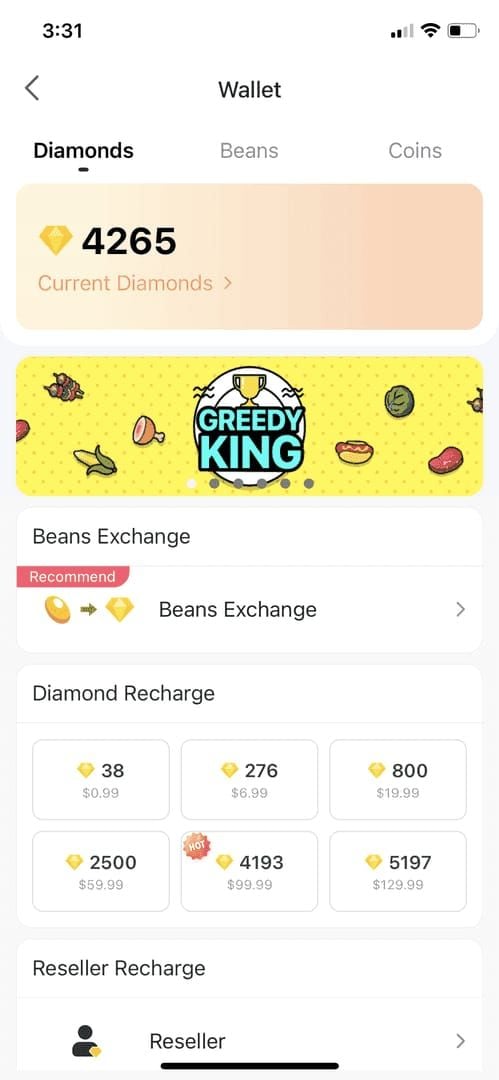
Web recharge platforms like BitTopup: $0.0196 per diamond vs $0.0314 in-app = 37% savings. For 50,000 budget: $980 web vs $1,570 in-app, saving $590.
Combine promotional bonuses with web recharge for maximum efficiency. 15% bonus at $0.0196 = effective $0.0170 per diamond, enabling 50,000 budget for ~$850 vs $1,570 in-app.
Account Security Measures for Large Diamond Balances
Enable 2FA immediately after large acquisitions. Navigate Me > Settings > Account Security, activate via authenticator app or SMS.
Use unique strong passwords (16+ characters, mixed case, numbers, symbols). Password managers generate and store complex passwords.
Monitor account activity logs daily during tournament. Review login locations, device access, transaction records.
Avoid account sharing. Account access remains exclusively with registered owner.
Payment Method Selection for High-Value Transactions
Credit cards with fraud protection and chargeback capabilities provide optimal security.
Digital payment platforms (PayPal, regional equivalents) offer additional transaction layer separating card details.
Avoid direct bank transfers or non-reversible methods for initial large purchases.
Document all transaction confirmations, payment receipts, crediting notifications.
Common Whale Strategy Mistakes and How to Avoid Them
Four core mistakes: premature budget exhaustion through front-loading, ignoring DER efficiency through poor timing, inadequate family coordination, emotional reactivity during competitive pressure.
Mistake 1: Front-Loading Budget Without Reserve Planning
Front-loading 65%+ budget during first 4 days (Dec 6-9) consistently ranks 3-5 positions below peak standings.
Avoid through strict phase allocation enforcement. Hard caps: max 20% Promotion (10,000 for 50,000 budget), max 35% Group (17,500 cumulative).
Reframe early phases as positioning/coordination testing vs decisive competitive periods. True outcomes crystallize final 48 hours (Dec 11-13).
Mistake 2: Ignoring Prime Time Efficiency Multipliers
Peak DER 1.4-1.5 vs off-peak 1.0-1.2 = 20-40% efficiency differential. Ignoring timing effectively wastes 10,000-15,000 diamonds of 50,000 budget.
Implement strict timing discipline. Pre-plan 70% daily budget for peak hours (19:00-23:00 GMT+8).
Calculate losses: 5,000 diamonds off-peak (DER 1.1) = 5,500 CP. Same 5,000 peak (DER 1.45) = 7,250 CP. 1,750 CP loss (32% reduction) from timing failure.
Mistake 3: Poor Communication with Family Members
Isolated whale spending fails to capture combo multipliers, creates redundant concentration, misses psychological impact. 20-30% lower CP efficiency vs coordinated contributors.
Establish mandatory protocols: daily coordination briefings, real-time combo announcements (5-minute advance), post-session debriefs.
Designate communication responsibility to specific sub-leaders preventing accountability diffusion.
Mistake 4: Emotional Spending During Competitive Pressure
Panic spending depletes reserves without addressing competitive dynamics, leaving vulnerability during subsequent phases.
Implement cooling-off protocols: mandatory 15-minute pause before tactical response to competitor surge/position drop.
Pre-Defined Response Thresholds:
3-5 rank drops: Analysis, no immediate spending increase
6-10 rank drops: Activate 10% emergency reserve
10+ rank drops: Full emergency response with whale leader coordination
Advanced Metrics and Performance Tracking
Key Metrics:
Diamonds-to-Points Conversion Rate (actual vs theoretical DER)
Family Contribution Percentage (whale CP ÷ total family CP)
Leaderboard Position Velocity (ranking change rate over time)
Budget Pacing Variance (actual vs planned phase allocation)
Implement real-time tracking: hourly expenditure, CP generation, efficiency metrics.
Diamonds-to-Points Conversion Rate Monitoring
Track actual DER hourly vs theoretical max (1.4-1.5 peak, 1.0-1.2 off-peak). 1.35+ during peak = effective timing/coordination. Below 1.25 during peak = timing failures.
Target daily DER: 1.3+ during Group/Semifinals, 1.35+ during Finals.
Compare individual whale DER. 1.4+ = superior discipline. 1.1-1.2 = requires coaching.
Family Contribution Percentage Benchmarks
Healthy families targeting Rank 1-10: 60-70% whale contribution, 20-25% mid-tier, 10-15% grassroots.
Whale percentages exceeding 80% indicate insufficient mid-tier mobilization.
Monitor trends across phases. Increasing whale percentage (65% Promotion → 75% Finals) suggests mid-tier exhaustion requiring re-mobilization.
Leaderboard Position Velocity Analysis
Track positions gained/lost per hour during peak periods. Positive velocity (+2 to +5) = effective pressure. Negative velocity (-2 to -5) = competitor advantages.
Sudden velocity shifts (+3 to -4) indicate competitor tactical changes requiring immediate analysis.
Expected Velocity Ranges:
Promotion/Group: ±3 positions per hour
Semifinals/Finals: ±5-8 positions per hour
Post-Tournament ROI Assessment Framework
Calculate total investment (diamond expenditure × per-diamond cost) vs returns (prize pool, broadcaster relationships, reputation).
Document strategic successes/failures for future application. Successful patterns become baseline frameworks. Failures inform protocol adjustments.
Assess individual whale performance identifying high performers for leadership roles, struggling contributors for coaching.
Compare planned vs actual execution documenting variance sources.
Final 48 Hours: Emergency Reserve Deployment Tactics
Final 48 hours (Dec 11-13 Semifinals/Finals) = decisive competitive window. Families maintaining 25-30% budget reserves consistently outperform those with superior total budgets but poor distribution.
Semifinals (Dec 11-12): Deploy 40-50% of final-phase reserves ensuring advancement while preserving 50-60% for Finals.
Finals (Dec 13): Graduated deployment: 40% at T-6 hours, 30% at T-3 hours, 30% during final hour.
Calculating Minimum Diamonds Needed for Target Ranking
At T-6 hours, document: current family CP, target ranking CP threshold, gap requiring closure. Divide gap by expected DER (1.4-1.5) for minimum diamonds needed.
Example: Current CP 850,000, Rank 3 threshold 920,000, gap 70,000. At DER 1.45: 70,000 ÷ 1.45 = 48,276 diamonds. Add 15-20% buffer: 48,276 × 1.18 = 56,966 diamonds required.
Compare minimum vs available reserves. If reserves exceed by 20%+, maintain disciplined deployment. If barely meet, consider aggressive early deployment.
Recalculate every 2 hours during final 12 hours as dynamics evolve.
Aggressive Spending Triggers and Thresholds
Three Triggers:
Position Drop Acceleration: Ranking declining 5+ positions within 2 hours → immediate 15-20% emergency reserve deployment over next 2 hours
Competitor Surge Detection: Competing family CP increasing 15%+ within 3 hours → analyze source, sustainable surges justify 20-25% emergency activation
Final Hour Proximity: T-3 hours with ranking below target → deploy 50-60% remaining reserves during T-3 to T-1 hour
Coordinating Final Push with Entire Family
Final-hour coordination: comprehensive mobilization across all contributor tiers.
Schedule T-2 hours briefing reviewing: current position, target requirements, whale reserve schedule, mid-tier mobilization, grassroots encouragement.
Execute coordinated combo chains every 15 minutes during final hour. Whale anchors deploy Love Carriage/Gala Dragon with mid-tier extenders and grassroots amplifiers.
Maintain continuous communication providing real-time leaderboard updates, competitor activity, tactical adjustments.
Psychological Warfare and Competitor Demoralization
Strategic psychological pressure through visible sustained spending creates competitor demoralization potentially triggering premature surrender or panic spending.
Execute pressure tactics at strategic moments: immediately after competitor combos, during competitor reserve deployment, at leaderboard update cycles.
Coordinate whales for synchronized high-value deployment. Three whales simultaneously deploying Love Carriage (89,997 diamonds total, 161,995 CP at 1.8x) generates overwhelming pressure.
Monitor competitor response. Reduced spending after displays = successful demoralization. Increased spending = resistance requiring sustained pressure.
Frequently Asked Questions
How many diamonds do you need to be a whale in Bigo Live Family Battle?
50,000+ diamonds individual commitment for meaningful impact. Rank 1-3 families need 10 core whales each at 50,000+ (500,000+ total whale) reaching 800,000-1,200,000 total family budget.
What is the best time to spend diamonds during Family Battle tournaments?
Peak hours (19:00-23:00 GMT+8) deliver DER 1.4-1.5 vs off-peak 1.0-1.2 = 20-40% efficiency gains. Concentrate 65-70% daily budget during peak hours, especially Semifinals (Dec 11-12) and Finals (Dec 13).
How should whales allocate 50,000 diamonds across tournament days?
Promotion 15-20% (7,500-10,000), Group 30-35% (15,000-17,500), Semifinals 20-25% (10,000-12,500), Finals 25-30% (12,500-15,000), emergency reserves 10-20% (5,000-10,000).
What percentage of diamonds should be held in reserve for final hours?
Maintain 25-30% total budget as final-phase reserves for Semifinals/Finals (Dec 11-13), with 10-20% additional emergency reserves. Final 6 hours require 20-30% total tournament budget concentration.
How do gift combos affect Family Battle leaderboard rankings?
Combos multiply CP values 1.2x to 1.8x based on sequential gifts. Love Carriage (29,999 diamonds) with 7+ follow-ups achieves 1.8x = 53,998 CP vs 29,999 isolated (80% efficiency gain).
Should whales focus on one broadcaster or spread diamonds across the family?
Promotion/Group favor 60-40 distribution (60% primary, 40% across 2-3 secondaries). Semifinals/Finals shift to 70-30 or 80-20 concentration on proven performers. Maintain minimum 3-broadcaster rotation preventing over-concentration vulnerabilities.
Ready to dominate December 2026 Family Battle? Secure your 50,000+ diamonds through BitTopup with instant delivery, $0.0196 per diamond (37% savings vs in-app $0.0314), and secure processing. Stock up before tournament – your family's victory starts with smart diamond acquisition through trusted platforms offering superior pricing, fast delivery, and excellent customer service.