

Bigo Live agency rebates determine host earnings from streaming revenue, with commission back ranging from 20% (Domestic tier) to 55% (LLC Company level). Top hosts earning 800,000+ Beans monthly negotiate premium rates using performance metrics, competitive offers, and strategic timing. This guide reveals proven tactics elite broadcasters use to maximize commission back in 2026.
Understanding Bigo Live Agency Rebates: Foundation for Success
Agency rebates represent the percentage of host earnings agencies return after taking commission. Viewers send gifts converting to Beans at 210 Beans per $1 USD. Your agency takes their commission, returning the remainder as commission back.
The tier system establishes baseline rates: Domestic agencies retain 20% monthly per host, Regional 25%, International 30%, Diamonds Reseller 40% on diamond sales plus 30% monthly, and Agency LLC Company 55% profit per package plus 55% monthly at S6 level.
For hosts maximizing revenue, platforms like BitTopup offer Bigo Live Diamonds recharge services complementing agency earnings.
Registration fees vary: Domestic $145, Regional $175, International $225, Diamonds Reseller $750, Agency LLC Company $2,950 year one plus $100 annually thereafter.
Commission Back Structures Explained
Commission back is your actual percentage after agency deductions. Earning 100,000 Beans ($476) monthly with 30% agency commission yields 70,000 Beans commission back.
Performance tiers determine earnings:
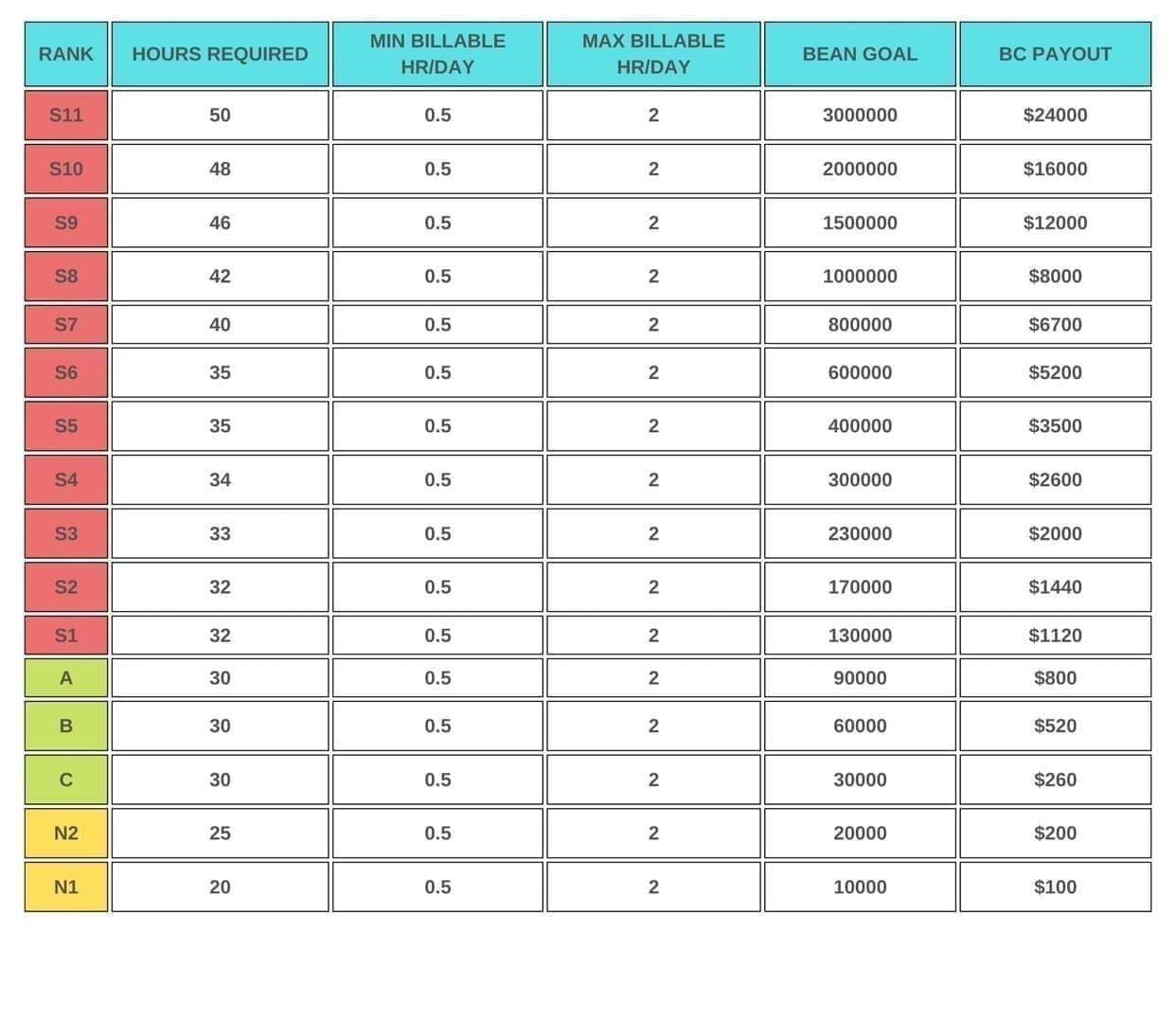
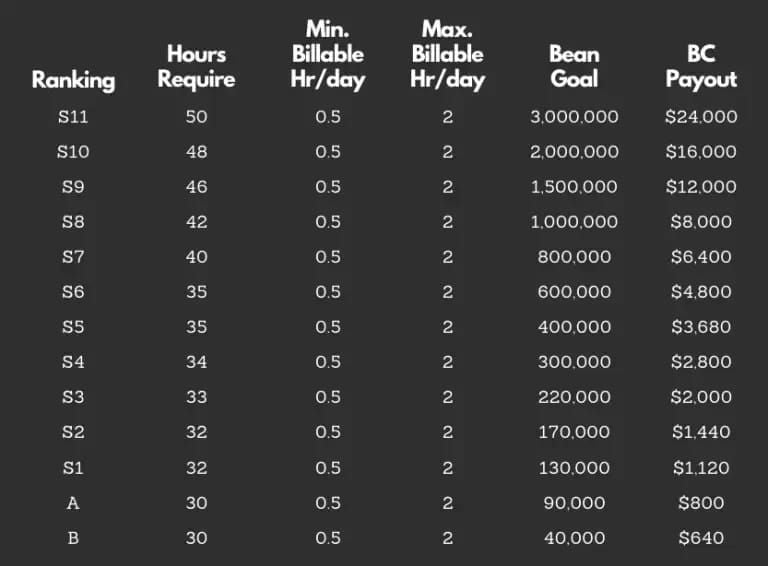
Tier 1: 20 hours, 10,000 Beans = $100-$650 monthly
Tier 2: 25-30 hours, 20,000-40,000 Beans = $250-$1,120
S1 tier: 32 hours, 130,000 Beans = $1,739 total ($1,120 base + $620 gifts)
Elite tier: 50+ hours, 800,000+ Beans = $5,000-$68,000
Agencies earn 20-40% commissions from host gifts. Top agencies generate $100,000-$200,000 monthly managing successful host portfolios.
Revenue Share vs Commission Back
Revenue share splits gross platform payments before deductions, while commission back calculates your percentage after agency costs. A 70% revenue share may deliver less than 60% commission back depending on what base amount each applies to.
Contracts mandate minimum 3-month commitments with 15-day termination notice. Payment structures include 6,700 Beans ($31.90) minimum withdrawal and 1,050,000 Beans ($5,000) weekly caps. Missing quota twice triggers 50% pay cuts.
2025-2026 Rebate Trends
Competition for top talent intensified throughout 2025-2026, driving higher commission back offers. Elite performers like Rico Tian (3.5M fans, $34,000-$68,000 monthly) command premium negotiations. Angel Chooi's $7,500 monthly demonstrates mid-tier benchmarks.
The 40,000 Beans threshold unlocks full pay tier—a critical negotiation milestone. Seasonal events like ICON Pageant (June 20-August 14) and Mid-Year Gala (July 1-30) create revenue spikes savvy hosts leverage for permanent increases.
Why Top Hosts Prioritize Optimization
Every percentage point multiplies annual earnings. A host generating 500,000 Beans monthly ($2,381) sees $286 monthly difference between 60% and 70% commission back—$3,432 annually. For elite performers at 800,000+ Beans, 10% increase = $28,000+ annually.
Reinvesting 20-30% of earnings into viewer rebates and promotions becomes feasible with optimized rates, accelerating audience growth and strengthening future negotiation leverage.
The Agency Tier System: Rebate Benchmarks
Five tiers create distinct commission back benchmarks:
Domestic (20% commission) = 80% commission back
Regional (25%) = 75% back
International (30%) = 70% back
Diamonds Reseller (40%) = 60% back on sales
Agency LLC Company (55%) = 45% back at standard rates
These represent starting points, not ceilings. Agencies adjust rates for high-value hosts demonstrating consistent performance and growth.
Standard Tier: 30-40% Commission Back
New broadcasters enter at International or Diamonds Reseller levels, receiving 60-70% commission back. Rates reflect agency investment risk in unproven talent and operational support costs.
Minimum requirements: 30 streaming hours across 15 days monthly. Meeting baseline maintains status but doesn't trigger increases. Agencies reserve enhanced rates for hosts substantially exceeding minimums.
Hosts managing 10,000-40,000 Beans monthly earn $100-$1,120 after deductions—supporting part-time streaming but rarely justifying full-time commitment.
Premium Tier: 45-55% Rebates
S1 tier performers (32 hours, 130,000 Beans monthly) position for premium negotiations. At $1,739 monthly total, hosts demonstrate reliable revenue agencies value. Consistency matters more than occasional spikes.
Premium tier hosts negotiate 45-55% agency commission rates. This sweet spot proves value without reaching elite status. Agencies stay motivated to retain while hosts maintain leverage.
For enhanced streaming revenue through strategic purchases, BitTopup provides top up Bigo Diamonds cheap with competitive pricing and secure transactions.
Elite Tier: 60%+ Commission Back
Elite performers (50+ hours, 800,000+ Beans monthly) command highest percentages. Earning $5,000-$68,000 monthly makes them invaluable assets. Hosts possess substantial leverage for 60%+ rates or LLC structures offering 55% profit sharing.
Elite tier operates under different economics. Losing top performers creates immediate six-figure revenue impacts, shifting negotiation dynamics dramatically. Hosts request performance-based escalation clauses, quarterly reviews, and guaranteed minimums.
Rico Tian's $34,000-$68,000 monthly exemplifies elite performance. At this scale, shifting from 60% to 65% on $50,000 monthly adds $2,500/month or $30,000 annually.
Hidden Placement Factors
Beyond Beans revenue, agencies evaluate audience engagement. High viewer retention, active chat participation, and strong gift conversion demonstrate sustainable potential. A host earning 100,000 Beans from 500 engaged viewers presents better long-term value than same amount from 5,000 passive viewers.
Growth trajectory influences placement as significantly as current performance. Hosts showing consistent 10-20% month-over-month increases signal future elite potential, making agencies willing to offer enhanced rates for long-term contracts.
Multi-guest session utilization (max 12 participants) and Host Family engagement (max 100 members) demonstrate community-building capabilities agencies value for network effects.
Building Negotiation Leverage: Performance Metrics
Successful negotiations require quantifiable data demonstrating value. Vague claims carry minimal weight versus specific metrics showing consistent revenue, audience expansion, and competitive positioning.
Monthly Beans Revenue: Primary Leverage
Monthly Beans represents the single most important metric. Agencies calculate earnings directly from your Beans generation. Track 6-12 month periods to demonstrate consistency and identify trends.
The 40,000 Beans threshold unlocks full pay tier—your first major milestone. Consistently exceeding by 50-100% (60,000-80,000 monthly) positions for initial increases. Elite performers at 800,000+ operate in entirely different categories.
Document using Creator Center analytics, maintaining monthly spreadsheets tracking total Beans, streaming hours, unique viewers, and gift conversion rates.

Audience Engagement and Retention
High engagement indicates sustainable revenue justifying premium percentages. Track average concurrent viewers, chat messages per stream, gift-giving viewer percentage, and return viewer rates. Maintaining 30%+ return rates demonstrates loyalty translating to predictable revenue.
PK battles worth 500-750 Beans showcase competitive performance and audience mobilization. Regular participation with strong win rates demonstrates revenue spike generation during events.
Viewer retention throughout streams matters as much as total counts. Maintaining 200 concurrent viewers for 3-hour streams demonstrates stronger engagement than attracting 500 who leave after 15 minutes.
Streaming Consistency and Hours
Streaming consistency impacts revenue predictability—critical for negotiations. Broadcasting 30+ hours weekly across 5-7 days demonstrates professional commitment agencies reward. Sporadic patterns create volatility agencies compensate through higher commission retention.
Official minimum of 30 hours across 15 days monthly represents baseline, not target. Elite performers typically stream 50+ hours, with top earners exceeding 80. Document consistency over 6-month periods, highlighting consecutive daily broadcasts.
Time zone coverage affects value to international agencies. Streaming during off-peak hours fills scheduling gaps, creating additional leverage beyond raw metrics.
Gift Conversion and Premium Viewers
Gift conversion rate—percentage of viewers sending gifts—indicates monetization efficiency. Achieving 10%+ conversion demonstrates superior engagement generating more revenue per viewer than competitors with larger but less engaged audiences.
Premium viewer percentage tracks proportion sending high-value gifts (1,000+ Beans). Cultivating premium viewer relationships creates revenue stability agencies highly value. A host with 50 premium viewers contributing 80% of revenue presents lower risk than one dependent on thousands of small gifts.
Track individual premium contributions to identify top supporters. Reference specific viewer relationships demonstrating sustainable streams unlikely to transfer if switching agencies.
Growth Trajectory: Month-Over-Month Increases
Month-over-month growth demonstrates momentum agencies want to capture. Showing consistent 10-20% monthly increases over 3-6 months proves you haven't plateaued, making agencies willing to invest in retention.
Calculate using 3-month rolling average to smooth seasonal variations. Present graphically during negotiations for visual impact. Growth trend lines pointing upward create psychological pressure to secure long-term commitment before elite status.
Compare your rate to agency averages if available. Growing faster than 80% of roster demonstrates exceptional potential justifying premium rates. Even at mid-tier absolute revenue, superior growth signals future elite performance.
7 Proven Negotiation Tactics
Effective negotiation requires strategic preparation, optimal timing, and clear value communication. These tactics represent proven approaches top hosts use to secure 5-15 percentage point increases above standard rates.
Tactic 1: Time with Performance Peaks
Schedule negotiations immediately following exceptional periods—after ICON Pageant (June 20-August 14) or Mid-Year Gala (July 1-30) when revenue and visibility peak. Agencies evaluate requests in context of recent performance.
Contract anniversaries create natural windows when both parties review terms. Prepare documentation 30-45 days before renewal, allowing time for multiple rounds. Avoid attempts during performance valleys or after missing quotas.
Monitor competitor announcements about enhanced rebate programs. When agencies launch aggressive talent acquisition, existing high performers gain leverage to request matching or superior rates.
Tactic 2: Present Competitive Offers
Secure written offers from competing agencies before negotiations. Concrete competitive offers create immediate retention pressure abstract metrics cannot match. Ensure offers specify exact percentages, contract duration, and performance requirements.
Present professionally without ultimatums. Frame around desire to remain while acknowledging responsibility to maximize earnings. This maintains relationship quality while clearly communicating viable alternatives.
Verify competitive offers come from legitimate agencies at comparable or superior tiers. Domestic agency (20%) offers carry minimal weight negotiating with International (30%). Target Diamonds Reseller or LLC Company offers for meaningful leverage.
Tactic 3: Request Performance-Based Escalation
Performance-based escalation clauses automatically increase commission back at specified milestones, eliminating repeated negotiations. Propose triggers tied to Beans thresholds: 5% increase at 200,000 monthly, additional 5% at 400,000, another 5% at 800,000.
Escalation aligns agency and host incentives by rewarding growth benefiting both. Agencies accept escalation more readily than immediate increases because they defer higher costs until you prove enhanced value.
Include de-escalation protections preventing reductions from temporary dips. Specify triggers apply to 3-month rolling averages rather than single-month performance to avoid volatility-driven fluctuations.
Tactic 4: Bundle Contract Length with Higher Percentages
Offer extended commitments for enhanced commission back. Agencies value long-term revenue predictability and often accept 5-10% increases for 12-24 month contracts versus standard 3-month terms.
Structure with performance-based exit clauses allowing termination if agency fails providing agreed support or your revenue declines from agency-related factors. These prevent unfavorable long-term lock-ins.
Negotiate length and percentage simultaneously rather than sequentially. Bundled proposals create perceived agency value while giving you flexibility to adjust either variable. If agencies resist percentage requests, reduce contract length rather than accepting initial offers.
Tactic 5: Negotiate Quarterly Reviews
Quarterly review clauses create structured opportunities to adjust percentages based on performance without full renegotiation. Propose automatic reviews evaluating Beans revenue, growth trajectory, and engagement against predefined benchmarks. Exceeding benchmarks triggers specified percentage increases.
Quarterly reviews reduce agency risk by limiting increase duration to 3-month periods, making agencies more willing to approve higher rates on trial basis. Maintaining enhanced performance makes temporary increases permanent through successive renewals.
Document review criteria explicitly in contracts, specifying exact metrics, measurement methods, and adjustment formulas. Vague clauses create disputes. Clear criteria enable objective evaluations minimizing subjective discretion.
Tactic 6: Leverage Multi-Platform Success
Demonstrate success on YouTube, Instagram, or TikTok proving audience-building capabilities extend beyond Bigo Live. Agencies value hosts driving cross-platform traffic, reducing marketing costs and accelerating revenue growth.
Quantify cross-platform audience size and engagement, highlighting instances where you converted followers from other platforms to Bigo Live viewers. A host with 100,000 Instagram followers regularly promoting streams presents greater growth potential than one dependent solely on Bigo Live's discovery algorithms.
Propose cross-promotional initiatives where you commit to specific multi-platform marketing in exchange for enhanced rates. This creates tangible value beyond streaming performance, justifying higher percentages through expanded promotional reach.
Tactic 7: Secure Written Guarantees for Minimums
Request written guarantees establishing minimum commission back regardless of performance fluctuations. Guaranteed minimums protect income during temporary dips from illness, algorithm changes, or seasonal variations. Agencies resist because they eliminate downside protection.
Structure minimums 5-10 percentage points below current performance-based rate. If receiving 65% based on elite performance, request 55-60% guaranteed minimum. This provides meaningful protection while maintaining agency incentive to support continued high performance.
Limit guarantee duration to 6-12 months with renewal contingent on maintaining specified baseline metrics. Time-limited guarantees reduce agency risk and increase approval probability while providing meaningful income stability.
Critical Contract Clauses: Protecting Your Commission Back
Contract language determines whether negotiated rates translate into actual payments or become dispute sources. These clauses protect interests and ensure transparent, predictable calculations.
Rebate Percentage Lock-In Provisions
Lock-in provisions prevent agencies unilaterally reducing commission back during contract term. Specify negotiated rate remains fixed for entire duration regardless of agency policy changes, new recruitment incentives, or market conditions.
Include language addressing agency tier changes or ownership transfers. If your agency upgrades tiers or gets acquired, your commission back should remain unchanged or improve, never decrease. Specify structural changes triggering reductions constitute material breaches allowing immediate termination without penalty.
Define lock-in duration explicitly in months rather than vague terms. Specify whether provisions survive auto-renewal or require renegotiation. Clear temporal boundaries prevent disputes about when agencies can propose adjustments.
Payment Schedule Specifications
Payment schedule clauses determine when you receive commission back and whether agencies can delay payments. Specify monthly schedules with exact dates (e.g., by the 5th of each month for previous month's earnings) rather than vague timeframes.
Address treatment of minimum withdrawal thresholds (6,700 Beans/$31.90) and weekly caps (1,050,000 Beans/$5,000). Clarify whether platform limits apply to commission back payments or only direct host withdrawals. Elite hosts earning above weekly caps need explicit language addressing payment handling for amounts exceeding limits.
Include late payment penalties incentivizing timely payments. Specify payments delayed beyond agreed dates accrue interest at defined rates (e.g., 1.5% monthly) or trigger penalty fees.
Performance Threshold Definitions
Performance threshold clauses define exactly how agencies measure metrics determining commission back. Specify whether Beans calculations include or exclude platform fees, whether streaming hours count only live broadcast time or include preparation, and how audience metrics are measured and averaged.
Address treatment of special events and seasonal variations. Clarify whether 40,000 Beans full pay threshold applies as monthly average, minimum monthly requirement, or rolling 3-month average. Different methods produce substantially different results.
Define dispute resolution procedures for measurement disagreements. Specify you retain right to access raw data from Creator Center to verify agency calculations. Include provisions for third-party audits if discrepancies exceed defined thresholds (e.g., 5% variance).
Termination Clauses and Protection
Termination clauses determine rights and obligations when ending relationships. Standard contracts require 15-day notice, but this can be negotiated based on performance tier and contract length. Specify whether notice periods apply equally to both parties or differ for agency-initiated versus host-initiated termination.
Address commission back payment handling during termination. Clarify you continue receiving negotiated percentage for all earnings through final streaming date, not reduced rates or withheld payments.
Include provisions protecting commission back on earnings generated during agency tenure but paid after termination. Gifts sent during final streams may not convert to Beans until after termination. Specify your percentage applies to all earnings from streams conducted while under contract, regardless of when Bigo Live processes payments.
Transparency Requirements for Calculations
Transparency clauses require agencies providing detailed breakdowns of commission back calculations. Specify monthly statements must itemize total Beans earned, agency commission percentage and amount, any deductions or fees, and net commission back payment.
Request access to Creator Center data agencies use for calculations. Some agencies restrict host access to detailed analytics, creating information asymmetry favoring agencies in payment disputes. Contractual data access rights enable independent verification.
Define acceptable deduction categories and caps. Agencies sometimes deduct administrative fees, platform fees, or marketing costs without clear authorization. Specify only explicitly listed deductions are permitted and cap total deductions at defined percentages (e.g., maximum 5% of gross earnings).
Red Flags: Offers to Avoid in 2026
Certain practices and contract terms signal problematic relationships rarely delivering promised rates. Recognizing red flags during initial negotiations prevents costly mistakes.
Vague Commission Back Promises
Agencies offering competitive rates, above-market percentages, or performance-based rebates without specifying exact numbers are concealing unfavorable terms. Legitimate agencies provide specific percentages in writing during initial negotiations.
Reject offers contingent on undefined performance reviews or management approval that don't specify review criteria, timing, or decision-making processes. These contingencies give agencies unilateral control, eliminating negotiation leverage.
Demand written percentage commitments before signing. Verbal promises carry no enforcement value when disputes arise. Agencies willing to commit in conversation but refusing documentation signal intent to pay lower amounts than discussed.
Exclusivity Without Premium Rates
Exclusivity clauses prevent streaming on other platforms or working with multiple agencies. While justified for elite hosts receiving premium rates and substantial support, it represents unfair restriction for mid-tier performers receiving standard rates.
Evaluate exclusivity against commission back and support services offered. Exclusivity should command at least 10-15 percentage point premiums versus non-exclusive arrangements. Agencies demanding exclusivity while offering standard rates extract value without commensurate compensation.
Negotiate limited exclusivity restricting only direct competitor platforms rather than all streaming. Clauses preventing simultaneous Bigo Live and competing platform streaming may be reasonable, while blanket prohibitions on YouTube, Instagram, or TikTok unfairly limit revenue diversification.
Hidden Deduction Fees
Hidden deductions reduce actual commission back below nominally agreed rates. Agencies may advertise 65% commission back but then deduct platform fees (10%), administrative costs (5%), and marketing expenses (5%), reducing actual rebate to 45%.
Request comprehensive fee schedules listing all potential deductions before signing. Calculate true commission back by subtracting all fees from nominal rate. Compare net rate against competing offers to determine actual value.
Reject contracts with open-ended deduction categories like reasonable administrative expenses or necessary operational costs giving agencies unlimited discretion. Acceptable clauses specify exact fee types, calculation methods, and maximum amounts.
Contracts Lacking Clear Payment Timelines
Contracts without specific payment dates and processing timelines create opportunities for indefinite payment delays while agencies use your earnings for operational cash flow. Payments processed monthly could mean any time during month, while by the 5th of each month creates enforceable deadlines.
Verify timelines account for platform processing delays. Bigo Live may take 3-5 days to finalize Beans calculations after month-end, so realistic payment dates typically fall 5-10 days into following month.
Include escalation procedures for delays. Specify if payment doesn't arrive by stated date, you can send written notice requiring payment within 5 business days. If payment remains outstanding after notice, you gain right to suspend streaming until payment arrives.
Agencies Refusing Performance Data Access
Agencies refusing to grant access to your own Creator Center data are concealing information revealing calculation errors or unfavorable terms. Legitimate agencies provide transparent access because they have nothing to hide.
Data access enables verifying agencies accurately report Beans earnings, streaming hours, and audience metrics. Without independent verification, you must trust agency-provided numbers that may understate performance to reduce payments.
Specify data access rights explicitly in contracts, including right to download raw data files, access historical records, and receive monthly analytics reports. These provisions create contractual obligations agencies cannot later claim violate policies.
Advanced Strategies: Maximizing Beyond Base Rates
Elite hosts employ sophisticated strategies extending beyond basic negotiations to create comprehensive revenue optimization systems.
Performance Bonuses: Additional 5-15% Incentives
Performance bonuses supplement base commission back with additional payments tied to specific achievements. Negotiate structures paying 5% additional for achieving monthly Beans targets 50% above baseline, 10% for doubling baseline, and 15% for tripling baseline.
Event-specific bonuses reward exceptional performance during major competitions. Request 10-20% commission back increases for top-10 finishes in ICON Pageant or Mid-Year Gala. These temporary bonuses don't affect base rate but significantly boost earnings during high-revenue periods.
Audience growth bonuses incentivize fan base expansion creating long-term value. Propose 5% commission back bonuses for months adding 10,000+ new followers or achieving 20%+ increases in average concurrent viewers.
Multi-Agency Approaches: Leveraging Competition
Multi-agency strategies involve maintaining relationships with multiple agencies simultaneously to create ongoing competitive pressure. This works best for elite hosts whose performance justifies agencies competing for exclusive commitment.
Operate under short-term contracts (3-6 months) with multiple agencies serving different business aspects—one managing Bigo Live streaming, another handling diamond sales, third coordinating cross-platform promotion. This diversification prevents any single agency gaining leverage through exclusivity.
Use multi-agency competition strategically during renewals. When primary contract approaches expiration, secure written offers from 2-3 competitors. Present during renewal negotiations to establish market-rate benchmarks your current agency must match or exceed.
Seasonal Negotiation Windows
Seasonal patterns create optimal windows when agencies are most receptive to increases. Periods immediately following major events (ICON Pageant ending August 14, Mid-Year Gala ending July 30) represent peak timing when recent performance is most visible and agencies plan talent retention strategies.
Year-end negotiations (November-December) coincide with agency budget planning for following year. Agencies have clearer visibility into financial capacity for enhanced rates and are motivated to secure top talent before competitors launch new year recruitment campaigns.
Avoid attempts during agency low-revenue periods or immediately after platform policy changes affecting agency economics. Timing requests when agencies are financially strong dramatically improves success probability.
Cross-Promotion Deals Enhancing Rebates
Cross-promotion agreements create additional value beyond standard streaming, justifying enhanced rates. Offer to promote other agency hosts during streams, participate in collaborative multi-guest sessions, or create promotional content for agency social media in exchange for 5-10% commission back increases.
Quantify promotional value by tracking viewer crossover rates, follower growth for promoted hosts, and engagement metrics on agency promotional content featuring you. Demonstrating measurable promotional impact strengthens cases for increases compensating this additional value creation.
Structure commitments with specific deliverables (e.g., minimum 2 collaborative streams monthly or minimum 4 social media posts monthly) rather than vague promises. Clear deliverables create enforceable obligations protecting both parties and preventing scope creep.
Calculating True Earnings: Beans, Diamonds, Commission Back
Accurate earnings calculations require understanding Bigo Live's multi-layered conversion system and how commission back applies at each stage.
Gift-to-Beans Conversion System
Viewers purchase diamonds using real currency, then spend diamonds to send gifts during streams. Gifts convert to Beans at fixed rate of 210 Beans per $1 USD. A gift costing 1,000 diamonds (approximately $10) generates 2,100 Beans.
Conversion rate remains constant regardless of gift type, viewer location, or purchase method. This standardization simplifies commission back calculations—your monthly Beans total directly reflects gross earnings before agency deductions.
Track Beans earnings daily using Creator Center analytics. Daily tracking enables identifying high-performing streams, optimal streaming times, and audience engagement patterns maximizing Beans generation.
How Diamonds Factor Into Calculations
Diamonds represent viewer-side currency while Beans represent host-side currency. Your commission back percentage applies to Beans earnings, not diamond purchases. This matters because diamond purchase prices include platform fees and payment processing costs not affecting Beans calculations.
Diamonds Reseller agencies operate under different economics, earning 40% commission on diamond sales plus 30% monthly per host. If working with Diamonds Reseller, understand their diamond sales commission comes from viewer purchases, not your Beans earnings. Your commission back applies only to 30% monthly commission on Beans.
Agency LLC Company structures at 55% profit per diamonds package create complex scenarios. Clarify in contract whether 55% profit share applies to Beans earnings or represents separate revenue stream from diamond package sales.
Monthly Revenue Projections Based on Percentages
Calculate projections by multiplying expected Beans earnings by commission back percentage. A host earning 200,000 Beans monthly (approximately $952) with 65% commission back receives 130,000 Beans ($619) in actual payments. Same host with 75% receives 150,000 Beans ($714)—a $95 monthly difference or $1,140 annually.
Elite performers earning 800,000 Beans monthly ($3,810) see dramatic impacts. At 60% commission back, monthly payments equal 480,000 Beans ($2,286). At 70%, monthly payments increase to 560,000 Beans ($2,667)—a $381 monthly difference or $4,572 annually.
Account for minimum withdrawal threshold of 6,700 Beans ($31.90) and weekly withdrawal cap of 1,050,000 Beans ($5,000) in cash flow projections. Hosts earning above weekly cap need multi-week withdrawal schedules.
Tax Considerations for High Earnings
Commission back payments constitute taxable income in most jurisdictions, requiring proper tax planning and documentation. Elite hosts earning $50,000+ annually should consult tax professionals to optimize deduction strategies and ensure compliance with self-employment tax obligations.
Track all business expenses related to streaming—equipment purchases, internet costs, promotional expenses, and professional services fees. These deductions reduce taxable income, effectively increasing net earnings beyond commission back percentage alone.
Request detailed payment documentation from agency showing gross Beans earnings, commission deductions, and net payments. This documentation supports tax return preparation and provides evidence for deduction claims if tax authorities question reported income.
Using Rebate Calculators to Verify Payments
Create spreadsheet-based rebate calculators automatically computing expected commission back payments based on Beans earnings and contracted percentage. Input monthly Beans total from Creator Center analytics and compare calculated payment against agency's payment statement.
Discrepancies exceeding 2-3% warrant immediate investigation. Small variances may result from timing differences in Beans finalization or legitimate deductions, but larger gaps suggest calculation errors or unauthorized fee deductions.
Maintain historical payment records spanning 12+ months to identify patterns in calculation discrepancies. Systematic underpayments of 5-10% monthly compound into substantial annual revenue losses. Historical data provides evidence supporting contract renegotiation or termination for material breach.
When to Renegotiate: Optimal Timing for Updates
Strategic timing transforms commission back renegotiation from reactive requests into proactive career management maximizing lifetime earnings.
Performance Milestone Triggers
Achieving significant milestones creates natural renegotiation opportunities when increased value is most evident. Crossing 40,000 Beans monthly threshold unlocking full pay tier justifies immediate requests. Similarly, doubling monthly Beans or achieving elite tier status (800,000+ Beans) creates compelling cases for increases.
Audience growth milestones like reaching 100,000 followers, 500,000 followers, or 1 million followers demonstrate expanding influence extending beyond immediate Beans earnings. These signal future revenue potential agencies want to capture through long-term contracts.
Event performance achievements like top-10 finishes in major competitions or winning agency-level contests provide concrete evidence of elite-tier capabilities. Schedule renegotiation meetings within 2-3 weeks of achievements while performance remains top-of-mind for decision-makers.
Contract Anniversary Periods and Renewal Leverage
Contract anniversaries create structured renegotiation windows when both parties expect to review and potentially modify terms. Begin preparations 60-90 days before expiration to allow time for multiple negotiation rounds, competitive offer collection, and careful contract language review.
Agencies prefer retaining existing high performers over recruiting replacements due to costs and risks of talent acquisition. This retention preference gives you leverage during renewals that doesn't exist mid-contract. Use this to request 5-15% commission back increases, performance-based escalation clauses, or enhanced support services.
Avoid automatic renewal clauses extending contracts without active renegotiation. These eliminate renewal leverage by continuing existing terms indefinitely. Specify contracts require explicit written renewal agreements signed by both parties.
Market Changes Justifying Increase Requests
Significant platform policy changes, algorithm updates, or competitive landscape shifts create justification for mid-contract renegotiation. If Bigo Live implements changes increasing operational costs or reducing revenue potential, these constitute material circumstances justifying commission back adjustments.
Monitor competitor announcements about enhanced rebate programs or new host incentives. When competing agencies publicly announce 60%+ commission back rates for elite performers, you gain leverage to request matching rates from current agency regardless of contract timing.
Economic conditions affecting agency profitability may create opportunities or obstacles. During periods when agencies report strong financial performance or announce expansion plans, they possess greater capacity to approve increases.
Agency Switching Considerations: Process and Timing
Agency switching represents ultimate negotiation leverage—the credible threat to leave if current agency won't meet requirements. However, switching involves costs and risks requiring careful evaluation before execution.
Calculate break-even commission back increase justifying switching costs. If switching requires 3-month contract gap during which you earn reduced rates, you need permanent increase of at least 5-10% to recover switching costs within 12 months.
Time agency switches to minimize revenue disruption. Avoid switching during major event periods when earnings peak. Instead, switch during seasonal low-revenue periods when opportunity cost of any transition gap is minimized. Optimal windows typically occur January-February or September-October between major platform events.
Maintain professional relationships with departing agency even after switching. The streaming industry is small, and you may encounter same representatives at future platforms or events. Professional departures preserve reputation and keep doors open for potential future relationships.
Maximizing Revenue with BitTopup Premium Services
Comprehensive revenue optimization extends beyond commission back negotiations to encompass all monetization strategy aspects.
BitTopup provides essential services complementing agency relationships and enhancing overall earnings potential. The platform offers competitive pricing on diamond recharges, enabling strategic support for your own streams during critical moments like PK battles or event competitions. Fast delivery ensures diamonds are available when needed, while secure transactions protect account and financial information.
Wide game coverage means BitTopup serves as single platform for multiple revenue streams if you diversify beyond Bigo Live. Excellent customer service provides support when encountering technical issues or having questions about optimal recharge strategies. High user ratings from thousands of satisfied customers demonstrate BitTopup's reliability and trustworthiness.
Strategic diamond recharges through BitTopup enable seeding your own streams during slow periods, creating momentum attracting organic viewers and gifts. This self-investment strategy, when executed properly, generates positive ROI by triggering platform algorithms increasing stream visibility. Combined with optimized commission back rates, strategic diamond use maximizes net earnings.
FAQ
What percentage of commission back can top Bigo Live hosts negotiate in 2026?
Top hosts earning 800,000+ Beans monthly can negotiate 60-75% commission back, significantly above standard 45-55% rates for mid-tier performers. Elite hosts like Rico Tian earning $34,000-$68,000 monthly possess leverage to demand premium rates or explore Agency LLC Company structures offering 55% profit sharing. Your ceiling depends on consistent performance, growth trajectory, and competitive offers.
How do Bigo Live agency rebates differ from revenue share models?
Agency rebates (commission back) represent percentage of Beans earnings returned after agency commission deductions, while revenue share models split gross platform payments before operational costs. Commission back applies to actual Beans total (210 Beans per $1 USD), making calculations transparent and verifiable. Revenue share may apply to post-platform-fee amounts, potentially reducing actual earnings despite seemingly higher percentages.
What metrics do agencies consider when offering higher rebate percentages?
Agencies prioritize monthly Beans revenue as primary metric, with 40,000 Beans threshold unlocking full pay tier and 800,000+ qualifying for elite rates. Secondary metrics include streaming consistency (30+ hours across 15 days minimum), audience growth trajectory (10-20% month-over-month increases), gift conversion rates (10%+ of viewers sending gifts), and premium viewer percentage (proportion sending 1,000+ Bean gifts). Multi-platform success and cross-promotional capabilities provide additional leverage.
When is the best time to renegotiate your Bigo Live agency contract?
Optimal timing occurs immediately following major performance achievements like top-10 event finishes, crossing significant Beans milestones (40,000, 200,000, 800,000 monthly), or achieving audience growth targets (100,000, 500,000, 1 million followers). Contract anniversary periods 60-90 days before expiration provide structured windows with maximum leverage. Post-event periods following ICON Pageant (ending August 14) or Mid-Year Gala (ending July 30) capitalize on peak performance visibility.
What contract clauses protect hosts in agency rebate agreements?
Critical protective clauses include commission back percentage lock-ins preventing unilateral rate reductions, specific payment schedules with exact dates and late payment penalties, detailed performance threshold definitions specifying measurement methods, termination protections ensuring full commission back through final streaming date, and transparency requirements mandating itemized payment statements. Include provisions for quarterly reviews, performance-based escalation, and data access rights to Creator Center analytics.
How are Bigo Live beans converted to commission back payments?
Viewer gifts convert to Beans at 210 Beans per $1 USD. Your agency applies their commission percentage to monthly Beans total, returning remainder as commission back. For example, 200,000 Beans monthly ($952) with 65% commission back yields 130,000 Beans ($619) in actual payments. Minimum withdrawal thresholds of 6,700 Beans ($31.90) and weekly caps of 1,050,000 Beans ($5,000) affect payment timing but not commission back calculations.