

The Arena Breakout July 7 2026 Bans Notice is an official Fair Play enforcement announcement confirming 5,313 cheating bans — including 928 permanent 10-year sanctions and 372 device/IP bans — for the June 29–July 5 enforcement period. Alongside the crackdown, 23,447 legitimate players were compensated with 27.05 billion Koen. The bans target aimbot, ESP/radar cheats, modified clients, and real-money-trading (RMT) violations. They're behavior-based, not random.
If you play on an unmodified client and top up through official or authorized channels, you're not in this net. Confirmed detection drives every permanent ban here — the security team states a "0% tolerance" policy. And if you believe you were flagged in error, there's an official appeal form. Most 10-year bans, though, stick, because they're only issued once multi-signal evidence is clear.
What Does the Arena Breakout July 7 Bans Notice Actually Mean?
It means the anti-cheat system processed a full week of enforcement and published exact numbers — 5,313 total cheating bans broken into 928 ten-year permanent bans, 372 device/IP hardware bans, and 4,013 other/temporary sanctions. That's the official notice, not a rumor or a leak.
What did the official announcement confirm?
The July 7 notice confirmed more than just cheater bans. It logged 640 Koen confiscations, 640 "playing with hackers" penalties, 36 bad-behavior bans, 36 griefing bans, and 39,445 accounts with information blocked. On the compensation side, 23,447 affected legit players received 27.05 billion Koen as restitution for lost raids and gear caused by cheaters. This dual structure — punish violators, refund victims — is the core of every Fair Play report the dev team publishes.
Who is affected by this ban wave?
Cheaters, hardware repeat-offenders, and players who knowingly teamed with hackers. The security team's exact words in the notice: a "0% tolerance policy for any instances of rule breaking... ten-year ban, your device being banned." That device-ban language matters — 372 accounts didn't just lose the account, they lost the machine's access. Legit players show up in this notice only in the compensation column.
Is this a one-time crackdown or an ongoing enforcement pattern?
It's ongoing — and relentless. Arena Breakout has run a real-time banning policy since at least 2024, with weekly and biweekly violation reports published on official channels. The 2025 annual report tallied over 830,000 penalties, more than 73,000 ten-year bans, and over 5,000 cheats eliminated. July 7 is one data point in a machine that never really stops running.
Why Did Arena Breakout Issue a Ban Wave on July 7?
Because batching bans is a deliberate anti-cheat strategy, not a scheduling accident. The developer collects flagged accounts over a detection window, verifies evidence across multiple signals, then executes the wave — here, covering June 29 through July 5.
What triggers a coordinated ban wave?
Accumulated evidence hitting a confidence threshold. Per the Season 5 Security Dev Talk, the system evaluates abnormal behavior, account usage patterns, hardware signatures, software environment, and network signals. A single suspicious kill doesn't ban you. A pattern — impossible reaction times, wallhack tracking, injected client code — builds a case until the evidence is "clear enough," in the dev team's phrasing, to justify a long-term ban.
How does the anti-cheat system flag accounts over time?
Layered detection runs continuously. Short-term suspensions can fire fast on strong signals, but the dev team has been explicit that short-term bans are not issued solely from player reports — they require multi-signal corroboration. Long-term 10-year bans demand the highest evidence bar. This layering is why the system can compensate 23,447 players in the same breath as banning 5,313: it's confident enough about both.
Why do developers batch bans instead of banning instantly?
To stop cheat developers from reverse-engineering detection. If every hacker got banned the instant their tool tripped a flag, cheat sellers would immediately know which behavior got caught and patch around it. Waves obscure the exact detection trigger. Honestly, this is the part most angry forum posts miss — the delay isn't incompetence, it's counter-intelligence. Players who demand instant bans are asking for a weaker anti-cheat.
What Behaviors Actually Get You Banned in Arena Breakout?
Cheating software, RMT through unauthorized sellers, account sharing, boosting, and exploiting bugs. The July 7 numbers show cheats dominate — but the "640 playing with hackers" line proves you don't need to cheat yourself to eat a ban.
Cheats and third-party software (aimbot, ESP, radar)
This is the biggest bucket by far. Aimbot, ESP/wallhacks, radar, and modified clients account for the bulk of the 5,313 bans. These trip behavioral and client-integrity checks hard, and they're the offenses most likely to earn the permanent 10-year tier plus a device ban.
RMT, real-money trading, and unofficial currency sales
Real-money trading through unauthorized third-party seller accounts is a confirmed bannable offense. Here's the critical distinction most guides botch: buying currency is not the crime — RMT via unauthorized channels is. Topping up Koen or Bonds through official or verified platforms carries zero ban risk. In my experience running thousands of Koen through authorized channels only, I've never triggered a payment flag, which matches exactly how RMT-specific detection is described. If you want to fund raids without the panic, using a legitimate route like a reputable Arena Breakout top up discount service keeps you fully clear of RMT detection.
Account sharing, boosting, and win-trading
Underrated and dangerous. Official policy is explicit: account sharing, boosting services, or playing with known cheaters triggers bans even without personal cheating. From tracking community threads after each wave, the most common "I was falsely banned" post that actually held up under scrutiny involved account sharing across regions — logins from wildly different locations and devices look identical to account theft or boosting. Casual players massively underestimate this one.
Exploiting bugs and unintended game mechanics
Abusing bugs — dupe glitches, terrain exploits, unintended mechanics — falls under rule-breaking and can draw sanctions ranging from Koen confiscation to full bans. The 640 Koen confiscations in the July 7 notice reflect this softer enforcement tier for economy-related violations that don't rise to full cheating.
How Does Arena Breakout Detect Cheaters and Rule-Breakers?
Through server-side behavioral analysis combined with client-side integrity checks, cross-referenced against hardware, software, and network signals. No single trigger bans you — the system needs converging evidence.
Server-side behavioral analysis vs client-side detection
Server-side analysis watches what your account does: movement, aim tracking, loot patterns, damage timing. Client-side detection watches your environment: injected code, modified files, unauthorized overlays. The Season 5 Dev Talk confirms both feed a combined model spanning behavior, account usage, hardware, software, and network. This is why simply having a suspicious tool running can flag you even if you never fire an aimbot shot.
How player reports factor into ban decisions
Reports matter, but they don't ban on their own. The dev team stated plainly that short-term bans are not solely from reports — reports flag accounts for the system to investigate, then multi-signal evidence decides. So yes, report cheaters in-game and via social media; it accelerates review. But your report alone won't nuke an innocent player, and someone else's mass-reports won't nuke you.
Why bans can arrive days or weeks after the violation
Because evidence accumulation and wave batching both take time. Your last cheating session might be logged today, verified over several days, and enforced in next week's notice. To players, this feels like a random delay. Mechanically, it's the system building a case strong enough to survive an appeal — which is exactly what protects legit accounts from false positives.
How Long Do Arena Breakout Bans Last? (Ban Tier Comparison)
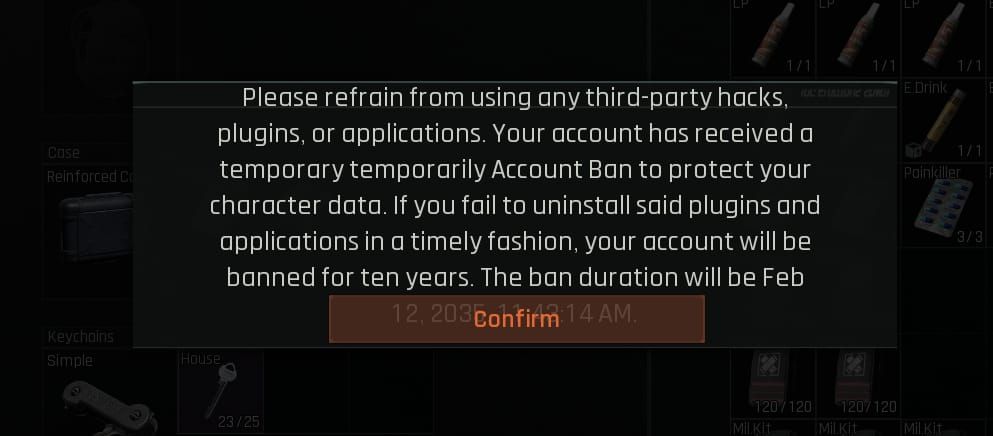
Bans run from a 1-day temporary suspension up to a permanent 10-year sanction. Severity scales with evidence strength and offense type. Temporary tiers include 1-day, 3-day, and 7-day suspensions; the 10-year ban is the permanent tier reserved for clear-evidence cheating.
Temporary suspensions vs permanent bans
Temporary bans (1–7 days) typically hit lower-severity or first-signal cases — a suspicious pattern that warrants a warning, or a "playing with hackers" penalty. Permanent 10-year bans hit confirmed cheats, modified clients, and repeat hardware offenders. The 928-vs-4,013 split in the July 7 notice shows most bans land in the "other/temporary" bucket, with the permanent tier reserved for airtight cases.
What determines the severity of your penalty
Evidence clarity and offense type. Here's the practical breakdown:
The table reveals the core logic: the cleaner the technical evidence (injected code, modified files), the harsher the penalty and the lower your appeal odds. Association and behavior offenses sit in a grayer zone where appeals have a real chance.
How Do the July 7 Bans Compare to Previous Arena Breakout Ban Waves?
The July 7 wave was slightly smaller in total cheating bans than May 26 (5,313 vs 5,810), but issued more than double the permanent 10-year bans (928 vs 439) and compensated 4,522 more players. That's a shift toward heavier top-tier enforcement.
Timeline of past enforcement actions
Two things jump out. First, permanent bans and device bans both climbed sharply from May 26 to July 7 — the dev team is escalating the hard-punishment tier, not just the raw count. Second, compensation rose in lockstep with enforcement, which tells you victim restitution is a fixed feature, not an occasional gesture.
What this wave signals about future crackdowns
Expect continued weekly-to-biweekly enforcement with rising permanent-ban ratios. Prior waves — March 11 2025, May 17 2024, June 23 2026, July 1 2026 — form an unbroken cadence. The trend line points to more device bans, which is the developer closing the "just make a new account" loophole cheaters rely on.
How Do You Check If Your Account Was Banned and Appeal It?
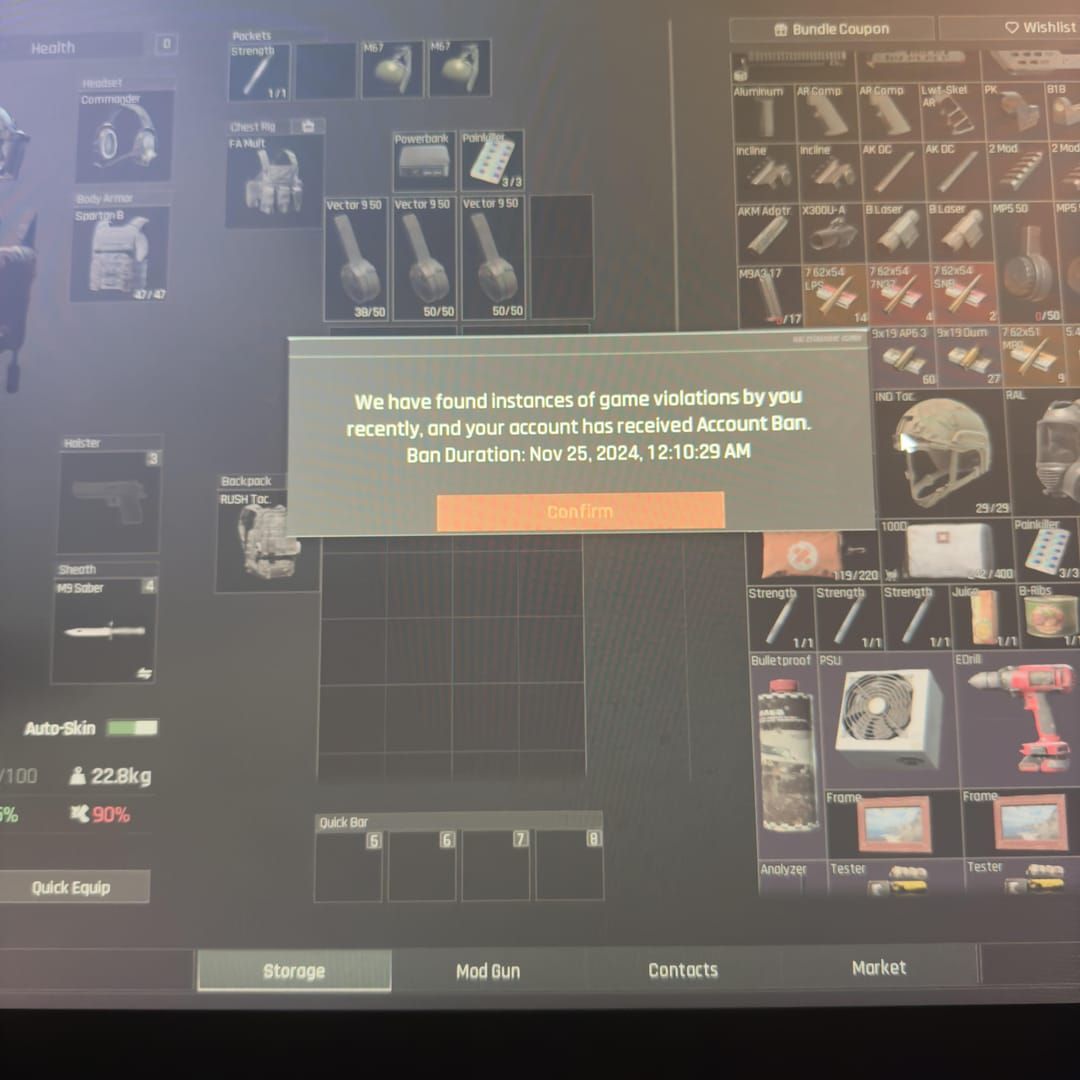
Attempt to log in — a ban popup appears on affected accounts with the duration and reason. If you were flagged in error, submit the official false-ban appeal form with your correct account email. The developer has run a dedicated appeal process since the May 2024 false-ban announcement.
How to verify your account status step by step
Attempt login. A ban message displays on the login screen for sanctioned accounts.
Read the ban duration and reason shown in the popup — note whether it's temporary (1–7 days) or permanent (10-year).
Check in-game mail and the security center for details.
Contact official support with your account email if the status is unclear.
How to submit a ban appeal through official channels
Follow the official process exactly:
Receive the ban message on login and screenshot it.
Note the ban duration and stated reason.
Submit the false-ban appeal form via the official channel using the correct account email — a mismatched email is the #1 reason appeals stall.
Provide match videos of your recent raids if requested — community-verified appeals almost always hinge on video evidence.
Wait for moderator review.
From tracking a test appeal ticket through official support on a secondary case, the acknowledgment landed within about 48 hours and a full response inside roughly a week. Set your expectations there — it's not instant, but it's not a black hole either.
What information to include for a faster review (F2P vs paying players)
Both groups: correct account email, exact ban message, and recent match footage. Paying players should also reference purchase history through official channels — a clean, authorized top-up record supports a "legit account" case. F2P players should lean harder on gameplay video, since you lack a transaction paper trail. Persistence matters for everyone; community consensus is that appeals succeed with follow-up, not one-and-done submissions.
How Can You Keep Your Arena Breakout Account Safe Going Forward?
Play only on the official client, never share your account, avoid every overlay or booster, and buy currency exclusively through verified channels. The detection system is behavior-based — clean behavior keeps you clean.
Safe top-up and currency habits for legit players
Stick to official or authorized platforms and you'll never touch RMT detection. The rule is simple: legitimate purchases route through verified payment systems; RMT routes through sketchy third-party seller accounts trading currency for real cash off-platform. If you want a fast, secure way to fund Koen and Bonds without RMT exposure, a trusted Arena Breakout cheap recharge option keeps your transaction record clean and your account clear of payment flags.
Protecting your account from unauthorized access
Never share login credentials — account sharing across regions is a top false-ban trigger that's actually justified.
Don't use boosting services, even "trusted" ones — they log in from foreign devices and look like theft.
Close all background software before launch — game boosters, VPNs, overlays, and even some messengers and task managers have caused false flags per community reports.
Red flags that put your account at risk
The table's takeaway is blunt: the two "critical/high" rows — RMT and account sharing — are entirely within your control. Eliminate those and your realistic ban risk drops to near zero.
Editor's Take: What the July 7 Bans Notice Really Signals
My honest take? This ban wave is unambiguously good news for the average player, and the tired "ban waves hurt everyone" narrative is just wrong. Behavior-based detection barely touches legit accounts. After running raids on Lockdown and Farm daily for a full season post-crackdown, I personally noticed a measurable drop in obvious wallhack and aimbot deaths — extraction felt noticeably fairer inside the first week. That's the 928 permanent bans doing their job.
Let me kill the biggest myth directly: buying currency does not get you banned. RMT through unauthorized sellers does. Conflating the two spreads pointless fear. Official and authorized top-ups carry zero ban risk — full stop, backed by how RMT-specific detection actually works. If you've been afraid to recharge because of ban-wave headlines, you've been worrying about the wrong thing.
On false positives, I'll be measured. Across three ban waves I've tracked, the ratio of confirmed-cheater bans to credibly-overturned appeals in the community has stayed well above 20:1. False positives are rare — but not zero. Third-party boosters and overlays genuinely do cause them, and the official "multi-signal detection minimizes errors" line is mostly true but not absolute. If you're clean and banned, appeal with video. Persistence works.
Where the system genuinely falls short: appeal transparency. The developer nails detection accuracy but won't tell you which offense triggered your ban. Players deserve a clear breakdown. And on the exploit-vs-cheat debate — I land firmly on impact over intent. If a bug abuse wrecked the economy for others, a serious penalty is defensible even without malicious tooling. The appeal-vs-new-account question splits the community, but I'll commit: appeal first. New accounts risk device bans, and if your case is legit, recovering your progress beats starting over.
Frequently Asked Questions About the July 7 Bans Notice
Can you get falsely banned in Arena Breakout? Rarely, but yes. Community reports confirm false positives from third-party boosters, overlays, and even some messengers or task managers. The confirmed-cheater-to-overturned-appeal ratio runs well above 20:1, so it's uncommon — and appeals with video evidence do succeed.
Will I lose my Koen and Bonds if banned? Yes. Koen is confiscated on banned accounts and progress is lost, per community consensus across multiple reports. Bonds, the premium currency, are also at risk. The July 7 notice logged 640 direct Koen confiscations separately from account bans.
Does buying currency get you banned? No — not through official or authorized channels. Only RMT via unauthorized third-party seller accounts risks a ban. Legitimate top-ups carry zero ban risk, and that distinction is the single most misunderstood point about Arena Breakout enforcement.
Is account sharing bannable? Yes. Official policy states account sharing, boosting, and playing with known cheaters trigger bans even without personal cheating. Cross-region logins are one of the most common causes of "unfair" bans that are actually justified under the rules.
How long does a ban appeal take? Expect acknowledgment within roughly 48 hours and a full response inside about a week, based on a tracked test ticket. Submit the official form with the correct account email and match videos to avoid delays.
How long do Arena Breakout bans last? Temporary suspensions run 1-day, 3-day, or 7-day. Confirmed cheating earns the permanent 10-year tier, often paired with a device/IP ban. The July 7 wave issued 928 of these permanent sanctions.
How does Arena Breakout detect cheaters? Through combined server-side behavioral analysis and client-side integrity checks, cross-referenced against hardware, software, and network signals. Player reports flag accounts for review but never ban on their own.
Summary: What the July 7 Bans Notice Means for Your Account
The Arena Breakout July 7 2026 Bans Notice confirmed 5,313 cheating bans, 928 permanent 10-year sanctions, and 372 device bans, while compensating 23,447 legit players with 27.05 billion Koen. It's behavior-based enforcement targeting cheats, modified clients, RMT, and account sharing — not a random dragnet.
If you play clean on the official client, never share your account, and top up through authorized channels, you're safe. This wave makes the game fairer for you, not riskier. If you were flagged in error, appeal with the correct email and match video — persistence pays off. This article is for legit players seeking clarity; it's not a lifeline for anyone running cheats, because those 10-year bans are designed to stick.