

Zenless Zone Zero version 2.5 changed controller input processing, breaking DualSense haptic feedback for many PC players. This guide provides seven tested solutions covering Steam Input configuration, driver resets, connection optimization, and firmware updates. Most issues resolve through Steam's PlayStation Configuration Support settings.
Understanding DualSense Haptics in ZZZ 2.5
What Haptic Feedback Adds to Combat
DualSense haptics transform ZZZ combat through precise tactile responses. Perfect Dodges deliver distinct resistance patterns via adaptive triggers, confirming successful timing. Ultimate activations generate escalating vibration matching on-screen energy buildup. Stun DMG multiplier effects produce sharp haptic bursts at 200% damage thresholds.
The system differentiates Physical DMG from Ether/Ice elemental strikes through varying motor frequencies. Physical agents like Ye Shunguang trigger deeper vibrations during Honed Edge Attacks, while Ice Defense characters like Zhao produce sharper, crystalline patterns. These cues become critical during Shiyu Defense's five-stage challenges where visual clarity diminishes under particle effects.
Players managing Zenless Zone Zero Monochrome top up through BitTopup maximize investment by experiencing premium content with full controller immersion—haptics reveal combat nuances visual indicators can't convey.
Adaptive Triggers vs Standard Vibration
Standard vibration provides binary on/off feedback. DualSense adaptive triggers offer 10 distinct resistance levels. In ZZZ, triggers simulate weapon weight during charged attacks—holding for Ye Shunguang's Physical DMG abilities creates progressive resistance releasing upon execution. This helps optimize damage windows without watching cooldown timers.
Basic vibration uses simple rumble motors activating uniformly. Haptic motors operate independently in left/right zones, creating directional feedback. When enemies approach off-screen during Hollow Zero exploration (progress cap 220), the corresponding controller side vibrates, providing spatial awareness beyond camera view.
Controllers may retain basic vibration while losing adaptive triggers, indicating partial driver recognition rather than complete connection failure. This commonly occurs after updates when Steam Input defaults to Generic Gamepad profiles instead of PS5-specific configurations.
How Version 2.5 Changed Input Processing
Version 2.5 implemented native controller support refinements altering how Windows recognizes DualSense devices. The update modified Input Tab UI Layout switching, requiring explicit Controller mode selection even for players using automatic detection previously. This affected both Bluetooth and USB connections.
The update prioritized compatibility with expanded Shiyu Defense (now 5 stages, 60000 max points per stage), requiring more responsive input processing that inadvertently reset existing configurations. Players transitioning from keyboard to experience new S-Rank agents Ye Shunguang and Zhao encountered immediate haptic issues, as the game no longer auto-applies PlayStation input profiles.
Options menu Input Tab now requires manual verification after every major patch, particularly when new content like Divine Maze Joint Investigation (2026/01/03 10:00 to 2026/01/22 03:59) introduces mechanics benefiting from haptic feedback.
What Changed: Controller Support Overhaul
Official Patch Notes Analysis
Version 2.5's overhaul focused on accommodating expanded Shiyu Defense requiring S+ ranks across all rooms for 90000 total points. The update standardized controller polling rates supporting new boss mechanics—story boss with 30 base DEF and 200% Stun DMG multiplier demands frame-perfect inputs previous configurations couldn't consistently deliver.
Post-2.5, the game requires explicit PlayStation controller identification to activate advanced haptics, preventing generic profiles from accessing adaptive triggers even when hardware supports it. This coincided with new Drive Discs like White Water Balled (4-Pc grants 12% CRIT Rate +12%/30s) and Shining Aria (4-Pc provides +36 Anomaly Proficiency/8s), necessitating tighter input response windows.
Why Existing Configurations Broke
Pre-2.5 configurations relied on Steam's automatic detection, classifying DualSense as generic HID-compliant controllers. This provided basic input but routed haptic commands through legacy vibration APIs instead of PlayStation-specific protocols. When 2.5 enforced stricter identification, generic profiles lost haptic motor control.
The update's requirement for manual Controller UI Layout selection invalidated saved configurations assuming automatic mode switching. Players connecting controllers before launching ZZZ found devices recognized for basic input but stripped of haptics, as the game defaulted to Keyboard/Mouse UI Layout until manually changed.
Third-party input wrappers previously bridging DualSense functionality now create conflicts. Native support expects direct communication with PlayStation controllers, causing wrapper software to intercept and neutralize haptic signals.
Affected Connection Types
USB connections experienced widespread issues as version 2.5 changed device query during initialization. Wired connections previously auto-configuring now require manual Steam Input verification.
Bluetooth DualSense faces additional complications from Windows Bluetooth stack updates. PC Bluetooth must maintain active pairing throughout sessions, but 2.5's extended combat encounters can exceed Bluetooth timeout thresholds, causing mid-session disconnections resetting haptic configurations.
Wireless connections through dedicated adapters show highest stability, but 2.5's changes still require Steam Input configuration regardless of connection method.
Quick Diagnostic: Is Your DualSense Detected?
Verifying Windows Recognition
Open Device Manager (Windows Key + X). Expand Human Interface Devices and locate Wireless Controller or DualSense Wireless Controller entries. Yellow exclamation marks indicate Windows recognizes hardware but lacks proper drivers. Right-click device > Properties to view Device Status—This device is working properly confirms basic recognition.
Navigate to Settings > Devices > Bluetooth & other devices (wireless) or USB to verify active connections. Controller should appear as Wireless Controller with Connected status. Paired without Connected means Bluetooth established pairing but failed to maintain active session.
Test basic input via Windows' Game Controllers panel (search Set up USB game controllers). Select DualSense > Properties to access test interface. All inputs should register immediately. If inputs register but haptics remain non-functional in ZZZ, the issue resides in game-specific or Steam-level configuration.
Testing in Steam Controller Settings
Launch Steam Big Picture Mode (controller icon top-right). Navigate to Settings > Controller > Controller Settings and verify PlayStation Configuration Support shows checkmark. If unchecked, Steam treats DualSense as generic gamepad, blocking haptics and adaptive triggers.
Select Calibration & Advanced Settings > choose DualSense > Test Device Inputs. Press L2/R2 fully—on-screen indicators should display gradual fill representing adaptive trigger resistance. If indicators jump 0% to 100% without intermediate values, Steam recognizes basic input but not PlayStation-specific features.
Right-click Zenless Zone Zero > Properties > Controller. Verify Use Steam Input enabled and set to Use default settings. Click Edit Layout—top bar should display PlayStation Controller Configuration not Generic Gamepad.
Identifying Partial vs Complete Failure
Launch ZZZ > Options > Input Tab. Switch UI Layout to Controller, then enter combat from All-New Program event (Encrypted Master Tape x10 for 7 login days after Version 2.5 to 2026/02/05 03:59). Execute Perfect Dodge—complete failure produces zero feedback, partial failure delivers basic vibration without adaptive trigger resistance.
Partial failure manifests as uniform vibration across both sides without directional variation. Test by taking damage from different positions—functional haptics produce stronger vibration on corresponding side.
Complete failure includes non-responsive adaptive triggers during charged attacks. Hold attack with Ye Shunguang—functional triggers increase resistance as charge meter fills. Uniformly soft triggers throughout charge indicate Steam Input configuration issues.

Fix #1: Configure Steam Input (Most Common)
Accessing Steam Input Settings
Close ZZZ. Right-click Zenless Zone Zero in Steam library > Properties > Controller tab. Verify Override for Zenless Zone Zero displays Use your global Steam Input settings or Enable Steam Input. If Disable Steam Input, change to Enable Steam Input.
Click controller icon top-right (or View > Big Picture Mode). Navigate using D-pad to Settings > Controller Settings.
Enabling PlayStation Configuration Support
In Controller Settings, locate PlayStation Configuration Support checkbox. If unchecked, Steam treats PlayStation controllers as generic devices. Click checkbox—warning may appear This will disable other controller drivers. Confirm change.
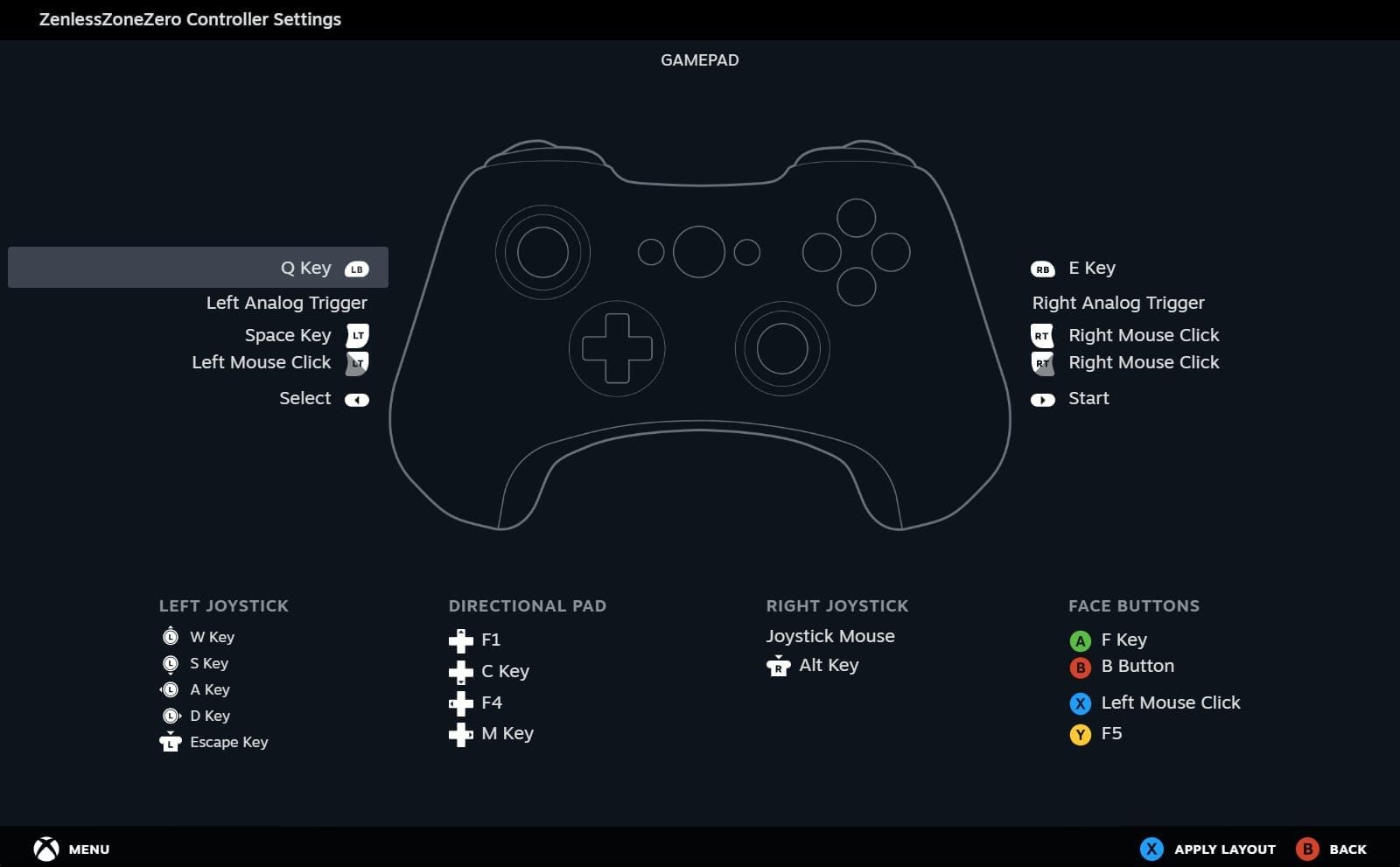
After enabling, Steam rescans devices. DualSense should appear in Detected Controllers with PlayStation icon not generic gamepad symbol. If icon doesn't update, disconnect/reconnect controller.
Click Calibration & Advanced Settings > select DualSense. Verify Controller Type displays Sony DualSense or PlayStation 5 Controller not Generic Gamepad.
Switching to PS5 Mode
Exit Big Picture. Launch ZZZ > Options > Input Tab. Locate UI Layout showing Keyboard and Mouse. Click to reveal dropdown with Controller option.
Select Controller—interface transitions to controller-optimized prompts, replacing keyboard indicators with PlayStation symbols (Cross, Circle, Square, Triangle).
Enter combat scenario like Potential Hypothesis New Chapter Reforged event (2025/12/31 10:00 to 2026/02/05 03:59, requires Inter-Knot Lv. 20). Execute combat actions monitoring haptic feedback.
Verifying Changes
Test systematically using specific scenarios triggering known haptic responses. Enter Shiyu Defense (5 stages) and engage story boss (30 base DEF, 200% Stun DMG multiplier). Execute Perfect Dodge—successful configuration produces sharp vibration pulse with on-screen slow-motion.
Charge Ultimate with any character monitoring adaptive triggers. Functional triggers increase resistance progressively as meter fills, reaching maximum at full charge. Release trigger—properly configured haptics produce snap sensation as resistance drops to zero.
Test directional feedback by positioning enemies at screen edges during Hollow Zero. Enemies attacking from left should vibrate left motor more intensely. This confirms full functionality vs basic vibration fallback.
Fix #2: Controller Mode Reset in Big Picture
When to Use Big Picture Mode
Use Big Picture when desktop Steam settings fail to apply PlayStation Configuration Support despite checkbox activation. This occurs when conflicting profiles from previous sessions remain cached. Desktop interface lacks tools to clear cached profiles.
Use specifically when Detected Controllers shows DualSense but ZZZ continues using generic gamepad inputs. This indicates Steam recognizes hardware globally but hasn't assigned PlayStation-specific profiles to ZZZ's executable.
Access when multiple controllers were previously connected. Steam maintains configuration history for all devices, and conflicts arise when attempting to apply Xbox, Nintendo, or generic profiles to DualSense.
Clearing Conflicting Profiles
Enter Big Picture > Settings > Controller > Controller Settings. Scroll to Guide Button Chord Configuration displaying all controller profiles. Click Clear All to remove cached configurations, forcing Steam to rebuild profiles from scratch.
Disconnect DualSense completely. In Controller Settings, verify Detected Controllers shows zero devices. Exit Big Picture > navigate to Steam installation directory (typically C:\Program Files (x86)\Steam) > open config folder > locate controllerconfig.vdf and controllerneptune.vdf. Rename files adding .old extensions.
Restart Steam completely. Reconnect DualSense and launch Big Picture. Steam rebuilds configurations from default templates. Re-enable PlayStation Configuration Support, verify DualSense appears with PlayStation icon.
Setting Per-Game Preferences
In Big Picture Library, select ZZZ. Press Options button (three lines) > Manage Game > Controller Configuration. This opens ZZZ's dedicated profile interface.
Configuration interface displays current active profile—if showing Gamepad or Generic, click profile name > select PlayStation Controller Configuration or Recommended. Apply template and exit.
Verify per-game settings in ZZZ Properties > Controller tab. Override for Zenless Zone Zero should display Enable Steam Input with note indicating custom configuration active.
Fix #3: Complete Driver Reset (Windows)
Uninstalling via Device Manager
Press Windows Key + X > Device Manager. Expand Human Interface Devices > locate all entries containing Wireless Controller, DualSense, or HID-compliant game controller. Right-click each > Uninstall device > enable Delete the driver software for this device checkbox.
Repeat for Bluetooth section entries if using wireless. Disconnect DualSense after uninstalling. Open Universal Serial Bus controllers > locate USB Composite Device or USB Input Device appearing when controller connected. Uninstall with driver deletion enabled.
Safe Mode Removal
Restart Windows pressing F8 during boot for Advanced Boot Options (or hold Shift clicking Restart > Troubleshoot > Advanced Options > Startup Settings > Restart > press 4). Safe Mode loads minimal drivers, preventing third-party software interference.
In Safe Mode Device Manager, expand Human Interface Devices. Previously hidden entries may appear. Uninstall all controller-related entries with driver deletion enabled.
Navigate to C:\Windows\System32\drivers > locate hidusb.sys, hidbth.sys, and files containing ds or dualsense. Rename adding .old extensions rather than deleting. Restart normally.
Reinstalling with Windows Update
After restarting, connect DualSense via USB. Windows auto-detects hardware. Open Settings > Update & Security > Windows Update > Check for updates. Windows Update downloads official DualSense drivers.
Monitor Device Manager during installation. Human Interface Devices populates with new entries—Wireless Controller should appear. Wait until Searching for drivers notification disappears.
Verify successful installation checking Device Manager for Wireless Controller without warning icons. Right-click > Properties > Driver tab. Driver Provider should display Microsoft with recent Driver Date.
Third-Party Conflict Resolution
Open Task Manager (Ctrl + Shift + Esc) > Startup tab. Locate DS4Windows, InputMapper, reWASD entries. Right-click > Disable to prevent startup launch. These tools intercept inputs before Steam/ZZZ access.
Search PC for programs containing controller, gamepad, or input. Uninstall DS4Windows, SCPToolkit, ViGEm Bus Driver via Settings > Apps. These install virtual controller drivers persisting after uninstallation, requiring manual removal through Device Manager's Show hidden devices (View menu).
After removing third-party software, restart Steam and verify PlayStation Configuration Support remains enabled. Re-enable if necessary, then test haptics in ZZZ.
Fix #4: Connection Optimization
USB-C Wired Best Practices
Use USB 3.0+ ports (blue internal connectors). USB 2.0 provides sufficient bandwidth for basic input but may throttle haptic data during intensive combat like Shiyu Defense fifth stage (3 rooms, 60000 max points). USB 3.0 ensures haptic commands transmit without latency.
Connect directly to motherboard USB ports not front-panel connectors or hubs. Front-panel routes through extension cables introducing signal degradation, hubs share bandwidth. Motherboard rear-panel provides direct PCH connections with dedicated bandwidth.
Verify cable quality testing with official Sony DualSense USB-C cable. Third-party cables may lack proper data pin wiring, functioning for charging while failing full-speed data transmission. Replace with certified USB-IF cables rated USB 3.2 Gen 1 or higher.
Bluetooth Latency Trade-offs
Bluetooth introduces 8-15ms input latency vs wired sub-1ms response. This affects haptic timing—vibration responses to Perfect Dodges arrive slightly delayed. For combat requiring frame-perfect inputs like achieving S+ ranks (90000 total Shiyu Defense points), wired provides superior synchronization.
Bluetooth quality degrades with distance and interference. Maintain line-of-sight within 3 meters. Wireless routers, microwaves, and 2.4GHz devices corrupt haptic data packets. Position Bluetooth adapter away from interference sources or switch to 5GHz WiFi.
Battery level impacts Bluetooth haptic intensity. DualSense reduces haptic motor power below 30% battery to conserve charge. Charge to 100% before troubleshooting—perceived failure may be power-saving mode. Wired connections bypass battery limitations, maintaining consistent intensity.
Wireless Adapter Options
Sony's official DualSense USB Wireless Adapter provides dedicated 2.4GHz connectivity separate from Bluetooth. This eliminates Bluetooth stack overhead and interference, reducing latency to near-wired levels (3-5ms) while maintaining full haptics. Adapter supports firmware updates optimizing PC game compatibility.
Third-party adapters claiming PlayStation support often lack proper haptic API implementation. Verify specifications explicitly mention DualSense haptic feedback support and adaptive trigger compatibility. Adapters supporting only basic input strip advanced features identical to Bluetooth failures.
Configure wireless adapters through Windows Bluetooth & devices settings. Adapter appears as separate wireless device requiring driver installation—allow Windows Update to install manufacturer drivers. After installation, DualSense connects automatically when powered on.
Fix #5: Firmware Update and Calibration
Checking Firmware Version
Connect DualSense via USB and download PlayStation Accessories from Microsoft Store. Launch app—it auto-detects controllers displaying current firmware version (e.g., 0308 or 0403). Higher numbers indicate newer releases.
Compare firmware against Sony's official documentation. DualSense firmware released after ZZZ 2.5's December 2025 launch may include PC compatibility improvements addressing haptic functionality. If firmware predates version 2.5, outdated firmware may lack protocol implementations.
Check update history clicking information icon. App displays update dates and versions. If last update occurred before July 2024 (when ZZZ controller guide last updated), controller likely requires firmware updates for 2.5 compatibility.
Updating via PlayStation Accessories
In PlayStation Accessories, select connected DualSense. If update available, Update button appears. Click to begin—app downloads latest firmware from Sony servers and transfers via USB.
Maintain USB connection throughout 5-10 minute process. Don't disconnect or close app—interruption corrupts installation, potentially rendering controller non-functional. Progress bar indicates download/installation status.
After completion, app prompts disconnect/reconnect. Unplug USB, wait 5 seconds, reconnect. App verifies successful installation displaying new firmware version. Test haptics in app's controller test interface pressing L2/R2—adaptive triggers should function before launching ZZZ.
Haptic Motor Calibration
Firmware updates reset haptic calibration to factory defaults. Access Steam Big Picture > Settings > Controller > Calibration & Advanced Settings. Select DualSense > Calibrate.
Calibration wizard prompts pressing each button and moving sticks through full range. Pay attention to trigger calibration—press L2/R2 fully until bottoming out, then release completely. This establishes resistance range ensuring Steam correctly interprets adaptive trigger positions.
After calibration, test in Steam's controller test interface. Press triggers/buttons monitoring on-screen visualization—haptics should activate immediately. Successful calibration displays smooth, gradual trigger resistance curves not stepped/binary responses. Save profile and launch ZZZ.
Advanced Troubleshooting
DS4Windows Conflicts
DS4Windows creates virtual Xbox 360 controller intercepting DualSense inputs. Even when not running, ViGEm Bus Driver remains loaded, blocking direct communication. Open Device Manager > System devices > locate Virtual Gamepad Emulation Bus. Right-click > Disable device.
If disabling ViGEm causes other games to lose controller support, configure DS4Windows to exclude ZZZ. Launch DS4Windows > Settings > Profile Settings > add ZenlessZoneZero.exe to exclusion list.
InputMapper and similar wrappers modify Windows HID driver stack. Uninstall completely via Settings > Apps, then restart. Check Device Manager Human Interface Devices for HID-compliant game controller with warning icons—uninstall with driver deletion enabled.
Steam Overlay Interference
Steam Overlay's input hooking conflicts with DualSense haptics, particularly when multiple overlays (Discord, GeForce Experience, Xbox Game Bar) run simultaneously. Disable Steam Overlay for ZZZ: right-click game > Properties > General > uncheck Enable the Steam Overlay while in-game.
Test haptics with overlay disabled. If functional, conflict originates from Steam's input hooking. Re-enable and disable other overlays systematically—close Discord, disable GeForce Experience overlay, disable Xbox Game Bar via Settings > Gaming. Identify conflicting combination through elimination.
For players requiring Steam Overlay, configure activation using keyboard shortcuts not controller combinations. Open Steam Settings > In-Game > change Overlay shortcut keys from default (Shift+Tab) to keyboard-only combination.
Registry Edits (Backup First)
Press Windows Key + R > type regedit > Enter. Navigate to HKEYLOCALMACHINE\SYSTEM\CurrentControlSet\Services\HidGuardian. Right-click HidGuardian > Export creating backup .reg file.
Within HidGuardian, locate Parameters subkey > examine AffectedDevices multi-string value. If entries contain VID054C&PID0CE6 (DualSense vendor/product IDs), delete these entries. Save and restart Windows.
Navigate to HKEYCURRENTUSER\Software\Valve\Steam\Apps\1281590 (ZZZ's Steam App ID) > locate ControllerRumble DWORD. If set to 0, change to 1, save, restart Steam. This stores per-game controller preferences overriding UI settings.
Clean ZZZ Reinstall
Perform clean reinstall when all fixes fail and you've verified controller functionality in other Steam games. Right-click ZZZ > Manage > Uninstall > enable Delete all local content.
Before reinstalling, navigate to C:\Users[YourUsername]\AppData\LocalLow\miHoYo\ZenlessZoneZero and delete entire folder. This removes saved settings and cached configurations standard uninstallation preserves.
Reinstall through Steam but don't launch immediately. First verify Steam's PlayStation Configuration Support enabled and DualSense appears correctly. Connect controller, configure Steam Input via Properties > Controller, then launch. On first launch, ZZZ detects controller and builds fresh configurations compatible with 2.5.
Preventing Future Issues
Backup Configurations Before Patches
Before major ZZZ updates, export Steam's controller configuration. Navigate to Steam installation directory > config > copy controller_config folder to backup location outside Steam directory.
Create System Restore Point before patches: search Create a restore point > select system drive > Create > name with current ZZZ version (e.g., ZZZ 2.4 Working Controller Config). If future updates break functionality, restore to recover working states.
Document current settings screenshotting Steam Controller Settings, ZZZ Options > Input Tab, and Device Manager controller entries. Store with date and version number. When updates cause issues, screenshots provide reference for identifying configuration changes.
Monitor Patch Notes
Check ZZZ official patch notes immediately upon release, searching controller, input, haptic, DualSense, PlayStation. Version 2.5's input modifications appeared under System Optimizations not prominent features, requiring thorough reading.
Subscribe to ZZZ official social media and forums where developers post supplementary technical information. Input changes often receive detailed explanations in blog posts or Q&A sessions days after release.
Monitor Steam Community Hub within 24 hours of patch deployment. Early adopters report controller issues quickly. Search Hub for controller, DualSense, haptic immediately after updating to discover emerging issues and player-developed workarounds.
Community Solutions
Join ZZZ Discord servers and subreddits where players share real-time troubleshooting. Communities often discover Windows update conflicts with ZZZ patches, providing advance warning to delay updates. Maintain pinned threads documenting known issues and verified solutions.
Contribute your troubleshooting experiences. Document specific steps, hardware configuration (Windows version, Bluetooth adapter model, USB port type), and ZZZ version. Detailed reporting helps players with identical setups.
Follow content creators playing ZZZ on PC with controllers. These players test updates immediately and often stream troubleshooting sessions, providing real-time problem-solving demonstrations.
Enhancing ZZZ Experience
Optimal In-Game Settings
After restoring haptics, optimize ZZZ controller settings. Access Options > Input Tab > adjust Vibration Intensity to 80-90% not maximum—full intensity obscures subtle cues during complex combat like Shiyu Defense fifth stage. Reduced intensity maintains clarity while preventing motor fatigue.
Configure Aim Sensitivity and Camera Sensitivity independently. Set Camera Sensitivity to 6-7 for responsive scanning during Hollow Zero exploration (progress cap 220), maintain Aim Sensitivity at 4-5 for precise targeting. This leverages haptic feedback for spatial awareness without sacrificing aiming precision.
Enable Toggle Sprint not Hold Sprint to reduce trigger fatigue during extended exploration. This preserves adaptive trigger responsiveness for combat while minimizing unnecessary engagement during non-combat movement.
Character-Specific Haptic Patterns
Ye Shunguang's Honed Edge Attack produces escalating haptic intensity mirroring combo progression. First hit generates light vibration, subsequent hits increase strength, culminating in powerful burst on final strike. This provides combo timing feedback without watching counters.
Zhao's Ice Defense abilities create distinct crystalline patterns—sharp, staccato vibrations differing from Physical DMG's deeper resonance. When activating defensive abilities, adaptive triggers increase resistance proportionally to shield strength. Resistance decreases as shields absorb damage, alerting to reactivate before break.
S-Rank W-Engine Cloudcleave Radiance (Attack) and Half-Sugar Bunny (Defense) modify haptic patterns when equipped. Cloudcleave intensifies responses during Attack abilities, Half-Sugar adds subtle pulses when Defense shields activate. Equipment-specific signatures help identify active bonuses during combat.
Using BitTopup for Polychromes
With fully functional haptics enhancing combat, maximize ZZZ enjoyment acquiring new S-Rank agents. Buy ZZZ Monochrome recharge online through BitTopup's secure platform offering competitive pricing on Polychrome bundles and Monochrome purchases for exclusive outfits like Ye Shunguang's Touch of Dawnlight (1350 Monochrome discounted until 2026/02/06 05:59 UTC+8).
BitTopup provides instant Polychrome delivery directly to account, enabling immediate participation in limited events like Joint Investigation Divine Maze (2026/01/03 10:00 to 2026/01/22 03:59) and Shadow Riptide Clash (2026/01/09 10:00 to 2026/01/26 03:59). 24/7 customer support resolves transaction issues quickly.
Secure payment processing protects financial information through encrypted transactions and multiple payment methods. BitTopup's high ratings reflect consistent service quality and competitive pricing maximizing Polychrome-to-currency ratio.
FAQ
Why did DualSense haptics stop after ZZZ 2.5? Version 2.5 modified input processing requiring explicit PlayStation Configuration Support in Steam and manual Controller UI Layout selection in ZZZ Options, invalidating automatic configurations from previous versions.
How do I enable Steam Input for ZZZ? Right-click ZZZ in Steam > Properties > Controller > set to Enable Steam Input. Open Steam Settings > Controller > enable PlayStation Configuration Support. Launch ZZZ > Options > Input Tab > switch UI Layout to Controller.
What's the difference between generic and PS5 mode? Generic mode treats DualSense as basic gamepad blocking haptic motors and adaptive triggers. PS5 Configuration Support uses Sony's controller APIs providing full haptic feedback, adaptive trigger resistance, and directional vibration.
Does ZZZ support DualSense adaptive triggers? Yes, when properly configured through Steam's PlayStation Configuration Support. Adaptive triggers provide progressive resistance during charged attacks and Ultimates, with resistance corresponding to charge meter progress. Requires Steam Input enabled and Controller UI Layout selected.
Should I use wired or wireless for haptics? Wired USB provides superior synchronization with sub-1ms latency and consistent intensity regardless of battery. Wireless Bluetooth introduces 8-15ms latency and reduces intensity below 30% battery. For competitive play requiring frame-perfect inputs, wired offers optimal performance.
How do I update DualSense firmware? Download PlayStation Accessories from Microsoft Store, connect DualSense via USB, launch app. If updates available, click Update maintaining USB connection throughout 5-10 minute installation. After updating, recalibrate via Steam Big Picture > Controller > Calibration & Advanced Settings.
Now that your DualSense haptics work perfectly, experience ZZZ 2.5's new content fully! Purchase Polychromes and exclusive bundles securely through BitTopup—trusted platform for Zenless Zone Zero top-ups with instant delivery, competitive rates, and 24/7 support!