

Winning in Yalla Ludo Global Tournament Mode comes down to two resources most players manage separately: diamonds and voice chat. Top-100 players treat them as one system. Here's exactly how.
What Tournament Mode Actually Is in 2026
This isn't ranked play with a leaderboard bolted on. Diamond investment determines your access tier, social visibility, and board-level advantages — and every match feeds a cumulative ranking ladder: Bronze → Silver → Gold → Platinum → Diamond → Legend. Position is determined by room participation and gifting activity, not just wins. Spending is a competitive act.
Version 1.4.9.0 (February 9, 2026) introduced VIP Room Upgrades, Free Monthly Rewards, Royal Privileges, the Companion System, and VIP Voice Chat Emote Packs. All have direct tournament implications.
Voice chat is the other major differentiator. Tournament rooms support 15 simultaneous mic slots. VIP Baron members get priority routing — their mic requests process ahead of non-VIP players when slots fill. That's a mechanical advantage, not a social perk.
What's at stake: The Ramadan 2026 grand prize is 100,000 diamonds, with the top 1,000 players qualifying for the reward pool. Community data shows top-100 requires a minimum 55,800-diamond investment. Top-10 contenders are working with 168,860+.
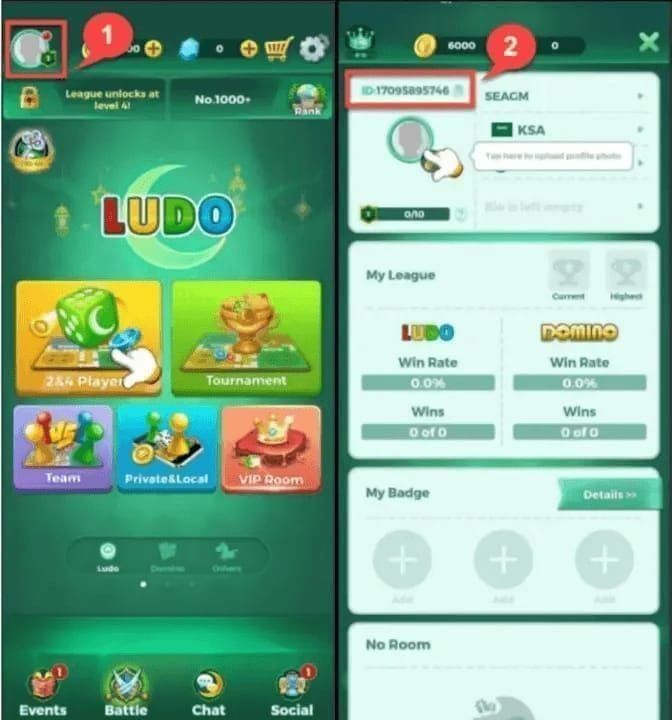
Baseline requirements: Your 11-digit User ID (tap profile icon, upper left — starts with 7) and iOS 13.0 or later for full voice chat functionality. Without these, coordination becomes impossible mid-tournament.
Why Diamonds Drive Everything
Diamonds buy stamina, visibility, and social leverage — not just entry. Run out mid-tournament and you lose mic priority, gifting power, and the psychological presence that comes from being a visible spender.
Current Diamond Pack Pricing

The $100 tier delivers 15–25% better value per diamond than smaller packs. If you're planning a real tournament run, this is where your per-diamond cost starts working for you.
Think of diamonds as a deployment problem, not a spending problem. Every diamond spent early is one unavailable for the final-day surge — when leaderboard positions shift fastest. Free earnings cap at 1,000 activity props daily, nowhere near sufficient for top-100 qualification. The gap has to be covered by pre-built reserves.
Strategy 1 — Pre-Tournament Diamond Stacking
Build your reserve before the tournament clock starts. This single habit separates players who compete from players who contend.
Budget formula: (10 matches/day × room tier cost × event days) + 20% buffer. That buffer isn't optional — it covers ranking surges, unexpected entry costs, and the final-day push.
For Ramadan 2026: 55,800 diamonds minimum for top-100. Top-10 targeting means 168,860+. These are observed thresholds from community leaderboard tracking, not estimates.
Earning windows to use:
Daily tasks (~15 minutes) yield up to 1,000 activity props and qualify you for the 100,000-diamond grand prize draw
Valentine's Carnival (February 8–14, 2026) and Dice Design Contest Season 2 (February 8–28, 2026) both offered pre-Ramadan earning opportunities
One timing note most guides miss: don't buy Board Skins before March 1, 2026. The 70% skin discount runs March 1–30. Buying at full price beforehand is a direct budget drain. If you're in the 830–1,000 diamond range, buy the VIP emote pack first and hold the rest for March.
For closing the gap between your current reserve and your target threshold, timing matters. Community data shows 98% of top-ups process within 30 seconds (maximum 30 minutes), so last-minute recharges are viable — but cutting it that close adds unnecessary stress. Players looking to buy Yalla Ludo diamonds for tournaments should complete their recharge at least 24 hours before the event opens, then screenshot the balance as a baseline record. Also: diamonds carry a 6-month validity period, and gift cards expire June 3, 2026.
Strategy 2 — Selective Power-Up Investment
Not all in-match spending is equal. Players burning reserves in early rounds on low-ROI purchases are the same ones who can't surge in the final five days.
Tier S (highest ROI):

Private Room Customization — permanent social ROI, best for room hosts
Companion System — generates Goodwill Points for social progression; unlock the highest rate tier first
Tier A (strong situational value):
VIP Emote Packs — low cost, high visibility; signal status and attract gifting invitations
Board Skins — only during the March 70% discount window
Avoid or defer:
Board Skins at full price before March 1
Lucky Spin purchases when your reserve is below tournament entry threshold
The Companion System deserves specific attention: it builds competitive value through social interaction, not dice rolls, so it doesn't deplete match-critical reserves. The compounding effect across a multi-week tournament is real.
The most common budget mistake veterans flag: never use entry-fee diamonds on spins. It sounds obvious until you're three rounds in, slightly behind, and the Lucky Spin is promising a comeback. That's the trap. Entry fee diamonds are untouchable.
Strategy 3 — Voice Chat as a Diamond-Saving Weapon
Almost no existing guide acknowledges this: voice chat is a decision-quality tool that directly reduces costly errors. And costly errors in tournament mode mean diamond waste.
Real-time coordination eliminates the information lag that causes reactive spending. A teammate calling out that an opponent has two pieces approaching home changes your board decision — and potentially saves a power-up purchase you'd have made blind. Over a 10-match day, those saved decisions compound into meaningful conservation.
VIP Baron ($39.99/month) is the community's recommended tier for voice chat dominance because of priority mic routing in 15-slot rooms. When slots fill, Baron members get access first. In a competitive room where information flow is a resource, that's structural — not cosmetic.
Animated Avatar Frames and VIP Emote Packs also boost gifting invitations and mic access in competitive rooms. Higher social visibility means more consistent mic access, which means more consistent information flow.
Pre-match voice chat setup — establish three things before the match starts:
Who calls opponent positions
Who calls blocking opportunities
A signal for strategic silence (covered in Strategy 6)
Strategy 4 — Diamond-Backed Psychological Pressure
A visible diamond advantage changes how opponents play. This can be deliberately engineered.
When opponents see your VIP status, animated frames, and gifting activity, they make assumptions about your resource depth. Those assumptions create hesitation. Hesitation in Ludo — where timing and aggression are everything — produces suboptimal moves. You don't have to be reckless with diamonds to create this effect. You have to be visible at the right moments.
VIP Knight ($11.99/month) provides exclusive emotes that serve this function in voice rooms. The emote pack isn't entertainment — it's a status signal that shapes the room's social dynamic.
On voice chat aggression: banter has a place, but it's a tool, not a default. The goal is occupying opponent attention, not constant noise your own team has to filter. Use it sparingly and purposefully. Strategic silence is equally powerful — when you go quiet mid-match, opponents interpret it as either confidence or a setup. Both readings work in your favor.
What to announce vs. what to hide: Call out moves that signal strength — a piece entering the home stretch, a successful block, a capture. Stay quiet when you're setting up a trap or when your position is weaker than it looks. Everything you broadcast on voice chat is available to everyone in the room.
Strategy 5 — Safe Zone Timing and Diamond Conservation
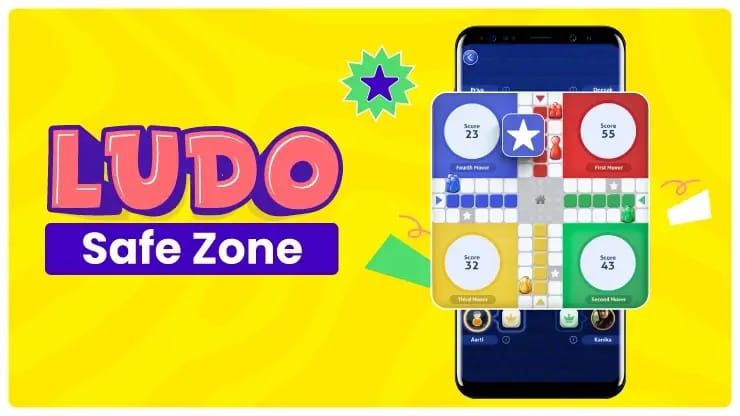
The Diamond Patience Principle: every piece you lose to a capture is a potential re-entry cost. Safe zone timing is budget management.
Rushing pieces toward home without safe zone coverage is the most common board mistake in tournament play, and it has a direct diamond cost. A piece in a safe zone costs nothing to maintain. A captured piece costs resources to replace. Waiting for the right dice roll rather than forcing movement is one of the highest-ROI habits you can build — especially in early and mid rounds when your reserve needs to stay intact.
Two pieces blocking the same safe zone approach path is one of the most effective defensive formations in competitive play. Coordinating this on voice chat — calling when you're positioning for a block, when a teammate needs to hold — turns a passive mechanic into an active strategic tool. Without voice chat, it's guesswork.
The reserve rule: The players who surge in the final five days aren't the ones who spent the most in the first five. They're the ones who conserved enough to spend aggressively when it counts. Reserve 25–30% of your total diamond budget for the final five days of any multi-week event. This is the single most consistent pattern in community leaderboard analysis.
Strategy 6 — Reading Opponents Through Voice Chat
This is the strategy experienced players use but almost never discuss openly.
Voice chat gives you access to information the game interface doesn't: your opponents' emotional state. Hesitation before a move announcement signals uncertainty. Overconfident commentary early in a match frequently precedes aggressive overextension. A sudden drop in voice activity from a previously talkative opponent can signal they're setting up something they don't want you to anticipate.
Watch reaction timing. When you make a move and an opponent responds immediately — with commentary or noticeable silence — that speed tells you how much they were anticipating it. Slow reactions mean they weren't watching that piece, which tells you where their attention is focused.
But your voice is broadcasting too. Experienced opponents are doing exactly this. The discipline is staying emotionally flat regardless of board state. Celebrate captures internally. Stay measured when you're behind. The less your voice gives away, the less opponents can adapt.
Strategy 7 — The Late-Tournament Diamond Surge
The final five days are where leaderboard positions are won and lost. Everything before that is positioning.
For Ramadan 2026, community-confirmed optimal spending sequence:
Days 1–2: Tent setup (low cost, high structural value)
Days 3–5: Gifts
Days 6–7: Lucky boxes
Final week: Deploy the reserved 25–30%
Don't deviate from this sequence under pressure. When your position is within striking distance of a reward tier in the final stretch, aggressive deployment pays off — leaderboard positions are most volatile here, and small surges can jump multiple ranks.
In final rounds, shift your voice chat protocol from information-gathering to execution. Less analysis, more decisive calls. Assign one person to call board state, one to call action — splitting these roles prevents decision paralysis when stakes are highest.
If you need to close a diamond gap before the final-day push, a fast top-up is viable here. Players who need to top up Yalla Ludo Global diamonds fast before the final-day surge can typically complete the process in under 30 seconds. In tiebreaker scenarios, pre-agree your protocol on voice chat before you need it — panic-spending on power-ups that don't change the fundamental board dynamic is the most expensive mistake in overtime play.
Common Mistakes That Cost Players Diamonds and Matches
Overspending in early rounds. Early aggression feels good. But players who dominate final leaderboard positions treated early rounds as positioning exercises. Spending your surge budget in Round 2 of a 14-day event is the fastest way to watch your ranking stall when it matters.
Misusing voice chat. Two failure modes: muting entirely and forfeiting the information advantage, or talking constantly without strategic intent — broadcasting your own uncertainty and giving opponents free reads. Voice chat is a tool. Use it with the same intentionality you'd apply to any other competitive resource.
Targeting the wrong opponents. Not everyone in your room is a leaderboard threat. Spending diamond resources and voice chat energy on players who aren't competing for the same reward tier is a misallocation. Know your actual competition and direct resources accordingly.
Account Preparation Checklist
Confirm iOS 13.0 or later (voice chat requires it)
Have your 11-digit User ID accessible
Know the Redeem Code flow before you need it under pressure: tap Diamond icon → Select Redeem Code → enter 11-digit User ID and 12-digit PIN → confirm
Calculate budget: (10 matches/day × room tier cost × event days) + 20% buffer
Confirm you're at or above 55,800 diamonds for top-100 targeting
Screenshot diamond balance before and after any transaction
Verify validity period (6 months from purchase; gift cards expire June 3, 2026)
Use stable WiFi for tournament entry; if a fee is deducted without a match loading, screenshot the pre-fee balance and relaunch after 60 seconds
Run practice voice chat sessions with your team before the event — establish role assignments and test your strategic silence signal
VIP Knight ($11.99/month) covers exclusive emotes and social visibility. VIP Baron ($39.99/month) is the recommendation for players prioritizing voice chat dominance — priority mic routing in 15-slot rooms is a mechanical advantage that pays for itself in competitive play.
FAQ
How many diamonds do you need to enter a tournament in 2026? Entry costs vary by room tier. Top-100 targeting requires 55,800 diamonds minimum. Top-10 contenders work with 168,860+. Mid-tier competitive rooms are covered by the 13,580–27,640 range.
Can solo players compete in voice chat tournaments? Yes, but the coordination advantages in Strategies 3, 4, and 6 are significantly reduced. Solo players should prioritize diamond conservation strategies (1, 2, 5) and use voice chat primarily for intelligence-gathering rather than coordination.
What happens to unused diamonds after early elimination? They stay in your account with the standard 6-month validity. They don't expire on elimination — which is exactly why the reserve protocol matters. Unused reserves from one tournament become your starting position for the next.
Is voice chat mandatory? No. But opting out forfeits the competitive advantages documented throughout this guide. The 15-mic structure means there's always space to participate, and VIP members get priority access. The question isn't whether to use it — it's how to use it strategically.
How do I report voice chat abuse during a match? Use the in-app reporting function during or immediately after the match. Screenshot any relevant evidence before leaving the room. For diamond deduction disputes, your pre-incident balance screenshot is the evidence standard support teams work from.
Does the 70% skin discount apply to all cosmetic items? Community data confirms the March 1–30, 2026 promotion applies to Board Skins specifically. Buying at full price before March 1 is a direct budget inefficiency experienced players avoid.
The players who consistently reach top-100 aren't necessarily the best Ludo players in the room. They're the ones who treat diamonds and voice chat as a single integrated system — building reserves before events open, deploying them at the right stages, and using voice communication as genuine competitive intelligence rather than background noise. Execute these seven strategies in sequence, and you're not just competing. You're competing with a plan.