

The short answer: 55,800 diamonds to realistically target a top-100 finish — that's the $100 recharge pack. Casual players can enter lower tiers with 5,150–10,300 diamonds ($10–$20). Top-10 contenders need 168,860+. Top-3 aspirants budget north of 283,000. Here's every tier, every cost, and every strategy — no hype.
What Is the Spring 2026 Tournament?
The season runs through March 2026 and overlaps directly with the Ramadan leaderboard period. That overlap matters: player activity spikes during Ramadan, making every leaderboard position more contested than in off-season events. The Ramadan 2026 grand prize pool is 100,000 diamonds distributed among the top 1,000 players — meaningful, but worth honest math before you commit.
Key Dates
The Valentine's Carnival window (Feb 8–14) is your best recharge opportunity before the competitive surge hits. Load your diamonds then, not after. Version 1.4.9.0 also introduced VIP Room Upgrades that affect tournament mic slot allocation — relevant to strategy below.
How Many Diamonds Do You Actually Need?
Diamond Requirements by Tier
These figures come from community observation across multiple seasonal events — not official entry fees, but they reflect real spending patterns from players who've tracked costs across bracket progression.
Where Diamonds Actually Go
This is where underprepared players get blindsided. Your budget covers multiple categories:
Room entry and re-entries — the primary cost driver
Companion system activations — Tier 1 priority, directly affects match performance
Private room creation — necessary for coordinated guild play during final-day surges
Gift interactions — specifically Days 3–5 of the Ramadan phase
What to skip during tournament season: Lucky Spin (poor expected value, zero ranking advantage), cosmetic board skins, and Dice Design Contest rewards. The 70% March skin discount is tempting — but if you're in a top-100 run, those diamonds belong in reserve.
The 25–30% Reserve Rule
This is the insight that separates players who finish strong from those who stall. Hold back 25–30% of your total diamond budget for the final five days. Leaderboard positions are most volatile in the endgame surge — coordinated guilds push hard in the final 48 hours, and players who spent evenly often can't defend their rank.
On a 55,800-diamond budget, that means reserving roughly 14,000–16,700 diamonds until the final week. Counterintuitive early on. Critical at the end.
Earning Free Diamonds Before the Tournament
Free diamonds are real but capped. The daily activity prop limit is 1,000 diamonds worth of props per day — no grinding trick bypasses this.
Over a 28-day pre-tournament window (January through early February):
Daily activity props: ~1,000/day × 28 days = ~28,000 diamonds maximum
Valentine's Carnival bonuses: recharge-triggered, active Feb 8–14
Login streaks and mission completions: supplement daily props but don't stack above the cap
Honest assessment: 28,000 diamonds from free play puts you in top-500 territory, not top-100. For casual players targeting lower-bracket entry, free play is genuinely viable — four weeks of consistent daily missions covers the 5,150–10,300 range. For top-100, you'll need to supplement with at least a modest recharge.
Free Activity Priority Order
Daily activity missions — highest consistent yield, non-negotiable daily habit
Pre-tournament event participation — Spring 2026 events before the main bracket offer diamond rewards
Achievement milestones — one-time but substantial; check your achievement tab for unclaimed rewards
Skip: Dice Design Contest cosmetic grind — high time cost, low diamond yield relative to tournament needs
How to Recharge Diamonds Efficiently
The math is unambiguous. The $100 pack (55,800 diamonds) offers 15–25% better value per dollar than smaller packs. For top-100 aspirants, it's not just the most efficient pack — it's the one that hits the minimum competitive threshold in a single transaction.
Full Pack Value Comparison

The efficiency curve flattens above $100, but the $300 pack remains the best single purchase for top-10 contenders. Stacking small packs to reach 55,800 costs 15–25% more than buying the $100 pack outright — a real loss at competitive spending levels.
To buy Yalla Ludo diamonds cheap online, time your purchase during the Valentine's Carnival window (Feb 8–14) when recharge bonuses are active.
Top-Up Steps
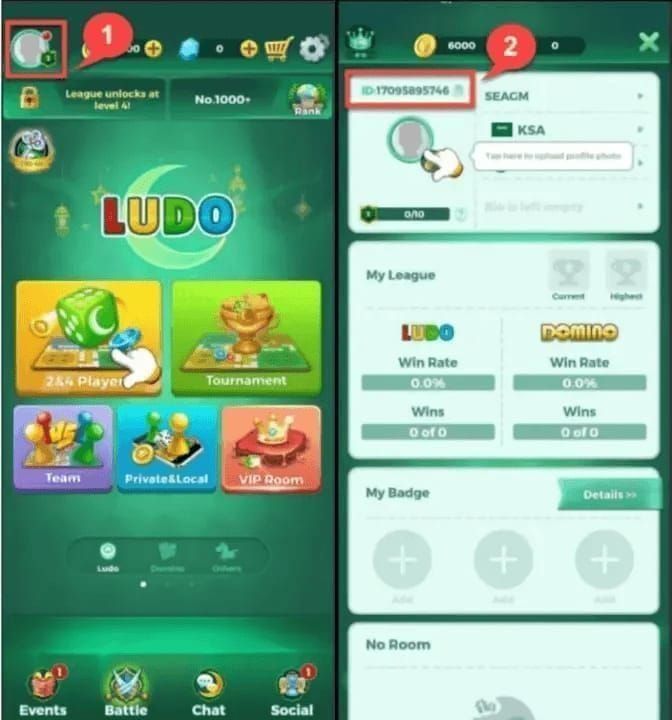
Open Yalla Ludo Global → tap your profile icon (upper left)
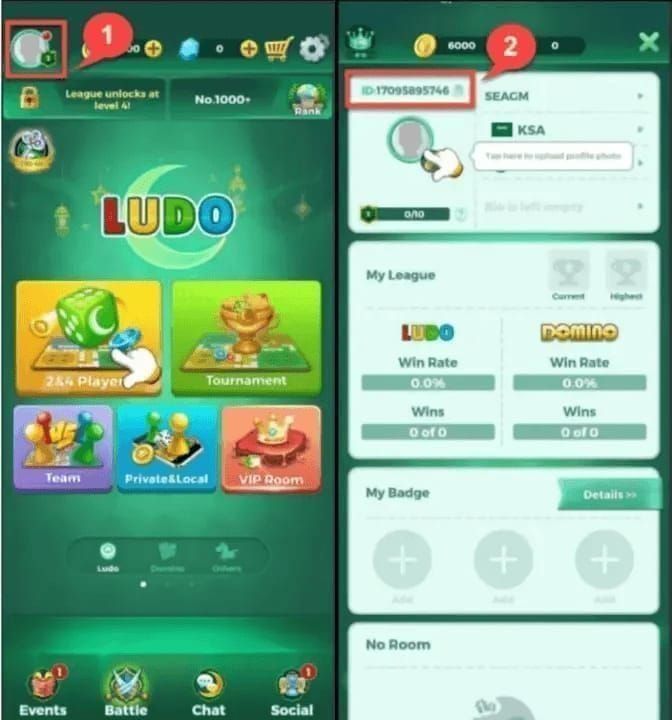
Locate your 11-digit User ID (starts with 7)
Copy it exactly — one wrong digit sends diamonds to the wrong account
Select your pack tier and complete payment
Screenshot your balance before and after as proof of receipt
For gift card redemption: Diamond icon → Redeem Code → enter your 11-digit ID + 12-digit PIN → confirm. Gift cards for Spring 2026 are valid through approximately September 2026.
Community data shows 98% of top-ups complete within 30 seconds, max 30 minutes. Use stable WiFi before a tournament session — a failed transaction during entry fee payment is a preventable disaster.
Winning Strategies for Spring 2026
VIP Baron vs. Knight: Which One You Actually Need
VIP Knight is $11.99/month. VIP Baron is $39.99/month. For casual play, Knight is fine. For top-100 runs, Baron is a competitive necessity.
Tournament rooms have 15 mic slots. Baron grants priority mic access. Voice coordination reduces diamond waste — when your team communicates board states in real time, you make fewer costly re-entry decisions and execute blocking strategies more precisely. Coordinated voice teams consistently outperform silent players even when the silent players have more diamonds.
Budget under $60 total? Knight is sufficient for top-500. At $100+, upgrade to Baron.
Ramadan Phase Pacing (Days 1–7)
Player activity peaks during Ramadan evenings across Middle Eastern and Southeast Asian time zones. If you're competing from another region, your opponents are at peak engagement during those windows — plan accordingly.
Token Movement Under Tournament Pressure
Three principles that hold up in competitive conditions:
Protect home column entries aggressively. Opponents specifically target tokens near the home column — eliminating a nearly-finished token is maximally disruptive to your rhythm.
Sacrifice to block when the math favors it. Sending one token back to start to prevent an opponent's run completion is often worth it in final bracket rounds, where position matters more than piece count.
Don't chase dice variance. Set a decision rule before each match: if X happens, re-enter; if Y happens, accept the result and preserve diamonds. Players who react emotionally to bad rolls burn reserves fast.
Guild Coordination in the Final Days
A synchronized push from 5–10 guild members in the same window creates a compound leaderboard effect that individual efforts can't replicate. Coordinate your surge timing — and have your diamonds loaded before the final 48-hour window starts.
To top up Yalla Ludo Global diamonds fast before a coordinated guild surge, mid-surge top-up delays cost you critical positioning time. Be ready before the push, not during it.
Is the Tournament Worth Your Investment?
The tournament is not diamond-positive for most players. What it offers instead: exclusive cosmetic rewards, titles, and seasonal recognition unavailable through any other game mode. If those matter to you — and for many competitive players they genuinely do — the investment makes sense on those terms.
Enter if: You value competitive ranking, exclusive seasonal rewards, and guild tournament play. Especially if you've already accumulated free diamonds and need only a modest top-up.
Wait if: You'd spend $100+ purely for prize pool return. The math doesn't support it unless exclusive rewards are your actual goal.
Mistakes That Eliminate Players Early
Funding cosmetics before essentials. The March board skin discount is good value — but not mid-tournament when you're short on room entry diamonds. Room entries and companion costs are Tier 1. Cosmetics are Tier 2. Always.
No reserve plan. Players who go hard in week one and run dry in the final five days consistently underperform relative to their total spend. The endgame is where positions are actually decided.
Lucky Spin spending. Poor expected value, zero ranking advantage. Every diamond spent there is a diamond unavailable for the final surge.
Emotional re-entries. Variance is part of Ludo. Stick to your pre-set re-entry rules. Players who manage their reaction to bad rolls preserve more diamonds and finish stronger.
Misreading prize tiers. Know exactly what rank you need for each reward tier before spending. Targeting top-100 when top-500 rewards would satisfy you costs 28,000+ unnecessary diamonds.
Frequently Asked Questions
How many diamonds do I need to enter? Lower-tier casual entry starts at 5,150–10,300 ($10–$20). A realistic top-100 run needs 55,800+ ($100 pack). Top-10 contenders need 168,860+.
Can free play get me competitive? For lower-tier casual entry, yes. Four weeks of daily missions covers it. For top-100, free play alone isn't enough — you'll need at least a $50–$100 recharge.
What's the prize pool? 100,000 diamonds distributed among the top 1,000 players in the Ramadan 2026 grand prize pool, weighted toward top finishers.
Which pack gives the best value? The $100 pack (55,800 diamonds) offers 15–25% better per-dollar value than smaller packs and hits the top-100 threshold in one purchase. For top-10, the $300 pack is the most efficient single transaction.
What if I run out of diamonds mid-tournament? You'll need to top up immediately — which is exactly why the 25–30% reserve rule exists. Running dry during the final surge is the most common reason competitive players underperform relative to their total spend.
Are there regional restrictions? The tournament runs through March 2026. Check the official Yalla Ludo Global app for regional eligibility and server-specific scheduling, as these vary by region.
Spring 2026 is more competitive than typical off-season events — the Ramadan overlap sees to that. Go in with your budget set, your reserve protected, your VIP tier matched to your ambition, and a clear-eyed view of what the prize pool actually returns. That combination beats raw spending every time.