

The 2026 PUBG Mobile esports ecosystem features four major global tournaments with $7 million combined prize pools, over 30 national championships across eight competitive regions, and 1,000,000 players from 180 regions. This roadmap reveals exact tournament structures, qualification pathways, and rank thresholds scouts monitor when recruiting competitive talent.
2026 PUBG Mobile Esports Landscape: What Changed
The 2026 season consolidates the tournament ecosystem by removing PMSL events, streamlining pathways from regional competition to global championships. Four flagship tournaments dominate: PMGO Season 1, PMGO Season 2, PMWC, and PMGC.
Eight competitive regions ensure balanced representation across Southeast Asia, South Asia, Middle East, Europe, Americas, and emerging markets. Each hosts dedicated PUBG Mobile National Championships (PMNC)—over 30 national competitions annually.
For competitive players preparing for qualifications, maintaining optimal resources during ranked pushes becomes critical. BitTopup offers high rank PUBG Mobile UC top up with secure transactions and fast delivery for uninterrupted training.
Four Global Championships Define 2026
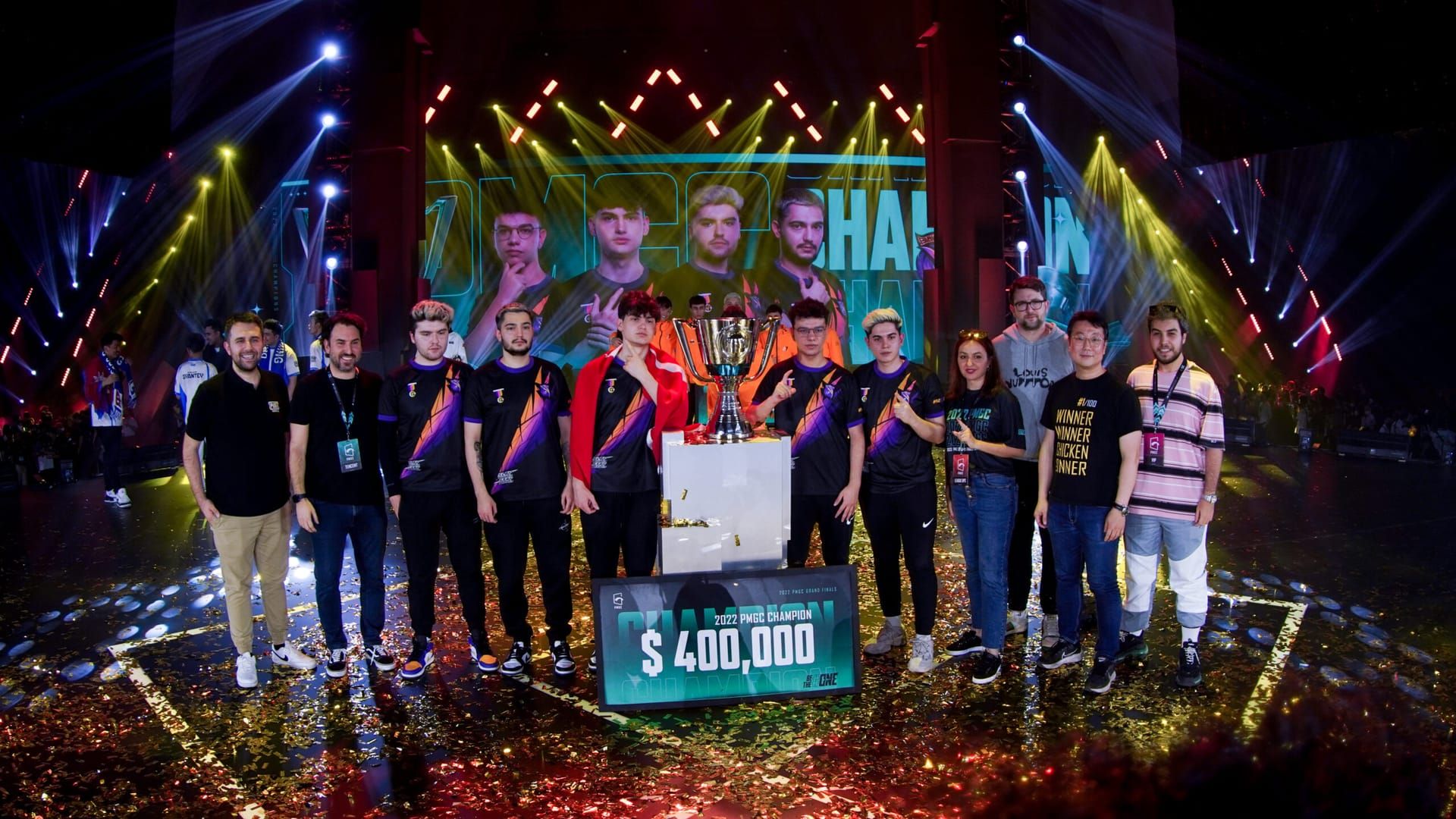
PMGO Season 1: $500,000, Southeast Asia
PMGO Season 2: $500,000, Pakistan
PMWC 2026: $3,000,000, Riyadh
PMGC 2026: $3,000,000, Grand Finals in Türkiye
This replaces the previous multi-tier system with focused championship events carrying significant prestige and financial rewards.
180 Regions Create Unprecedented Access
Expansion to 180 participating regions marks the broadest competitive reach in PUBG Mobile history. National championships serve as primary feeder systems where scouts actively monitor performance beyond simple rank achievements.
Format Evolution: Competitive Balance
Qualification tournaments feature 20-24 games for statistical significance, while championship finals condense to 15-18 matches. Point distribution now weights placement consistency over eliminations, rewarding strategic discipline and late-game execution.
Complete 2026 Global Events Calendar
Q1-Q2: Regional Qualification (January-June)
PMNC events begin January across all eight regions. Open qualifiers for regional leagues occur February-March, providing direct entry for unsponsored teams. Regional league regular seasons run March-May, with top teams securing automatic PMGO qualification.
Q3: Mid-Year Championships (July-September)
PMGO Season 1 dominates July-August, bringing qualified Southeast Asian teams together. September transitions into PMGO Season 2 preparation, with Pakistan hosting the second $500,000 global open.
Q4: Championship Convergence (October-December)
October marks PMWC 2026 qualification finalization in Riyadh ($3,000,000). PMGC 2026 qualification runs parallel, with Grand Finals in Türkiye scheduled late November-December (previous PMGC 2025 occurred December 12-14 in Bangkok).
Wildcard Windows
Quarterly wildcard tournaments accommodate teams that narrowly missed qualification. Condensed formats (12-15 matches over 2-3 days) reward established chemistry and adaptable strategies.
The Rank Reality: What Scouts Actually Look For
Conqueror Tier: Top 500 vs Top 1000
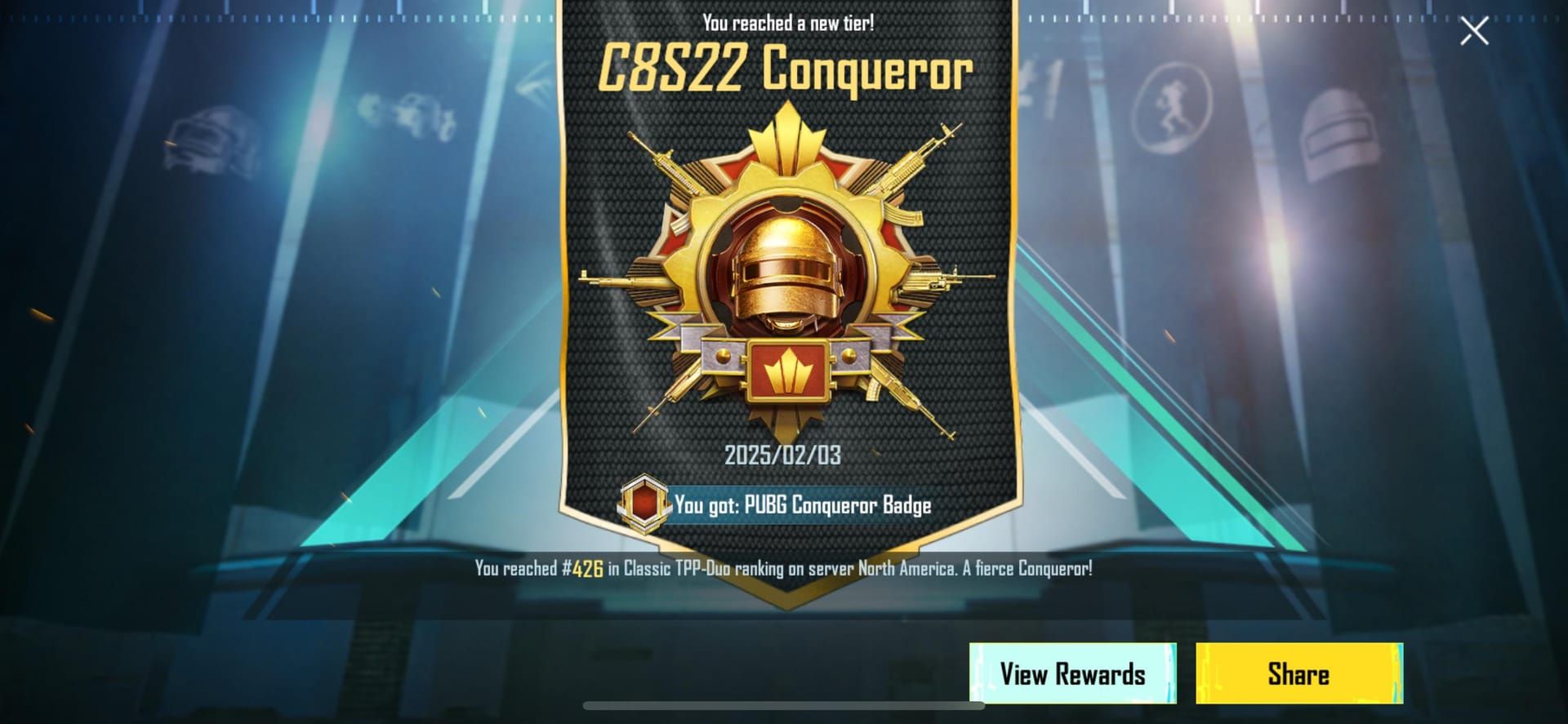
Conqueror represents top 500 players per server per season, but scout attention extends through top 1000, especially for role-specific specialists. An IGL ranked #800 with exceptional survival time receives comparable consideration to a #200 fragger.
Server population density affects Conqueror accessibility. Asian servers require significantly higher tier points than European or American servers. Top 100 receives premium attention, but positions 100-500 represent the primary recruitment pool.
Ace Dominator Sweet Spot
Ace Dominator generates higher tryout invitations than lower Conqueror positions. Players maintaining Ace Dominator while prioritizing scrims over ranked grinding demonstrate competitive focus scouts value.
A player maintaining Ace Dominator with 4.8 KD and 650 average damage while competing in daily scrims presents a more attractive profile than Conqueror #450 with 3.2 KD who exclusively plays ranked.
Crown and Below: Alternative Paths
Crown tier players face steeper challenges but maintain viable pathways through open qualifier performance. Exceptional tournament results override ranked tier limitations.
Key differentiator: consistency. Crown player maintaining 5.0+ KD across 200+ matches demonstrates mechanical proficiency meriting evaluation.
Server-Specific Differences
Asian servers maintain highest competitive density—Conqueror requires 5500+ tier points vs 4800+ European, 4500+ American servers. Southeast Asian players face particularly intense competition with multiple professional academies systematically developing talent.
European and American markets offer more accessible entry points with developing ecosystems actively seeking talent.
Beyond Rank: 5 Stats Scouts Check
KD Ratio Benchmarks
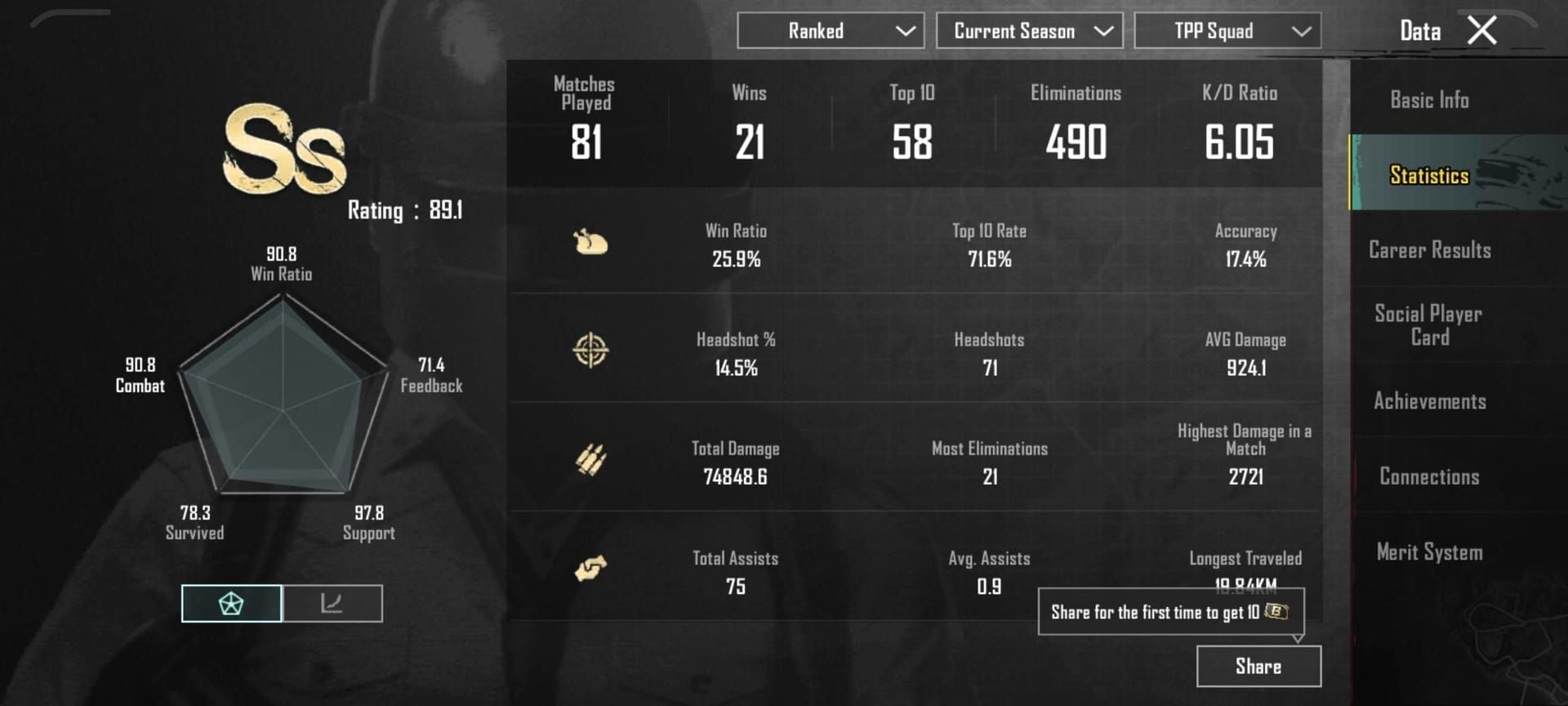
Assault players: Minimum 4.5 KD
IGL/support roles: 3.8-4.2 KD acceptable with superior survival rates
Sustained KD matters more than peak performance. Player maintaining 4.6 KD across 300 matches demonstrates reliable skill.
Average Damage: 600+ Per Match
600+ damage threshold indicates consistent mid-game fighting and late-game execution. Players exceeding 700 average damage while maintaining strong survival times demonstrate aggressive-yet-disciplined playstyle competitive formats reward.
Survival Time vs Aggression Balance
Elite competitive players average 22-26 minutes survival time while maintaining 4.5+ KD. This indicates strategic positioning extending match participation without excessive passivity.
Optimal profile: top-10 finish rates above 75% with average placement in top 3-5 range.
Tier Point Velocity
Players reaching Conqueror within 150 matches demonstrate efficiency suggesting competitive readiness. Scouts examine tier point graphs for consistency—steady upward progression indicates systematic improvement.
Season-over-season improvement provides crucial context. Player progressing from Ace Master to Conqueror #300 to #150 across three seasons demonstrates upward trajectory.
Win Rate and Top-10 Consistency
Win rate above 25% in solo queue indicates carry potential. Top-10 finish rates exceeding 80% demonstrate positioning discipline essential for tournament formats.
4.5 KD player with 28% win rate presents stronger potential than 4.6 KD player with 18% win rate.
Tournament Format Deep Dive
WWCD vs Placement Points
Victory awards 15-20 points, second place 12-15 points. Elimination points (1 per kill) contribute secondary value. Hybrid system requires 15-18 match samples for statistically significant rankings.
Match Count Changes
Qualification stages: 20-24 matches for adequate sample sizes. Championship finals: 15-18 matches balancing competitive integrity with spectator engagement. Daily distribution: 5-6 games per day with 15-minute breaks.
Circle Settings and Loot Adjustments
Competitive matches employ accelerated circle timings—first circle begins 30-60 seconds earlier than public matches. Loot distribution adjusted for equipment parity with increased spawn rates for essential items while maintaining power weapon scarcity.
TPP Dominance
Third-person perspective maintains 95%+ dominance in mobile esports. First-person exists primarily in regional exhibitions. Players aspiring to professional careers should prioritize TPP skill development.
Regional Pathways
South Asia: High Skill, Fierce Competition
India and Pakistan maintain highest player density and competitive intensity. PMGO Season 2's $500,000 in Pakistan highlights regional investment, but player-to-opportunity ratio remains challenging. South Asian players require top-50 server rankings vs top-200 in less competitive regions.
Southeast Asia: Expanding Investment
Strongest growth trajectory with increasing organizational investment. Thailand, Indonesia, Vietnam, Philippines host multiple professional organizations developing talent pipelines. PMGO Season 1's $500,000 reflects regional prioritization.
Americas and EMEA: Easier Entry
More accessible entry points with developing ecosystems actively recruiting talent. Lower player density creates opportunities unavailable in Asian markets. However, infrastructure limitations—fewer organizations, smaller prize pools—constrain long-term development.
Strategic approach: use Americas/EMEA as stepping stones, building credentials enabling subsequent Asian recruitment.
Cross-Region Transfers
Eligibility rules require 6-12 month residency before representing a region internationally. Language proficiency significantly impacts integration—teams prioritize English-speaking players for international rosters.
90-Day Competitive Preparation Plan
Phase 1 (Days 1-30): Rank Push
Achieve minimum Ace Dominator, target Conqueror top 500. Daily objectives:
Ranked matches (4-6/day): Maintain 4.5+ KD, 600+ average damage
Aim training (30 min): TDM/Arena for recoil control
VOD review (20 min): Analyze deaths, missed opportunities
Meta study (15 min): Weapon balance, drop locations, rotations
Track tier point velocity—100+ daily demonstrates efficiency for 30-day Conqueror achievement. Players can utilize PUBG Mobile UC recharge through BitTopup for rank protection cards and essential resources during crucial qualification windows.
Phase 2 (Days 31-60): Team Practice
Scrim participation (3-4 sessions weekly): Join community discords
Team formation: Connect with players or form squad
Role specialization: Identify primary role (IGL, fragger, support, flex)
Strategic learning: Study pro rotations, compound holds, positioning
Document scrim statistics separately—scouts evaluate scrim KD, average placement, clutch performance as competitive readiness indicators.
Phase 3 (Days 61-90): Tournament Experience
Open qualifier registration: Enter 2-3 tournaments for elimination-format experience
Advanced VOD analysis: Review personal gameplay and pro matches
Network building: Connect with scouts, managers, players
Performance documentation: Compile highlight reels, statistical summaries
Tournament performance under pressure reveals competitive readiness practice can't fully test. Scouts monitor open qualifiers to identify emerging talent.
Resource Management: UC Investment
Essential investments:
Royale Pass Premium: Rank protection cards
Weapon skins: Competitive-legal cosmetics with visibility improvements
Seasonal outfits: Professional appearance for streaming/broadcasts
Prioritize functional advantages over cosmetics. Competitive edge from consistent ranked progression outweighs aesthetics.
Getting on the Radar
Streaming Your Ranked Grind
Platform selection by region:
YouTube Gaming: Southeast/South Asian audiences
Facebook Gaming: Philippines, Vietnam
Twitch: Western/international exposure
Stream consistency matters more than production quality. Daily 2-3 hour streams demonstrating ranked progression attract scout attention. Include rank, KD, average damage in titles—scouts use these for initial screening.
Scrim Performance Documentation
Maintain detailed statistics:
Overall scrim KD and average damage
Placement distribution (% top-5, top-10 finishes)
Clutch statistics (1v2, 1v3 win rates)
Role-specific metrics
Create shareable summaries using spreadsheets or infographics. Video documentation of exceptional plays creates compelling evidence.
Open Qualifier Participation
Treat every match as live audition. Scouts monitor qualifier leaderboards identifying standout performers. Consistent participation demonstrates commitment—appearing in 8-10 qualifiers over three months shows dedication.
Post-tournament networking proves crucial. Many roster additions result from relationships built during qualifiers.
Community Networking
Active participation in competitive spaces:
Regional competitive discords with LFT channels
Tournament organizer communities
Professional organization public servers
Social media competitive groups
Contribute valuable content rather than self-promoting. Players sharing strategic insights build reputations attracting recruitment.
Common Misconceptions
Myth: Only Conqueror #1-100 Get Noticed
Reality: Active recruitment extends through top 1000, with role-specific specialists recruited from broader pools. Conqueror #600 with exceptional vehicle control may receive priority over #200 with superior KD but limited versatility.
Myth: You Need Full Team to Start
Reality: Individual recruitment represents primary pathway. Organizations prefer integrating talents into established systems. Free agents with strong statistics and scrim experience receive regular tryout invitations.
Myth: Age Limits Prevent Most Players
Reality: 16+ can compete regionally, 18+ internationally with travel. Players aged 16-28 represent core demographic. Younger players (14-15) can build foundations through community tournaments.
Myth: Free-to-Play Can't Compete
Reality: Competitive success doesn't require extensive UC investment. Strategic resource allocation provides advantages during preparation. Practical reality involves modest investment ($10-20 monthly) for essential tools rather than hundreds on cosmetics.
FAQ
What rank do you need for PUBG Mobile esports in 2026?
Minimum Ace Dominator with 4.5+ KD provides baseline consideration, though Conqueror top 500 significantly increases scout attention. Role-specific positions may accept slightly lower ranks with exceptional strategic skills and scrim performance.
How many PUBG Mobile global tournaments are there in 2026?
Four major tournaments: PMGO Season 1 ($500K, Southeast Asia), PMGO Season 2 ($500K, Pakistan), PMWC 2026 ($3M, Riyadh), PMGC 2026 ($3M, Türkiye). Additionally, 30+ national championships across eight regions.
What is the minimum KD ratio for pro teams?
Assault/fragger roles require minimum 4.5 KD. IGL/support positions accept 3.8-4.2 KD with strong survival rates and strategic value. Sustained consistency across 200+ matches matters more than peak performance.
How do open qualifiers work in 2026?
Multi-stage elimination formats featuring 20-24 matches across qualification rounds. Teams register through tournament platforms, compete in assigned lobbies, advance based on cumulative placement points. Top 4-8 teams earn regional league slots or direct championship qualifier entry.
Is Conqueror rank required to go pro?
Conqueror significantly improves prospects but isn't absolutely required. Ace Dominator players with exceptional scrim performance, tournament results, and role-specific expertise receive regular tryout opportunities. Open qualifier success can override rank limitations.
What stats do scouts check besides rank?
Five core metrics: KD ratio (4.5+ fraggers, 3.8+ support), average damage (600+ target), survival time (22-26 min sweet spot), tier point velocity, win rate (25%+ indicates carry potential). Additionally: scrim statistics, tournament placements, VOD footage for decision-making assessment.
Ready to dominate 2026? Fuel your ranked grind with instant UC from BitTopup—secure, fast, trusted by competitive players worldwide. Get your UC now and focus on climbing to Conqueror.