

Poppo Live exchange rate arbitrage reveals significant regional pricing gaps. Philippines delivers 12,000+ coins per $1 USD via Google Play—beating Nigeria and Pakistan's 9,460 coins per dollar, Nepal's 8,900 coins, and the global baseline of 8,300-9,100 coins. This analysis examines verified pricing across regions, providing cost-conscious users actionable strategies to maximize coin purchasing power through legitimate regional pricing differences.
Understanding Poppo Live Exchange Rate Arbitrage
Exchange rate arbitrage leverages regional pricing differences on Google Play to acquire coins at lower costs. This capitalizes on purchasing power parity adjustments Google implements across markets, where identical coin packages carry vastly different local currency prices.
The mechanics: a 210,000 coin package costs PHP 989 (≈$17.40 USD) in Philippines, while the same value requires significantly more in global markets. Philippine pricing delivers 12,000+ coins per dollar versus the global benchmark of 9,460 coins—a 27% improvement.
For simplified access without regional complexity, Poppo Live Coins top up through BitTopup provides transparent pricing with instant delivery, eliminating VPN configurations or payment adjustments while maintaining competitive rates.
What Is Currency Arbitrage in Mobile Gaming
Currency arbitrage exploits price inconsistencies across geographical markets. Google Play adjusts pricing based on local economic conditions, average income levels, and competitive positioning. These adjustments create opportunities where identical digital goods cost different amounts when converted to common currency.
Key differences from traditional financial arbitrage:
Consumer-level transactions vs. institutional trading
Price differences from deliberate market segmentation vs. temporary inefficiencies
Requires navigating platform policies vs. sophisticated trading algorithms
Effective arbitrage requires more than price comparison. Transaction fees, currency conversion costs, payment method availability, and account restrictions all impact net savings. A 30% nominal advantage can evaporate when foreign transaction fees add 3-5% and currency conversion spreads consume another 2-4%.
Why Regional Pricing Exists on Google Play
Google implements regional pricing to maximize market penetration across economies with vastly different purchasing power. A $10 USD package represents significantly larger disposable income in developing markets versus Western economies, necessitating price adjustments.
This follows purchasing power parity principles, where prices reflect what consumers in each market can reasonably afford. Philippines pricing—packages starting at PHP 33 (≈$0.58 USD) for 7,000 coins—demonstrates this approach, offering entry points aligned with local economic conditions.
Platform holders also face competitive pressures within each market. Regional pricing allows Google Play to compete effectively against local payment platforms and alternative recharge methods dominating specific geographical areas.
Legal and Ethical Considerations
Regional pricing arbitrage occupies a gray area in platform terms of service. Google Play policies prohibit using VPNs to access content unavailable in your region or manipulate pricing, though enforcement varies. The platform primarily targets large-scale abuse rather than individual consumer purchases.
Legally, purchasing digital goods through legitimate payment methods rarely constitutes fraud, even when accessing different regional stores. However, platforms reserve the right to restrict accounts violating terms of service.
Ethical considerations center on whether exploiting regional pricing undermines the economic logic making content affordable in developing markets. Some argue arbitrage by wealthy-market users could prompt publishers to eliminate regional discounts, ultimately harming users in lower-income countries who genuinely need those price adjustments.
How Exchange Rates Impact Purchasing Power
Currency exchange rates directly determine USD-equivalent cost of regional purchases. The Philippine peso typically trades around 56-58 PHP per USD, meaning the 21,000 coin package at PHP 99 costs ≈$1.74 USD—delivering roughly 12,069 coins per dollar.
Exchange rate volatility introduces timing considerations. A 5% currency fluctuation can amplify or diminish arbitrage advantages. When the peso strengthens against the dollar, Philippine packages become relatively more expensive for USD holders. Conversely, peso weakness enhances the arbitrage opportunity.
Real-world calculations must account for the complete transaction chain. If your credit card charges 3% foreign transaction fee and payment processor applies 2% currency conversion markup, your effective exchange rate differs substantially from mid-market rate. A package nominally costing $17.40 might actually charge $18.27 after fees—reducing coins-per-dollar from 12,069 to 11,504.
Complete Regional Price Comparison: Verified Data
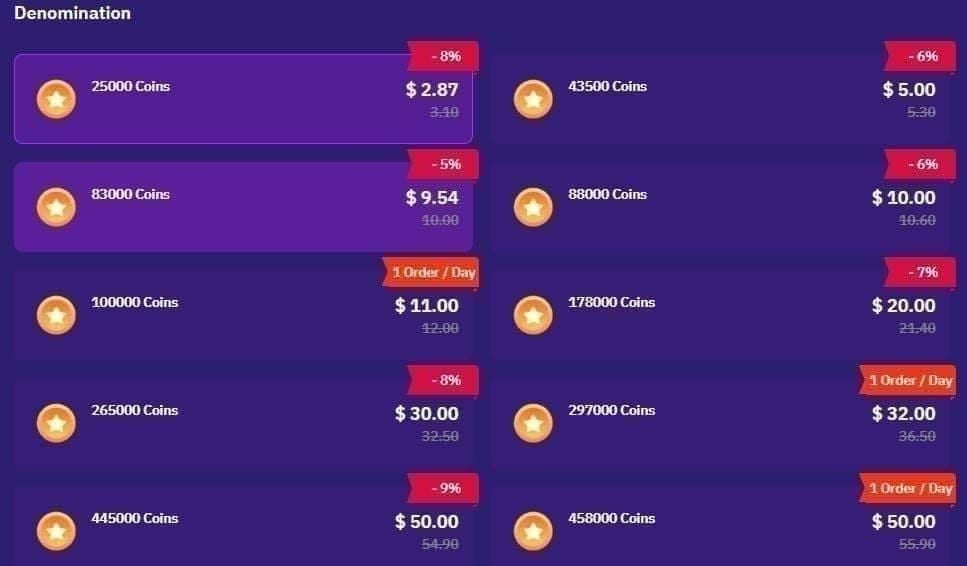
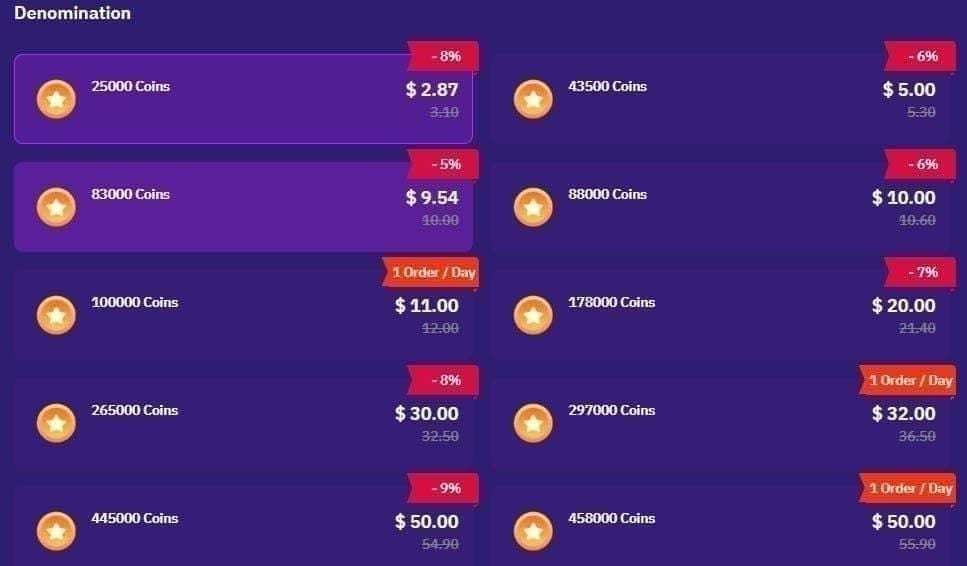
Comprehensive pricing analysis across regions reveals distinct tiers of coin affordability. As of October 2025, Philippines consistently offers highest coins-per-dollar ratio, followed by Nigeria and Pakistan at parity, with Nepal and global markets trailing.
Data demonstrates clear patterns: smaller denomination packages typically offer better per-coin rates in low-cost regions, while bulk purchases show less dramatic regional variation.
Philippines: Most Cost-Effective Market
Philippine pricing establishes the benchmark for maximum coin value:
7,000 Coins: PHP 33 (≈$0.58) = 12,069 coins/$
21,000 Coins: PHP 99 (≈$1.74) = 12,069 coins/$
70,000 Coins: PHP 329 (≈$5.79) = 12,090 coins/$
210,000 Coins: PHP 989 (≈$17.40) = 12,069 coins/$
700,000 Coins: PHP 3,290 (≈$57.88) = 12,093 coins/$
3,500,000 Coins: PHP 22,450 (≈$394.96) = 8,862 coins/$
Data reveals consistent efficiency across small to medium packages, with notable drop in largest bundle. Optimal purchase points exist in the 700,000 coin range, where you maximize regional advantage before diminishing returns.
Current promotional periods from June 23 through October 31, 2025, offer 20% discounts on bundles of 21,000+ coins with minimum PHP 130 purchases, further enhancing arbitrage opportunity.
Nigeria and Pakistan: Competitive Alternatives
Nigeria and Pakistan maintain identical coins-per-dollar ratios, both delivering 9,460 coins per USD—matching global benchmark but falling short of Philippine efficiency:
Nigeria:
10,000 Coins: NGN 1,690 (≈$1.06) = 9,434 coins/$
100,000 Coins: NGN 16,900 (≈$10.56) = 9,470 coins/$
500,000 Coins: NGN 84,500 (≈$52.81) = 9,468 coins/$
1,000,000 Coins: NGN 169,000 (≈$105.63) = 9,467 coins/$
Pakistan:
10,000 Coins: PKR 2,960 (≈$1.06) = 9,434 coins/$
100,000 Coins: PKR 29,600 (≈$10.56) = 9,470 coins/$
500,000 Coins: PKR 148,000 (≈$52.81) = 9,468 coins/$
1,000,000 Coins: PKR 296,000 (≈$105.63) = 9,467 coins/$
These markets offer minimal advantage over global pricing, making them less attractive for arbitrage. However, users with existing payment infrastructure in these regions may find convenience value in local currency transactions.
Nepal: Mid-Tier Pricing
Nepal occupies middle ground between premium Philippine rates and global baseline, delivering ≈8,900 coins per dollar:
10,000 Coins: NPR 150 (≈$1.12) = 8,929 coins/$
100,000 Coins: NPR 1,650 (≈$12.33) = 8,110 coins/$
200,000 Coins: NPR 3,435 (≈$25.66) = 7,795 coins/$
500,000 Coins: NPR 8,435 (≈$63.02) = 7,933 coins/$
1,000,000 Coins: NPR 16,210 (≈$121.11) = 8,257 coins/$
Nepali pricing shows greater variance across package sizes, with smallest denomination offering best per-coin value. Users targeting Nepali pricing should focus on smaller, repeated purchases rather than bulk buying.
Global Market Baseline
Standard global pricing establishes the reference point:
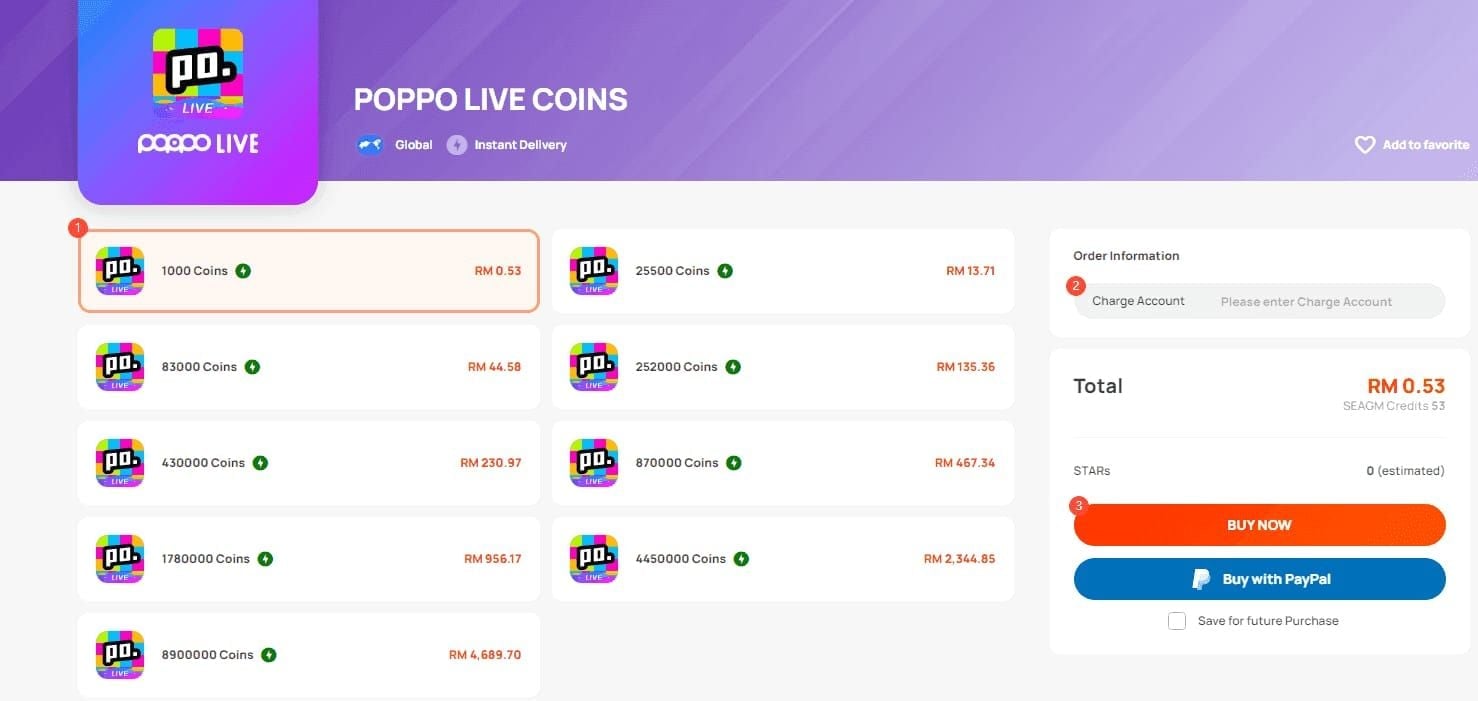
83,000 Coins: $10 = 8,300 coins/$
252,000 Coins: $30 = 8,400 coins/$
430,000 Coins: $50 = 8,600 coins/$
870,000 Coins: $100 = 8,700 coins/$
1,780,000 Coins: $200 = 8,900 coins/$
4,500,000 Coins: $500 = 9,000 coins/$
9,100,000 Coins: $1,000 = 9,100 coins/$
Global pricing demonstrates progressive improvement with larger purchases, reaching 9,100 coins per dollar at $1,000 tier. This means bulk purchasers in global markets approach efficiency of mid-tier regional pricing, narrowing arbitrage advantage for high-volume transactions.
Real Savings Calculations
Translating regional price differences into concrete savings requires accounting for complete transaction cost.
Philippine Purchase (210,000 coins):
Base: PHP 989 (≈$17.40)
Foreign transaction fee (3%): $0.52
Currency conversion markup (2%): $0.35
Total: $18.27
Effective rate: 11,495 coins/$
Global Direct Purchase:
Nearest equivalent: 252,000 coins for $30
Adjusted for 210,000 coins: $25.00
No additional fees
Effective rate: 8,400 coins/$
Philippine route delivers 210,000 coins for $18.27 vs. $25.00 globally—net savings of $6.73 or 27% despite transaction fees. For monthly purchases, this translates to annual savings of ≈$80.76.
Users seeking to avoid transaction complexity while maintaining competitive pricing can explore recharge Poppo Coins agent services through BitTopup, which consolidates regional advantages into straightforward pricing without requiring VPN connections or international payment methods.
Small Package Optimization (Under 100,000 Coins)
Small denomination purchases show most dramatic regional advantages. For 70,000 coins:
Philippines:
Cost: PHP 329 (≈$5.79)
With fees: ≈$6.08
Rate: 11,513 coins/$
Global (83,000 coins, scaled to 70,000):
Cost: ≈$8.43
Rate: 8,300 coins/$
Philippine advantage delivers 38.7% more coins per dollar at this tier. Monthly purchases save ≈$28.20 annually through regional pricing.
Medium Package Analysis (100,000-500,000 Coins)
Medium-tier purchases represent the sweet spot for arbitrage efficiency:
Philippines (210,000 coins):
With fees: $18.27
Savings vs. global: $6.73 (27%)
Nigeria/Pakistan (200,000 coins):
With fees: $22.18
Savings vs. global: $2.82 (11%)
Nepal (200,000 coins):
With fees: $26.94
Savings vs. global: -$1.94 (premium of 8%)
At this tier, only Philippine pricing delivers meaningful savings after transaction costs.
Bulk Purchase Considerations (500,000+ Coins)
Large-volume purchases narrow regional advantage as global pricing improves with scale:
Philippines (700,000 coins):
With fees: $60.77
Rate: 11,518 coins/$
Global (870,000 coins, scaled to 700,000):
Cost: ≈$80.46
Rate: 8,700 coins/$
Philippine pricing maintains 32% advantage, saving $19.69. However, largest Philippine package (3,500,000 coins at $394.96) delivers only 8,862 coins/$—inferior to global $1,000 package at 9,100 coins/$.
Critical insight: beyond ≈1 million coins, regional arbitrage advantages diminish or disappear. High-volume purchasers may find better value in global pricing or specialized platforms offering bulk discounts.
Step-by-Step Regional Access Implementation
Accessing regional pricing requires either legitimate presence in target market or technical workarounds carrying varying degrees of platform policy compliance.
Method 1: VPN-Based Region Access

VPN access represents most common arbitrage method, though it explicitly violates Google Play terms of service:
Install reputable VPN service with servers in target country
Connect to Philippine server and verify IP shows Philippine location
Clear Google Play Store cache to force region detection refresh
Access Google Play Store and navigate to Poppo Live
Verify pricing displays in PHP before proceeding
Complete transaction using payment method accepting international charges
Disconnect VPN after purchase completion
Google increasingly detects VPN usage through signals beyond IP address, including device fingerprinting, payment method origin, and account history patterns. Accounts flagged for region manipulation may face purchase restrictions or suspension.
Method 2: Legitimate Regional Payment Methods
Users with genuine connections to low-cost regions can leverage local payment infrastructure without policy violations:
Philippine mobile wallets (GCash, PayMaya) linked to local bank accounts
Regional gift cards purchased through legitimate local retailers
Local credit/debit cards issued by banks in target country
Family/friend assistance from contacts residing in optimal pricing regions
This eliminates policy violation concerns but requires existing infrastructure or relationships in target markets.
Method 3: Specialized Recharge Platforms
Third-party recharge services consolidate regional pricing advantages into simplified purchasing experiences. BitTopup exemplifies this by:
Maintaining payment infrastructure across multiple regions
Offering transparent pricing reflecting regional advantages
Eliminating VPN requirements and technical complexity
Providing instant delivery with purchase protection
Supporting multiple payment methods without foreign transaction fees
This trades maximum theoretical savings for convenience, reliability, and policy compliance. Users avoid account risks while accessing better-than-global pricing.
Payment Method Strategies
Payment method selection significantly impacts net savings. Transaction fees, currency conversion rates, and payment processor markups can consume 5-10% of nominal savings.
Credit Card Considerations
International credit card purchases trigger multiple fee layers:
Foreign transaction fees: 1-3% (some cards waive this)
Currency conversion markup: 1-3% above mid-market rates
Dynamic currency conversion: Additional 3-5% if merchant offers pay in your currency
Premium travel credit cards often waive foreign transaction fees, immediately improving arbitrage economics by 1-3%. Always decline dynamic currency conversion—allow card network to handle conversion at more favorable rates.
Digital Wallet Optimization
PayPal:
Charges 3-4% currency conversion fee
May add foreign transaction fees
Generally unfavorable for international arbitrage
Regional Mobile Wallets (GCash, PayMaya):
No foreign transaction fees for local purchases
Competitive currency conversion if funding from international sources
Requires Philippine phone number and verification
Prepaid Card Solutions
Regional prepaid cards purchased through legitimate channels provide another access vector:
Philippine Google Play gift cards from authorized retailers
No foreign transaction fees when redeemed in correct region
Fixed exchange rate at time of card purchase
Requires VPN or regional account to redeem
This frontloads currency conversion but eliminates ongoing transaction fees. Purchase cards during favorable exchange rate periods and redeem later.
Risk Management and Account Security
Regional pricing arbitrage carries inherent risks. While individual consumer purchases rarely trigger enforcement, patterns suggesting commercial resale or systematic abuse attract platform attention.
Platform Policy Compliance Spectrum
Low Risk (Rarely Enforced):
Occasional purchases while traveling in different regions
Using legitimate payment methods from your actual location
Accessing content available in your home region
Medium Risk (Selective Enforcement):
Regular VPN usage to access different regional pricing
Frequent region switching on single account
Large-volume purchases inconsistent with account history
High Risk (Active Enforcement):
Commercial-scale purchasing for resale
Automated purchasing systems
Payment fraud or stolen payment methods
Multiple accounts from single device/payment method
Most individual users engaging in regional arbitrage fall into medium-risk category, where enforcement depends on volume, frequency, and whether activity triggers automated fraud detection.
Account Security Best Practices
Maintain consistent account information (don't frequently change registered country)
Use legitimate payment methods in your name
Avoid excessive region switching (pick one optimal region and stay consistent)
Keep purchase volumes reasonable relative to account history
Document legitimate reasons for regional access if questioned
Maintain backup accounts for critical access needs
Common Enforcement Triggers
Specific patterns tend to trigger platform review:
Rapid region changes: Switching between countries multiple times per day
Payment method mismatches: Philippine purchases with US-issued cards lacking international usage history
Volume inconsistencies: Sudden large purchases on previously inactive accounts
Multiple device access: Same account accessed from different countries simultaneously
Refund patterns: Frequent purchase-refund cycles suggesting testing or abuse
BitTopup Advantage: Simplified Access
Direct recharge platforms like BitTopup eliminate technical complexity and policy risks while maintaining competitive pricing advantages.
Transparent Pricing Without Regional Complexity
BitTopup consolidates regional pricing advantages into straightforward package offerings:
No VPN required
Clear USD pricing
Instant delivery (coins credited within minutes)
Multiple payment methods (credit cards, digital wallets, cryptocurrency)
No foreign transaction fees
This model maintains payment infrastructure across multiple regions and purchases in bulk at optimal regional rates, then passes savings to consumers through competitive package pricing.
Security and Reliability Advantages
No account policy violations
Purchase protection with refund policies and customer support
Payment security without exposing cards to international merchants
Consistent availability without VPN dependency
Clear transaction history for budgeting
Cost-Benefit Analysis: DIY vs. Platform
DIY Regional Arbitrage:
Maximum savings: 25-35%
Requires technical setup and maintenance
Policy violation risks
Time investment for each purchase
Best for: Tech-savvy users making large purchases
Platform Purchase (BitTopup):
Typical savings: 15-25% vs. global pricing
Zero technical requirements
No policy risks
Instant, simple transactions
Best for: Convenience-focused users, regular small purchases, risk-averse users
For monthly purchases under $50, time savings and risk elimination of platform purchases typically outweigh incremental savings from DIY arbitrage. High-volume users spending $200+ monthly may find DIY approaches worthwhile despite added complexity.
Advanced Optimization Strategies
Experienced users combine multiple optimization techniques to maximize long-term value.
Currency Timing Optimization
Exchange rate fluctuations create timing opportunities:
Monitor PHP/USD exchange rate using financial tracking tools
Purchase during peso weakness (higher PHP per USD = better coin rates)
Use gift cards to lock rates during favorable periods
Avoid purchases during peso strength
Philippine peso typically trades in 54-60 PHP/USD range, with 5-10% fluctuations over 3-6 month periods. Purchasing during 58 PHP/USD vs. 54 PHP/USD period gains ≈7% additional value.
Bundle Selection Strategy
Optimal Philippine Packages:
700,000 coins (PHP 3,290): 12,093 coins/$
210,000 coins (PHP 989): 12,069 coins/$
70,000 coins (PHP 329): 12,090 coins/$
Avoid:
3,500,000 coins (PHP 22,450): Only 8,862 coins/$
Strategic users purchase multiple medium-sized packages rather than single large packages when per-coin rate deteriorates at higher tiers.
Promotional Period Exploitation
Current promotional period (June 23-October 31, 2025) offering 20% discounts on 21,000+ coin bundles with minimum PHP 130 purchases creates stacking opportunities:
Base Philippine advantage: 12,069 coins/$
Promotional bonus: +20% coins
Combined rate: 14,483 coins/$
Savings vs. global: 59% improvement
Concentrate purchases during promotional windows, buying larger quantities to carry through non-promotional periods.
Monthly Budget Allocation
Regular spenders benefit from structured purchasing:
Calculate monthly coin consumption based on typical usage
Identify optimal package size minimizing per-coin cost
Set purchase schedule aligned with promotional periods and favorable exchange rates
Maintain 1-month buffer inventory to avoid emergency purchases at unfavorable rates
Track spending against budget to prevent overconsumption
Common Misconceptions
Myth: All Regional Purchases Violate Terms of Service
Reality: Legitimate purchases made while physically present in a region, using local payment methods, or through authorized third-party platforms don't violate platform policies. Violations occur when users deliberately misrepresent location to access pricing unavailable in their actual region.
Myth: VPN Usage Automatically Results in Account Bans
Reality: While VPN usage to manipulate pricing violates Google Play policies, enforcement is selective and primarily targets commercial-scale abuse. Individual users making occasional purchases rarely face account action, though risk exists.
Myth: Cheapest Region Always Offers Best Overall Value
Reality: Transaction fees, currency conversion costs, payment method limitations, and time investment can eliminate or reverse nominal price advantages. A region offering 15% lower base prices may cost more after accounting for 5% foreign transaction fees, 3% currency conversion markup, and 2% payment processor fees.
Myth: Bulk Purchases Always Provide Better Value
Reality: Regional pricing structures sometimes offer better per-coin rates on smaller packages. Philippine pricing shows this—the 3,500,000-coin package delivers only 8,862 coins/$ vs. 12,093 for the 700,000-coin package.
Future-Proofing Your Strategy
Regional pricing landscapes evolve as platforms adjust to market conditions, regulatory changes, and arbitrage exploitation.
Monitoring Regional Price Updates
Platforms periodically adjust regional pricing in response to:
Currency fluctuations: Major exchange rate movements trigger price recalibrations
Market conditions: Economic changes in specific regions prompt pricing reviews
Competitive pressure: New entrants or alternative platforms force price adjustments
Arbitrage exploitation: Excessive abuse may prompt platforms to narrow regional gaps
Track pricing across target regions monthly, documenting changes to identify trends.
Building Sustainable Long-Term Approaches
Most resilient coin purchasing strategies combine multiple methods:
Primary method: Lowest-risk approach for regular purchases (platform or legitimate regional access)
Opportunistic method: Higher-risk/higher-reward approach for large purchases during optimal conditions
Backup method: Reliable fallback when primary methods become unavailable
This diversified approach prevents complete disruption when any single method becomes unavailable or uneconomical.
When to Switch to Direct Purchase Platforms
Indicators suggesting transition from DIY arbitrage to platform purchases:
Time investment exceeds value
Risk tolerance decreases (account restrictions would create significant problems)
Purchase frequency increases (regular transactions make convenience more valuable)
Regional advantages narrow (platform pricing approaches DIY arbitrage results)
Technical complexity increases (enhanced detection requires more sophisticated workarounds)
Calculate effective hourly return from arbitrage activities, including setup time, purchase execution, and troubleshooting. When this rate falls below your personal value of time, platform purchases become economically rational even at slightly higher per-coin costs.
Frequently Asked Questions
Which country has the cheapest Poppo Live coins on Google Play?
Philippines offers cheapest Poppo Live coins, delivering ≈12,000+ coins per $1 USD—significantly better than Nigeria and Pakistan (9,460 coins/$), Nepal (8,900 coins/$), and global markets (8,300-9,100 coins/$). The 700,000-coin package at PHP 3,290 (≈$57.88) provides optimal per-coin rate at 12,093 coins/$.
How much can I save using exchange rate arbitrage on Poppo Live?
Savings range from 25-35% depending on package size and transaction costs. Purchasing 210,000 coins through Philippine pricing costs ≈$18.27 (including fees) vs. $25.00 through global pricing—saving $6.73 per transaction or 27%. Monthly purchasers save ≈$80-100 annually.
Is it legal to buy Poppo coins from different countries?
Purchasing through legitimate regional payment methods while physically present in a region is legal. However, using VPNs to misrepresent location and access different regional pricing violates Google Play terms of service, though it doesn't constitute illegal activity in most jurisdictions. Platforms may restrict accounts for policy violations. Third-party platforms like BitTopup provide policy-compliant access to competitive pricing.
What payment methods work best for international Poppo coin purchases?
Credit cards without foreign transaction fees (typically premium travel cards) offer best combination of convenience and cost-effectiveness, adding only 1-2% in currency conversion costs. Regional mobile wallets like GCash or PayMaya eliminate foreign transaction fees entirely but require local verification. Prepaid Google Play gift cards purchased in target regions avoid ongoing transaction fees but require VPN access for redemption.
Can I get banned for buying Poppo coins from another region?
Account restrictions are possible but uncommon for individual users making occasional purchases. Platforms primarily enforce against commercial-scale abuse, automated purchasing systems, and patterns suggesting resale operations. Risk increases with frequent region switching, large-volume purchases inconsistent with account history, and payment method mismatches. Using legitimate third-party platforms eliminates this risk.
Does BitTopup offer better prices than Google Play regional stores?
BitTopup pricing typically falls between optimal regional pricing (Philippines) and global Google Play rates, offering 15-25% savings vs. global pricing. While maximum DIY arbitrage can achieve 25-35% savings, BitTopup eliminates VPN requirements, foreign transaction fees, policy violation risks, and technical complexity. For users valuing convenience and security, BitTopup's competitive pricing with instant delivery and purchase protection provides superior overall value.