

Opera Singer dominates Identity V's COA VIII with near-universal bans, rivaling Dream Witch's 75% pick/ban in Legendary matches. This analysis examines why this hunter achieves top priority in competitive play, backed by December 2025-February 2025 qualifier data. Understanding Opera Singer's mechanics, stats, and meta impact reveals critical insights for Season 39's 165% healing efficiency and cipher rush meta.
COA VIII Qualifiers Meta Context
COA VIII tournament structure differs fundamentally from ranked play. Competition began December 26, 2025-January 2, 2025 (Preheat), with registration until January 14, 2025 09:00. Leviathan Shore (January 2-16) and Ancient Passage (January 16-23) phases impose strict match limits rewarding consistent hunter performance.
Tournament rules create daily match restrictions: Leviathan Shore allows 6 daily matches (60 total cap), Ancient Passage tightens to 5 daily (20 total). These limits make every match critical, elevating hunters guaranteeing consistent results.
Points system heavily favors hunters: Team Points = Hunter Points x2 + top 4 Survivor Points. A dominant hunter carries team rankings more effectively than survivors. Identity V Echoes top up through BitTopup provides fast, secure character access with competitive pricing.
Tournament vs Ranked Differences
Competitive environments eliminate ranked variables. Five-player teams use voice chat versus mixed solo queue coordination. Map selections follow predetermined pools, not random assignment, enabling prepared strategies.
Ban phase permits 2 bans per faction in Legendary matches. Teams prioritize threats, forcing choices between survivor powerhouses like Priestess (80% ban rate) or overwhelming hunters.
Season 39 meta shifts compound tournament factors. September 17, 2025 update nerfed healing to 165% while making chair saves 10-15% faster. This pushed cipher rush strategies where teams prioritize generators over extended chases. Hunters securing quick downs gain disproportionate value.
Rule Variations Affecting Viability
COA VIII's April 2025 Grand Final involves 20 teams: China (9), Japan (5), Southeast Asia (2), NA-EU (2), South Korea (1), HK-MO-TW (1). Teams field 1-7 players, minimum 5 advancing through qualifiers.
Match format creates pressure testing hunter reliability. Unlike ranked, tournament games require performance under scrutiny against opponents who've studied patterns and developed counter-strategies.
Ancient Passage rankings award 2000 Fragments (Rank 1), 1500 (Rank 2), 1200 (Rank 3). Significant gaps incentivize conservative, high-success-rate strategies.
Ban Phase Statistics
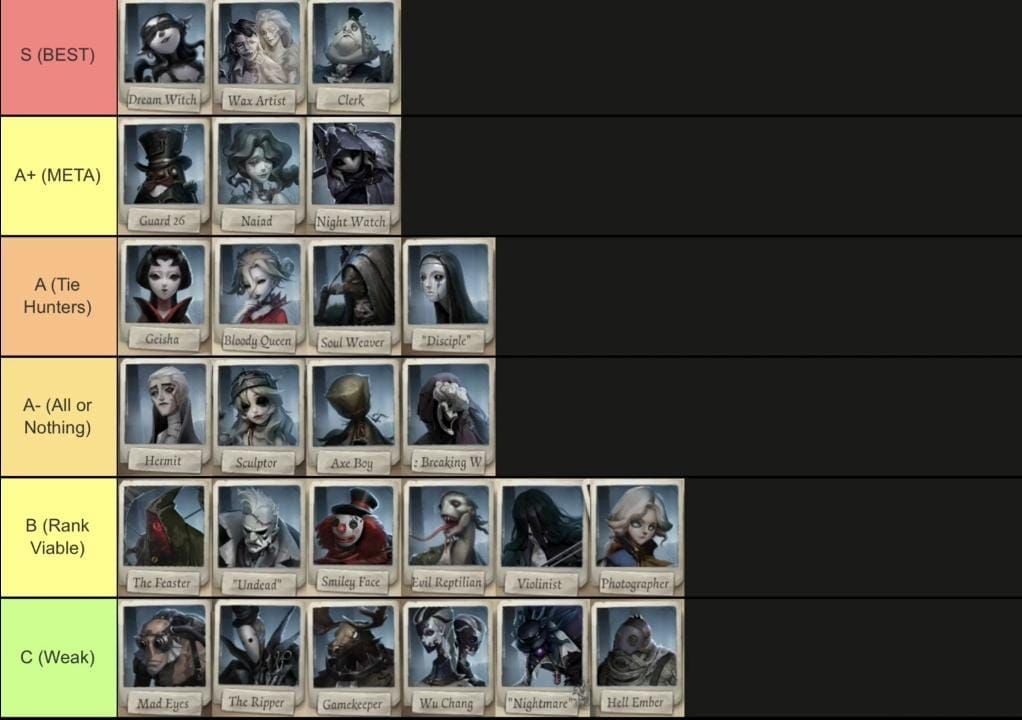
Tournament data reveals clear hierarchies:
Dream Witch: 75% pick/ban, 35/35 rating
Breaking Wheel: 35/35 rating, 80% speed boost (14s Energy Charge)
Sculptor: 34/35 rating
Opera Singer: 33/35 rating
Geisha: 33/35 rating
Opera Singer's 33/35 places it with elite hunters. Survivors consistently prioritize banning Dream Witch or Opera Singer in Legendary matches.
IJL Fall Tournament (November 15-16, 2025) showed S-Tier hunters achieving 65% higher escape prevention versus lower tiers.
Opera Singer Core Mechanics
Music Notes system generates area-of-effect influence survivors can't avoid through traditional kiting. Unlike hunters requiring line-of-sight or proximity, Opera Singer establishes zone control persisting even when not directly chasing.
Euphoria status represents primary threat. When survivors accumulate Music Notes through proximity or deployed abilities, they enter Euphoria—a debuff severely compromising movement and decision-making. This bypasses traditional chase dynamics where skilled survivors extend pursuits through optimal pathing.
Music Notes and Euphoria Explained
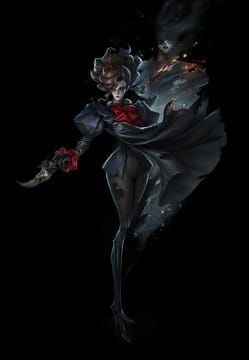
Music Notes accumulate through multiple vectors:
Direct proximity to Opera Singer (passive)
Active abilities (strategic acceleration)
Cipher defender targeting (forced accumulation)
Euphoria triggers at critical thresholds, imposing movement penalties and visual/audio disruption. In tournament play where milliseconds determine outcomes, these debuffs transform safe kiting routes into death traps. Survivors can't reliably execute tight vaults or pallet drops while affected.
Strategic depth emerges through note management across multiple survivors. Opera Singer spreads notes to different targets, creating team-wide pressure where multiple survivors operate at reduced efficiency simultaneously.
Map Pressure vs Other Hunters
Opera Singer's map control transcends traditional patrol through persistent Music Notes. While Geisha or Sculptor must physically traverse maps, Opera Singer establishes zones where accumulation continues during chases. This creates multiplicative pressure—survivors near current chase accumulate notes while primary target gets downed.
Multi-story maps amplify effectiveness. Dream Witch achieves 75% pick/ban specifically for multi-story dominance. Opera Singer shares this advantage, using vertical space to spread notes across floors simultaneously.
Cipher rush counter-mechanics represent most tournament-relevant strength. Season 39's meta shift toward rapid completion through Mechanic (200% robot decoding for 81s ciphers) demands disruptive hunters. Opera Singer's area denial prevents safe cipher clustering, forcing spread positioning reducing rescue efficiency.
Why 100% Ban Rate in COA VIII
Near-universal ban priority stems from neutralizing coordinated survivor strategies defining tournament play. Professional teams invest hundreds of hours perfecting rescue timing, kiting rotations, cipher management. Opera Singer's mechanics directly counter these, rendering preparation less effective.
Chase efficiency in tournament kiting reaches levels impossible in ranked. Survivors with thousands of hours execute frame-perfect vaults and maintain optimal camera angles. Opera Singer bypasses skill gaps through Euphoria's unavoidable debuffs—even top kiters can't overcome movement penalties when notes reach critical levels.
Music Notes denial eliminates territorial advantages from map knowledge. Competitive survivors memorize every pallet, window angle, transition route. Opera Singer's area pressure transforms safe zones into hazards, forcing unfamiliar territory.
Tournament-Level Chase Efficiency
Professional survivors extend chases through precise resource management. Seer uses owls for 20+ second extensions. Persona builds with 36 Borrowed Time + Tide Turner provide 20s rescue invincibility at 49% chair progress. Opera Singer compresses timelines through guaranteed hits once Euphoria triggers.
Season 39 chair save buffs (10-15% faster) theoretically favor survivors, but Opera Singer counters through camp pressure. Notes accumulate on rescuers approaching chairs, forcing Euphoria acceptance during saves or delayed rescues until decay. This often results in second chair stage or elimination.
Persona 129 Flywheel Effect grants 0.5s dash immunity with Knee Jerk's 20-30% vault speed increase. Opera Singer's area denial negates these by controlling space before survivors reach vault/pallet positions.
Safe Zone Denial
Traditional counterplay relies on safe zones—areas with multiple vault/pallet options for infinite loops. Teams designate survivors to occupy these, drawing attention while teammates complete ciphers. Opera Singer eliminates this through persistent note accumulation making safe zones dangerous.
Map-specific strategies teams practice 50+ hours become unreliable. Prepared cipher orders and kiting routes require complete revision since traditional zones no longer function. This preparation invalidation represents unacceptable tournament risk.
Psychological pressure compounds mechanical advantages. Survivors can't rely on muscle memory and must constantly monitor note levels. This divided attention creates mistakes even among professionals.
Team Coordination Disruption
Competitive Identity V relies on audio information for coordination. Teams use sound cues to track hunter position, coordinate rescues, time cipher completion. Music Notes create audio interference disrupting communication channels.
Voice communication advantages become less effective. While teams verbally coordinate, Euphoria impairs execution regardless of communication quality. Perfectly coordinated rescues fail if rescuers can't execute cleanly due to movement debuffs.
For competitive roster building, Recharge Identity V global through BitTopup ensures immediate access with secure transactions.
Cipher Rush Counter Analysis
Season 39's healing nerf to 165% shifted strategy toward cipher rush. Teams prioritize generators over healing injured survivors. This should favor mobile hunters, but Opera Singer's area denial proves more effective.
Mechanic's 200% robot decoding creates 81s completion scenarios most hunters can't prevent. Traditional counterplay pressures Mechanic directly, but teams position her safely while others draw attention. Opera Singer's notes spread across multiple survivors, pressuring both Mechanic and protectors.
Faster chair saves (10-15% improvement) encourage aggressive rescues suicidal against other hunters. Teams calculate quick rescues enable more cipher contributors. Opera Singer punishes through note accumulation on rescuers, often securing double downs.
Opera Singer vs Top-Tier Hunters

Understanding ban priority requires direct S-tier comparison:
Dream Witch: 35/35, 75% pick/ban (follower system, map pressure)
Breaking Wheel: 35/35, 80% speed boost (14s charge, cyclical power)
Sculptor: 34/35 (statue placement, map-wide pressure)
Opera Singer: 33/35 (consistent area denial)
Geisha: 33/35 (buffed November 20, 2025)
Dream Witch achieves top status through follower-based simultaneous pressure rivaling Music Notes. However, requires higher mechanical skill and map knowledge. Opera Singer functions more consistently across skill levels.
Breaking Wheel's 80% speed boost provides unmatched chase in specific scenarios. 14s Energy Charge creates vulnerability windows coordinated teams exploit. Opera Singer maintains consistent pressure without cyclical fluctuations.
vs Sculptor
Sculptor's 34/35 places her above numerically, yet bans don't always reflect this. Sculptor excels through statue placement creating map-wide pressure and information. Professional teams counter through disciplined statue management—designating destroyers while others focus ciphers.
Opera Singer's notes can't be destroyed or managed similarly. While survivors attempt decay through distance, competitive map sizes and cipher positioning make this impossible without sacrificing objectives.
Sculptor's strength scales with map knowledge and placement optimization. Teams study patterns and develop counter-routes. Opera Singer's pressure adapts dynamically to positioning, making pre-planned counters less effective.
vs Breaking Wheel
Breaking Wheel's Execution mode represents highest single-target chase potential. 80% speed boost catches even top kiters when charged. However, 14s charge creates predictable downtime windows.
Tournament teams exploit power cycles through coordinated timing. Survivors track Energy Charge and coordinate aggressive cipher progress during weak phases. When Execution activates, teams shift defensive, wasting the window.
Opera Singer maintains steady pressure without exploitable downtime. Notes accumulate continuously, preventing safe windows for aggressive plays. This consistency proves more valuable in tournament margins.
Why Alternatives Don't Match
Fundamental difference: counterplay reliability. Dream Witch, Sculptor, Breaking Wheel have documented counter-strategies professionals execute consistently. Followers can be tracked. Statues managed. Power cycles waited out.
Opera Singer's notes lack comparable counterplay coordinated teams reliably execute. Survivors can't avoid accumulation while completing ciphers in competitive timeframes. Area-of-effect nature means spreading out becomes impossible when positioned near cipher clusters.
This counterplay absence explains ban priority despite lower ratings. Teams prefer banning threats they can't consistently counter over those with documented strategies.
Tournament-Specific Amplification
COA VIII's ruleset creates conditions amplifying Opera Singer beyond ranked play. February 2025 Online Qualifiers will demonstrate these at highest level.
Communication advantages theoretically favor survivors, but Opera Singer's mechanics turn this neutral or negative. While teams verbally coordinate, Euphoria impairs execution regardless of communication quality. Perfect hunter position information doesn't prevent note accumulation or negate movement penalties.
Map pools differ from ranked rotation. Competitive formats feature maps with specific characteristics. Multi-story environments where Dream Witch dominates also amplify Opera Singer's vertical pressure. Teams can't ban maps and hunters simultaneously.
Map Pool Advantages
Tournament pools include environments testing diverse skills, but certain features consistently favor Opera Singer:
Multi-story structures: Notes spread across floors, pressuring survivors on levels hunter isn't occupying. Particularly effective on maps with central multi-story buildings survivors must approach for optimal cipher routing.
Tight corridors: Amplify Euphoria's movement penalties. Narrow passages between key areas force confined spaces where avoiding notes becomes impossible. Corridors transform from safe kiting zones into traps.
Large open areas: Typically favor survivors against chase hunters, but work differently against Opera Singer. Notes don't require line-of-sight or proximity like standard attacks. Survivors can't use distance and obstacles to safely complete ciphers.
Persona Optimization
Tournament Persona builds optimize for consistent pressure over situational spikes. Ranked builds might invest in high-risk traits, but competitive builds prioritize reliability.
Endgame selections become critical when matches frequently reach final cipher scenarios. Detention remains standard, but Opera Singer's notes create pre-Detention pressure others can't match. Survivors under Euphoria face near-certain elimination when Detention activates.
Interaction between base kit and Persona creates multiplicative power increases. Traits improving area control or debuff duration synergize with notes, amplifying effectiveness beyond what same points provide other hunters.
Endgame Excellence
Tournament matches frequently reach one-two cipher scenarios with multiple survivors active. These demand hunters securing eliminations before objective completion. Opera Singer's accumulated notes from early/mid-game carry into endgame, creating immediate pressure others build from scratch.
Faster Season 39 chair saves (10-15%) create endgame rescue scenarios favoring survivors against most hunters. Teams execute aggressive saves, accepting trades to keep all active for final completion. Opera Singer counters through note accumulation on rescuers, often securing double eliminations.
Detention + Euphoria creates unwinnable scenarios. While survivors sometimes outplay Detention through timing and coordination, adding movement penalties and visual disruption makes escape virtually impossible.
Common Misconceptions
Myth: Map-Specific Strength Only
Map-specific arguments cite hunters dominating particular environments but struggling elsewhere. This pattern doesn't apply to Opera Singer. Notes function effectively across diverse architectural styles.
Tournament bans would show variation if true. Teams would ban selectively based on map pool. Instead, data shows consistent priority regardless of selection, indicating reliable cross-environment performance.
Misconception likely stems from confusing optimal with viable performance. While Opera Singer peaks on certain maps, baseline on weak maps still exceeds most alternatives.
Myth: Coordination Counters Easily
This misunderstands theoretical counterplay versus practical execution under pressure. Yes, teams can communicate position, track notes, attempt positioning management. However, executing while completing ciphers, coordinating rescues, maintaining kiting proves impossible in practice.
Professional results provide clearest evidence. COA VIII teams represent highest coordination achievable. If coordination alone countered effectively, ban rates would decrease as strategies refined. Instead, priority remains consistent or increases at higher competitive levels.
Myth persists because casual players observe individual counter-techniques in isolation and assume combining creates comprehensive counterplay. In reality, each carries opportunity costs. Survivors managing notes through positioning can't simultaneously optimize cipher progress.
Reality: Professional Data
IJL Fall Tournament (November 15-16, 2025) demonstrated S-Tier hunters achieving 65% higher escape prevention. This encompasses matches where Opera Singer appeared through failed bans or strategic selections.
COA VIII points system's hunter weighting (x2 in team calculations) means teams can't afford unreliable performances. Single poor showing eliminates teams regardless of survivor quality.
Professional player behavior provides most credible evidence. These players have financial incentives to develop counters rather than waste bans. Consistent Opera Singer priority despite these incentives indicates power exceeds what coordination and skill overcome.
Future Meta Predictions
Opera Singer's dominance creates pressure for post-COA VIII balance adjustments. Historical precedent shows developers address extreme ban rates. April 2025 Grand Final likely represents peak influence before potential changes.
Community discussions focus on specific mechanics requiring adjustment over comprehensive reworks. Most cited targets:
Music Notes accumulation rates
Euphoria debuff intensity
Area-of-effect range
These focused changes could preserve identity while reducing oppressive tournament presence.
Historical Precedent
Identity V's competitive history includes multiple dominant hunters followed by balance adjustments. Dream Witch's current 75% pick/ban resulted from previous buffs addressing viability. Developers demonstrated willingness to adjust even popular hunters when data indicates excessive dominance.
Geisha's November 20, 2025 buffs (2.95m attack range, 3.21m charged, 0.66s miss recovery) illustrate ongoing philosophy. Adjustments aimed to improve viability without creating oppression. This suggests future Opera Singer changes would target specific mechanics over comprehensive power reduction.
Pattern involves post-tournament analysis where developers review match data, feedback, ban statistics. Major adjustments usually arrive 2-3 months after conclusions. This timeline suggests potential changes mid-2025, after Grand Final data becomes available.
Potential Changes
Most likely targets:
Accumulation rates: Reducing would extend time before critical debuff levels, creating larger counterplay windows.
Euphoria intensity: Adjusting movement penalties would preserve mechanic while reducing impact on skilled kiting.
Area-of-effect range: Reducing spread distance would require more precise positioning, increasing skill requirements and creating positional counterplay.
Cooldown adjustments: Creating rhythm-based counterplay similar to Breaking Wheel's cycles. If deployment required cooldown management, survivors could identify windows for aggressive progress.
Building Competitive Roster
Competitive success requires diverse characters covering multiple roles. While Opera Singer dominates current meta, comprehensive rosters enable adaptation to balance changes. COA VIII structure demanding 5-7 players with minimum 5 advancing emphasizes depth over single-character mastery.
Hunter Priorities
Core competitive pool:
Dream Witch (35/35, 75% pick/ban)
Breaking Wheel (35/35, 80% Execution speed)
Sculptor (34/35)
Opera Singer (33/35)
Geisha (33/35, buffed November 20, 2025)
With 2 bans per faction in Legendary matches, three viable hunters = minimum requirement. Five-hunter rosters provide comfortable flexibility.
Survivor Priorities
Balance decoding efficiency, rescue capability, kiting potential:
Decoder: Mechanic (200% robot decoding) Kiter: Seer (20+ second owl extensions) Rescuer: Builds using Persona 36 Borrowed Time + Tide Turner (20s invincibility at 49% chair progress)
Persona 129 Flywheel Effect (0.5s dash immunity) + Knee Jerk (20-30% vault speed) provides rescue approach tools.
Cost-Effective Investment
Prioritize unlocks by competitive value:
S-tier hunters (immediate tournament viability)
Recently buffed characters (Geisha post-November 20, 2025)
Role coverage survivors (one decoder, rescuer, kiter)
Specific counter-picks after core coverage
Seasonal events provide Echo income. Ancient Passage awards 2000 Fragments (Rank 1), 1500 (Rank 2), 1200 (Rank 3). Combining event rewards with strategic purchases maximizes efficiency.
FAQ
Why ban Opera Singer over higher-rated Dream Witch?
Opera Singer achieves comparable priority because notes lack reliable counterplay coordinated teams execute consistently. While Dream Witch rates 35/35 vs 33/35, viability depends more on counter-strategy availability than raw ratings.
What makes Opera Singer stronger in tournaments than ranked?
Tournament environments amplify strengths through coordinated survivor strategies notes specifically counter. Professional teams invest hundreds of hours perfecting timing and rotations—area pressure and Euphoria directly neutralize these. COA VIII points system (Hunter x2) makes unreliable performances unacceptable.
Can survivors win if bans fail?
Yes, but success rates drop significantly. Victory requires near-perfect cipher rush execution, accepting health disadvantages to maintain pressure. Teams must coordinate rescues during brief note decay windows, execute frame-perfect kiting despite Euphoria, complete ciphers before overwhelming pressure.
How does Season 39 meta affect viability?
Healing nerf to 165% and 10-15% faster saves pushed cipher rush strategies theoretically favoring mobile hunters. However, Opera Singer's area denial proves more effective than mobility at disrupting coordinated progress. Notes pressure multiple survivors simultaneously, preventing spread positioning cipher rush requires.
Will Opera Singer receive nerfs post-COA VIII?
Historical precedent suggests adjustments following extreme ban rates. April 2025 Grand Final provides data for analysis, with potential changes mid-2025. Likely targets: accumulation rates, Euphoria intensity, area range—focused changes preserving identity while reducing oppression.
Most efficient unlock method?
Direct Echo purchase through reliable platforms provides immediate access for tournament prep. February 2025 Online Qualifiers demand roster readiness, making fragment accumulation impractical. Combine event rewards (Ancient Passage offers 2000 Fragments top rank) with strategic investment.
Dominate COA VIII meta with full competitive roster! Purchase Identity V Echoes instantly at BitTopup—secure transactions, best rates, immediate delivery. Unlock Opera Singer and tournament-essential characters today. Visit BitTopup now for competitive pricing, fast delivery, and excellent customer service trusted worldwide!