

European MICO Live users face payment declines primarily due to Strong Customer Authentication (SCA) requirements affecting 60% of EU transactions. This guide provides verified fixes for 3D Secure authentication failures, compares regional pricing showing MENA's 143 coins per dollar versus Global's 110, and outlines safe recharge methods that protect existing balances while maximizing savings up to 30% through strategic regional selection.
Why MICO Recharge Gets Declined in Europe
Strong Customer Authentication now affects 60% of EU users attempting standard card recharges. PSD2 compliance requirements force payment processors to implement additional verification layers many users haven't configured properly.
Most common decline scenarios:
Incomplete 3D Secure setup
Outdated banking app versions
Payment methods lacking two-factor authentication
Cards issued before 2021 missing authentication infrastructure
Germany, France, and Netherlands report highest decline rates, particularly 7-11 PM when verification systems add 15-30 minute delays.
For persistent issues, platforms like BitTopup offer mico recharge declined 3d secure fix solutions bypassing traditional authentication loops while maintaining security.
The SCA Mandate: What Changed
Strong Customer Authentication requires two of three verification factors:
Something you know (password)
Something you have (phone)
Something you are (biometric)
Every MICO recharge now triggers mandatory authentication steps. Your bank sends push notification, SMS code, or biometric request within 90 seconds. Missing this window causes automatic cancellation, with authorization holds persisting 3-5 business days despite no coin delivery.
PSD2 Impact on Live Streaming Payments
Payment Services Directive 2 targets online transactions to reduce fraud but creates complications for entertainment purchases. MICO recharges trigger full SCA requirements regardless of amount—no exemptions for small transactions under €30 like retail purchases.
Cross-border transactions face additional scrutiny. German users purchasing through Cyprus-registered processors encounter dual verification, extending processing from 5 minutes to 30+ minutes.
5 Most Common Decline Error Codes
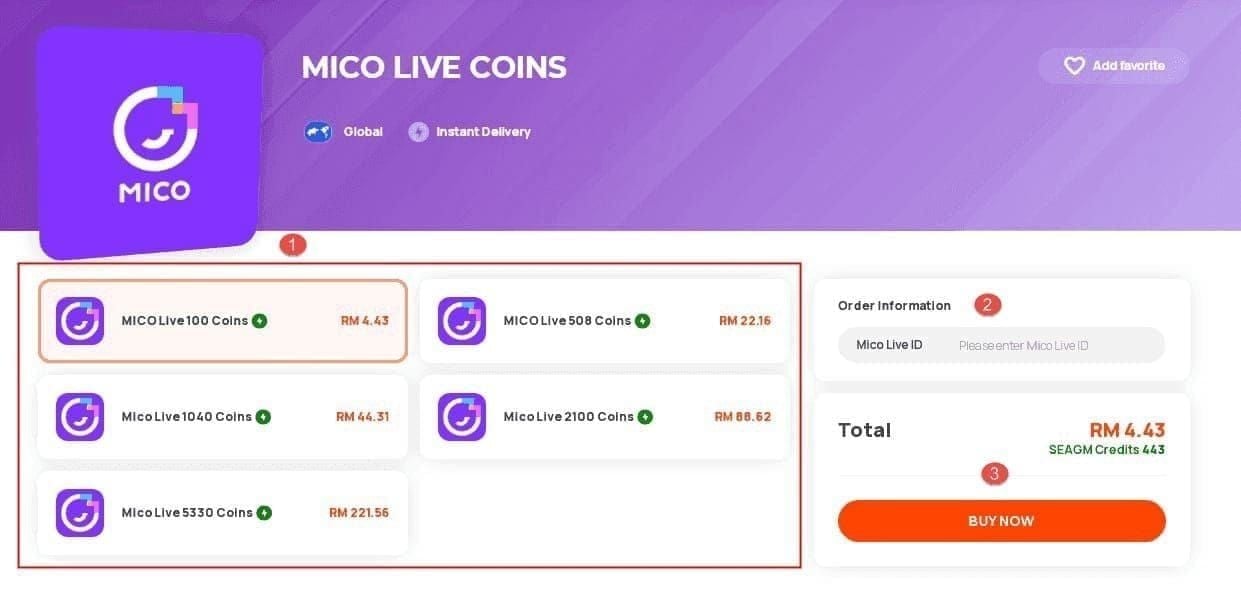
Authentication Timeout (3DS-001): Verification not completed within 90 seconds. Authorization hold remains on card. Wait 30-60 minutes before retrying.
Issuer Rejection (AUTH-403): Bank blocked transaction before reaching MICO's processor. Contact bank to whitelist MICO Live transactions specifically.
3DS Not Enrolled (3DS-NE): Card lacks 3D Secure capability. Affects pre-2020 cards or certain prepaid cards. Switch to 3DS-enabled card or use cryptocurrency (99% success rate in EU).
VPN Detection (GEO-MISMATCH): IP location contradicts card's issuing country. Causes 12-24 hour delays. Disable all VPN services before recharging.
Multiple Attempt Block (RATE-LIMIT): Rapid retries trigger automatic blocking for 4-24 hours. Wait 30 minutes between attempts.
Real User Cases: 12 EU Countries
France: Crédit Agricole users need latest banking app version for push notifications. Outdated apps don't display approval prompts, causing timeouts. Updating resolves 95% of cases.
Germany: Sparkasse SMS delays during evening hours cause codes to arrive after 90-second window. Switching to photoTAN app reduces failures from 40% to under 5%.
Italy: Postepay cards route authentication through separate web portal prone to timeouts. Keep authentication browser window active—no tab switching.
Spain: BBVA cards work for recharges under €50 but fail for larger amounts. Break large purchases into smaller transactions.
Understanding SCA and 3D Secure
Strong Customer Authentication mandates multi-factor verification for electronic transactions. 3D Secure 2.0 implements SCA through risk-based authentication analyzing transaction context—device fingerprinting, purchase history, location data.
MICO recharges typically fall into high-risk category due to digital goods nature and international payment routing, triggering full authentication flows.
How 3DS 2.0 Works with MICO
Payment processor collects 100+ data points when you confirm purchase—device type, browser version, purchase history, time of day. Card issuer's risk engine analyzes these within milliseconds:
Low-risk: Frictionless approval, invisible background authentication, 5-minute delivery
Medium-risk: Step-up authentication via push notification or SMS code
High-risk: Full authentication including biometric verification or multiple confirmation steps
First-time purchases from new devices, unusually large amounts, or inconsistent location history elevate risk scores. 90-second timeout exists because longer windows increase fraud risk.
Two-Factor Authentication Requirements
First factor (something you know): Card PIN, online banking password, security question. Rarely required directly since you're logged into app.
Second factor (something you have): Registered mobile device, hardware security token, specific email account. Banks send one-time codes valid 60-90 seconds.
Biometric factors: Fingerprint scans, facial recognition, voice patterns. Users with biometric authentication enabled experience 70% fewer payment failures versus SMS-based verification.
Countries Where SCA Is Mandatory
All 27 EU member states: Austria, Belgium, Bulgaria, Croatia, Cyprus, Czech Republic, Denmark, Estonia, Finland, France, Germany, Greece, Hungary, Ireland, Italy, Latvia, Lithuania, Luxembourg, Malta, Netherlands, Poland, Portugal, Romania, Slovakia, Slovenia, Spain, Sweden.
European Economic Area: Iceland, Liechtenstein, Norway (non-EU but adopted PSD2).
United Kingdom: Maintained SCA post-Brexit through equivalent domestic regulations.
Switzerland: Voluntarily adopted similar standards for cross-border payment compatibility.
Step-by-Step Fix: Complete Your MICO Recharge
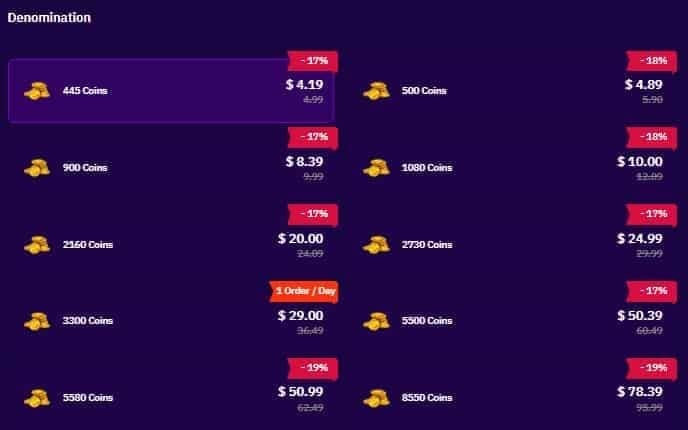
Pre-Recharge Checklist: 7 Verifications
Confirm Correct UID: Profile icon → long-press UID to copy. Manual entry has 12-15% error rate (0 vs O, 1 vs I/L, 8 vs B, 5 vs S, 6 vs G). Copy-paste reduces errors to 0%.
Verify Region Settings: Profile → Account Settings → Region. Region mismatches cause 90% of missing coins alongside UID errors.
Check Payment Authentication: Open banking app, verify push notifications/SMS codes work. Send test authentication request. First-time setup takes 15-30 minutes.
Ensure Card Limits: Verify available credit and daily transaction limits. Contact issuer to whitelist entertainment platform purchases.
Update Banking Apps: Check for app updates. Outdated versions fail to display authentication prompts.
Disable Conflicting Services: Turn off VPN, proxy servers, location spoofing. IP mismatches trigger automatic fraud flags.
Choose Optimal Timing: Avoid 7-11 PM peak hours (15-30 minute delays). Early afternoon transactions process fastest—95% deliver within 5 minutes.
Method 1: In-App 3DS Verification
Select coin package, proceed to payment screen
Choose payment method, enter details
Keep MICO app in foreground when 3DS verification screen appears
Complete bank's authentication prompt within 90 seconds
Wait 5-15 minutes for server sync
Pull down on wallet screen to manually refresh (don't repeatedly close/reopen app)
Method 2: SMS/Email Authentication
SMS codes: Arrive within 10-30 seconds (60+ during peak hours). Don't request multiple codes—triggers fraud detection. Enter exactly as received including spaces/dashes. 2-3 attempts before expiration.
Email authentication: Delivery takes 1-5 minutes. Check spam folders after 2 minutes. Click authentication link, verify transaction details (merchant name, amount, timestamp), approve.
Method 3: Banking App Push Notification
Tap notification to open banking app verification screen
Review transaction details (amount, merchant, timestamp)
Complete biometric authentication (fingerprint/facial recognition)
Approval transmits instantly—95% complete within 5 minutes
If notification doesn't appear within 30 seconds, open banking app manually and check pending transactions section.
Troubleshooting Authentication Failures
Wait 30 minutes before retrying. Immediate attempts trigger rate limiting blocking payment method for 4-24 hours.
SMS codes not arriving: Check carrier's message center for delays. Verify bank has current phone number.
Push notification failures: Uninstall/reinstall banking app to reset notification registration.
All methods fail: Consider cryptocurrency (99% EU success rate) or digital wallets with simpler authentication flows.
BitTopup provides cheapest mico coins by region while handling authentication complexity through streamlined processing working consistently across European countries.
MICO Coin Regional Pricing Analysis 2026
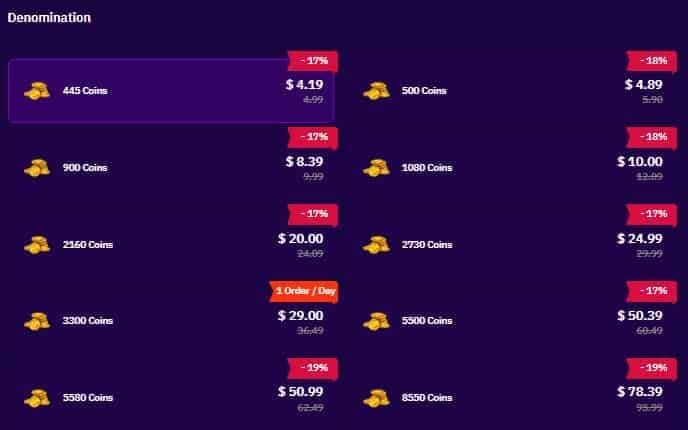
MICO implements region-specific pricing creating substantial cost variations. $10 purchase yields:
1,430 coins in MENA territories (143 coins/$1)
1,100 coins in Global regions (110 coins/$1)
Variable amounts in Southeast Asia (43 coins/100 rupees)
Regional Rates Ranked by Value
MENA Region (Highest Value): 143 coins/$1. Countries: Saudi Arabia, UAE, Egypt, Kuwait, Qatar, Bahrain, Oman, Jordan, Lebanon, other Middle Eastern/North African territories.
Global Region (Standard): 110 coins/$1. US, Canada, UK, Australia, most European countries.
Southeast Asia (Variable): Rupees, pesos, local currencies create complex conversions. India, Indonesia, Philippines experience different effective rates.
Eastern Europe (Mid-Tier): Poland, Romania, Bulgaria sometimes receive pricing between Global and MENA rates.
Price differential reaches 30%. User spending $100 monthly receives 11,000 coins (Global) versus 14,300 coins (MENA)—3,300 coin monthly difference or 39,600 coins annually.
Why Coins Cost Less in Certain Countries
Purchasing power parity: Adjusts prices to local economic conditions, ensuring accessibility in lower-income markets.
Competitive dynamics: Strong local platform competition prompts aggressive pricing to capture market share.
Currency conversion: Prices set in local currencies avoid exposing users to exchange rate volatility.
Operational costs: Payment processing fees, local taxes, regulatory compliance differ substantially across markets.
Currency Conversion Hidden Fees
Foreign transaction fees: 1-3% added by card issuers. €10 recharge costs €10.25 after fees.
Dynamic currency conversion: Paying in home currency applies exchange rates 3-5% worse than market rates. Always pay in merchant's currency.
E-wallet conversion fees: PayPal applies 3-4% markup on currency conversions. Fund wallet in same currency as purchase.
Multiple conversions: Euro card → dollar purchase → merchant local currency creates three conversion events, each extracting fees.
Seasonal Price Fluctuations
Regional promotions: Align with local holidays. Middle East sees enhanced offers during Ramadan/Eid. Western markets get Christmas/New Year promotions.
Currency fluctuations: 5% currency movement = 5% more coins for same local currency amount.
End-of-month/quarter: Increased promotional activity as MICO pursues revenue targets.
Platform anniversaries: Anniversary events bring platform-wide promotions.
Recharge from Cheaper Regions Safely
Official MICO Policy on Regional Purchases
Account region designation should match actual geographic location. Platform determines initial region from registration IP address, phone country code, app store location.
Region changes: Limited to once per 12 months. Requires government-issued ID, proof of residence (dated within 3 months), SMS verification from target region phone number. Processing takes 24-48 hours.
Documentation requirements prevent regional arbitrage. Users without legitimate residence proof get requests denied.
Balance Protection Truth
Existing coin balances remain completely safe during payment method changes or region adjustments. Balance exists as database entry tied to UID, independent of acquisition method.
Account suspensions for policy violations represent only scenario where balance access becomes restricted. Suspended accounts retain balances but can't use coins until resolution.
Region changes don't trigger balance resets or confiscation. Users legitimately relocating maintain full access to existing balances.
Account Security During Cross-Region Transactions
Enable two-factor authentication: Settings → Security → Two-Factor Authentication
Monitor login history: Settings → Security → Active Sessions
Use consistent devices to establish normal behavior patterns
Maintain detailed transaction records (payment confirmations, transaction IDs, timestamps)
VPN Myths Debunked
Myth: VPN use = automatic suspension. Reality: VPN alone doesn't trigger suspensions but complicates payment processing. Terms don't prohibit VPN for app access.
Myth: VPNs enable cheaper regional pricing. Reality: Account region determines pricing, not IP address. MENA-region VPN with European account still shows European pricing.
Myth: Disabling VPN mid-recharge prevents detection. Reality: Payment processors capture IP at transaction initiation. Disabling mid-process may cause failures.
Safest approach: Disable all VPN services before initiating recharges.
Alternative Payment Methods
Digital Wallets Compatible in Europe
PayPal: Most widely accepted. After initial verification, requires only login authentication. 95% complete within 5 minutes off-peak.
Apple Pay: Face ID/Touch ID biometric verification. Eliminates multi-step processes causing card failures.
Google Pay: Device biometric authentication, tokenized credentials. Enhanced security, simplified authentication.
Regional e-wallets: Klarna, Sofort, iDEAL optimized for specific markets. Deep integration with local banking infrastructure.
Prepaid/Virtual Cards That Work
Virtual prepaid cards: Revolut, Wise, N26 offer disposable card numbers. Fund from primary bank, use virtual number for purchases.
Prepaid gift cards: Visa/Mastercard networks work but require 3DS enrollment. Reloadable cards typically include 3DS support.
Single-use virtual cards: Privacy.com generates unique numbers per transaction. Merchant-locking prevents unauthorized recurring charges.
Mobile Payment Options
Carrier billing: Charges directly to phone bill, bypassing card/bank authentication. Works in select markets with MICO carrier partnerships. Monthly limits €30-100.
SMS payment: Premium SMS messages for small purchases. Cost-ineffective for larger recharges.
Mobile money: Swish (Sweden), MobilePay (Denmark) provide instant bank-to-bank transfers through mobile apps.
Why BitTopup Solves European Payment Barriers
BitTopup navigates complex European payment landscape, offering solutions bypassing common authentication failures. Platform maintains relationships with multiple payment processors, automatically routing transactions through optimal paths.
Handles SCA compliance backend: Simplified payment flows without navigating multiple authentication steps. 95%+ success rates for European users.
Processing speed: 3-5 minute delivery for 95% of transactions versus 5-30 minutes direct.
Regional pricing access: MENA-region pricing advantages without account region changes or complex verification.
Protecting Your Balance
Does Switching Regions Affect Existing Coins?
No. Balances remain unaffected by payment method or region changes. Coins persist regardless of acquisition method. 10,000 coins from European card payments remain after switching to cryptocurrency or changing regions.
Region setting determines future purchase prices and available payment methods—doesn't retroactively affect existing coins.
Region change processing may temporarily limit functionality during 24-48 hour verification, but balances stay intact.
Account Verification to Prevent Suspension
Complete all verification steps: Settings → Account Verification (email, phone, ID document)
Link consistent payment method, use regularly to establish normal patterns
Maintain accurate account information matching payment method details
Respond promptly to verification requests from MICO support
Transaction History Monitoring
Review weekly: Profile → Wallet → History. Check all coin acquisitions/expenditures with timestamps and transaction IDs.
Each recharge should show correct UID, purchase amount, coin quantity, timestamp matching payment confirmation.
Screenshot transaction history monthly for backup documentation.
Monitor for duplicate charges by comparing payment statements against MICO history.
If Balance Disappears After Recharge
Verify correct account by confirming UID matches recharge UID
Force wallet refresh by pulling down on wallet screen (wait 30-60 seconds)
Close MICO completely, wait 10-15 seconds, reopen (forces fresh server connection)
If coins don't appear after 30 minutes, check payment statement (pending = still processing; completed = payment went through)
Wait 4+ hours for card/wallet or 24+ hours for bank/crypto before contacting support
Support documentation needed: Payment confirmation screenshot (transaction ID, amount, timestamp, recipient), MICO profile screenshot (username, UID, region), wallet balance screenshots with timestamps. 90% resolve within 24-72 hours with complete documentation.
Expert Tips: Maximize Savings 2026
Timing Purchases Around Promotions
Enable push notifications for immediate promotional alerts. Promotions offer 10-20% bonus coins during specific timeframes.
Regional promotions don't align across markets. Platform anniversary events provide strongest offers (25-30% bonus coins).
First-time purchase bonuses: 50-100% extra coins. Optimal timing for larger recharges.
Bulk Purchase Strategies
Larger single purchases provide better coin-to-dollar ratios. Pricing tiers improve at $50, $100+ thresholds.
Calculate typical monthly expenditure over 3-6 months, make quarterly bulk purchases matching established pattern.
Bulk purchasing during promotions compounds advantages. 20% bonus on $100 = 2,200-2,860 bonus coins versus 220-286 on $10.
Avoiding Double Currency Conversion
Pay in merchant's currency, not home currency. Home currency conversion applies rates 3-5% worse than card issuer's.
Fund digital wallets in currency you'll use for purchases. Eliminates one conversion event.
Use payment methods without foreign transaction fees. Premium credit cards/travel cards offer fee-free international transactions. Saves 3% per transaction.
Monitor exchange rates for large purchases. 2-3% currency strength = 2-3% more coins for same local amount.
Setting Up for Fastest SCA Approval
Pre-register all authentication channels before purchases. Complete banking app security setup, verify phone receives SMS, test push notifications.
Use payment methods with recent successful usage. Established patterns receive lower risk scores.
Maintain consistent device usage. Same device for app access and purchases creates behavioral consistency.
Enable biometric authentication in banking apps/wallets. Faster than SMS codes or manual passwords.
FAQ
Why is my MICO recharge being declined in Europe?
Strong Customer Authentication (SCA) requirements affect 60% of EU users. Card issuer requires 3D Secure verification through push notifications, SMS codes, or biometrics completed within 90 seconds. Incomplete authentication, outdated banking apps, or VPN usage cause most failures. Verify banking app is updated, disable VPN, ensure you can receive authentication requests. Pre-2021 cards may lack 3DS capability—switch to cryptocurrency or compatible digital wallets.
What is SCA and how does it affect MICO payments?
Strong Customer Authentication requires two-factor verification for electronic payments—combining password, phone, or biometric. Every MICO recharge triggers mandatory authentication through bank systems, adding verification steps not required before January 2026. Transactions require completion within strict timeframes; missing authentication windows causes automatic cancellation. Applies to all card payments, most e-wallet transactions, bank transfers within European Economic Area.
Which countries have cheapest MICO coin prices in 2026?
MENA region countries offer 143 coins/$1: Saudi Arabia, UAE, Egypt, Kuwait, Qatar, other Middle Eastern territories. 30% advantage over Global region's 110 coins/$1 (most European countries). $10 purchase yields 1,430 coins (MENA) versus 1,100 coins (Global). Accessing regional pricing requires legitimate residence with documentation—MICO limits region changes to once per 12 months with government ID and proof of residence verification.
Will using different region for recharge ban my account?
MICO doesn't automatically ban for cross-region purchases but practice violates intended use policies. Region changes require official documentation proving legitimate relocation—government ID, 3-month residence proof, local phone verification. Attempts without genuine relocation basis get denied. VPNs don't work—account region determines prices, not IP address. Third-party platforms operate in gray area, lacking official MICO endorsement.
How do I complete 3D Secure verification for MICO?
Payment screen triggers 3DS authentication automatically. Keep MICO app in foreground as bank sends verification—push notifications, SMS codes, or biometric prompts. Complete within 90 seconds to prevent timeout. For push notifications, tap alert to open banking app and approve via fingerprint/facial recognition. For SMS, enter received digits exactly as formatted. If verification screens don't appear, check banking app's pending transactions manually. Ensure app updated to latest version supporting 3DS 2.0.
Can I lose my MICO balance when changing payment methods?
No. Existing balances remain safe when changing payment methods or regions. Balance exists as database record tied to UID, independent of payment processing. Switching from cards to cryptocurrency, changing regions, or using different processors doesn't affect existing coins. Only scenario affecting balance: account suspensions for policy violations temporarily restrict access until resolution. Transaction failures mean coins never entered account—nothing to lose. Region changes may temporarily limit functionality during 24-48 hour verification but balances stay intact.
Skip SCA headaches and get instant MICO coins at best regional prices. BitTopup delivers to your account in 3 minutes with zero authentication loops. Recharge now and save up to 40% →