

Likee's January 19, 2025 algorithm update prioritizes 15-30 second loop videos achieving 80%+ completion rates over live streams. Short loops deliver 70% more engagement, with the platform detecting trends within 10 minutes and weighing first-10-minute engagement 3x heavier. This stems from completion rate mathematics—shorter videos achieve higher watch-through percentages, triggering exponential For You feed distribution while live streams can't meet the same benchmarks.
The Algorithm Shift: Why Likee Now Favors 15-Second Loops
The January 2025 update restructured content distribution. Videos under 60 seconds get 20-50% baseline reach boosts, with 15-30 second loops receiving strongest priority. The completion rate revolution centers on simple math: a 15-second video watched twice hits 200% completion, while a 5-minute live stream with 2 minutes watched only reaches 40%. The algorithm interprets loops as significantly more engaging.
Short videos consistently achieve 80%+ completion rates, while live streams require level 35 (2-4 weeks) before gaining traction. For immediate reach, Top Up Likee Diamonds through BitTopup accelerates profile growth and unlocks visibility features.
Platform Evolution and User Behavior
With 62.26% of users aged 25-34 and 18.97% aged 18-24, Likee caters to limited attention spans. Users prefer content consumable in seconds, then immediately rewatchable. The platform detects trending content within 10 minutes—loops excel here because short duration allows multiple complete views in that critical window. Live streams can't accumulate comparable completion metrics.
Weekend posting yields 30-40% higher engagement. Combined with loop rewatch mechanics, posting during 6-9 PM peak hours creates optimal algorithmic distribution.
The Completion Rate Revolution
The algorithm requires 80%+ completion for prioritized distribution. A 3-minute video needs 2:24 retention; a 15-second loop needs just 12 seconds. The advantage compounds when viewers rewatch loops, pushing completion above 100%.
First 10 minutes carry 3x weight. Loops accumulate dozens of complete views early while live streams build initial audiences. The platform's 2,000+ creative effects (particularly 4D Magic at 70-80% intensity) boost engagement 30% on short videos, multiplying on loops where viewers rewatch visual details.
Data: Live Stream vs Loop Video Reach
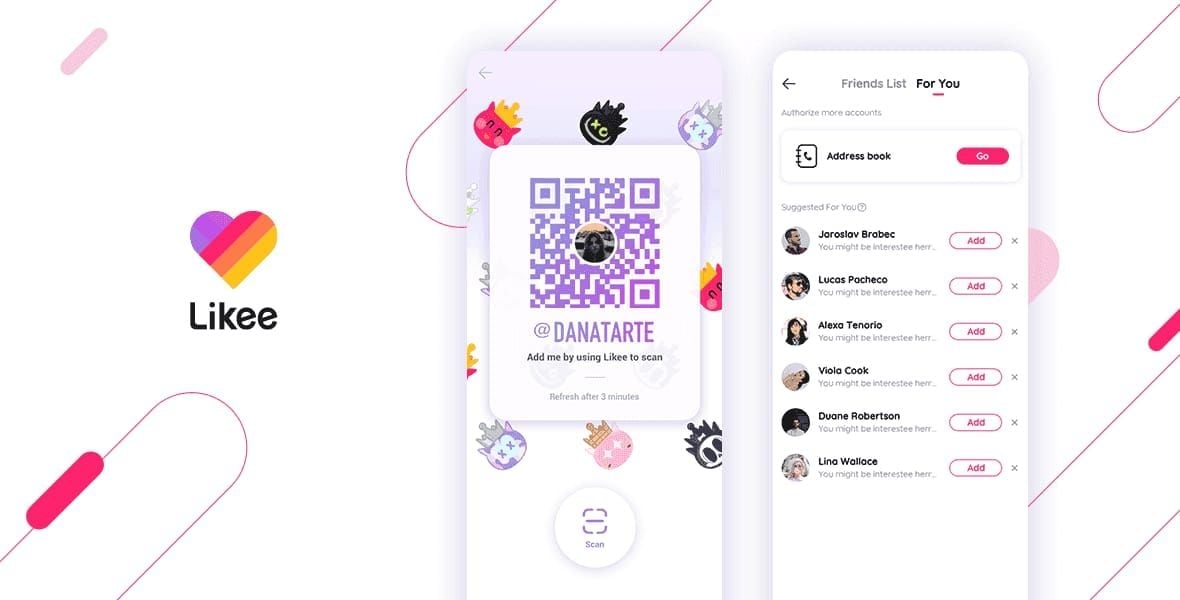
Loops achieve 70% more engagement across all metrics. They enter For You feeds immediately; live streams rely on follower notifications. Niche-targeted loops yield 10,000-100,000 views with 10-15 hashtags (30% high-volume, 50% medium, 20% niche). High-volume hashtags average 41 likes and 3 comments—the baseline for algorithmic promotion.
Hybrid strategies (loops for growth, streams for monetization) yield 20-50% higher performance than live-only approaches. Expect 2-4 weeks transitioning from live-focused strategies.
Understanding Likee's Recommendation Algorithm
The algorithm operates on weighted signal hierarchy prioritizing completion rate. Initial distribution goes to 200-500 test users matching your hashtags. Performance determines expansion to larger pools.
Signal weights: completion rate 40%, engagement actions 35%, replay behavior 25%. A video with fewer likes but higher completion often outperforms content with strong engagement but poor watch-through.
Likee Recharge Online from BitTopup enables strategic profile enhancements, improving test audience performance and distribution expansion.
For You Feed Selection
Selection begins milliseconds after upload. The algorithm analyzes visuals, audio, hashtags, and captions to categorize content. Videos under 60 seconds get priority; longer content enters secondary queues with stricter requirements.
Initial distribution targets users who engaged with similar content. The algorithm monitors first 10 minutes (3x weight window). Videos achieving above-average completion trigger progressive expansion to broader segments.
9:16 vertical ratio is mandatory for optimal mobile viewing. Non-compliant videos get reduced distribution.
Weighted Signal Hierarchy
Completion rate dominates because it measures content quality and audience match. 80%+ completion separates expanded distribution from limited circulation.
Replay rate functions as quality multiplier. Immediate rewatches signal exceptional value. Each replay counts as additional watch time, boosting completion above 100%.
Early velocity determines trajectory. Videos hitting 41+ likes and 3+ comments within 10 minutes signal strong resonance, triggering promotion to larger pools.
Why Completion Rate Trumps Watch Time
Total watch time measures aggregate duration; completion rate calculates percentage watched. The algorithm prioritizes completion as quality indicator independent of length. A 15-second video at 95% completion demonstrates better retention than a 5-minute video at 40%, despite less total watch time.
Loops watched 1.5 times achieve 150% completion. Live streams can't exceed 100% because viewers can't rewatch real-time content.
Math favors brevity: reducing from 30 to 15 seconds doubles your chances of hitting 80%+ completion.
The Science Behind 15-Second Loop Performance
Loops qualify when ending transitions seamlessly into beginning, creating continuous playback. This exploits autoplay—when viewers reach the end, immediate restart often captures additional views before scrolling.
Psychological triggers: incomplete pattern resolution, unexpected reversals, curiosity gaps. When viewers sense they missed details, they rewatch or allow autoplay to continue, generating 100%+ completion rates.
The replay multiplier compounds exponentially. Each replay increases completion rate, improving algorithmic ranking, exposing content to more users who generate additional replays. This feedback loop explains why successful loops often go viral within 24-48 hours.
What Qualifies as a 'Loop'
Technical qualification requires frame-perfect alignment between final and first frames. Visual elements in motion must maintain consistent direction and speed. Audio must align rhythmically—beats completing at exact loop points avoid jarring cuts.
Optimal structure for 15-30 seconds: 1-3 seconds hook, 4-15 seconds core content, 16-30 seconds CTA transitioning back to hook. Viewers watching through CTA immediately see compelling hook again, triggering another cycle.
Native Likee editing signals platform optimization. Tap + icon to record, use timeline scrubber for loop points, adjust duration sliders to 15-30 seconds exactly.
Psychological Triggers for Rewatching
Incomplete pattern resolution exploits cognitive bias toward closure. Viewers see patterns begin but don't fully process completion before restart—they instinctively rewatch. Works well with transformations, magic tricks, skill demonstrations.
Unexpected reversals create cognitive dissonance demanding resolution. Process moving forward suddenly reverses at loop point—viewers rewatch to understand transition.
Curiosity gaps leverage information asymmetry. Present question in hook, partial resolution in content, restart before complete resolution. Viewers rewatch seeking answers, often realizing the loop itself IS the answer.
Completion Rate Mathematics
Calculation: total watch time ÷ video duration × 100. A 15-second video with 13-second average watch hits 86.7% completion. Same 13 seconds on 30-second video yields 43.3%—failing the 80% threshold.
Advantage compounds with replays. If 30% rewatch once, average completion jumps to 116.7%. This above-100% metric signals exceptional quality, triggering maximum distribution. Longer videos can't achieve this because replays are less common.
Viewer attention decays logarithmically. By second 15: 85% retention. Second 30: 65%. Second 60: 40%. Shorter videos capture viewers before significant decay.
The Replay Multiplier Effect
Each replay generates signals beyond completion rate. The platform interprets replays as strong value indicators, applying quality multipliers. Videos with 20%+ replay rates get preferential For You placement, often appearing multiple times to same users.
Exponential distribution: 80%+ completion unlocks tier-1 (5,000-10,000 users). 20%+ replay triggers tier-2 (50,000-100,000). Continued performance reaches tier-3 (500,000+), creating viral potential.
Seed initial replays with AR effects like 4D Magic, sparkles, confetti in first 3 seconds. Viewers replaying to appreciate missed details generate early signals triggering promotion.
Live Stream Performance Decline
Live streams face fundamental algorithmic disadvantages post-January 2025. Real-time content can't exceed 100% completion, capping algorithmic potential. Live streams require viewers joining at specific times, limiting audience pools versus continuous discovery loops enjoy.
Average live completion rarely exceeds 30-40% because viewers join mid-stream. A viewer watching 10 minutes of 30-minute stream contributes 33% completion—well below 80% threshold.
Discovery problem: streams appear in Live tab and follower notifications, missing For You feed driving 70-80% of recorded content views. Past streams aren't discoverable to new followers.
Why Streams Struggle with Signals
Live engagement disappears when broadcasts end. The algorithm can't use post-stream engagement to evaluate quality, relying solely on concurrent viewers and real-time interaction.
Level 35 requirement creates 2-4 week barrier. During growth, streams generate minimal distribution, forcing audience building through other formats first.
Concurrent viewers fluctuate throughout broadcasts, creating inconsistent signals. The algorithm struggles to assign quality scores to variable performance.
Average Completion: Live vs Recorded
Live streams average 25-35% completion; optimized loops achieve 85-150%. This 3-5x gap translates to 3-5x more algorithmic reach for loops.
Recorded content benefits from viewer control over timing. Users watch loops whenever they browse, during peak engagement hours. Streams require schedule adjustments, reducing complete viewing likelihood.
The 70% engagement advantage stems from completion gap plus replay mechanics. A loop at 120% completion with 100 likes delivers more algorithmic value than a stream with 300 concurrent viewers at 30% completion.
The Discovery Problem
Real-time content exists only during broadcast, eliminating post-publication discovery. Loops posted today appear in feeds for weeks. Streams disappear from discovery the moment you end broadcast.
For You feed prioritizes evergreen content remaining relevant regardless of browse timing. Streams lose relevance immediately after ending—structural incompatibility with primary discovery mechanism.
Archives perform poorly versus purpose-created content. Viewers perceive archives as old, rarely watching completely, generating low completion preventing distribution.
When Streams Make Strategic Sense
Streams excel at retention and monetization despite poor discovery. Existing followers value real-time interaction, creating gift revenue and community building opportunities recorded content can't replicate.
Reaching level 35 through loop growth unlocks streaming as viable secondary strategy. Build audience base through short content, then activate for revenue without relying on algorithmic discovery.
Special event streams (launches, collabs, Q&As) justify disadvantages through unique value. Promote via loops beforehand to drive attendance, offsetting discovery limitations.
Creating Perfect Loop Videos: Step-by-Step

Hook design in first 0.5-3 seconds: Apply AR effects immediately—tap sparkle icon, select 4D Magic at 70-80% intensity. Add sparkles/confetti drawing attention to key elements. Immediate visual stimulation stops scrolling, reducing early drop-off.
Content section (4-15 seconds) delivers on hook promise while building toward transition. Complete your message within this window for viewer satisfaction. Introduce subtle elements connecting back to hook for seamless loop.
CTA section (16-30 seconds) prompts engagement while transitioning to opening frame. If hook shows subject entering left, CTA shows them exiting right—continuous motion across loop point. Audio completes musical phrases at 30-second mark, aligning with visual loop.
Hook Design: First 0.5 Seconds
First 0.5 seconds determine scroll-past or commit. Use high-contrast visuals, sudden movement, unexpected imagery. AR effects like 4D Magic create depth and motion standing out in static feeds, increasing stop rates 30%.
Text overlays pose questions, make bold claims, create curiosity gaps. Tap text icon, select auto-caption, position lower third, use white text with black outlines. Keep hook text to 3-5 words max.
Visual composition: place primary subject in center third of 9:16 frame. Mobile viewers' eyes focus here first. Background provides context without competing for attention.
Seamless Transition Techniques
Match visual elements across loop point. If featuring continuous motion, ensure subject position, speed, direction at second 30 align with second 0. Use timeline scrubber to identify exact alignment frame, trim to precise duration.
Match cuts align similar visual elements. Ending frame hand reaching toward camera matches opening frame hand in similar position—illusion of continuous action. Works well for transformations where before at end matches after at beginning.
Audio loop points require rhythmic alignment. Select tracks where beat patterns complete at 15, 20, 25, or 30-second marks. Avoid fade-outs or incomplete phrases—audio discontinuity breaks loop illusion.
Sound Selection for Rewatch Value
Choose tracks with layered elements revealing details on repeated listening—background instruments, vocal harmonies, rhythmic variations. Audio depth rewards rewatching, encouraging replay behavior driving distribution.
Trending sounds get algorithmic priority when aligned with visual content. The platform detects audio-visual mismatches, reducing distribution for videos exploiting trending sounds without relevant content.
Original audio creates unique opportunities. When others use your audio, the platform credits you with derivative engagement, boosting profile algorithmic standing.
Native Editing for Algorithm Favor
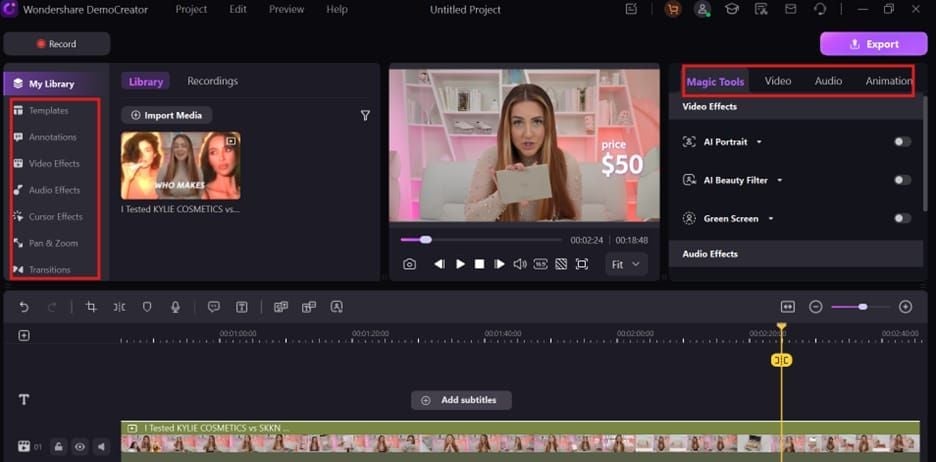
Native editing signals platform commitment. Videos edited entirely within Likee get subtle distribution advantages over imported content. Tap + icon for recording/editing, use built-in timeline, effects, text tools.
Layer up to three effects: 4D Magic for depth, sparkles for attention, beauty filters for enhancement. Apply at 70-80% intensity—full intensity appears artificial, reducing perceived quality.
Auto-caption improves accessibility and completion. Tap text icon, select auto-caption for synchronized subtitles. Position lower third, use white text with black outlines. Captions achieve 15-20% higher completion in sound-off environments.
Algorithm Signals Breakdown
Completion rate dominates at ~40% of distribution decisions. The 80%+ threshold separates expanded distribution from plateau. Every point above 80% incrementally improves distribution tier; videos exceeding 100% get maximum priority.
Replay rate functions as quality multiplier amplifying distribution. 20%+ replay signals extraordinary value, triggering aggressive promotion. The algorithm interprets replays as strongest engagement signal—immediate rewatching demonstrates quality beyond likes/comments.
Early velocity in first 10 minutes carries 3x weight. The algorithm uses this window to predict long-term performance. Videos hitting 41+ likes and 3+ comments within 10 minutes unlock tier-2 distribution to larger pools.
Completion Rate: #1 Factor
Calculation: average watch time ÷ total duration. A 20-second video with 17-second average watch achieves 85% completion, exceeding 80% threshold. The algorithm recalculates continuously, adjusting distribution real-time.
Maintaining 80%+ requires ruthless editing. Remove anything not serving hook promise or building toward loop transition. Every unnecessary second increases drop-off likelihood.
Completion varies by audience segment. The algorithm tests progressively broader audiences, monitoring stability. Videos maintaining 80%+ across diverse segments receive unlimited scaling. Content performing well niche but poorly broad plateaus at medium reach.
Replay Rate Exponential Impact
Replay rate: total views ÷ unique viewers. 10,000 views with 7,500 unique viewers = 33% replay rate (2,500 replays ÷ 7,500 unique). Signals quality more reliably than raw views.
Exponential impact stems from replay effect on completion. Each replay adds watch time while unique viewers stay constant, pushing completion above 100%. A 120% completion video gets dramatically more distribution than 95%, despite only 25 points difference.
Optimize for replays with discovery moments—details noticed only on second viewing. Subtle background elements, quick visual gags, layered audio reward attention. Most viral loops contain 3-5 discovery moments discussed in comments.
Early Engagement Velocity
First 30 minutes, especially first 10, determine trajectory. The algorithm monitors accumulation rate, comparing to benchmarks. Faster-than-average engagement gets progressive expansion; slower stays limited.
Seed initial engagement: post during peak hours (6-9 PM local, 7-9 PM Southeast Asia, 8-10 PM Middle East). Notify existing followers through other platforms. First 10 comments/shares carry disproportionate weight.
3x multiplier means minute 5 engagement counts three times more than hour 5. This compressed window favors engaged communities responding quickly. Build this through consistent schedules—3-4 videos weekly trains audiences to check regularly.
Share and Save Signals
Shares indicate value beyond personal entertainment. The algorithm often weights one share equivalent to 10-15 likes. Loops generate higher share rates because short duration reduces friction—viewers quickly preview before sharing.
Saves signal intent to rewatch later, indicating lasting value. The algorithm prioritizes saved content in personal feeds and recommends to similar segments. Loops generate saves when containing educational content, inspiration, practical tips.
High replay + shares + saves creates viral triangle triggering maximum distribution. Above-average performance in all three often achieves 500,000+ views within 48 hours.
Common Mistakes Killing Performance
Too clever loops confuse rather than delight. Overly complex transitions, abstract connections, unclear narratives frustrate viewers. Confusion drives early drop-off, tanking completion. Effective loops feel obvious in retrospect but surprising first viewing.
Length miscalculation is most common technical error. Videos at 18 or 22 seconds miss optimal 15-30 range, reducing priority. Imprecise duration indicates poor loop alignment—extra seconds represent incomplete trimming.
Ignoring audio sync creates jarring transitions breaking loop illusion. Music cutting mid-phrase or misaligned beats make viewers consciously notice restart, reducing replays.
The 'Too Clever' Loop
Complexity kills completion. Viewers make split-second decisions. Loops requiring multiple views to understand frustrate, driving scrolling. Most successful loops deliver clear value first viewing, with loop mechanism as pleasant surprise.
Abstract visual connections fail. If ending/beginning connect only through metaphor, most won't recognize loop structure. Effective loops use literal visual continuity—objects, people, motion clearly connecting.
Narrative loops require exceptionally clear storytelling. If telling circular story, narrative must be graspable in 15-30 seconds. Complex plots create confusion depressing completion.
Length Miscalculation
Duration precision matters algorithmically and practically. The system categorizes by ranges: 10-15s, 15-20s, 20-30s, 30-60s. An 18-second video competes in 15-20 range rather than benefiting from 15-second advantages.
Practical loop functionality degrades with imprecision. Extra 3 seconds usually represent incomplete editing—loop point at 15 seconds but video continues 3 more, creating dead zone breaking seamless illusion.
Trim to exact durations by identifying true loop point. Scrub timeline to find frame where ending aligns with beginning. This becomes target duration. Use sliders to trim precisely, even if cutting to 14 or 16 rather than forcing 15.
Ignoring Audio Sync
Audio discontinuity destroys effectiveness. Music cutting mid-phrase or misaligned beats create jarring transitions reminding viewers they're watching short video. This awareness reduces replays 40-50%.
Beat alignment requires selecting music with clear rhythmic structures. Count BPM, calculate where phrases complete—typically at 15, 20, 25, 30-second marks. Preview audio at target duration before filming.
Voiceover loops require scripting circular dialogue. Final words flow naturally into opening words, creating continuous speech. Works well for educational content where ending provides context reframing beginning.
Over-Editing Breaking Flow
Effect overload overwhelms viewers, obscuring core content. While algorithm prioritizes AR effects, too many simultaneously creates visual chaos driving drop-off. Limit to three complementary effects max.
Transition abuse disrupts flow. Excessive cuts/wipes/transitions within 15-30 seconds fragment experience. Most effective loops use minimal transitions—often just single loop point.
Color grading extremes reduce perceived authenticity. Heavy filters signal over-production, paradoxically reducing engagement. Audience prefers authentic, relatable content. Apply corrections subtly.
Transitioning Your Strategy: Action Plan
Repurpose live stream content by identifying self-contained 15-30 second segments delivering complete value. Review archives for moments explaining concepts, demonstrating techniques, delivering punchlines. Extract segments, add hook, create loop transition.
Restructure content calendar prioritizing loops while maintaining strategic streams. Implement 3-4 videos weekly: Monday trends, Wednesday originals, Friday collabs. Reserve streams for weekend slots with 30-40% higher engagement.
Balance format diversity: loops for acquisition, 30-60 second videos for deeper value, occasional streams for community/monetization. This captures different segments and serves multiple objectives.
Repurposing Stream Content
Identify high-value moments by reviewing analytics for engagement spikes. Moments where concurrent viewership jumped or chat intensified indicate repurpose-worthy content. Extract 20-30 second segments surrounding peaks.
Add context through text overlays and hooks. Since segments lack surrounding context, create 3-second hook introducing topic. Use auto-caption for accessibility, increasing completion 15-20%.
Create loop transitions by adding visual/audio bridge. If segment doesn't naturally loop, add 2-3 second outro connecting to hook—text saying Want to see that again? or visual rewind effect.
Content Calendar Restructuring
3-4 videos weekly optimizes algorithmic favor without overwhelming production. Monday posts capitalize on weekend trend identification—browse trending hashtags/sounds Sunday evening, create relevant content Monday for 6-9 PM posting.
Wednesday originals showcase unique perspective/skills. These reflect niche expertise, differentiating from trend-followers. Original content builds loyal audiences creating engaged communities driving early velocity.
Friday collaborations cross-pollinate audiences, signal social proof. Partner with complementary niche creators for loops appealing to both audiences. Tag collaborator, encourage simultaneous posting, doubling initial distribution/velocity.
Balancing Format Diversity
Format diversity serves different objectives. Loops (15-30s) maximize reach/acquisition. Medium videos (30-60s) allow deeper value for followers. Streams monetize existing audiences despite poor discovery.
70/20/10 rule: 70% loops for growth, 20% medium for value, 10% streams for monetization/community. This prioritizes algorithmic reach while serving existing audience needs.
Track format performance separately. Loops: reach and new followers. Medium: engagement rate and retention. Streams: concurrent viewership and gift revenue. Segmented analysis prevents unfair comparisons.
Testing and Measuring Success
A/B testing identifies optimal structures. Create two versions with different transitions/hooks/durations. Post simultaneously, compare completion/replay/reach after 48 hours. Winning approach informs production template.
Completion benchmarking establishes baseline. Track across first 10 loops to identify average. Videos 10%+ above indicate successful variations worth replicating. 10%+ below reveal ineffective approaches to avoid.
Replay analysis reveals content types driving rewatching. Categorize by type (educational, entertainment, transformation), calculate average replays. Double down on categories achieving 20%+ while refining low-performers.
Advanced Optimization: Maximizing Reach
Posting time strategy requires understanding your audience patterns. While platform peaks run 6-9 PM local, your niche may differ. Review analytics for follower activity, post 30-60 minutes before peak so initial distribution coincides with maximum availability.
Hashtag selection follows 30/50/20 rule: 30% high-volume (1M+ posts) for broad discovery, 50% medium (100K-1M) for targeted reach, 20% niche (10K-100K) for engaged micro-communities. Use 10-15 total hashtags.
Thumbnail optimization focuses on first frame serving as feed thumbnail. Ensure opening frame contains most compelling visual, clear composition with subject in center third, high contrast standing out. Avoid text in first frame.
Posting Time Strategy
Geographic targeting influences optimal times. If targeting Southeast Asia, post during their 7-9 PM even if different timezone. Algorithm prioritizes showing content to active users.
Weekend posting yields 30-40% higher engagement. Schedule highest-quality loops for Friday 6-9 PM or Saturday 2-5 PM to capitalize on increased activity. Reserve weekdays for trend-responsive content.
Consistency training builds anticipation. Posting same times weekly conditions followers to check during those windows, improving early velocity. Algorithm rewards consistent schedules with improved initial distribution.
Hashtag Selection
High-volume hashtags provide broad discovery but intense competition. Use strategically for content you're confident will achieve 100%+ completion and 20%+ replay—absolute best loops competing at highest level.
Medium-volume offers best reach-to-competition ratio. 100K-1M range indicates active communities without saturation making standing out impossible.
Niche hashtags connect with highly engaged micro-communities. While generating fewer impressions, users following demonstrate strong topic interest, yielding higher engagement. Niche videos with targeted hashtags consistently achieve 10,000-100,000 views with 90%+ completion.
Thumbnail Optimization
First-frame composition determines effectiveness. Position primary subject in center third of 9:16 frame. Ensure adequate lighting/contrast so subject stands out clearly in small thumbnail size.
Action and emotion drive higher click-through. Capture first frame mid-motion or mid-expression rather than static. Movement/expressions signal dynamic content worth watching.
Background simplification prevents clutter. Busy backgrounds compete with subject. Use depth-of-field or simple backgrounds providing context without distraction.
Leveraging BitTopup for Growth
Strategic profile enhancement through BitTopup accelerates algorithmic credibility. The platform offers reliable services for Likee creators seeking visibility boosts and faster feature unlocking. Competitive pricing, fast delivery, secure transactions provide foundation for rapid growth signaling authority.
New creators face cold-start problems—without existing engagement, algorithm provides minimal initial distribution. BitTopup helps overcome this by establishing baseline metrics triggering improved treatment. Combined with quality loops, this creates momentum for sustainable organic growth.
Excellent customer service and high ratings reflect commitment to creator success. View enhancement as strategic investment in overcoming algorithmic barriers disadvantaging new creators. Combined with loop strategies, BitTopup provides comprehensive growth support.
Measuring Success: Analytics That Matter
Completion rate dashboard: locate average watch time and duration. Divide watch time by duration for completion rate. Videos exceeding 80% meet prioritization threshold; above 100% indicates replay behavior triggering maximum promotion.
Replay rate: divide total views by unique viewers. 15,000 views with 10,000 unique = 50% replay (5,000 ÷ 10,000). This exceptional metric indicates viral potential—30%+ replays typically achieve 500,000+ views.
Pattern identification across library reveals most effective structures. Categorize by hook type, content category, loop style, duration. Calculate average completion/replay for each. Emerging patterns become production template.
Reading Completion Dashboard
Dashboard displays completion percentage. Understanding calculation provides insights. If 20-second video shows 75%, viewers watch average 15 seconds before scrolling—content loses interest at 15-second mark, likely during CTA before loop.
Completion trends reveal algorithmic treatment changes. Video starting 85% declining to 70% over days indicates algorithm testing with progressively broader (less engaged) audiences. Normal pattern—algorithm expands until finding ceiling where completion drops.
Segment-specific completion in advanced analytics shows demographic engagement. 90% among 18-24 but 60% among 35-44 means content resonates younger. Refine targeting hashtags/style to double down on high-performing segments.
Replay Calculation and Benchmarks
Manual calculation: export view/unique viewer data. Subtract unique from total for replay count, divide by unique, multiply by 100. 8,000 views with 6,000 unique = 33% replay ((2,000 ÷ 6,000) × 100).
Platform benchmarks vary by category. Entertainment averages 15-20%, educational 10-15%, transformation 25-35%. Exceeding category benchmark by 10+ points indicates exceptional quality warranting replication.
Replay correlation with reach demonstrates algorithmic importance. 30%+ replay videos average 5-10x more views than 10% replay, even with similar initial engagement. Exponential relationship explains why optimizing for replays delivers outsized improvements.
Identifying Best-Performing Patterns
Content categorization enables pattern recognition. Tag each video: hook type, content category, loop style, duration. After 20+ videos, analyze which combinations achieve highest completion/replay.
Statistical significance requires adequate samples. Don't conclude from 3-5 videos—wait for 15-20 per category. Early outliers mislead without sufficient data confirming patterns.
Iterative refinement accelerates improvement. Once identifying 20-second educational loops with question hooks perform best, create 5-10 variations testing subtopics, visual styles, specific questions. Focused iteration improves faster than random experimentation.
When to Pivot Strategy
Performance plateaus signal pivot needs. If last 10 videos achieve similar completion (within 5%) without upward trend, you've optimized current approach maximally. Experiment with new structures, categories, visual styles.
Declining engagement despite consistent quality indicates audience fatigue or algorithmic changes. If completion drops 15%+ across multiple videos while quality remains constant, algorithm may have adjusted or audience saturated. Test dramatically different approaches.
Competitive analysis reveals emerging trends. Monitor top niche performers monthly, identifying new techniques, effect combinations, formats gaining traction. Early adoption provides temporary advantages before saturation.
FAQ
Why do 15-second videos get more views than longer content? 15-second videos achieve higher completion rates—viewers watch completely before scrolling. Algorithm prioritizes 80%+ completion. A 15-second video needs just 12 seconds watched to hit 80%; a 60-second video requires 48 seconds—much harder retention benchmark.
How does Likee calculate completion rate? Total watch time ÷ video duration × 100. If viewers watch average 17 seconds of 20-second video, completion is 85% (17 ÷ 20 × 100). Algorithm recalculates continuously, adjusting distribution based on whether meeting 80%+ threshold.
What makes viewers watch loops multiple times? Seamless transitions flowing naturally from end to beginning create infinite scroll within single video. Viewers often don't notice loop point first viewing, allowing autoplay to continue. Discovery moments—subtle details noticed only on rewatch—encourage intentional replays boosting completion above 100%.
Are live streams still worth doing in 2025? Streams serve monetization and community despite poor discovery. Hybrid strategy (loops for growth, streams for revenue) yields 20-50% higher performance than single-format. Build audience to level 35 through loops first, then leverage streams to monetize existing community.
How long should videos be for maximum reach? 15-30 second loops receive optimal treatment. Within this range, 20 seconds often performs best—long enough for complete value but short enough maintaining 80%+ completion. Test within range for your specific content/audience.
What signals matter most for distribution? Completion rate accounts for ~40% of decisions. Replay rate functions as quality multiplier—20%+ replays get exponential boosts. Early velocity in first 10 minutes carries 3x weight. Together these determine 70-80% of total reach potential.