

Buying SUGO Coins is safe — but only when you know where to look and what to avoid. The platform is legitimate, coins are available through the in-app store or verified third-party recharge services, and 85% of transactions complete in under five minutes. The danger isn't the coins. It's the ecosystem around them: fake discount sites, call-bait scams draining 100+ coins per minute, and unauthorized sellers that trigger account holds or permanent bans.
The Short Answer: Is SUGO Coins Safe to Buy in 2026?
Yes — with conditions. Buying through the official SUGO app or a verified recharge platform with UID-based delivery is consistently safe. Risk spikes when players chase deep discounts from unverified sellers, share account credentials, or buy in bulk on brand-new accounts without understanding the platform's anti-fraud holds.
When It's Completely Safe
Three conditions make any purchase low-risk:
You're buying through the official in-app store or a platform that uses your numeric User ID — not your login credentials — for delivery
The price sits within the 15–27% discount range (the legitimate market window)
Your account is 30+ days old and you're spacing recharges at least 15 minutes apart
New accounts face a 6,250-coin cap in the first 30 days. Purchases exceeding $20 USD or multiple rapid recharges trigger 24–72 hour holds. That's not a scam — it's anti-fraud doing its job.
When the Risk Becomes Real
The app carries a 2.9/5 rating across 718 ratings with a Net Promoter Score of -14, and roughly 20% of complaints involve fake profiles or scam activity. The most damaging pattern: call-bait scams where a 61-second voice call gets billed as two full minutes at 1.5–2x rates, draining 100+ coins per minute. One documented case — Prashant's encounter with the Nafrat profile between September and November 2024 — resulted in Rs 3.48 lakh lost (approximately 90,000 coins). These aren't platform failures. They're social engineering attacks that exploit how coins flow inside the app.
Red Flag #1 — The Price Is Suspiciously Low
Any price below $0.50 per 1,200 coins is a hard stop. Walk away.
Legitimate vs. Scam Pricing
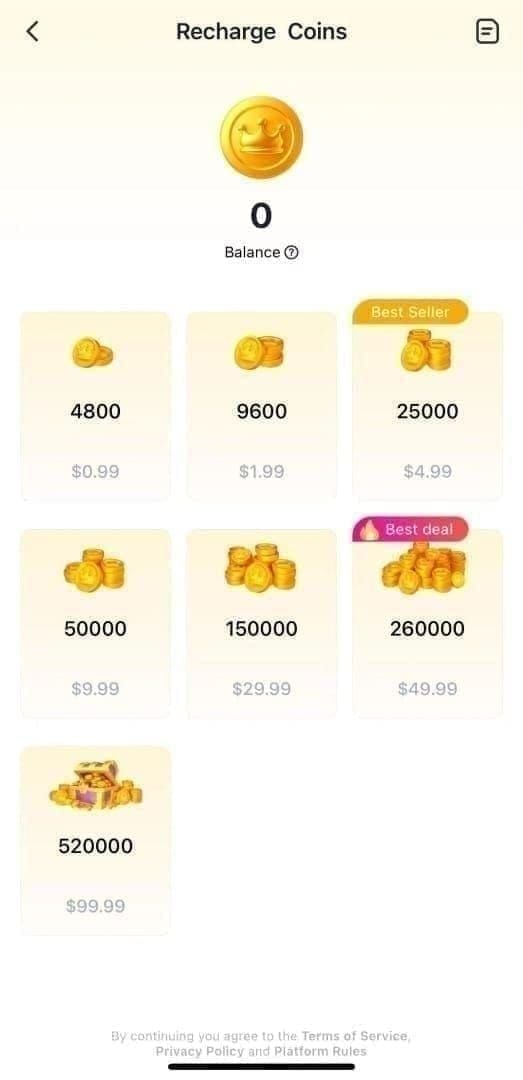
Note: The 65,000-coin package shows a genuine price spread ($40.44–$59.99) across sources — that reflects regional pricing differences, not fraud. But anything below $30 for that package is the danger zone.
Fake sellers offering 70%+ discounts collect payment, deliver nothing (or deliver coins bought with stolen cards that later get reversed), then disappear. When a chargeback hits, the platform may freeze your account as part of the fraud investigation — even if you were the victim.
The legitimate discount window is 15–27% off standard rates. Regional multipliers can push apparent value higher — Tier 4 regions receive up to 4x coins (1,200 coins becoming 4,800 in select US areas) — but those multipliers apply at the platform level, not through a third-party seller's special deal.
To buy SUGO coins safely online, the price you see should always fall within that 15–27% range. Anything dramatically lower is the first and most reliable warning sign.
Red Flag #2 — No Verifiable Payment Security
A legitimate recharge platform shows its security credentials without you having to dig. If you're hunting for an SSL certificate or can't identify the payment processor, that's your answer.
Check these in under 60 seconds:
HTTPS padlock in the browser bar — non-negotiable baseline
Recognized payment gateways: Visa, Mastercard, PayPal, or regional equivalents with visible logos
No crypto-only or wire transfer requirements — these offer zero buyer protection and are the preferred channel for fraud
PCI compliance signals: reputable platforms reference this in their footer or FAQ
Missing any of these doesn't automatically prove fraud. But it removes every layer of recourse if something goes wrong.
Red Flag #3 — No Clear Refund or Dispute Policy
Here's a nuance most guides miss: no refunds on digital goods is normal. SUGO officially confirms coins are irreversible and non-tradable once purchased. A platform acknowledging this is being honest, not predatory.
What's dangerous is zero recourse — no support channel, no dispute process, no way to escalate if delivery fails.
✅ No refunds on delivered coins — standard policy
✅ Contact support within 48 hours if coins don't arrive — legitimate
❌ No support contact listed anywhere — major red flag
❌ Support email bounces or goes unanswered — walk away
Test responsiveness before you spend. Send a pre-purchase question. A real answer within a reasonable window is a meaningful trust signal. Silence is your answer.
Red Flag #4 — Untraceable Seller Identity
Legitimate businesses leave a paper trail. Scam operations are specifically designed to avoid one.
A 60-second WHOIS lookup tells you when a domain was registered. A site that's been live for 11 days offering exclusive SUGO Coins deals isn't a business — it's a trap. Look for:
Domain age: established platforms have multi-year registration histories
Business registration: verifiable company information in most jurisdictions
Real contact: not just a form — an email domain matching the site, a support ticket system with actual response history
On social proof: fake review systems are sophisticated in 2026. AI-generated reviews are increasingly indistinguishable at a glance. What actually counts as credible: community forum discussions on Reddit or Discord where players describe specific transaction experiences — including problems and how they were resolved — not five-star ratings with generic text and no account history.
Red Flag #5 — They Ask for Your Login Credentials
This is the clearest line. No legitimate SUGO Coins recharge platform ever needs your password, linked phone number, or email login. Ever.
How the Safe Process Works
Legitimate top-ups use your numeric User ID only — found in ME > View/Edit Profile inside the SUGO app.
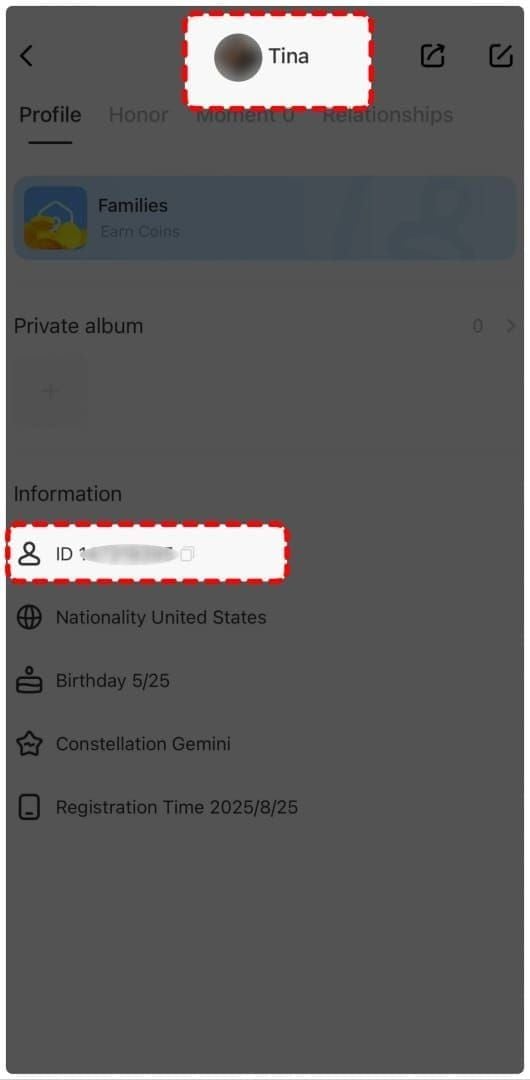
That's a public-facing identifier. It lets the platform credit your account without touching your login.
Safe recharge steps:
Open SUGO → ME → View/Edit Profile → copy your UID
On the recharge platform, select your package and enter your UID
Complete payment → coins arrive in 0–5 minutes (85% of transactions)
If a site asks for anything beyond your UID and payment details, close the tab. Credential-sharing scams drain coins, change account settings, or lock you out entirely — then sell access to your account on secondary markets.
You can recharge SUGO voice chat coins through platforms that require only your UID, keeping your login completely private throughout.
What Actually Happens If You Buy from an Unsafe Source
Community-reported outcomes fall into three categories:
Coin reversal: If a seller used stolen payment credentials, the original cardholder's chargeback removes those coins from your account — sometimes weeks after you spent them. You lose both the coins and whatever you paid.
Account holds: SUGO's anti-fraud system flags unusual coin inflows. Multiple rapid recharges or large purchases on new accounts trigger 24–72 hour holds. If the source is flagged as fraudulent, the hold can become permanent suspension.
The chargeback trap: Some players attempt chargebacks after a bad purchase. SUGO's no-refund policy means the platform may interpret this as a terms violation, resulting in account suspension — even when you were the victim.
The math gets brutal fast. A $15 deal that triggers a ban on an account with 450,000 coins invested toward Super VIP status isn't a bargain. It's a catastrophic loss.
Safe Purchase Checklist

Run through this before any purchase, especially from a new platform:
Price falls within 15–27% of standard rates (benchmark against the table above)
Site has HTTPS, recognized payment processors, no crypto-only requirement
Refund/dispute policy is clearly stated
Platform has verifiable identity: domain age, business info, real support channel
Delivery requires only your UID — no password, no login credentials
Account is 30+ days old (or purchase stays within the 6,250-coin new-account limit)
Spacing this purchase 15+ minutes from any previous recharge
Starting with a mid-tier package (6,250–37,500 coins) before committing to bulk buys
Timing note: Community consensus identifies a 20% top-up discount running through March 31, 2026. Stacking that event discount with a verified platform's standard 15–27% off creates the best legitimate value window available right now.
If You've Already Bought from a Suspicious Source
Act fast. The first 24 hours matter most.
Secure your account immediately. Change your SUGO password and linked email password. If you shared credentials, assume they're compromised. Enable every security option available.
Document everything. Screenshot the seller's site, payment confirmation, any chat logs, and your current coin balance.
Report within SUGO. Tap ⋮ on any suspicious profile > Report User > select category > attach screenshots > Submit. Check My Reports to track status.
Contact your payment provider. Credit card or PayPal disputes are your best recourse. Document that you were defrauded — not simply requesting a refund on delivered goods.
Monitor for 30 days. Watch for unusual coin drains: 500+ coins in 5 minutes or 2,000+ coins per day through 3–5 exchanges are automated scam patterns. Report immediately.
Frequently Asked Questions
Is buying SUGO Coins from third-party platforms against the game's terms?
Not inherently. UID-based recharges that don't require credential sharing are generally compatible with platform terms. The risk comes from sellers who fund purchases through stolen payment methods — that's where coin reversals and account actions originate.
Can you get banned for using an unofficial top-up service?
Yes, indirectly. If a seller uses fraudulent payment methods, the resulting chargeback can trigger account action on your end. The ban risk isn't from using a third-party service — it's from the fraud detection that follows when the underlying payment is disputed.
Are discounted SUGO Coins ever legitimate?
Yes. The 15–27% discount range reflects real market pricing across verified platforms. Regional multipliers (up to 4x in Tier 4 areas) can make certain packages appear dramatically cheaper — that's legitimate. The scam threshold is discounts beyond 27% from non-regional sources, or anything below $0.50 per 1,200 coins.
How long does a safe recharge take?
85% of transactions credit within 1–5 minutes. Delays affect roughly 60% of cases through payment gateway issues and 25% through system errors. If coins haven't appeared after 15 minutes: toggle airplane mode for 10 seconds, clear app cache, force-close and reopen SUGO, then check Payment History. New accounts may face 24–72 hour holds on larger purchases — normal anti-fraud behavior, not a scam.
What's the safest payment method?
Credit cards and PayPal offer the strongest buyer protection through chargeback rights. Avoid crypto, wire transfers, or gift card payments for any gaming top-up — zero recourse if delivery fails.
What should I do if I suspect a call-bait scam inside SUGO?
End the call immediately. A 61-second call bills as two full minutes at 1.5–2x rates — 100+ coins per minute. Before engaging with any new profile: check account age (under 7 days is high risk), reverse image search profile photos, and limit voice calls to users you've verified through text exchange first. Report suspicious profiles using the in-app report function.
SUGO Coins are safe to buy in 2026 when you control the variables. Know the price benchmarks, use UID-only platforms, protect your credentials, and time bulk purchases around legitimate discount events. The five red flags above map directly to scam patterns the community has documented. Run the checklist before every purchase, and the risk drops to near zero.