Ready to dominate Knight-Stage Anomaly Arbitration without breaking the bank? This Mono-Quantum DoT strategy using Cipher and Archer proves you don't need premium characters to clear endgame content. We'll walk through everything—team builds, combat rotations, and F2P optimization—so you can finally tackle those intimidating Knight-Stage challenges.
Why Mono-Quantum DoT Actually Works (When Other Strategies Don't)
Here's the thing about Knight-Stage content that catches most players off guard: traditional hypercarry strategies just... fall apart. Those 5-10% action delays per attack? The brutal energy absorption mechanics? They're specifically designed to punish direct damage approaches.
But Mono-Quantum DoT flips the script entirely.
Quantum Entanglement creates damage-over-time effects that trigger off-turn—meaning they completely bypass Knight-Stage's interference mechanics. When your quantum characters break enemy weakness, they stack Entanglement up to 5 times, each stack increasing both the DoT multiplier and action delays on enemies. It's like fighting fire with fire, except you're the one controlling the burn.
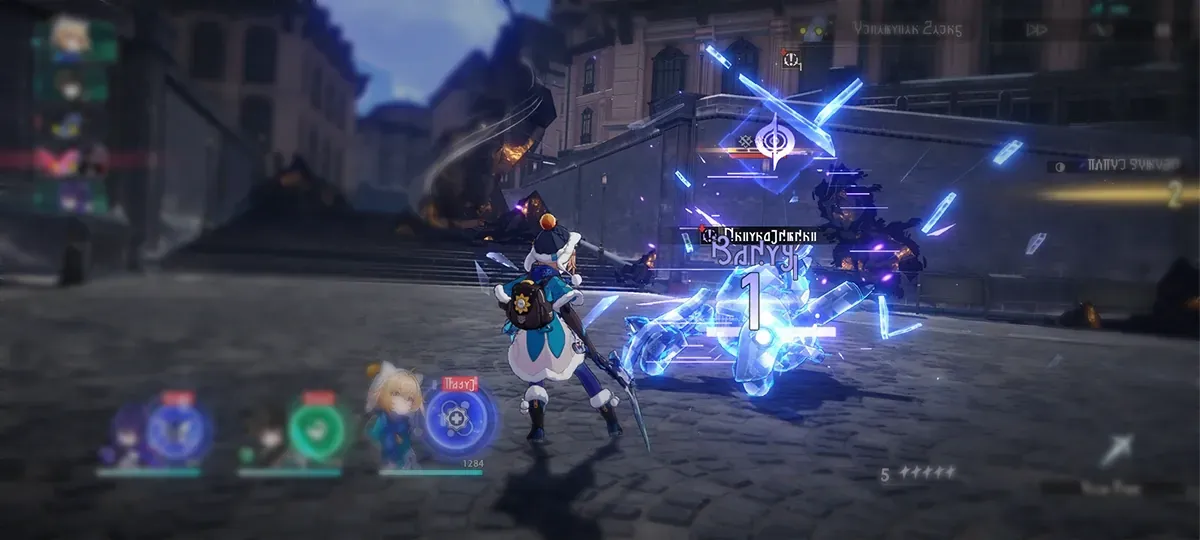
What makes this particularly effective against bosses like Howling Casket and Ichor Memosprite is that while they're busy penalizing your direct attacks, your DoT damage just keeps ticking away in the background. No interference, no energy penalties—just consistent damage accumulation.
Cipher's recording mechanism is where things get really interesting. She captures 12% of all non-True damage dealt to the enemy with highest Max HP (that's your Patron target). Hit that sweet 170+ speed breakpoint, and this doubles to 24%. During her Ultimate, all that recorded damage converts to True damage—25% hits the primary target, while 75% blasts through the target plus adjacent enemies.

For players serious about optimizing their Anomaly Arbitration runs, securing enhancement materials through honkai star rail anomaly arbitration top up can significantly accelerate your progression timeline.
The Math Behind the Magic
Let's break down Cipher's damage conversion because the numbers are honestly pretty wild. Her Talent triggers follow-up attacks whenever enemies take Entanglement damage—that's 150% ATK quantum damage, once per turn, while simultaneously building that recorded damage pool.
With proper speed tuning, you're looking at recording 12-24% of enemy Max HP per cycle. When Cipher unleashes her Ultimate, that entire pool converts to True damage. In practice, this means you can chunk bosses for massive percentages of their health bar in a single burst window.
Archer amplifies this through his skill spam mechanics. Maintain 2+ SP or keep under 5 skill uses per turn, and his damage stacks up to 2 times—that's a 100% damage boost. His Ultimate provides 2 charges for follow-up attacks that trigger on ally actions, each generating +1 SP. The synergy here is beautiful: Archer generates SP while dealing damage, Cipher converts that damage into devastating True damage bursts.
Building Cipher: The Recording Powerhouse
Trace Development That Actually Matters
Don't spread your resources thin—Cipher has clear priorities. Talent comes first (that's your follow-up attack foundation), then Basic for consistent damage, Skill for utility, and Ultimate last since it's mainly a conversion tool.
For major traces, Empyrean Strides is absolutely non-negotiable. At 170+ speed, you get +50% CRIT Rate and +100% recorded value—essentially doubling your damage contribution. Sleight of Sky follows close behind, providing +100% CRIT DMG on follow-ups and making enemies take +40% more damage.
Here's a detail most guides miss: Cipher needs exactly 38% Effect Hit Rate for 100% Skill debuff success against standard 20% resistance enemies. With Resolution Light Cone, this jumps to 67% for complete consistency against resistance buffs.
Relic Strategy (Not Just Stats)
Pioneer Diver of Dead Waters is your go-to 4-piece. The 2-piece gives +12% damage against debuffed enemies (which is constantly in Mono-Quantum), while the 4-piece provides +4% CRIT Rate with scaling CRIT DMG bonuses versus multiple debuffs. The real prize? +100% damage for one turn after applying debuffs.
Genius of Brilliant Stars works as an alternative—+10% quantum damage with 10% DEF ignore—but Pioneer's debuff synergy usually wins out in practice.
For planars, Penacony Land of Dreams is perfect for quantum DPS (100% effectiveness), though Firmament Frontline: Glamoth works if you need the speed boost (+12% ATK with +12/18% damage at 135/160 speed respectively).
Light Cone Reality Check
Cipher's signature Lies Dance on the Breeze provides 114.8% relative DPS compared to baseline options. That's significant, but not mandatory for Knight-Stage clears.
F2P players should focus on Resolution S5 (100% baseline performance) since it helps hit that crucial 67% EHR threshold. Holiday Thermae Escapade S5 reaches 101.5% relative performance if you can secure it, while Good Night S5 sits at 95%—still perfectly viable.
The 170 Speed Breakpoint (This Changes Everything)
Speed isn't just another stat for Cipher—it's a damage multiplier. At 170+ speed, Empyrean Strides doubles your recording efficiency and provides massive CRIT Rate bonuses. This breakpoint transforms Cipher from decent to dominant.
Target stats for endgame: 2800+ HP, 2200-2600+ ATK, 38.8%+ EHR, 80-100% CRIT Rate, 170+ Speed, 100%+ CRIT DMG. Priority order: Speed > CRIT Rate > CRIT DMG > ATK%.

Main stat requirements: Speed feet (mandatory), Quantum DMG% sphere, CRIT Rate or EHR body depending on substats, ATK% or ERR rope.
Archer Integration: The Quantum Spammer
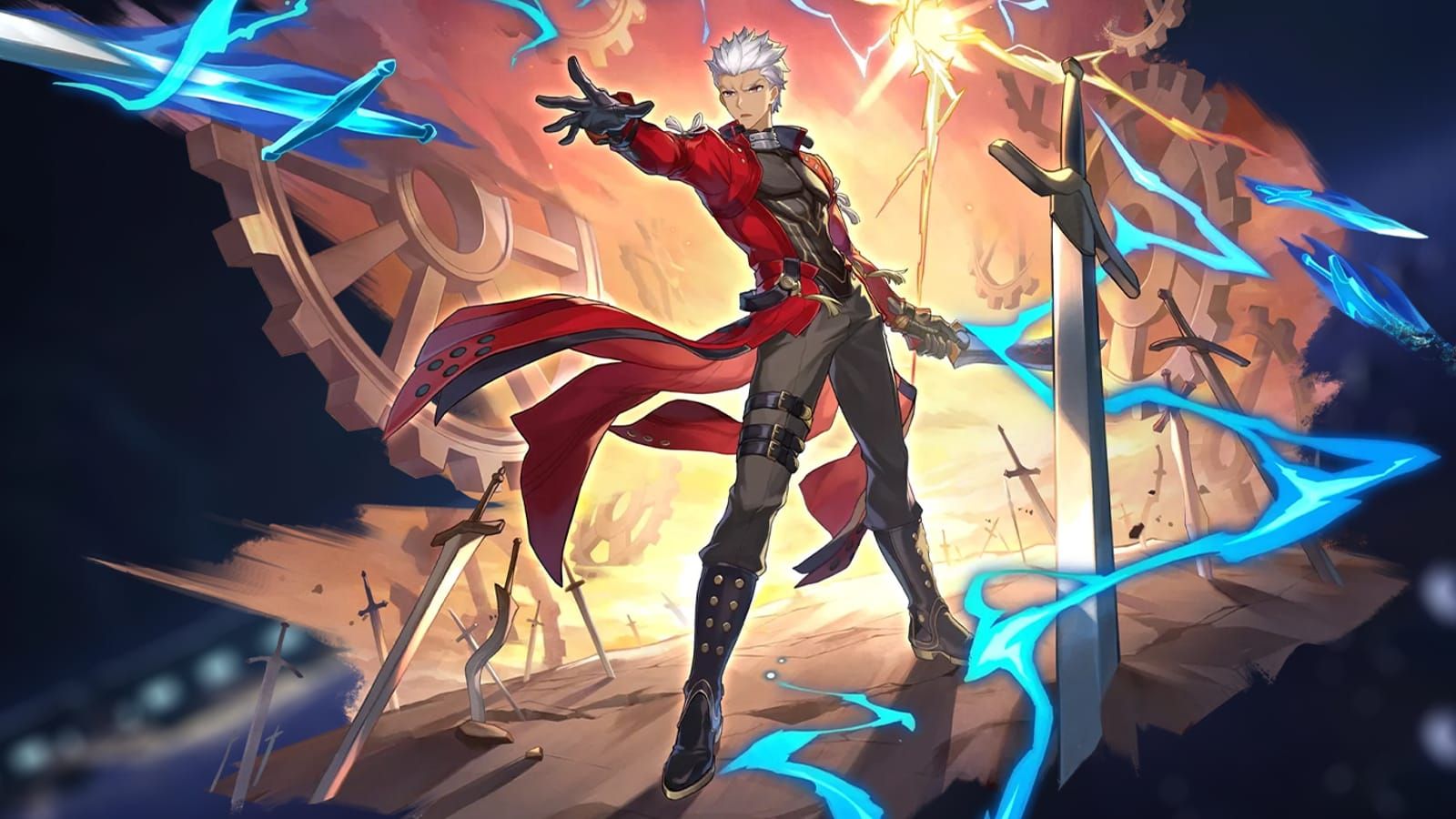
Archer functions as your primary damage dealer, but his role goes beyond just hitting hard. His skill spam mechanics create the foundation for Cipher's recording system while maintaining SP economy through his Ultimate's charge system.
The key insight? Archer's Guardian trace provides +120% CRIT DMG when he has 4+ SP after an ally acts. With Sparkle providing +2 maximum SP and SP-positive turns, this becomes consistently activatable rather than a rare occurrence.
Speed tuning matters here: 130-150 speed puts Archer after SP-positive supports but ensures he acts within Cipher's recording window. Too fast, and you waste SP; too slow, and you miss damage windows.
For team optimization materials, consider honkai star rail mono quantum team recharge to accelerate your progression.
Rotation Mastery
The optimal sequence flows like this: Support setup → Archer skill spam (2-5 uses depending on SP) → Cipher follow-up triggers → Ultimate phase coordination. Manual control outperforms auto-battle by 15-20% through precise timing and target prioritization.
What experienced players know: don't just spam Archer's skill mindlessly. Monitor SP count, watch Cipher's recording percentage, and time your burst windows for maximum impact. The difference between good and great Mono-Quantum play often comes down to these micro-optimizations.
Knight-Stage Mechanics: Know Your Enemy
Knight-Stage content demands three teams for complete mode, but it's Knight II where Mono-Quantum DoT really shines. The Interference mechanic (5-10% action delay per attack) and Energy Absorption (-2 energy on hit, +10 on kill) specifically punish traditional damage dealers while leaving DoT strategies largely unaffected.
Phase 1 presents Howling Casket and Ichor Memosprite—add management becomes crucial here to prevent Whirl stack accumulation. Phase 2 features Hoolay with enhanced mechanics, but he's surprisingly vulnerable to Entanglement DoT and True damage bursts.

Star requirements follow the standard pattern: ≤4 cycles for 3 stars, ≤2 cycles for 2 stars, no defeats for 1 star. The Self-Modeling Resin rewards at 3/6/9 total stars make the investment worthwhile, plus the Interference Key unlocks additional content.
Combat Execution: From Theory to Practice
Opening Sequence That Works
Turn 1 sets your foundation: Sparkle skill for Action Advance and SP generation → Archer skill spam (2-3 uses) → Cipher skill for debuff and ATK boost → Sustain setup.
Turns 2-3 focus on accumulation: Continue Archer skill spam while monitoring Cipher's recording percentage. Don't rush the Ultimate—timing matters more than speed.
Mid-Fight Decision Making
This is where manual control separates good players from great ones. You're constantly monitoring four variables: SP count, energy levels, recording accumulation, and enemy HP thresholds.
Drop to Basic attacks when SP falls below 2. Trigger Cipher's Ultimate near the 12-24% recording cap or during multi-target phases for maximum Blast coverage. Watch for enemy spawn patterns—that's often your optimal burst window.
Burst Phase Coordination
The perfect setup: Cipher near recording cap → Sparkle action advance → Archer Ultimate → Cipher Ultimate → Follow-up chain. This sequence maximizes damage conversion while maintaining SP economy for the next cycle.
Manual timing consistently outperforms auto-battle by 15-20%. The AI doesn't understand recording optimization or positioning for Blast coverage—but you do.
F2P Progression: Making Every Resource Count
Smart Material Allocation
Character levels: Cipher to 80/90 first (she's your damage converter), Archer to 80/80 second, supports get minimal investment initially. For traces, prioritize Cipher's major traces—especially Empyrean Strides—then Archer's damage traces, then support utility.
Relic farming should focus on Pioneer Diver for Cipher, with speed feet taking priority over perfect substats. That 170 speed breakpoint matters more than a few extra CRIT DMG rolls.
Stellar Jade Strategy
Priority order: Cipher acquisition > Sparkle > Light Cones > Eidolons. Sparkle's SP economy makes her irreplaceable in this composition—no other support provides the same SP generation and action manipulation.
Cipher's signature LC provides that 114.8% relative DPS increase, making it a better investment than most character dupes. But it's not mandatory for Knight-Stage clears.
Timeline Expectations
Week 1-2: Basic team assembly, level 70+ core DPS, essential traces unlocked. Week 3-4: Hit Cipher's 170 speed breakpoint—this is your critical milestone. Month 2: Optimize substats, complete major traces, achieve 38% EHR threshold. Month 3+: Fine-tune speed tuning, Light Cone optimization, explore alternative compositions.
Advanced Optimization: The Details That Matter
Speed Tuning Precision
Cipher: 170+ speed (mandatory for Empyrean Strides activation) Sparkle: 140-160 speed (ensures first turn without SP waste) Archer: 130-150 speed (acts after support setup, avoids SP starvation) Sustain: 110-130 speed (adequate frequency without SP competition)
Effect Hit Rate Balance
38% EHR provides 100% success versus 20% resistance enemies—this covers most content. 67% with Resolution LC ensures consistency against resistance buffs, but the damage trade-off usually isn't worth it unless you're struggling with debuff application.
Damage Distribution Analysis
In optimal runs, you'll see roughly: Archer 40-50%, Cipher 30-40%, supports 10-20%. If Cipher's contribution drops below 25%, check your recording efficiency and Ultimate timing. You should approach 100% conversion of your 12-24% cap per cycle.
When Things Go Wrong: Troubleshooting Guide
Common Failure Points
SP starvation hits when you ignore Basic attacks. Integrate them when SP drops below 2—it's better to lose one turn of skill spam than to stall your entire rotation.
Energy management becomes critical against Knight-Stage mechanics. Prioritize follow-up attacks and DoT damage over direct attacks when possible.
Recording waste happens when you hit the cap without using Ultimate. Monitor that percentage and time your bursts accordingly.
Positioning errors cost damage in Blast scenarios. Manual control for optimal coverage makes a real difference.
Character Substitutions
Archer alternatives include Seele or Qingque with modified rotations, though you lose some SP generation. Cipher substitutions are limited—Remembrance Trailblazer lacks the recording system entirely.
For supports, Sunday and Robin offer different advantages, but none match Sparkle's SP economy for this specific strategy. Sustain options include Gallagher (F2P friendly), Aventurine (premium), or Dan Heng PT (Knight-specific utility).
Backup Compositions
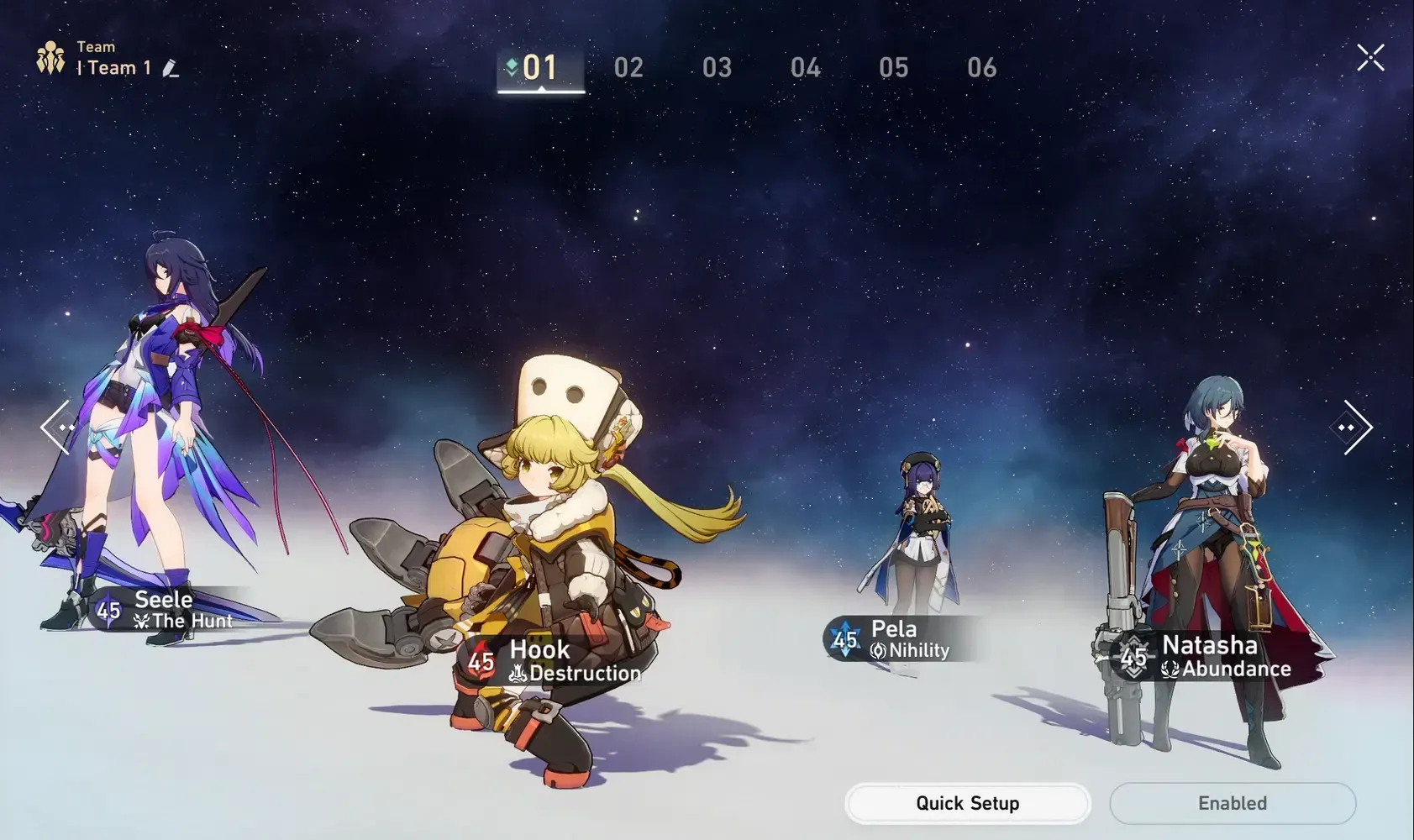
Alternative Mono-Quantum: Cipher + Silver Wolf + Seele/QQ + Fu Xuan Hybrid F2P: Archer + Remembrance Trailblazer + Pela + Gallagher
Non-quantum DoT: Kafka + Black Swan + supports
Your Questions Answered
How exactly does Mono-Quantum DoT bypass Knight-Stage mechanics? The DoT effects from Quantum Entanglement trigger off-turn, completely avoiding Interference and Energy Absorption penalties. While direct attacks get penalized, your DoT damage just keeps accumulating in the background.
What makes the 170 speed breakpoint so important for Cipher? Empyrean Strides doubles your recording efficiency from 12% to 24% and provides +50% CRIT Rate. It's literally a damage multiplier disguised as a speed requirement.
Can F2P players actually clear Knight-Stage with this strategy? Absolutely. Use Archer + Remembrance Trailblazer + Pela + Gallagher as your core. Focus on speed tuning, trace development, and rotation execution. It requires resource management, but it's completely viable.
What's the ideal rotation for maximum damage? Sparkle skill → Archer skill spam (2-5 uses) → Cipher skill → monitor recording accumulation → time Ultimate for multi-target phases or near the 12-24% threshold.
Should I prioritize Cipher's signature Light Cone? It provides 114.8% relative DPS increase, making it better than most character dupes. But Resolution S5 works fine for Knight-Stage clears—invest based on your overall account needs.
How do I counter specific Knight-Stage mechanics? Use DoT and follow-ups to minimize Interference impact. Clear adds quickly in Phase 1 to prevent Whirl accumulation. Time Cipher's Blast Ultimate during enemy spawns for maximum coverage.
The beauty of Mono-Quantum DoT lies in its elegance—you're not fighting Knight-Stage mechanics, you're simply ignoring them. Master the fundamentals, nail your speed tuning, and watch those intimidating endgame challenges become just another day at the office.