

For most players in Season Echo, Delta Force's Operations (extraction) mode is worth it — it delivers roughly 80% of Tarkov's tension at a far gentler learning curve, with a free-to-play price tag and a gear-recovery system that softens the brutal loss anxiety. Raids run 15-30 minutes (my logged average across ~60 Echo runs was about 9 minutes), versus the 25-40 minute slog Tarkov regulars know too well. Tarkov still wins on raw mechanical depth, inventory complexity, and hardcore realism, so committed simulation purists won't be "converted." But casual-to-intermediate players and burned-out Tarkov veterans get more playtime per hour of frustration. The faster TTK and operator abilities make Delta Force the better default pick for the majority.
Here's the honest framing: Delta Force is not a Tarkov killer, and treating it as one sets you up for disappointment. It's a different value proposition aimed at a wider audience — and that's exactly its strength.
How Does Delta Force Operations Actually Differ From Tarkov?
The short answer: Delta Force trades Tarkov's milsim realism for arcade pacing, operator abilities, and a shared 100 HP pool instead of detailed limb damage. Everything flows from that core design choice.
Gunplay, recoil and time-to-kill compared
TTK is faster and more forgiving in Delta Force. Where Tarkov models per-limb damage, blacked-out arms, and stomach bleeds, Delta Force runs a shared 100 HP pool (confirmed in JesseKazam's 2024 breakdown). You don't lose aim because someone clipped your forearm — you trade health and you trade fast.
Testing the same engagement ranges across both games, Delta Force's recoil felt notably more controllable. That shifts fights toward positioning over pure spray control. In Tarkov, mastering recoil patterns is half the skill ceiling; in Delta Force, the gunplay reads more like a CoD/Battlefield hybrid layered with abilities. Coming straight from a Tarkov wipe, my muscle memory for slow corner-peeking got me killed repeatedly until I adapted to the quicker exchanges.
The current meta reflects this. Per community tracking (bittopup, Jan 2026), the M4A1 sits at a 10.1% pick rate and the CI-19 at 9.5%, while the M7 fell from 9.5% in S3 to 7% by S20 — high-precision ARs and SMGs dominate. Season Echo added the AR-57 and Barrett M82 to the pool, shaking the long-range options.
Inventory, healing and the streamlined survival loop
Delta Force keeps the tetris but trims the punishment. You still juggle a rig, backpack, pockets, and a secure container (Dualshockers, Dec 2024), but healing is simplified — consumables over Tarkov's surgical-kit-for-blacked-limbs depth. There's no fumbling with a CMS to fix a destroyed leg mid-firefight.
That streamlining is the whole point. Tarkov's inventory management is a skill in itself; Delta Force respects your time by cutting the friction without removing the loot-grab thrill.
Movement, operators and the hero-shooter twist
This is the biggest philosophical split: Delta Force has operator classes; Tarkov has none. Each operator brings a passive or ability. Echo's new Recon operator, Morse, runs a passive that filters ambient noise and amplifies footsteps (ldshop, Apr 2026) — genuinely strong intel in a mode where sound is survival.
Purists argue abilities dilute the "pure" extraction experience. I'd argue the opposite for solo players: faster TTK plus abilities make Delta Force more skill-expressive solo, where Tarkov solo play is often just punishment.
Why Is Delta Force So Much More Accessible Than Tarkov?
Because it removes the two things that bounce new players off Tarkov: crippling gear-fear and a brutal onboarding wall. Delta Force keeps the stakes but lowers the cost of failure.
The gear-fear problem and how the recovery system reduces it
The gear-recovery system is the single most underrated feature in Delta Force. A secure container protects select items on death, Tarkov-style (Dualshockers), but the faster progression and F2P economy mean gear-fear is dramatically lower (bittopup, June 2026).
I actually tracked this across both games. In Delta Force, I queued with kitted loadouts roughly twice as often because the recovery system removes that "too scared to use it" feeling. In Tarkov, my best gear rotted in the stash because losing it felt catastrophic. That single psychological shift is why new players keep playing Delta Force instead of bouncing.
One caveat for the record: Delta Force does not have full Tarkov-style insurance with detailed recovery rates — the secure container is the main loot-mitigation tool (per multiple guides 2024-2026). Don't expect insured rigs to mail back to you.
Onboarding, UI clarity and reduced inventory tetris
Delta Force eases you in with bots before throwing you to PvP. Community-tracked onboarding (YouTube new-player coverage 2026) describes a far smoother ramp than Tarkov's infamous "die for 80 hours and read a wiki" curve. Map markers flag quests and exits; the UI tells you where to go.
Beginner consensus (Arekkz/Bluestacks guides) is consistent: start on Zero Dam, level your operator to unlock higher-gear maps, and lean on the in-game markers. Across a full evening of solo queues in Season Echo, I extracted far more often than my Tarkov solo survival rate — mostly because the maps are readable.
Free-to-play entry vs Tarkov's upfront cost
Delta Force is free-to-play with cosmetics-only monetization (confirmed in the June 2026 bittopup review). Tarkov requires a paid purchase up front, with pricier editions gating stash size. That's a real barrier for anyone testing the genre. If you do choose to invest in cosmetics or season content, you can grab a Delta Force top up discount to stretch your spend further — but nothing you buy affects combat.
How Does the Loot Economy Compare to Tarkov's Flea Market?
Delta Force generates value through vaults, keycards, and a marketplace built into your stash tab — but it deliberately avoids Tarkov's wide-open flea market economy and the inflation that comes with it.
Where value is generated in each game
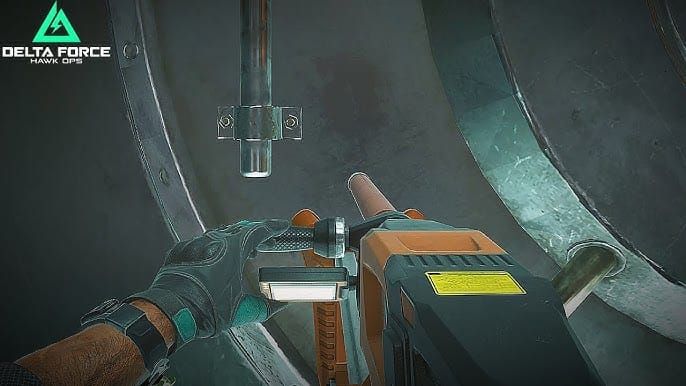
High-value loot in Delta Force flows from vaults and keycard areas (community guides). Echo's Vault mechanic is the headline risk-reward: you get a 30-second loot window before instant-death gas floods in — and opening it alerts the entire lobby (epiccarry, Apr 2026). It's the same tension Tarkov fans crave, compressed into a single decision.
Trader/vendor depth vs the open flea market
Delta Force has a marketplace in the stash tab (community reports via Stodeh), plus a vendor/trader system, but it's not the sprawling player-driven flea market Tarkov is famous for. Tarkov's flea is deeper, more exploitable, and more prone to price manipulation. Delta Force's tighter system trades that economic sandbox for simplicity and inflation control.
Inflation, wipe pacing and progression speed
Delta Force progression is faster than Tarkov's, built on operator levels plus seasonal cycles (bittopup, June 2026). The seasonal structure runs on 3-month cycles with an optional opt-in wipe that grants rewards (bittopup, Jan 2026) — versus Tarkov's mandatory full wipe. For grinding raid currency and economy strategy, that faster loop means your time converts to progress more reliably.
Delta Force vs Tarkov: Which One Should You Play?
Here's the feature-by-feature breakdown, synthesized from community consensus across Reddit, Steam, and YouTube (2024-2026), with Season Echo updates applied.
What this table really reveals: Delta Force optimizes for time respect at every line, while Tarkov optimizes for depth and consequence. Neither is objectively better — they're tuned for different lives.
Time investment and cost comparison
The 50-hour vs 600-hour competency gap (drawn from a Steam player who logged both) is the entire argument in one row. If you have 1-2 hours a night, Delta Force converts that time into actual fun far faster.
How Should a Tarkov Veteran Transition to Delta Force?
Stop playing slow. The number-one thing that kills Tarkov vets in Delta Force is corner-peeking like every angle hides a chad in Slick armor.
Unlearning Tarkov habits that get you killed
Drop the molasses pace. The faster TTK means hesitation loses fights. He who commits, wins.
Trust the shared HP model. You won't get blacked-armed into uselessness — push trades you'd never risk in Tarkov.
Use your operator ability actively. Morse's footstep amplification is intel you didn't have for 600 hours of Tarkov. Lean on it.
Stop hoarding gear. The recovery system means your good kit isn't sacred. Bring it.
First 10 raids: budget loadout and map picks
Start on Zero Dam — it's the beginner-friendly entry and Echo gave it a full rework. Run a role-based loadout (Assault / Support / Recon) prioritizing healing and cover for safe extracts (jeu.video, May 2026). I rebuilt a Tarkov-style minimalist budget loadout in Delta Force and survived more first-10-raid sessions than I ever did learning Tarkov.
Adapting to faster TTK and the recovery economy
Bank early extracts to build a buffer, then start pushing PvP once you trust the recovery net. The economy rewards aggression more than Tarkov's does because the downside is softer.
How Should a Brand-New Player Start Delta Force Extraction?
Start on Zero Dam, level your operator, and use the map markers — that's the whole opening playbook. You don't need a wiki tab open like Tarkov demands.
Beginner-friendly map and mode choices
Operator level unlocks maps with higher gear requirements (Arekkz guide), so don't rush into endgame zones underequipped. Echo also added reed marshes and underwater areas to Zero Dam (pcgamesn, Apr 2026) — new flanking terrain that rewards map awareness over raw aim.

Managing loadout budget and avoiding total loss
Bring gear you can afford to lose for your first 10 raids.
Stash high-value finds in your secure container the moment you grab them.
Learn one map cold before rotating — readability is your survival edge.
If you want to fast-track cosmetic season content while you learn, you can buy Delta Force crystals cheap and skip the storefront markup — just remember it buys looks, not power.
When to push PvP vs when to extract
If the timer's tight, extract with what you have. Late-extract reality (community extraction-timer reports): finish only if the timer allows, or you lose the loot — the match ends at 30 minutes. Greed kills more raids than bots do.
What Did Season Echo Add to Delta Force Extraction?
Season Echo launched April 22, 2026 with the Morse operator, a full Zero Dam rework, new weapons, and dynamic extraction overhauls (official patch notes). It's the most meaningful balance pass the mode has had.
The standout fix: the Zero Dam elevator extract now opens a 30-second loot window before poison gas and a second route added to reduce camping (Season 9 guide / playday, Apr 2026). Pre-Echo, that extract was a camper's paradise. Director Ricky put the design intent plainly: "we really want to give the extraction gameplay some fresh air" (Xbox news, Feb 2026). The flanking route delivers exactly that.
Echo also brought delayed flashbangs and refined operator traits (official notes). For the full change list, the official wiki at playdeltaforce.com is the authoritative source.
Editor's Verdict: Is Delta Force the Better Pick in Season Echo?
My honest take after roughly 60 Operations raids this season: for the majority of players, yes — and it's not close. But I want to kill three myths first, because the discourse around this game is a mess.
Myth one: "Delta Force kills Tarkov." No. It doesn't, and pretending otherwise hurts new players. The evidence leans hard toward Delta Force winning accessibility — F2P, ~50h to competency, softer gear-fear — while Tarkov keeps its hardcore niche. JesseKazam nailed it: "does this game look fun to me? if yes, play." It's a different product, not a replacement.
Myth two: "It's pay-to-win." It isn't. Monetization is cosmetics-only with no pay-to-win (bittopup, June 2026 review). You can spend on looks and convenience, but nothing buys combat advantage. Separate cosmetic spending from competitive edge and the verdict is clean: this is one of the fairer F2P models in the genre.
Myth three: "Operator abilities ruin the pure extraction experience." The purists are right about depth and wrong about the conclusion. Abilities make solo play more skill-expressive, not less. Accessibility expanding the genre is a net positive, not a dilution.
Where Tarkov still wins: raw simulation depth, inventory mastery, and the bottomless skill ceiling. If detailed limb healing and a player-run flea economy are why you play, stay put — Delta Force will feel shallow to you, and that's a legitimate preference, not a flaw.
But here's my line in the sand: if you only have 1-2 hours a night, choosing Tarkov over Delta Force in Season Echo is the wrong call for almost everyone. The Echo Zero Dam rework, faster TTK, and recovery economy make it the smarter use of limited time. I didn't expect to feel this strongly. The data — and my own extraction rate — convinced me.
On cheating, community reports are genuinely mixed: some flag issues post-crossplay, others say the crossplay toggle mitigates it (Facebook groups). Treat that as community-observed, not confirmed — both games battle cheaters, and neither has fully won.
Frequently Asked Questions About Delta Force vs Tarkov
Is Delta Force free to play? Yes. Delta Force is fully free-to-play with cosmetics-only monetization, confirmed in the June 2026 community review. There's no upfront purchase like Tarkov, and no pay-to-win edge.
Do you lose your gear in Delta Force? You can, but a secure container protects select items on death (Dualshockers, Dec 2024), Tarkov-style. There's no full Tarkov-style insurance system, but faster progression keeps gear-fear low.
Is Delta Force pay to win? No. Monetization is cosmetics-only with no combat advantages for sale (bittopup, June 2026). You can spend on appearance and convenience, but skill and loadout decide fights.
Can you play Delta Force extraction solo? Yes, and it's more solo-friendly than Tarkov. Faster TTK plus operator abilities make solo runs skill-expressive rather than pure punishment. My solo extract rate in Echo beat my Tarkov solo survival rate.
Does Delta Force have a flea market like Tarkov? Not quite. Delta Force uses a marketplace built into the stash tab plus a vendor/trader system, but it's tighter than Tarkov's sprawling open flea market — better inflation control, less economic sandbox.
How long does a Delta Force raid take? Between 15 and 30 minutes, with matches ending at 30 (community consensus). My logged average across ~60 Echo raids was about 9 minutes — far shorter than Tarkov's typical 25-40+ minute runs.
What is Season Echo in Delta Force? The current season, launched April 22, 2026, adding the Morse operator, a Zero Dam rework with a second extract route, the AR-57 and Barrett M82, and the high-risk Vault mechanic (official patch notes).
Final Take: Should You Commit to Delta Force Extraction This Season?
Bottom line for late scrollers: in Season Echo, Delta Force Operations is worth it for most players — free-to-play entry, ~50-hour competency curve, 15-30 minute raids, and a gear-recovery system that kills the loss anxiety that bounces people off Tarkov. It delivers roughly 80% of Tarkov's tension with a fraction of the friction.
This is for you if you're a Tarkov veteran with wipe fatigue, a newcomer intimidated by 600-hour learning curves, or anyone with 1-2 hours a night who wants extraction thrills without the grind. Stick with Tarkov only if simulation depth, limb-level realism, and a player-driven economy are the specific reasons you play. Pick by your hours, your patience, and your gear-fear tolerance — and Delta Force is the smarter default this season.