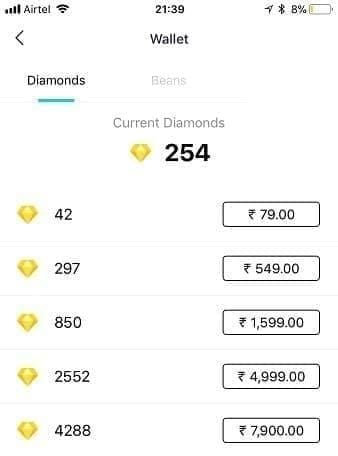
The BIGO Awards Gala 2026 (January 23, 2026, Seoul) demands strategic diamond deployment to maximize CP efficiency. This guide reveals when to push versus hold diamonds across the Global Family Tournament (December 6-14, 2026), using data-driven timing, peak hour analysis, and multi-wave tactics. Top families achieve DER ratios of 1.4-1.5 while competitors waste resources at 1.2 or lower through precise timing.
Understanding CP Efficiency Fundamentals
CP efficiency determines whether your family spends 800,000 or 1,200,000 Diamonds for the same leaderboard position. The difference lies entirely in timing strategy.
Awards Gala 2026 operates on: 1 Diamond sent = 1 CP, 1 Bean received = 1 CP. The critical metric is DER (Diamond-to-Earning Ratio): Total CP ÷ Diamonds Spent. Families achieving DER 1.5 generate 1,200,000 CP from 800,000 Diamonds plus 400,000 Beans received. Inefficient families at DER 1.2 require significantly more investment for identical results.
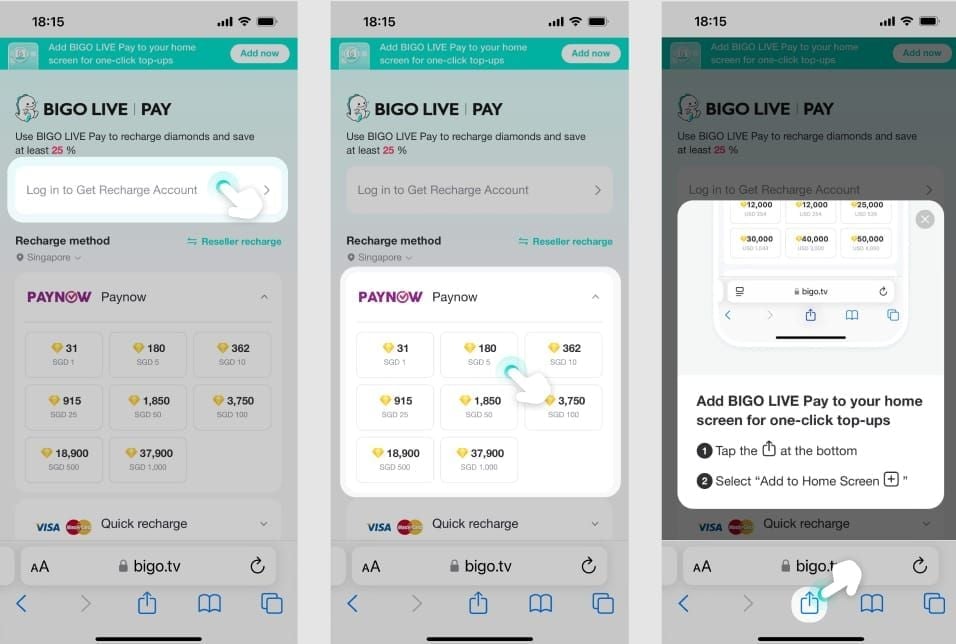
For diamond reserves, BIGO Live diamonds top up through BitTopup ensures resources are ready when strategic windows open.
CP Efficiency and Family Success
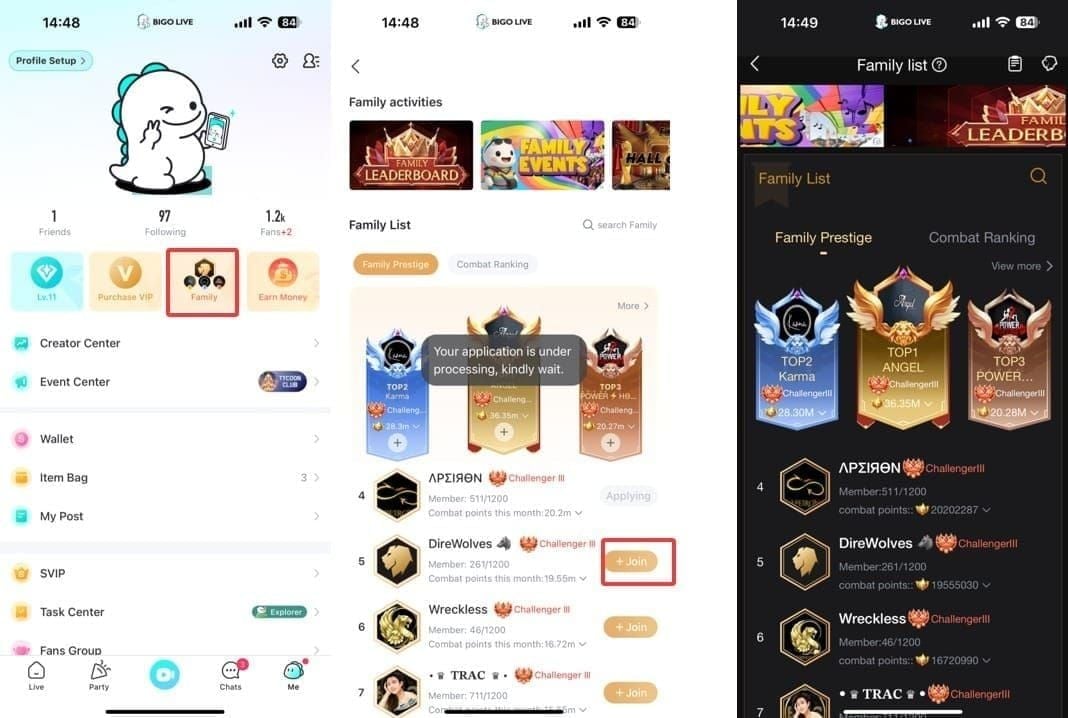
CP efficiency directly impacts competitive positioning across three tracks: Beyond Self, Best Partner, and Unstoppable Spirit. Leaderboard updates every 15 minutes throughout December 6-14, 2025.
Rank 1-3 families typically spend 800,000-1,200,000 Diamonds. Rank 4-10 requires 400,000-800,000 Diamonds. Dominant families don't spend more—they spend smarter, concentrating resources during peak hours 19:00-23:00 GMT+8 when Bean reception hits 40-60%.
Cost of Poor Timing
Continuous gifting throughout the tournament is the most expensive mistake. Off-peak hours yield DER 1.2, while strategic peak concentration achieves DER 1.4-1.5. For a family targeting Rank 3, this difference means 1,000,000 versus 800,000 Diamonds for the same CP total.
Tournament structure: Promotion Matches (Dec 6-7), Group and Revival Matches (Dec 8-10), Semifinals (Dec 11-12), Regional Finals (Dec 13), Global Finals at midnight GMT+8 Dec 13. Each phase demands different deployment strategies.
Awards Gala vs Regular Events
Unlike weekly events, Awards Gala 2026 compresses competition into eight days with preliminary rankings at 06:00 GMT+8 Dec 14 and final rankings locking at 12:00 GMT+8 Dec 15. Poor timing decisions in early phases cannot be corrected without massive overspending.
Prize structure: 200,000 Beans prize pools, gala tickets for top-3 families (3-5 tickets plus $3,000-$5,000 travel packages per attendee), exclusive trophies, skins, badges. These rewards attract families deploying 1,000,000+ Diamonds, making efficiency the only sustainable path.
Why Traditional Strategies Fail
Regular event strategies assume stable competition levels. Awards Gala 2026 follows the Host Championship (November 22-30, 2025) and inherits its competitive intensity.
Traditional approaches fail because they don't account for competitor resource pools, psychological warfare through strategic surges, or the final six-hour reserve deployment. Families must reserve 20-30% of total budget specifically for this final period.
Event Timeline: Phase-by-Phase Strategy
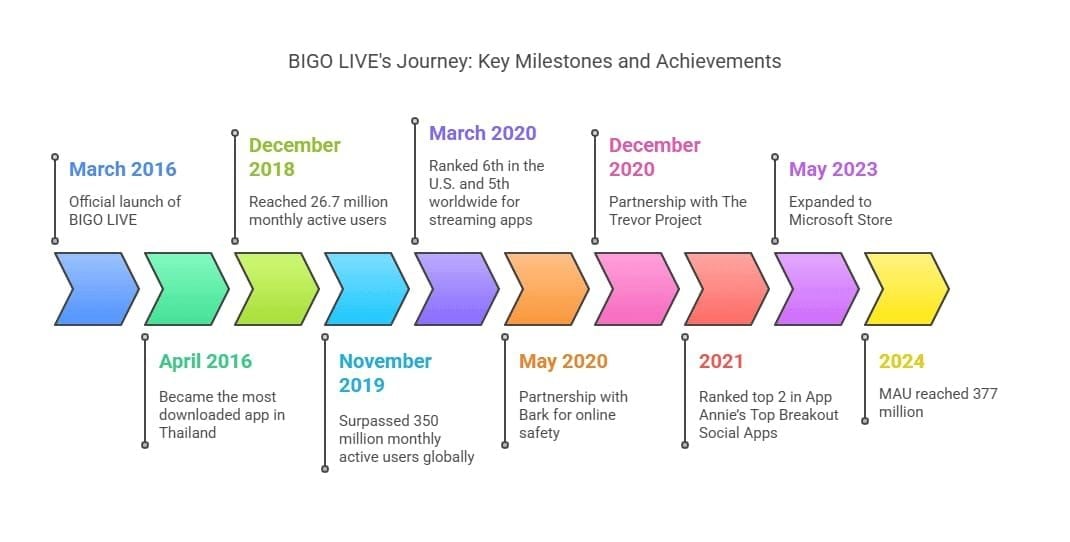
Pre-Event Preparation (Before Dec 6)
Complete diamond acquisition 48-72 hours before Promotion Matches. Black Friday (November 28, 2025) offers 35-42% bonuses—the most cost-effective stockpiling opportunity.
Budget requirements by target rank:
Rank 1-3: 800,000-1,200,000 Diamonds
Rank 4-10: 400,000-800,000 Diamonds
Rank 11-50: 150,000-400,000 Diamonds
Rank 51-100: 50,000-150,000 Diamonds
Optimal family size: 30-50 active participants. Requires level 10+ leader and 5 initial same-region members. Finalize role assignments: coordinators, gifters, analysts, scouts.
Daily missions provide 15,000-30,000 free CP throughout the tournament (5-8% of total CP for mid-tier families).
Opening Phase: Conservative Positioning (Dec 6-7)
Promotion Matches serve primarily as reconnaissance. Allocate only 15-20% of total budget. Establish baseline leaderboard presence while observing competitor spending patterns.
First Gala Power Hours occur Dec 6 from 12:00-18:00 UTC. Resist aggressive spending. Top families deploy small, visible surges creating the illusion of deep resource pools while conserving 80%+ of ammunition.
Track competitor spending rates by monitoring leaderboard position changes every 15 minutes. Calculate approximate CP accumulation rates for families ranked immediately above and below your target position.
Mid-Event Evaluation (Dec 8-12)
Group and Revival Matches (Dec 8-10) plus Semifinals (Dec 11-12) represent the tournament's longest phase. Allocate 35-45% of total budget, concentrated during peak hours 19:00-23:00 GMT+8.
Multi-guest streaming uses 60/40 split. Schedule 2-3 hour gifting blocks during peak hours rather than continuous 4-hour sessions, preventing burnout while maintaining leaderboard visibility.
Power Hours on Dec 13 include both Power Hours and Regional Finals—the single most important day before Global Finals. Reserve 15-20% of remaining budget specifically for Dec 13 peak hours.
VIP multipliers: VIP10 requires 10,000 Diamonds (1.15x multiplier), VIP30 requires 150,000 Diamonds. Ensure key gifters reach appropriate VIP levels before major deployment phases.
Final Push: Maximum Pressure (Last 6 Hours)
Global Finals begin midnight GMT+8 Dec 13, ending midnight GMT+8 Dec 14. Final six hours (18:00 Dec 13 to midnight) require deploying your reserved 20-30% budget plus emergency reserves.
Response strategy by position at 18:00 Dec 13:
Secure positions (3+ ranks above target): Deploy reserves only if competitor surge threatens standing
Contested positions (within 1-2 ranks): Immediate deployment of 50% reserves, hold 50% for final 2 hours
Deficit positions (below target): Aggressive deployment of 70% reserves in first 3 hours, final 30% in last hour
Preliminary rankings at 06:00 GMT+8 Dec 14 provide brief window for final adjustments before rankings lock at 12:00 GMT+8 Dec 15.
When to Push Diamonds
Peak Hour Analysis
Peak hours 19:00-23:00 GMT+8 consistently deliver 40-60% Bean reception rates, translating to DER 1.4-1.5 versus off-peak DER 1.2. For 100,000 Diamond deployment, this difference yields 140,000-150,000 CP versus 120,000 CP—a 20,000-30,000 CP advantage from timing alone.
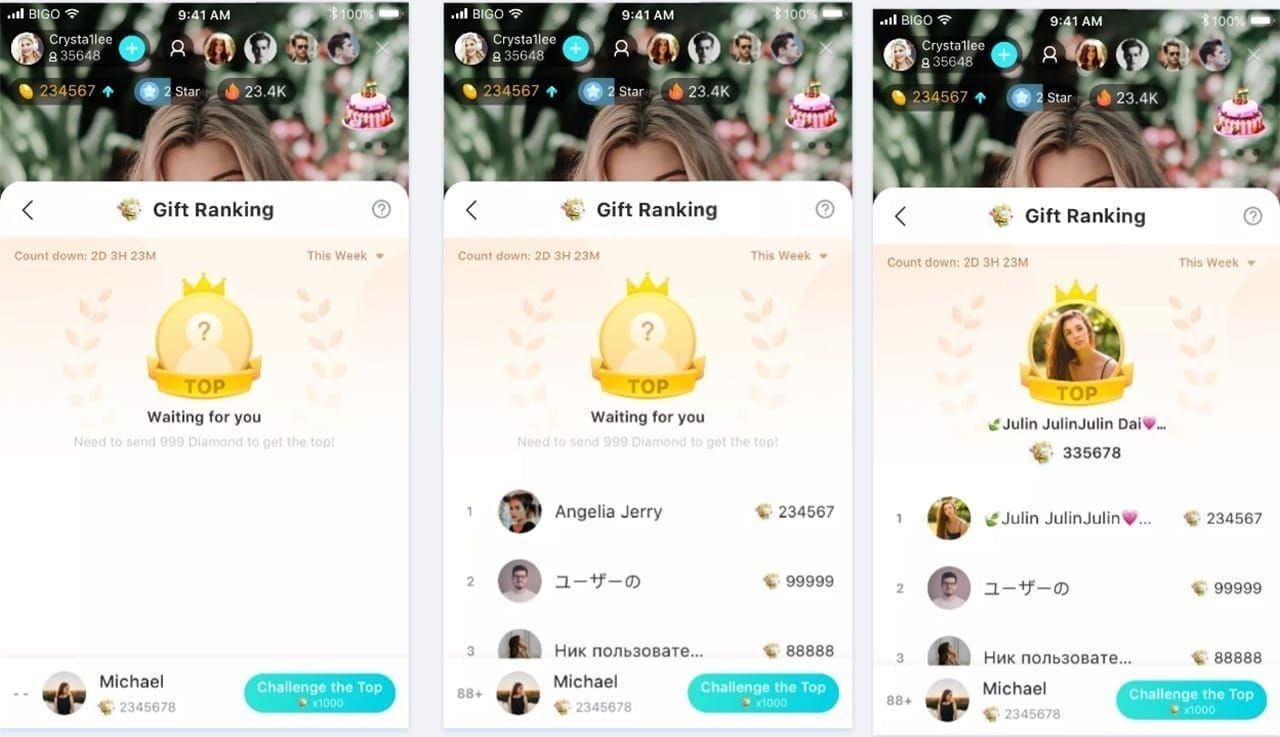
Optimal push strategy: concentrate 60-70% of daily allocation in first 90 minutes of peak hours (19:00-20:30 GMT+8) when traffic peaks but competitor fatigue hasn't set in. Final hour (22:00-23:00 GMT+8) serves as secondary window for defensive responses.
Gala Power Hours on Dec 6 and Dec 13 (12:00-18:00 UTC) create alternative high-value windows. Deploy 25-30% of phase-allocated budgets during these six-hour periods.
Competitor Weakness Detection
Leaderboard updates every 15 minutes create observable patterns. Families with irregular spikes reveal reactive, emotional spending—a weakness to exploit.
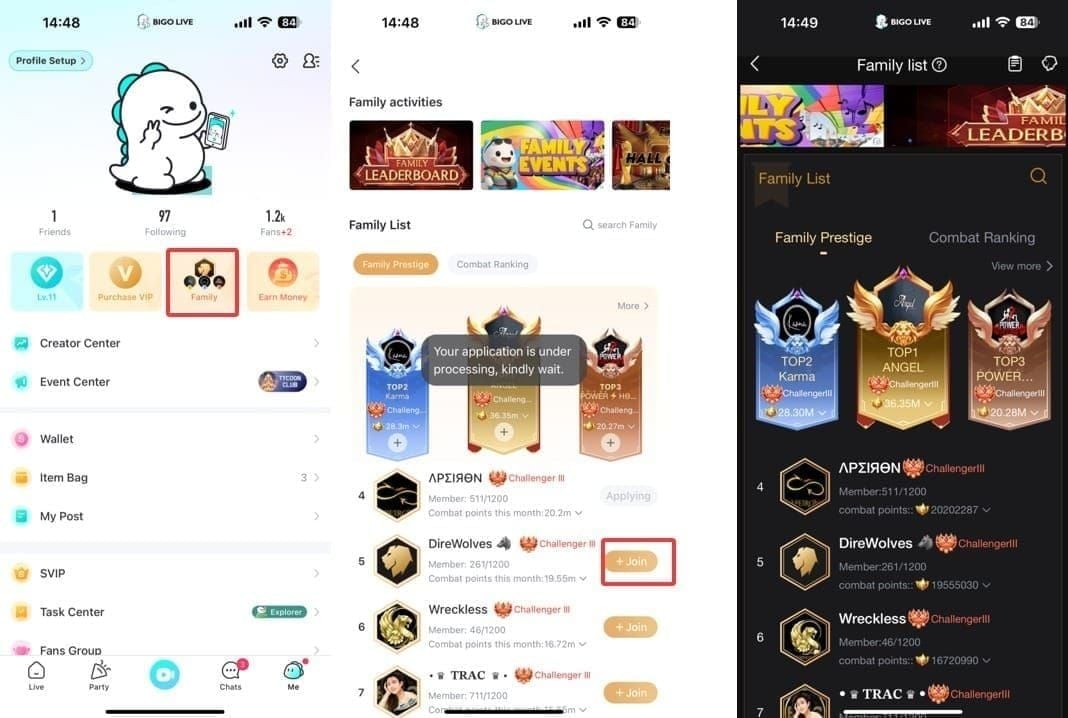
When a competitor shows 2-3 consecutive 15-minute periods without CP growth during peak hours, they're experiencing coordination problems or resource depletion. Deploy 10-15% of phase budget in concentrated 30-minute push to leapfrog their position and force defensive response that may exhaust reserves.
Scout competitor broadcaster streams for gifting fatigue: declining viewer engagement, reduced Bean reception rates, broadcaster comments about saving for later.
Momentum Multiplication
Leaderboard position influences Bean reception rates through viewer psychology. Families in top-10 positions attract more organic viewers and casual gifters, creating momentum effects that improve DER beyond base 1.4-1.5 peak hour rate.
Target leaderboard threshold positions: breaking into top-10, top-5, or top-3. A 50,000 Diamond deployment moving your family from rank 11 to rank 9 generates more total CP than the same deployment maintaining rank 11, because improved visibility increases Bean reception from non-family viewers.
Time threshold pushes for maximum visibility: first hour of peak periods, during Gala Power Hours, or immediately following competitor families' visible declines.
Emergency Push Triggers
Predetermined trigger conditions prevent emotional spending while ensuring defensive responses:
Trigger 1: Competitor surge moves them 2+ ranks above your position during final 24 hours—deploy 30% of reserves immediately
Trigger 2: Your family drops below target rank during final 6 hours—deploy 50% of reserves in next 60 minutes
Trigger 3: Competitor spending rate projects them overtaking your position within 3 hours—deploy 20% of reserves to maintain gap
Triggers require analyst team members monitoring leaderboard updates and calculating competitor spending rates in real-time. Communication protocols should enable trigger activation within 5 minutes.
When to Hold Diamonds
Low-Efficiency Time Windows
Off-peak hours (00:00-18:00 GMT+8) deliver DER 1.2, making them 17-25% less efficient than peak hours. 100,000 Diamonds during off-peak generates 120,000 CP, while same investment during peak yields 140,000-150,000 CP—a 20,000-30,000 CP opportunity cost.
Limit off-peak spending to daily mission completion and minimal leaderboard maintenance (5-10% of daily budget). This discipline separates families achieving rank 1-3 from those stuck in rank 4-10 despite similar total spending.
First 6 hours of each tournament phase represent reconnaissance periods where holding 80-90% of phase budget while observing competitor patterns provides strategic intelligence worth more than CP from early spending.
Competitor Baiting
Aggressive competitors often front-load spending in tournament opening phases, attempting psychological dominance. Families that respond emotionally deplete reserves needed for final phases.
Strategic holding during competitor surges—particularly in Promotion Matches and early Group Matches—forces aggressive families to spend more resources establishing leads you can overcome later. When a competitor deploys 200,000 Diamonds on Dec 6-7 to claim rank 1, holding position at rank 5-7 with only 50,000 Diamonds preserves 150,000 Diamonds for later phases when their reserves are depleted.
Reserve Pool Management
The 20-30% budget reserve for final six hours represents non-negotiable protection against last-minute competitor surges. Families that dip into these reserves during earlier phases consistently underperform during final rankings.
Calculate reserve pool before tournament begins based on total budget and target rank. For a family with 500,000 total Diamonds targeting rank 5-10, reserve pool equals 100,000-150,000 Diamonds. This amount stays completely untouched until 18:00 GMT+8 Dec 13.
Emergency reserves (additional 10% beyond standard reserve) deploy only if trigger conditions activate during final 24 hours.
Reading the Room
Leaderboard gaps of 150,000+ CP between your family and next competitor during mid-tournament phases indicate secure positioning that doesn't require additional spending. Calculate maximum possible CP competitors could generate with remaining time and typical spending rates—if this projection doesn't threaten your position, hold all diamonds.
However, security assessments must account for competitor reserve pools. A 200,000 CP lead with 48 hours remaining seems safe until competitor deploys 300,000 reserved Diamonds during final hours. Conservative security margins (250,000+ CP leads during final 24 hours) prevent these surprises.
CP-to-Diamond Ratio Optimization
Calculating Real-Time Conversion Rate
Basic formula: Total CP ÷ Diamonds Spent = DER. Calculate every 2-3 hours to track whether timing strategy achieves target efficiency.
Example at 21:00 GMT+8 Dec 8:
Total CP: 450,000
Diamonds Spent: 320,000
Beans Received: 130,000
DER: 450,000 ÷ 320,000 = 1.41
This 1.41 DER indicates strong efficiency, approaching peak-hour target of 1.4-1.5. If DER falls below 1.3, timing strategy needs adjustment—either too much off-peak spending or broadcaster engagement problems.
Track DER separately for peak versus off-peak spending to identify which time windows deliver best results for your specific family.
Benchmark Ratios
Families consistently ranking 1-3 maintain DER 1.45-1.5 through disciplined peak-hour concentration and optimized broadcaster engagement. These families generate 1,200,000 CP from approximately 800,000 Diamonds spent plus 400,000 Beans received.
Mid-tier families (rank 4-10) typically achieve DER 1.35-1.42. Lower-ranked families often show DER 1.2-1.3.
Target DER by competitive goals:
Rank 1-3: DER 1.45+ (requires strict peak-hour discipline)
Rank 4-10: DER 1.38-1.44 (allows some off-peak spending)
Rank 11-50: DER 1.30-1.37 (focuses on cost-efficiency)
Factors That Degrade Efficiency
Broadcaster fatigue: Streamers maintaining 4+ hour sessions show declining viewer engagement. Rotate broadcasters every 2-3 hours during peak periods.
Off-peak spending: Every Diamond spent during off-peak hours (DER 1.2) requires 1.25 Diamonds during peak hours (DER 1.5) to generate equivalent CP.
Uncoordinated gifting: Multiple family members sending Diamonds to different broadcasters simultaneously fragments viewer attention and reduces Bean reception rates.
Emotional spending: Reactive deployments without strategic analysis often occur during low-efficiency windows.
Using Efficiency Metrics
Real-time DER monitoring should directly influence deployment timing. If DER at 20:00 GMT+8 shows 1.48 (excellent), continue current pace. If DER shows 1.28 (poor), immediately pause spending and analyze causes:
Spending during off-peak hours? Shift all deployment to 19:00-23:00 GMT+8 windows
Broadcaster engagement low? Rotate to different family broadcaster
Bean reception rates below 40%? Improve stream quality, content, or viewer interaction
Family Coordination Framework
Role Assignment
Optimal structure for 30-50 active participants:
Coordinators (2-3 members): Make real-time deployment decisions, activate trigger responses, manage communication channels. Authority to override individual member preferences when strategically necessary.
Gifters (15-25 members): Execute diamond deployments per coordinator instructions. Organize into 3-4 rotating teams of 5-7 members each, with each team assigned specific 2-3 hour blocks during peak hours.
Analysts (3-5 members): Monitor leaderboard updates every 15 minutes, calculate competitor spending rates, track family DER in real-time, identify trigger conditions.
Scouts (5-10 members): Monitor competitor broadcaster streams, track competitor family communication, identify competitor weakness signals, report strategic intelligence.
Remaining members focus on daily mission completion (generating 15,000-30,000 free CP) and moral support.
Communication Protocols
Primary channel: Real-time messaging platform with separate channels for coordinators, gifters, analysts, scouts.
Update frequency: Analysts post leaderboard updates every 30 minutes during off-peak hours, every 15 minutes during peak hours, every 5 minutes during final 6 hours.
Decision authority: Coordinators have final authority on deployments above 20,000 Diamonds. Gifters can execute deployments below 20,000 Diamonds independently during assigned blocks.
Response times: All family members acknowledge coordinator instructions within 5 minutes. Gifters ready to deploy within 10 minutes of activation orders during assigned blocks.
Rotating Gifter Teams
Eight-day tournament duration makes burnout significant risk. Implement rotating schedules:
Team A: Dec 6-7 (Promotion Matches) + Dec 11-12 (Semifinals)
Team B: Dec 8-9 (Group Matches Days 1-2) + Dec 13 (Regional Finals)
Team C: Dec 10 (Group Matches Day 3) + Dec 13-14 (Global Finals)
Each team gets rest days between assignments. All teams participate during Dec 13-14 final push, but primary responsibility rotates.
Within daily assignments, further rotate team members every 2-3 hours during peak periods.
Whale Member Integration
Families often include 2-5 whale members capable of deploying 100,000+ Diamonds individually. Reserve whale deployments for:
Threshold pushes: Breaking into top-10, top-5, or top-3 positions
Competitor suppression: Responding to competitor surges threatening strategic positioning
Final hour dominance: Deploying during last 2-3 hours when psychological impact peaks
Coordinate whale timing to avoid overlap—sequential whale deployments create sustained pressure. If three whales each deploy 100,000 Diamonds, spacing deployments 45-60 minutes apart creates three separate surges that demoralize competitors more effectively than single 300,000 Diamond deployment.
Advanced Multi-Wave Attack Planning
Three-Wave Strategy
Wave 1 (Dec 6-8): Deploy 25-30% of total budget during Promotion and early Group Matches. Establish leaderboard presence, gather competitor intelligence, create initial psychological pressure. Achieve rank within 3-5 positions of target.
Wave 2 (Dec 9-12): Deploy 35-40% of total budget during late Group Matches and Semifinals. Consolidate position near target rank, respond to competitor movements, position for final push. Achieve rank within 1-2 positions of target.
Wave 3 (Dec 13-14): Deploy remaining 30-35% budget during Regional Finals and Global Finals. Secure target rank, defend against competitor final pushes, execute emergency responses.
Each wave should include visible surges during peak hours creating leaderboard movements competitors observe. Psychological message: We have resources for sustained competition across all phases.
Resource Distribution
For family with 500,000 total Diamonds targeting rank 5-10:
Wave 1: 125,000-150,000 Diamonds (25-30%)
Wave 2: 175,000-200,000 Diamonds (35-40%)
Wave 3: 150,000-175,000 Diamonds (30-35%)
Within each wave, concentrate 60-70% of wave budget during peak hours (19:00-23:00 GMT+8) and Gala Power Hours. Remaining 30-40% handles off-peak leaderboard maintenance.
Adaptive Wave Timing
If competitor deploys aggressive Wave 1 (40%+ of apparent total budget), they're likely vulnerable during Waves 2-3. Reduce your Wave 1 response to 20% of budget, accept temporary rank deficit, prepare larger Wave 2 to exploit their depleted reserves.
If competitors show conservative Wave 1 (20% or less), they're likely planning strong Wave 2-3 pushes. Increase your Wave 1 to 30-35% to establish psychological pressure.
Analysts should project competitor total budgets based on Wave 1 spending rates. Competitor spending 200,000 Diamonds during Wave 1 likely has 500,000-700,000 total budget (assuming 30-40% Wave 1 allocation).
Psychological Impact
Time wave surges for maximum visibility:
Wave 1: First peak hour period (19:00-21:00 GMT+8) on Dec 6
Wave 2: Gala Power Hours on Dec 13 (12:00-18:00 UTC)
Wave 3: Final 3 hours before midnight GMT+8 Dec 13
When executing wave surge, increase broadcaster stream activity, family member chat participation, visible celebration of leaderboard movements. Competitors monitoring your streams perceive deeper engagement and resource pools than may actually exist.
Most effective tactic: maintain consistent wave intensity across all three waves. Competitors who see strong Wave 1 and Wave 2 often assume Wave 3 will be equally strong, potentially causing them to give up or overspend defensively.
Real-Time Monitoring and Adjustments
Essential Metrics (Track Every 30 Minutes)
Your family metrics:
Current CP total and leaderboard rank
Diamonds spent (cumulative and last period)
Beans received (cumulative and last period)
Current DER (Total CP ÷ Diamonds Spent)
Remaining budget and reserve pool status
Competitor metrics (for families ranked ±5 positions from target):
Current CP total and rank
Estimated CP gain last period
Projected spending rate (CP gain ÷ estimated DER)
Projected time to overtake your position
Environmental metrics:
Current time period (peak vs. off-peak)
Hours remaining in current tournament phase
Hours remaining until Global Finals
Upcoming high-value windows
Competitor Spending Rate Analysis
Leaderboard CP changes every 15 minutes reveal competitor spending patterns. Competitor gaining 15,000 CP in 15 minutes during peak hours (DER 1.4-1.5) spent approximately 10,000-11,000 Diamonds.
Calculate competitor hourly spending rates:
Conservative: 20,000-30,000 Diamonds/hour (80,000-120,000 CP/hour at DER 1.4)
Moderate: 40,000-60,000 Diamonds/hour (160,000-240,000 CP/hour at DER 1.4)
Aggressive: 80,000+ Diamonds/hour (320,000+ CP/hour at DER 1.4)
Project competitor total budgets by multiplying hourly rates by remaining tournament hours and adding already-spent amounts.
Pivot Triggers
Pivot Trigger 1: Your DER falls below 1.25 for 6+ consecutive hours despite peak-hour concentration. Pause diamond deployment, diagnose engagement issues, rotate broadcasters, improve stream quality before resuming spending.
Pivot Trigger 2: Competitor spending rates project 5+ families will surpass your target rank before final rankings. Either increase budget (if resources available) or adjust target to more realistic rank.
Pivot Trigger 3: Your family achieves target rank with 30%+ budget remaining and 24+ hours until final rankings. Reduce deployment pace to minimum leaderboard maintenance, bank excess resources.
Pivot Trigger 4: Whale competitor families (identified by 200,000+ CP surges in single hours) enter your competitive tier. Pivot to next lower rank target where competition remains achievable.
Emergency Reserve Deployment
Emergency reserves (10% of total budget beyond standard 20-30% final-hour reserves) deploy only when trigger conditions activate during final 24 hours:
Emergency Scenario 1: Unexpected whale competitor enters your rank tier during final 12 hours. Deploy 50% of emergency reserves immediately, hold remaining 50% for final 2 hours.
Emergency Scenario 2: Technical issues cause you to miss critical deployment window. Deploy 100% of emergency reserves during next available peak hour window.
Emergency Scenario 3: Competitor families coordinate multi-family attack (2-3 families simultaneously surge against your position). Deploy 75% of emergency reserves immediately.
Emergency reserves never deploy before final 24 hours regardless of competitive pressure.
Common Timing Mistakes
Mistake #1: Front-Loading Resources
New families often deploy 40-50% of total budgets during Promotion Matches (Dec 6-7), attempting early dominance. This fails because early leaderboard positions mean nothing if you lack resources to defend them during final phases.
Prevention: Limit Promotion Matches to 25-30% of total budget maximum. Accept rank positions 3-5 below target during opening phases.
Mistake #2: Holding Too Long
Conservative families sometimes hold resources waiting for perfect deployment moments that never arrive. They reach final hours with 50%+ budgets unspent, then panic-deploy during low-efficiency windows.
Prevention: Establish minimum deployment schedules ensuring 70% of budget deploys before final 6 hours.
Mistake #3: Emotional Spending
Competitor surges trigger emotional responses: They're passing us! Deploy everything now! These reactive deployments often occur during off-peak hours (DER 1.2) or outside predetermined trigger conditions.
Prevention: Require analyst approval for all deployments above 20,000 Diamonds. Analysts verify: (1) deployment occurs during peak hours, (2) trigger conditions justify spending, (3) deployment amount aligns with strategic goals.
Mistake #4: Poor Communication
Family members deploying Diamonds to different broadcasters simultaneously fragments viewer attention and reduces Bean reception rates.
Prevention: Establish designated deployment windows where all family gifting concentrates on single broadcaster. Coordinators announce: 19:00-21:00 GMT+8, all gifting to [Broadcaster Name].
Post-Event Analysis
Calculating Actual Efficiency Achievement
Final DER calculation reveals whether timing strategy succeeded.
Final metrics (example):
Final CP: 1,150,000
Total Diamonds Spent: 780,000
Total Beans Received: 370,000
Final DER: 1,150,000 ÷ 780,000 = 1.47
This 1.47 DER indicates excellent efficiency. Compare against target DER based on rank goals—families achieving rank 1-3 should show DER 1.45+, while rank 4-10 should show DER 1.38+.
Break down DER by tournament phase to identify which periods achieved best efficiency.
Identifying Successful vs Failed Decisions
Review coordinator decision logs against actual outcomes:
Successful decisions:
Dec 8, 20:00 GMT+8: Deployed 50,000 Diamonds during peak hours, achieved 72,000 CP (DER 1.44), moved from rank 8 to rank 6
Failed decisions:
Dec 10, 10:00 GMT+8: Deployed 30,000 Diamonds during off-peak hours responding to competitor surge, achieved 36,000 CP (DER 1.20), minimal rank impact
Document reasoning behind each major decision and whether outcomes matched expectations.
Documenting Competitor Patterns
Top competitor families often participate in multiple Awards Gala events with consistent strategies. Document their patterns:
Family X (achieved rank 2):
Total estimated spending: 950,000 Diamonds
Strategy: Conservative Wave 1 (20%), aggressive Wave 2 (45%), moderate Wave 3 (35%)
Peak hours preference: 20:00-22:00 GMT+8
Weakness: Minimal off-peak presence, vulnerable to overnight surges
These profiles inform strategy in future events.
Refining Your Playbook
Convert analysis into updated strategic guidelines:
Playbook updates (example):
Increase Group Matches allocation from 35% to 40% (achieved best DER during this phase)
Reduce Finals allocation from 35% to 30% (DER declined during high-pressure final hours)
Implement stricter off-peak spending limits
Expand analyst team from 3 to 5 members
Share playbook updates with all family members before next major event.
Preparing Diamond Reserves: The BitTopup Advantage
Optimal Stockpiling Quantities
Calculate total diamond requirements based on target rank and family size:
Small families (10-20 active members):
Rank 11-50: 150,000-250,000 Diamonds
Rank 51-100: 50,000-100,000 Diamonds
Medium families (20-35 active members):
Rank 4-10: 400,000-600,000 Diamonds
Rank 11-50: 200,000-350,000 Diamonds
Large families (35-50 active members):
Rank 1-3: 800,000-1,200,000 Diamonds
Rank 4-10: 500,000-750,000 Diamonds
These ranges assume DER 1.35-1.45 through disciplined timing strategy.
Timing Pre-Event Purchases
Black Friday (November 28, 2025): Confirmed 35-42% bonuses make this the single best stockpiling opportunity. Acquire 60-70% of total diamond requirements during this window.
Early December (Dec 1-5): Secondary purchase window for remaining 30-40% of requirements. Avoid purchasing during tournament dates (Dec 6-14) when demand peaks and promotional bonuses end.
Why BitTopup Offers Superior Preparation
When preparing for high-stakes competitions like Awards Gala 2026, platform reliability becomes critical. The buy BIGO diamonds recharge online service through BitTopup provides competitive advantages for tournament preparation.
Fast delivery ensures diamonds arrive within minutes—critical when executing time-sensitive deployments during peak windows or responding to unexpected competitor surges.
Secure transaction processing protects financial information and prevents account security issues. Awards Gala 2026 represents significant investment; protecting that investment through secure channels prevents devastating losses.
Competitive pricing maximizes CP potential from available budget. A 5-10% cost savings on 500,000 Diamonds equals 25,000-50,000 additional Diamonds—enough to make the difference between rank 4 and rank 5.
Ensuring Resources Are Ready
Test recharge process 48-72 hours before tournament start. Execute small test purchase (1,000-5,000 Diamonds) to verify account linking works correctly, delivery completes within expected timeframe, diamonds appear in correct account, and no technical issues require resolution.
Maintain communication with recharge platform's customer service during tournament dates. If issues arise, immediate support access enables rapid resolution before strategic windows close.
FAQ
What is the optimal CP to diamond ratio for BIGO Awards Gala 2026?
Optimal DER ranges from 1.4-1.5, achieved through concentrated gifting during peak hours (19:00-23:00 GMT+8) when Bean reception rates hit 40-60%. This means generating 1,400,000-1,500,000 total CP from 1,000,000 Diamonds spent.
When should families push diamonds during Awards Gala events?
Push during three primary windows: peak hours (19:00-23:00 GMT+8) for maximum DER efficiency, Gala Power Hours on Dec 6 and Dec 13 (12:00-18:00 UTC) for sustained visibility, and final 6 hours before midnight GMT+8 Dec 13 for securing final rankings. Concentrate 60-70% of total budget in these high-value windows.
How much diamond reserve should families keep for final hours?
Reserve 20-30% of total budget specifically for final 6 hours (18:00 Dec 13 to midnight), plus additional 10% emergency reserve for unexpected final-day competitor surges. For family with 500,000 total Diamonds, this means 100,000-150,000 Diamonds for standard final-hour deployment and 50,000 Diamonds for emergency scenarios.
What are the peak hours for diamond gifting in Awards Gala 2026?
Peak hours run 19:00-23:00 GMT+8 daily throughout tournament, delivering DER 1.4-1.5 versus off-peak DER 1.2. First 90 minutes (19:00-20:30 GMT+8) typically show highest Bean reception rates. Gala Power Hours on Dec 6 and Dec 13 (12:00-18:00 UTC) provide secondary high-value windows.
How do you calculate CP efficiency in real-time during BIGO events?
Calculate DER every 2-3 hours using formula: Total CP ÷ Diamonds Spent = DER. Track separately for peak versus off-peak periods. Example: 450,000 total CP ÷ 320,000 Diamonds spent = 1.41 DER. If DER falls below 1.3, immediately analyze whether you're spending during off-peak hours or experiencing broadcaster engagement problems.
What are the most common diamond timing mistakes in Awards Gala?
Four critical mistakes: (1) Front-loading 40-50% of budget during Promotion Matches, leaving insufficient reserves for final phases; (2) Holding too conservatively and reaching final hours with 50%+ budget unspent; (3) Emotional reactive spending during off-peak hours in response to competitor surges; (4) Uncoordinated gifting where multiple members send Diamonds to different broadcasters simultaneously.
Prepare for BIGO Awards Gala 2026 with confidence. Stock your diamond reserves now through BitTopup—the trusted platform for fast, secure, and reliable BIGO Live currency. Don't let resource shortages cost you the leaderboard. Get your diamonds ready today at BitTopup and execute your CP efficiency strategy flawlessly when the Global Family Tournament begins December 6, 2025.