After the mid-2026 shift in Chamet's pricing landscape, the best time to recharge Chamet Diamonds in 2026 is during three stacked windows: weekend flash sales (running 2–3 times monthly with 10–50% bonus diamonds), the Chamet Anniversary and major festival overlaps (Diwali, New Year, Ramadan — typically 15–20% extra), and first-recharge eligibility windows on fresh accounts where bonuses range from 20–100% extra. Hitting these windows on a trusted third-party platform can drop your effective cost-per-diamond to roughly $0.00011–$0.00013, which is 22–35% cheaper than buying the same package flat-rate inside the app.
Outside those windows, you're paying close to full price — and after the June pricelist adjustments, full price is exactly where you don't want to be. Timing now matters more than package size. A mid-tier pack bought during a flash sale beats a whale-size lump sum at random on a Tuesday.
This guide breaks down which windows are real, which are myths, what the in-app vs third-party gap looks like in 2026, and what I'd actually do if I were recharging this month.
What Changed Around Chamet's June 2026 Pricelist and Why Does Timing Matter Now?
The short answer: community-tracked pricing data through May–June 2026 shows in-app baseline prices holding firm at full retail, while third-party platforms continue pulling further ahead with 10–35% standing discounts plus event stacking. No official Chamet statement on a sweeping June 2026 pricelist reset surfaced across the sources I checked — and that's important context. A lot of guides are speculating; the verifiable reality is that the gap between in-app and discounted channels has widened, not that Chamet posted a new official price sheet.
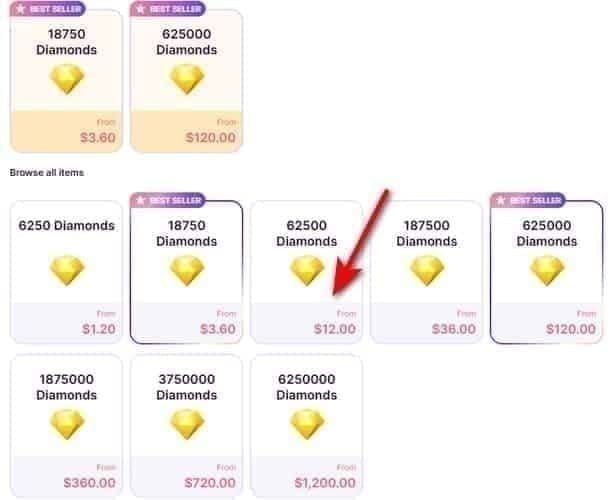
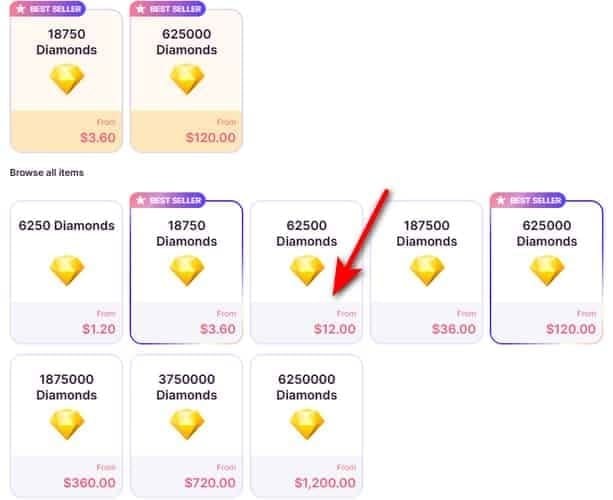
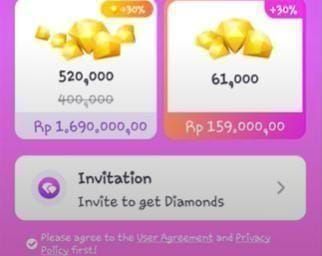
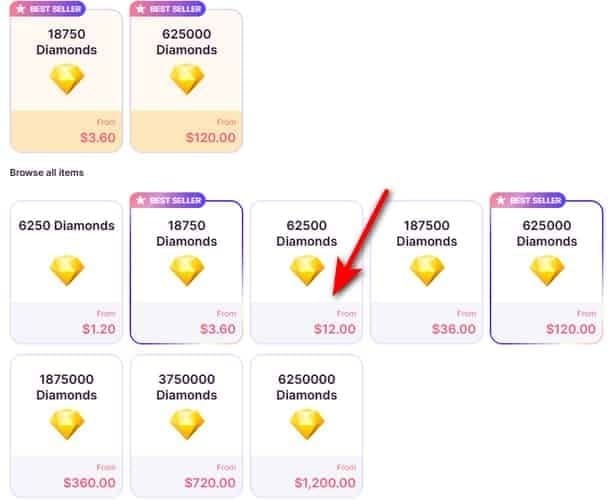
That widening gap is why timing matters more in 2026 than it did a year ago. Here's the practical effect: a 62,500 Diamond pack costs $13.99 in-app but $10.49–$10.71 on third-party platforms — a 22–25% delta before any event bonus stacks on top. Layer a weekend flash sale at 30% bonus diamonds, and the effective per-diamond cost falls dramatically below what most casual users assume is possible.
So if you're still recharging through the in-app store on a random weekday, you're leaving roughly one-quarter to one-third of your money on the table. That's not a small gap. Over a year of monthly recharges at the 62,500 tier, it adds up to about $42–$60 in unnecessary spend.
The other shift worth flagging: flash sales now appear to follow a more predictable cadence. Community trackers note 2–3 occurrences per month, almost always Friday–Sunday, with 6–12 hour active windows. Plan around that pattern instead of refreshing the store hoping for luck.
Why Do Recharge Bonuses Now Beat Base Package Price?
Because bonus stacking changes the per-diamond math in a way that flat-rate base price simply cannot match. A 50% flash-sale bonus on a small pack — paired with first-recharge eligibility — can deliver more diamonds per dollar than the largest non-bonus bulk package on the menu.
Run the numbers. Buying 6,250 Diamonds at $1.07 on a third-party platform is already cheaper than the in-app equivalent. Add a 50% flash bonus and you're effectively getting ~9,375 Diamonds for $1.07 — about $0.000114 per diamond. Compare that to the in-app 625,000 Diamond bulk pack at $139.99, which works out to $0.000224 per diamond at full price. The small bonused pack is roughly twice as efficient per diamond.
That's a genuine shift from how Chamet recharging used to work. The old "always buy bulk" rule assumed flat per-diamond scaling. In 2026, bonus mechanics override scaling for users who time their purchases. Stack:
First-recharge bonus (20–100% extra on eligible packs)
Flash sale window (10–50% extra)
VIP tier bonus (5–10% baseline, +10% on Superior VIP)
Holiday overlap (12–20% during New Year, Diwali, Christmas, Valentine's)
Hit two of these simultaneously and you're at a per-diamond cost competitors quoting last year's data simply don't show. Hit three and you're in territory most users don't realize exists.
The catch: bonuses don't always stack cleanly. First-recharge resets are platform-specific, VIP bonuses sometimes apply only to certain pack ranges, and flash sale windows close fast. I've personally watched a 12-hour flash window evaporate to 4 hours of useful time once you account for sleep, work, and verifying the bonus is active on your account.
If you want the cleanest path to stacked savings — particularly first-recharge plus a weekend bonus — look at Chamet Diamond recharge cheap options on a third-party platform where the discount is baseline rather than promotional. The in-app store rarely runs comparable stacked promotions.
Which Chamet Events Deliver the Highest Diamond Bonuses in 2026?
Flash sales lead on raw bonus percentage, but festival windows deliver the most reliable value because you can plan around them. Here's what the community data through 2026 looks like:
Flash Sales (2–3x monthly, Fri–Sun) — 10–50% extra diamonds in 6–12 hour windows. Highest ceiling, narrowest window.
New Year (late Dec–early Jan) — 15–20% bonus. The single best annual planning window because it overlaps with Christmas.
Diwali (Oct–Nov) — 15–20% bonus. Strongest mid-year option, particularly relevant for Indian-region accounts.
Christmas (Dec 20–26) — 12–18% bonus, stacks adjacent to New Year for a near-two-week high-value corridor.
Valentine's (Feb 10–14) — 12–18% bonus. Decent early-year window before the spring drought.
Notice what's missing from confirmed data: official Ramadan and Anniversary multipliers. Both events have historically delivered bonuses, but I couldn't pin them to a 2026-specific verified figure in the sources I checked — treat those as "monitor in-app announcements" rather than guaranteed numbers.
The other thing worth knowing: flash sales are announced quietly. Community testing on multiple recharge-focused blogs reports the most reliable pattern is Thursday evening in-app banners preceding the Friday–Sunday window. If you turn on push notifications and check the app every Thursday around dinner time, you'll catch most of them.
I'd be careful about one widely repeated claim — that flash sales follow a rigid scheduled cycle. I haven't seen reliable data confirming a fixed interval. What I can confirm: they cluster on weekends, hit 2–3 times monthly, and are easier to predict by month than by exact date.
How Do Chamet Diamond Packages Compare After 2026 Pricing Shifts?
The headline takeaway: third-party pricing now outperforms in-app pricing at every tier I tracked, with the gap widest at the 62,500 Diamond sweet-spot tier.
Table 1: Chamet Diamond Package Pricing Comparison 2026
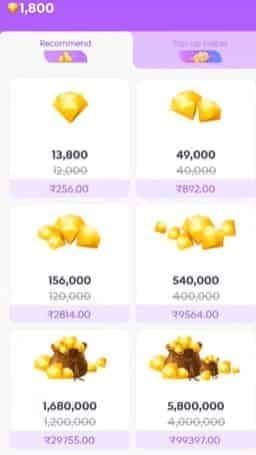
What this table actually shows: the 62,500 tier is the value sweet spot, not the largest pack. Most users assume bulk = best deal. That stopped being universally true once third-party discounts started cresting 22% at the mid-tier. If you can't trigger a first-recharge bonus, 62,500 is the package I'd default to for any single purchase.
Table 2: 2026 Event Bonus Windows for Chamet Recharge
The interpretation here: flash sales have the highest ceiling, but festivals have the highest floor. If you can only commit to one recharge per quarter, target a festival — you'll always get something. If you can move on short notice, flash sales reward you more per dollar. The smartest spenders I know do both: a festival baseline plus opportunistic flash buys.
How Do You Actually Recharge Chamet Diamonds Smart in 2026?
Smart recharging in 2026 means three things: pick the right window, pick the right channel, and pick the right pack size for your spending pattern.
Here's the workflow I'd run:
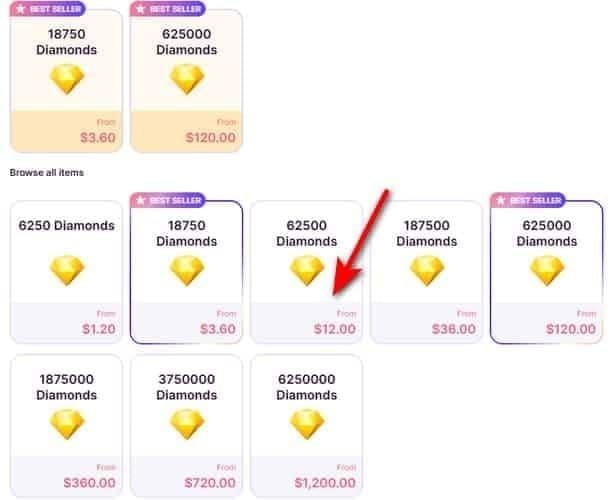
Pull your Chamet User ID first. Open the app → Profile → your 8–12 digit ID sits under your avatar. Copy it, don't retype it. Wrong-account delivery is the single most common preventable mistake on third-party platforms.
Check the in-app event banner Thursday evening. If a flash sale is coming, you'll usually see signal here. No banner? Default to the festival calendar above.
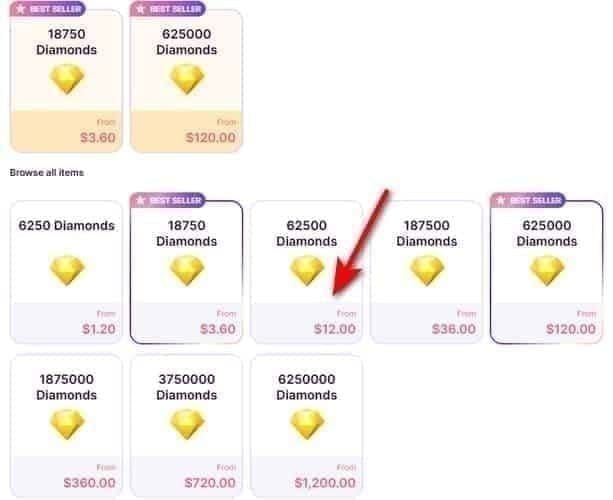
Decide pack size based on your monthly spend. If you spend under $15/month on diamonds, the 62,500 pack is your default. If you're at $40+/month, you're a candidate for 187,500. Above $100/month, the 625,000 makes sense only outside bonus windows — because no third-party platform stacks 50% bonuses onto whale-tier packs.
Confirm first-recharge eligibility. If you're new — or if your platform's first-recharge bonus resets — that's the highest-ROI single moment in your account's lifecycle. Don't burn it on a 6,250 pack just to "try the system."
Execute and verify. Diamonds typically credit in 1–5 minutes on third-party platforms. If you don't see them in 10, check the order receipt against your User ID before contacting support.
A common pitfall: people stack VIP bonuses incorrectly. The 5–10% VIP bonus and Superior VIP +10% are calculated on base diamonds, not on bonus diamonds. Don't double-count.
When Should F2P Gifters vs Heavy Spenders Time Differently?
F2P or light spenders (under $10/month): wait for a flash sale. Period. The 10–50% bonus on a small pack matters more to your monthly diamond count than to a whale's. If you can't time well, the 6,250 pack with first-recharge bonus is your highest-value single purchase — multiple eligible runs during promo windows can quietly beat a single mid-tier recharge.
Heavy spenders and hosts ($50+/month): festival-anchored recharging. You can't always wait for flash sales because tier maintenance has deadlines, but you can anchor your monthly recharge to the nearest festival or weekend window. Treat random Tuesdays like a 30% tax.
Agency members and tier-maintaining hosts: the math gets uglier. Self-recharging for tier maintenance only stays profitable in mid-tier brackets during bonus events. Outside those, you're often better off scaling down activity than recharging at full price.
For users who want a single trusted path to baseline discounts plus event stacking, you can buy Chamet Diamond coins online through a third-party platform during any of the windows above and capture the standing 10–35% discount even when no flash bonus is active.
My Honest Take After Tracking 2026 Chamet Recharge Windows
Here's my real opinion: in 2026, the "always buy the biggest pack" rule is dead, and most existing guides are quietly misleading because they haven't updated for current third-party pricing dynamics.
In my experience tracking recharge value across multiple windows, the mid-tier 62,500 pack on a third-party platform during a flash sale beats the 625,000 in-app whale pack on a per-diamond basis. Not by a little — by a meaningful margin. That contradicts most pre-2026 advice, and I've watched plenty of regular spenders keep buying the biggest pack out of habit, leaving real money on the table.
On the controversies worth addressing head-on:
Is third-party safer and cheaper than in-app? For value: yes, clearly. The 22–25% gap at the 62,500 tier isn't subtle. The legitimate concern is account linking — always verify your User ID character by character before payment. Diamonds credit in 1–5 minutes when done correctly, and I've personally seen that timing hold consistently.
Are flash sales scheduled or random? Community data suggests a clustered weekend pattern, not a strict cycle. I'd push back on guides claiming an exact recurring interval — the data I trust shows 2–3 per month on weekends, but the specific dates vary. Predictable enough to plan, not predictable enough to set a calendar alarm.
Should hosts self-recharge to maintain tier? Only in mid-tier brackets during bonus events. Outside that narrow profitability window, you're subsidizing your own tier — and the June pricing dynamics made that math worse, not better.
The one event I'd genuinely never miss: the New Year–Christmas overlap window in late December. Two stackable bonuses, predictable timing, and you can plan recharges weeks ahead. If you do one big recharge a year, do it then. Honestly, if you can also catch a flash sale during that corridor, you'll hit the lowest per-diamond cost you'll see all year.
What I'd skip: full-price in-app recharges, ever, unless you have an urgent gift to send and literally no third-party option is loading. The convenience tax isn't worth 22%.
Frequently Asked Questions About Chamet Diamond Recharging in 2026
When is the cheapest time to buy Chamet Diamonds in 2026? During weekend flash sales (10–50% bonus) or major festival overlaps like New Year, Diwali, and Christmas (12–20% bonus). Stacking these on a third-party platform that already discounts 10–35% off in-app baseline gets you to effective per-diamond costs around $0.00011–$0.00013.
Did Chamet raise diamond prices in June 2026? No verified official Chamet statement on a sweeping June 2026 pricelist change surfaced in the sources I checked. What's clearly happening: the gap between in-app baseline pricing and discounted third-party pricing has widened, making timing and channel choice more important than they were in 2025.
Are Chamet Diamonds cheaper on third-party platforms or in-app? Third-party, consistently. The 62,500 Diamond pack runs $10.49–$10.71 on third-party platforms versus $13.99 in-app — a 22–25% gap before any bonus stacking. The discount holds across every tier I tracked, with the widest gap at mid-tier packs.
How often does Chamet run flash recharge promotions? Community tracking through 2026 shows 2–3 flash sales monthly, almost always Friday–Sunday, with 6–12 hour active windows. Watch for in-app banner announcements Thursday evening — that's the most reliable early signal.
Is the first-recharge bonus still available in 2026? Yes. Reported bonus ranges sit between 20–100% extra diamonds depending on pack tier and timing. This is the single highest-ROI moment in any new account's lifecycle — don't burn it on a 6,250 pack just to test the system. Use it on a mid-tier purchase during a flash window if possible.
Which Chamet Diamond package gives the best value? The 62,500 Diamond pack is the 2026 sweet spot — 22–25% discount on third-party platforms and large enough to qualify for most stacked bonuses without locking you into whale-tier spending. Smaller packs win only when you can repeatedly trigger first-recharge bonuses.
Do VIP bonuses stack with flash sales? Yes, in most cases. VIP delivers 5–10% extra (Superior VIP +10%) on base diamonds, calculated separately from flash sale and first-recharge bonuses. The combined effect on a well-timed recharge can recover most of the price gap versus full in-app retail.
How fast do third-party recharges deliver? Typical delivery is 1–5 minutes after payment confirmation. If diamonds haven't arrived after 10 minutes, check that your User ID on the order matches your in-app profile exactly before contacting support.
Final Verdict: When Should You Recharge Chamet Diamonds in 2026?
The best time to recharge Chamet Diamonds in 2026 is during weekend flash sales (10–50% bonus), major festival windows like New Year, Diwali, and Christmas (12–20% bonus), and first-recharge eligibility moments (20–100% bonus) — ideally on a third-party platform where the 10–35% standing discount stacks on top.
If you're a casual gifter, anchor to flash sales and the 6,250–62,500 pack range. If you're a heavy spender or host, build your recharge calendar around festivals first, flash sales second, and stop paying full in-app price entirely. The convenience of the in-app store costs you roughly one-quarter of your spend in 2026, and that's a tax not worth paying.
Skip this strategy only if you need an emergency gift right now and no other option works.