

The dominant 4-man squad in Season 8 runs G28 overwatch, MG3 suppressor, SCAR-HAMR entry fragger, and AK102 flex. It's built specifically for Valley's expanded 150–250m engagement ranges — and it's not arbitrary. Operation Unbound's March 12 wipe, followed by Season 8's March 20 weapon unlocks, fundamentally changed what works at squad level. Teams still running Season 7 double-fragger setups are getting punished for it.
What Operation Unbound Changed
Operation Unbound launched March 12, 2026 with a full wipe. Season 8 followed March 20 with permanent unlocks for the ARX160, G36, M249, and RPD. Community testing since then has confirmed M249 and RPD at C-tier for squad use; G36 and ARX160 land at B-tier. The real meta shift wasn't the weapon pool — it was the map.
Valley expanded 1.5x with 700+ resource points added. Average engagement distances are now 150–250m. That single change killed CQB-heavy compositions that thrived in tighter Season 7 environments. A double-SCAR-HAMR rush squad that dominated Terminal-style layouts doesn't have the range to compete on Valley's open sightlines.
The weapon tier list reshuffled accordingly. HK416 (900 RPM, 910 m/s) and MCX (80 ergonomics, 700 RPM, 820 m/s, 77 vertical recoil) hold S-tier — but their value is map-dependent. On Valley, the G28 and MG3 combination, both B-tier in isolation, become force multipliers in a coordinated squad because they solve the range problem S-tier SMG-adjacent weapons can't.
What's outdated from Season 7: Any squad built around sub-100m dominance as a primary strategy on Valley. The expansion punishes passive CQB-waiting and rewards proactive overwatch positioning.
The Four Core Squad Roles
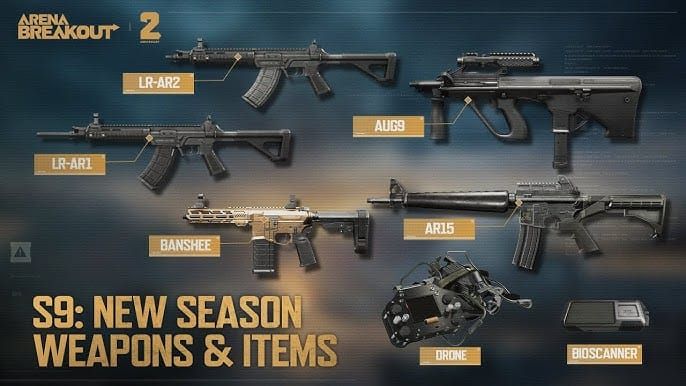
Overwatch — G28 Operator
This is your eyes and your first trigger. The G28 operator holds elevation, goes prone, and calls enemy positions before anyone else moves. Their job is identification and suppression at 150–250m. Not pushing. Not flanking. Not helping the fragger.
Community experience is consistent on this: the moment your G28 player abandons overwatch to push a contact, your squad loses its range advantage and exposes a 125–180k Koen kit to CQB conditions it's not built for.
Build priorities: recoil control first, then 4x–8x scope, suppressor muzzle, bipod underbarrel. Carry 60–70% Lv3+ penetration ammo (~120 rounds). M61 T6 delivers 682.5 damage with 714 penetration against T5/T6 armor at range. Running M80 T4 (441 penetration) against T5/T6 targets at 150–250m is one of the most common and costly mistakes in the current meta — those rounds bounce.
Suppressor — MG3 Operator
Simple and non-negotiable: bipod on a stable surface, belt-fed suppression for a 10-second window, then call Suppressing [X] seconds or Dry. That's it.
The MG3 is C-tier for solo play precisely because its mobility penalty makes it a liability without squad coordination. In a 4-man, it's the engine that makes everything else work. Belt-fed matters here — community testing confirms MG3 beats RPK because belt-fed avoids reload breaks during that critical 10-second window. A reload break mid-suppression is a dead SCAR-HAMR in the open.
Load M61 T6 in the belt where budget allows. Carry 2–3 medkits and 3 painkillers — the MG3 operator is often last to move and first to absorb return fire.
Entry Fragger — SCAR-HAMR
The SCAR-HAMR is the squad's damage dealer at 0–100m, and it only moves after the MG3 calls suppression. Full stop. Pre-suppression flanking is the single most common reason SCAR-HAMR players die in the open.
Build priority: recoil control → ergonomics → optics. Run 1x–2x for CQB or 3x–4x for 50–100m engagements. Compensator muzzle, vertical foregrip. SEK Composite T4 armor (70 durability, 5% move penalty, 15–25k Koens) outperforms T5 here — the 8–12% mobility penalty on T5 directly undermines the flanking speed this role depends on. Use burst rhythm on the variable ROF; full-auto past 50m loses accuracy fast.
Flex — AK102
At 92–95k Koens, the AK102 covers mid-range gaps, provides counter-overwatch capability when enemy snipers appear, and can rotate to support any of the other three roles as the engagement evolves. Not glamorous. But it's what separates a rigid three-role squad from one that can respond to unexpected contact directions.
Role assignment tip: Don't assign by preference — assign by playstyle. Give the G28 to whoever can hold still for 90 seconds without pushing. Put your most aggressive player on SCAR-HAMR.
Best Team Compositions (Ranked by Effectiveness)
Composition #1 — The Meta Standard (Recommended)
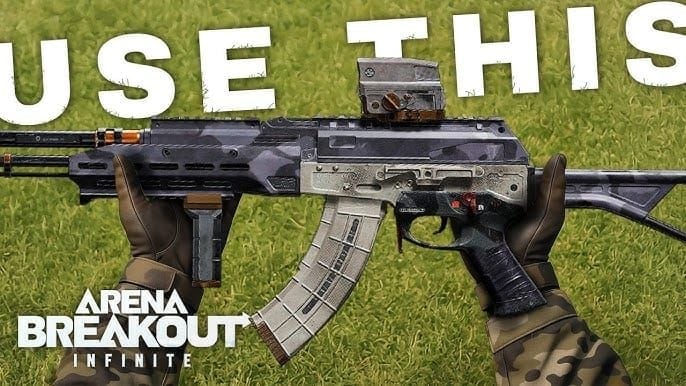
Community-validated for Valley in Season 8. Every role solves a specific problem the other three can't.
Composition #2 — Double SCAR-HAMR Rush (Situational)
Two SCAR-HAMRs, one MG3, one AK102. Works on Terminal and Tarmac-style CQB maps where engagements stay under 100m. On Valley post-expansion, it loses the long-range overwatch the meta demands. Run this when your squad wants aggressive PvP on compressed maps — not on Valley.
Composition #3 — Budget 4-Man (Sub-400k Koens)
Viable for T3–T4 engagements early wipe. The M110 loses effectiveness past 130m — a real limitation on expanded Valley. Upgrade path: MPX (~88k) first, then AK102 (92–95k), then SCAR-HAMR. Don't rush expensive kits before the squad has coordination down.
Composition #4 — 3-Man Variant
G28, SCAR-HAMR, MG3. Viable for T4–T6 Valley runs, but medical management becomes critical with no flex to cover rotations. Each player carries extra meds. Use this when you genuinely can't find a fourth — don't treat it as equivalent to the full 4-man.
The 6-Phase Squad Execution System
Every callout is mandatory. Squads that skip callouts lose the timing that makes the composition work.
Phase 6 is where squads lose 517–690k Koen kits for no reason. Splitting at extract — even briefly — is the most expensive mistake in the game. The squad extracts together or not at all.
Map-Specific Strategies
Valley — Primary Season 8 Battleground
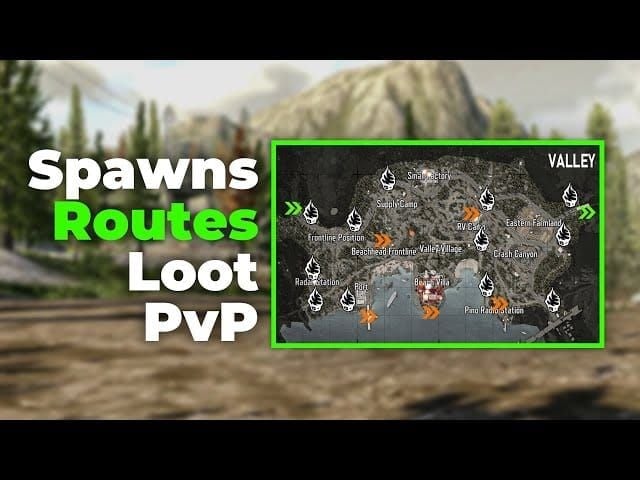
The community-validated route: Grain Trade spawn → crouch-walk NW 150m (90–120 seconds, ~60% noise reduction) → Stables (50–80k loot value) → Motel 3 safes (150–250k, 2011 keys at 30–50k with 4–6x ROI) → Outpost extract.
G28 sets overwatch at Stables before the squad moves to Motel. MG3 covers the approach. SCAR-HAMR clears Motel interior. The 90-second crouch-walk investment pays off every raid where another squad is contesting the same route — you arrive at Stables first, with information advantage, before opposition who sprinted and telegraphed their position.
Terminal and Tarmac — CQB Adjustments
On maps where engagements stay under 150m, the G28 operator can swap to M110 for faster target acquisition at shorter distances. Double SCAR-HAMR becomes viable here. The long-range overwatch gap matters less when sightlines are compressed.
Counter-Composition Awareness
CQB rush: SCAR-HAMR holds and defends; MG3 falls back to avoid mobility penalty in close quarters
Smoke screen: G28 relocates to secondary overwatch position — don't stay static
Counter-snipe: AK102 flex takes overwatch responsibility while G28 repositions
Squad Economy and Insurance
Squad economy is a team-level strategic layer that determines how many raids your composition can sustain.
The Composite Case is the highest-priority insurance purchase for squad players. Losing a 690k Koen kit without insurance on a squad wipe is a session-ending event. With insurance, it's a setback.
For players gearing up their squad and looking to move faster through early-wipe progression, Arena Breakout Bonds cheap top up Season 8 through BitTopup offers competitive pricing with fast delivery — worth checking before you commit to a full squad kit purchase.
Loot division: The G28 operator's rig runs 6 loot slots — they're typically last to push and first to loot. Assign loot priority by extraction weight, not by who grabbed it first. High-value items (Motel safe contents, 2011 keys) go to whoever has the most secure extract path.
When to run premium vs. budget: Premium kits (T4–T6) in ranked mode; budget sub-400k compositions in casual T3 lobbies. The gear tier mismatch in casual T3 actually favors budget comps — you're not paying 690k to fight players in T2 armor.
Budget Progression Path for New Squads
Don't try to build the full meta composition on day one of a wipe.
Start: AK-74N (~45k) flex + AK102 for two players, M110 overwatch, FAL suppressor — sub-400k total
First upgrade: MPX (~88k) replaces AK-74N for better CQB capability
Second upgrade: AK102 fully built out for flex role
Third upgrade: SCAR-HAMR replaces AK102 as entry fragger
Full meta: G28 overwatch completes the composition
Community consensus rates the SCAR-HAMR as the best value weapon post-Operation Unbound by cost-to-performance ratio at mid-range. Prioritize it over S-tier weapons like HK416 or MCX — it fills the specific role the composition needs at a lower price point.
If your squad is pushing toward the full meta kit, Arena Breakout Infinite currency recharge best deal 2026 is worth bookmarking before a big gear push.
The 6 Most Common Season 8 Squad Mistakes
1. G28 operator pushes contact. The G28's value is positional. The moment it pushes, it's a 125–180k Koen kit in a CQB fight it will lose. Hold the position. Call the position. Let the SCAR-HAMR close.
2. SCAR-HAMR moves before suppression is called. Pre-suppression flanking puts the entry fragger in the open without cover. Wait for Suppressing [X] seconds — every time, no exceptions.
3. Wrong ammo on G28 at range. M80 T4 has 441 penetration. Against T5/T6 armor at 150–250m, those rounds bounce. M61 T6 (714 penetration) is the correct choice for Valley engagements.
4. Splitting at extract. A squad wipe at extract loses the entire 517–690k kit. There is no loot value that justifies splitting the squad 50m from the exit.
5. MG3 without bipod discipline. Unstable surface bipod deployment wastes the suppression window. If the MG3 operator can't find a stable prone position, reposition before calling suppression — not after.
6. Over-stacking fraggers. Three SCAR-HAMRs and an AK102 collapses against any squad with overwatch and suppression. Raw firepower doesn't solve the range problem.
How to Build a Reliable Squad
The meta composition only works if all four players understand their roles. Finding squadmates who can execute the 6-phase system is harder than finding players who own the right weapons.
Where to find squadmates: The official Arena Breakout Discord is the most reliable source for English-speaking players seeking ranked squads. In-game squad tools work for casual runs but rarely produce the communication standards ranked play requires.
Evaluating a potential squadmate: Do one budget raid together first. Watch for two things: do they call positions without being asked, and do they wait for suppression before moving? Players who do both instinctively are worth running with.
Set expectations before the first raid. Agree on communication standards (mandatory callouts vs. optional), risk tolerance (when to extract vs. push for more loot), and gear tier (everyone runs equivalent kit or the squad carries the budget player). Misaligned expectations on any of these cause more squad wipes than enemy contact.
Chemistry compounds. A squad that's run 20 raids together executes phases 1–3 in under 15 seconds. A first-run squad takes 30–40 seconds — and that timing difference is often the margin between a clean flank and a dead SCAR-HAMR.
FAQ: Arena Breakout Season 8 Squad Play
What is the best squad size in Season 8? Four players. The meta composition requires all four roles to function at full effectiveness. A 3-man variant (G28, SCAR-HAMR, MG3) is viable for T4–T6 Valley runs but loses the flex role's adaptability and demands tighter medical management.
Can a 2-man squad compete with full 4-man teams? On Valley post-expansion, a 2-man squad is at a significant structural disadvantage. Without suppression and overwatch working simultaneously, the flanking mechanic doesn't exist. 2-man squads perform better on CQB maps (Terminal, Tarmac) where the engagement distance advantage of 4-man compositions is reduced.
How do I coordinate extractions under fire? The callout system: Extract clear means move, Extract not clear means hold. The G28 operator calls extract status from overwatch before anyone moves. If contested, MG3 suppresses the contact point while the squad moves together — never split.
Is the Heavy role worth running after Operation Unbound? The traditional Heavy concept maps most closely to the MG3 suppressor role in Season 8. T5 armor on the MG3 operator is actually counterproductive — the mobility penalty undermines repositioning after suppression. T3–T4 armor with high medical loadout is the correct build.
What's the best weapon for a beginner joining an established squad? AK102 at 92–95k Koens. It's the flex role weapon, forgiving at mid-range, and doesn't require the precise role execution that G28 overwatch or MG3 suppression demand. Learn the callout system on AK102 flex, then graduate to SCAR-HAMR once the timing is internalized.
Should the squad always run the same composition? No. The meta 4-man is optimal for Valley T4–T6 ranked play. On CQB maps, double SCAR-HAMR is viable. In casual T3 lobbies, the budget sub-400k composition is more economical. Map awareness and lobby tier should drive composition decisions — the meta is a default, not a rule.
Season 8 post-Operation Unbound rewards squads that understand why the composition works, not just what weapons to bring. The G28/MG3/SCAR-HAMR/AK102 setup solves specific problems created by Valley's expanded engagement distances. Run the 6-phase system, hold your role, and the composition does the rest.