

Arena Breakout Season 4's Market Price Compare tool eliminates spreadsheet dependency for crafting profit analysis. This guide shows how to leverage in-game price sorting, history graphs, and real-time data to identify high-margin crafts like T6 M61 ammo (714 penetration) and trader arbitrage like M110 rifles (78,000 Koen profit per flip). Master material sourcing, hideout optimization, and timing strategies to maximize Koen generation in the post-wipe economy launching January 8, 2026 at 6:00 PM EST.
What's New in Season 4: The Market Price Compare Revolution
Arena Breakout Infinite Season 4 launches January 8, 2026 at 6:00 PM EST with integrated Market Price Compare—sortable price data, quantity filters, and historical trend graphs directly in-game. No more manual tracking.
The economy resets Koen balances while preserving Bonds. Flea market opens at level 1 (down from level 5) with 250 million Koen daily cap. For quick capital, Arena Breakout Bonds top up online through BitTopup offers 1:1000 to 1:1500 Bond-to-Koen ratios with secure transactions.
Server tickrate improved to 72, but Market Price Compare is the real game-changer. Sort items by price and quantity, filter categories, analyze price history graphs to spot undervalued materials and overpriced finished products—the foundation of profitable crafting.
Understanding the Market Price Compare Feature
The interface displays vendor prices alongside flea market listings for instant comparison. Updates every 60 seconds as players list items. Price history graphs reveal patterns: materials spike post-wipe then stabilize within 72 hours, while finished products stay elevated for weeks.
Filter by category—ammunition, medical supplies, weapon parts—to focus on your hideout's crafting capabilities. Quantity sorting identifies bulk opportunities where 10+ units at slight discounts compound into major savings.
Cross-reference vendor reset timers. Daily trader resets at 10 PM PST; Deke Vinson refreshes every 2 hours. Check Market Price Compare immediately after resets to catch fresh stock before competitors.
Why Season 4 Changed the Economy Game
Previous seasons required external spreadsheets tracking dozens of costs. Season 4's integrated tools reduce overhead 80%. The psychological barrier of needing to be an economist disappears.
Vendor price adjustments created new arbitrage lanes:
Tier 4 armor: Buy 34,000 Koen, sell 56,000 Koen = 22,000 Koen profit
M110 rifle: Buy 34,000 Koen, sell 112,000 Koen = 78,000 Koen profit
Thermal sights: Buy 50,000 Koen, sell 150,000 Koen = 100,000 Koen profit
These vendor flips require zero crafting. One thermal sight flip funds materials for three T6 M61 ammo crafts.
Accessing the Tool: Step-by-Step
Navigate to flea market from hideout menu. Click Compare Prices button in upper-right corner. Select target category from dropdown—start with Ammunition or Medical Supplies for high-turnover markets.
Apply Sort by Price filter (lowest to highest). Vendor baseline price displays in highlighted row. When flea listings fall below vendor sell prices = material bargains. Above vendor buy prices = profitable selling opportunities.
Enable Show History toggle for 7-day price trend graphs. Upward trends = increasing demand. Downward trends = market saturation. Craft items with upward price momentum while material costs trend downward.
How to Use Market Price Compare for Crafting Profit Analysis
Profit analysis requires three price points: material acquisition cost, crafting overhead (fuel, time), and finished product market value. Market Price Compare provides two directly; you calculate the third.
Example: T6 M61 ammo needs level 3 workbench, High-Frequency Coil (2), High Energy Fuel (2), NitroCellulose (30), completing in 16 hours. Search each material in Market Price Compare, note lowest flea market price. Add for total material investment.
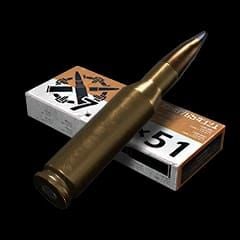
Search 7.62x51mm M61 to view finished product listings. Current market price = potential revenue. Subtract material costs and 5% flea market tax. If materials cost 100,000 Koen and ammo sells for 150,000 Koen: 50,000 Koen gross - 7,500 Koen tax = 42,500 Koen net over 16 hours.
Reading the Price Comparison Interface
Five critical columns: item name, seller reputation, quantity available, unit price, total cost. Seller reputation matters less for materials (you're consuming them) but significantly impacts finished product sales—buyers pay premiums for high-reputation sellers.
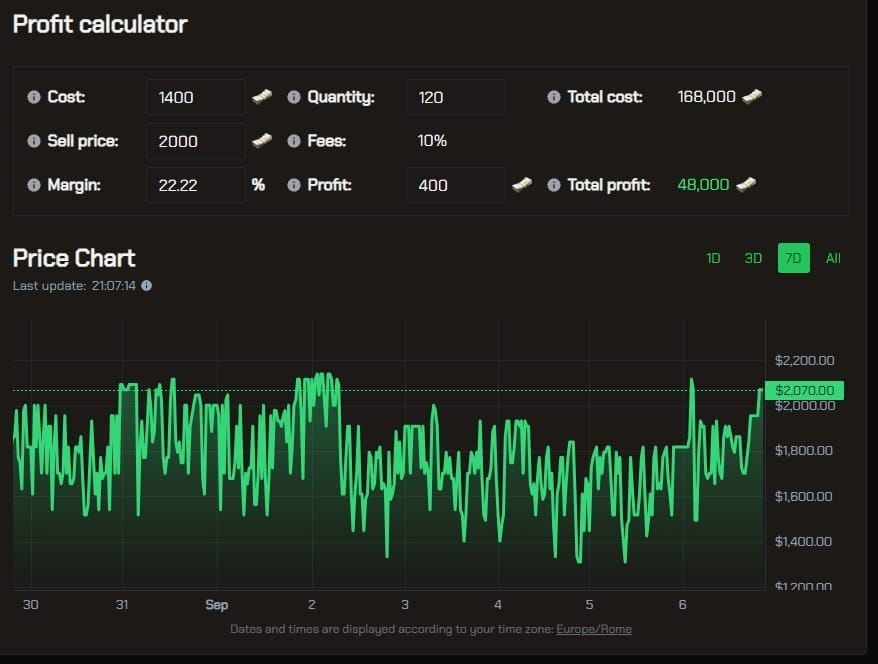
Quantity available indicates market depth. If only 3 High-Frequency Coils exist at lowest price, you can't scale profitably. Look for 20+ units at competitive prices for bulk crafting. Shallow markets force higher price tiers, eroding margins.
Total cost column identifies bulk discounts. Some sellers list 10-packs at 8-12% below single-unit prices. These bulk purchases transform marginally profitable crafts into strong earners. For immediate capital, buy Arena Breakout Bonds instant recharge through BitTopup offers fast delivery and secure payment.
Identifying Material Costs vs Finished Product Value
Material cost extends beyond simple addition. Consider substitutions: if NitroCellulose costs 2,000 Koen on flea but vendors sell for 1,800 Koen, always buy from vendors. Market Price Compare highlights these discrepancies with Show Vendor Prices enabled.
Finished product value fluctuates by time-of-day and day-of-week. Weekend evenings see 15-20% higher prices for PvP consumables as casual players stock up. Medical supplies peak Monday-Wednesday when hardcore players replenish. Craft items to complete during high-demand windows.
Barter items add complexity. Gold Pens value 450,000 Koen but rarely appear in vendor inventories. If recipes accept Gold Pens as substitutes, their effective cost equals flea market price (often 480,000-500,000 Koen). Always calculate barter items at current market rates, not vendor baseline.
Calculating Net Profit After Flea Market Fees
Flea market taxes consume 5% of sale price. A 100,000 Koen sale generates 95,000 Koen revenue. Tax applies to listing price, not profit—high-value crafts face larger absolute tax burdens.
Factor reputation bonuses. Sellers with 95%+ ratings command 3-5% premiums, offsetting the tax. Build reputation through small transactions before scaling to high-value crafts. This premium transforms 5% net margin into 8% without changing material costs.
Listing fees add another layer. Failed sales forfeit the fee (1-2% of asking price). Only list items with confirmed demand shown in price history graphs. Avoid niche items with sporadic sales unless willing to hold inventory.
Real-Time Price Updates: What They Mean
Prices update every 60 seconds as new listings appear and sales complete. This creates micro-arbitrage windows—purchase underpriced materials from impatient sellers, immediately relist at market rate for instant 5-10% gains. Zero crafting time, minimal risk.
Dramatic price drops (15%+ in under 5 minutes) usually indicate whale dumps or new exploits. Avoid purchasing during crashes—wait 30 minutes for stabilization. Sudden 20%+ spikes suggest market manipulation. Don't chase peaks; they correct within hours.
Set price alerts using Notify Me for critical materials. When High-Frequency Coils drop below target cost, you'll get in-game notification for immediate purchase. This automation secures materials at optimal prices without constant monitoring.
Top Profitable Crafting Opportunities in Season 4
Season 4 meta emphasizes high-penetration ammo and premium armor. T6 M61 ammo costs 1,909 Koen per 60 rounds to craft, delivering 714 penetration and 682.5 damage. Material costs around 115,000 Koen yield 180,000-210,000 Koen sales, netting 55,000-85,000 Koen per 16-hour craft.
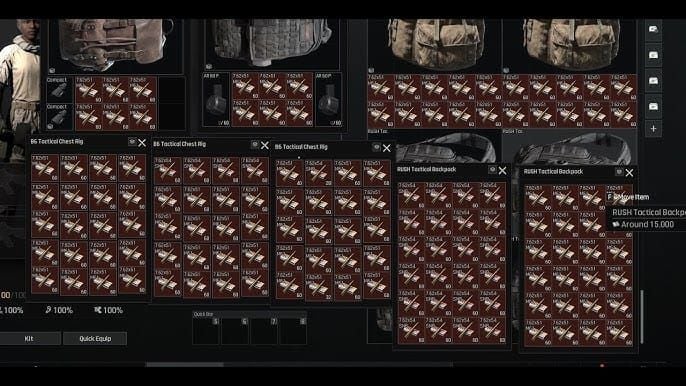
7.62x54mm SNB offers similar margins with different materials. Level 3 workbench using Fuel Tank (2), Titanium Alloy Plate (2), NitroCellulose (20) over 20 hours. Titanium Alloy Plates fluctuate wildly—purchase during off-peak hours (3-7 AM server time) when supply exceeds demand.
For level 4 workbenches, 7.62x54mm 7N37 ammo represents top-tier profitability. 28-hour craft requires Gold Cube (2), High Energy Fuel (2), NitroCellulose (20). Gold Cubes' rarity keeps finished product prices elevated. Expect 120,000-150,000 Koen materials generating 220,000-280,000 Koen sales.
Medical Items: High-Demand, High-Margin Crafts
Medical supplies maintain consistent demand regardless of PvP meta. Advanced medkits crafted at Medical Station level 3 use common materials from vendor resets. 8-hour craft time enables three cycles daily, compounding profits.
Surgical kits present premium margins due to raid-essential status. Players entering Northridge (level 11, 20 players, 30-minute raids) stock multiple surgical kits for heavy bleeding. Craft Thursday-Friday to sell into weekend demand spikes at 15-20% premiums.
Stimulant crafts cater to hardcore PvP players. Low-volume, high-margin items requiring rare materials but selling for 3-5x material costs. Focus on stamina and pain resistance stims during first month post-wipe when players prioritize survival over cost.
Ammunition Crafting: Volume vs Margin Strategy
Ammunition splits into two approaches: high-volume budget ammo with 10-15% margins, or low-volume premium ammo with 40-60% margins. Budget ammo like 120-round M855 bundles (21,000 Koen materials, 57,000 Koen sales) generates 36,000 Koen profit with 6-hour craft times—four cycles daily for 144,000 Koen total.
Premium ammunition requires advanced workbenches and rare materials but commands prices justifying investment. .338 AP ammo crafted at level 3 workbench using Battery Pack (2), Antenna (2), NitroCellulose (10) over 24 hours serves bolt-action sniper niche. Limited competition allows 50-70% margins.
Balance portfolio: 60% budget ammo for consistent cash flow, 40% premium ammo for margin expansion. This diversification protects against market saturation while maintaining steady revenue.
Weapon Modification Parts: Niche Profit Opportunities
Weapon attachments experience demand spikes tied to meta shifts. When content creators showcase specific builds, related attachments surge 30-50% within 24 hours. Monitor community discussions to anticipate trends, pre-crafting attachments before demand materializes.
Suppressors maintain evergreen demand across weapon classes. 12-hour craft times and moderate material costs create accessible entry points. Expect 25,000-40,000 Koen profits per suppressor with minimal market timing required.
Optics crafting serves players preferring specific sight pictures. Red dot sights move quickly at thin margins (8-12%), while magnified optics sell slower but yield 30-40% margins. Craft magnified optics during week, listing Thursday evening to capture weekend buyer traffic.
Barter Item Conversions: Hidden Gems
Certain barter items convert into higher-value items through crafting. Equipment Storage Keys value 600,000 Koen but craft using 420,000-450,000 Koen materials at level 4 stations. 36-hour craft time limits volume but guarantees 150,000+ Koen profit per completion.
Gold Cups (270,000 Koen) and Gold Pens (450,000 Koen) serve as both loot and crafting materials. When flea prices dip below vendor values due to oversupply from TV Station raids (12 players, 20-minute raids, 450,000 Koen cap), purchase for future crafting needs.
Barter chains—converting Item A to Item B to Item C—occasionally produce 80-120% total returns over 48-72 hours. Market Price Compare filtering helps identify these chains by revealing undervalued intermediate items.
Material Sourcing Strategies for Maximum ROI
Vendor shopping at reset windows provides materials at baseline prices, eliminating flea premiums. Daily trader resets at 10 PM PST restock NitroCellulose and basic fuel. Set alarms for this window during first two weeks to secure inventory.
Deke Vinson's 2-hour rotation offers premium materials including High-Frequency Coils and Titanium Alloy Plates. Stock depletes within 15-20 minutes during peak hours. Checking off-peak resets (3 AM, 5 AM, 7 AM) increases acquisition success from 30% to 75%.
Flea market sniping requires patience. Set maximum purchase prices 10% below current market rates, wait for impatient sellers to meet bids. Works best for non-perishable materials you can stockpile during low-demand periods.
Vendor Shopping: Timing Reset Windows
Vendor inventories follow predictable patterns. Common materials restock in 50-100 units, rare materials in 5-15 units. Prioritize rare material purchases immediately at reset, return 30 minutes later for common materials still available.
Vendor prices never fluctuate—stable baseline for profit calculations. When flea prices drop below vendor prices, it signals oversupply. Purchase discounted materials in bulk; prices typically revert to vendor baseline within 48-72 hours.
Some materials never appear in vendor inventories, forcing flea dependence. Battery Packs and Antennas for .338 AP ammo fall here. Establish price ceilings based on finished product values—never pay more than 40% of final sale price for any single material.
Flea Market Sniping: When to Buy Materials
Flea activity peaks 6-10 PM server time when player counts maximize. Paradoxically, this creates worst buying conditions—competition drives prices up 12-18% above off-peak rates. Schedule material purchases for 2-6 AM when listings accumulate from overnight raiders liquidating inventory.
Price history reveals weekly patterns. Sunday evenings see material prices bottom as weekend warriors sell accumulated loot. Monday-Tuesday prices climb as crafters restock. Wednesday-Thursday plateau. Friday-Saturday spike as casual players prepare for weekend raiding. Buy Sunday-Monday, sell Friday-Saturday.
Bulk listings (20+ units) often carry 5-8% discounts versus single-unit prices. Sellers prioritize quick liquidation. Filter for quantity >20 when purchasing for multi-craft operations. 7% bulk discount on 200,000 Koen materials saves 14,000 Koen—pure profit.
In-Raid Farming Routes for Key Components
Self-farming materials eliminates acquisition costs, converting time into pure profit. TV Station raids yield high-value barter items from 12 safes, elevator access activating 10 minutes after raid start. Successful extractions average 450,000 Koen per raid.
Farm Motel offers accessible farming with 12 players across 30-minute raids. Three safes yield 200,000-400,000 Koen in barter items and cash. Focus on safe-heavy routes during off-peak hours when PvP encounters decrease, improving survival from 40% to 65%.
Northridge Hotel requires level 11 but rewards skilled players with 8 safes producing 500,000-800,000 Koen per successful raid. 20-player lobbies and 30-minute limits create intense competition. Reserve Northridge for when you've mastered lower-tier maps.
Bulk Purchasing: Calculating Break-Even Points
Bulk purchasing makes sense when you can complete 5+ craft cycles before material prices shift. Calculate break-even: divide bulk discount percentage by expected price volatility. If materials offer 8% bulk discounts but fluctuate ±12% weekly, complete crafts within 4-5 days to guarantee profit protection.
Storage limitations constrain bulk strategies. Hideout stash caps at 400 slots for standard accounts. High-volume materials like NitroCellulose (10-30 per craft) consume storage quickly. Balance bulk purchases against storage availability, reserving 100 slots for finished products.
Opportunity cost matters. Tying up 500,000 Koen in materials means that capital can't exploit immediate arbitrage like underpriced thermal sights (50,000 Koen buy, 150,000 Koen sell). Maintain 30% liquid Koen in reserve for time-sensitive flips.
Hideout Station Optimization for Crafting Profits
Hideout progression determines accessible recipes and craft efficiency. Level 3 workbench unlocks T6 M61, 7.62x54mm SNB, and .338 AP ammunition—three most profitable Season 4 crafts. Prioritize workbench upgrades over aesthetic improvements during first month.
Medical Station level 3 enables advanced medkit and surgical kit production. 30-40% profit margins with 8-12 hour craft times provide reliable income between longer ammunition crafts. Station upgrade costs 180,000 Koen but pays for itself within 15-20 cycles.
Level 5 workbench unlocks prestige items like BT201 Full Body Armor and IND70 Tactical Helmet. 40-hour crafts require Porcelain (2), Titanium Alloy Plate (4), and 500,000 Koen in Space Boy Comics. Finished products sell for 1,200,000-1,500,000 Koen, netting 400,000-600,000 Koen profit—but 500,000 Koen material cost limits accessibility.
Priority Upgrade Path for Profit-Focused Players
Week 1 post-wipe: Upgrade Generator to level 2 for continuous fuel efficiency, reducing operating costs 15%. Upgrade Workbench to level 2 for intermediate ammunition recipes with 20-25% margins.
Week 2-3: Push Workbench to level 3 for T6 M61 access. Simultaneously upgrade Medical Station to level 2 for basic medkit production. Parallel upgrades create diversified income streams.
Week 4-6: Achieve level 4 workbench for 7.62x54mm 7N37 ammo. This unlocks 50-60% margin crafts funding level 5 station investments. Begin stockpiling rare materials for prestige crafts.
Week 7+: Level 5 stations enable BT201 armor and IND70 helmet production. You're competing in premium markets where reputation and reliability matter more than price.
Station Fuel Costs vs Crafting Output Analysis
Fuel consumption varies by station and craft complexity. Workbench level 3 consumes 2 fuel units per hour during active crafts. 16-hour T6 M61 craft uses 32 fuel units. At 1,200 Koen per fuel unit (vendor price), that's 38,400 Koen operating costs added to materials.
Generator upgrades reduce fuel consumption 8-12% per level. Level 3 generator cuts T6 M61 fuel cost to 33,600 Koen, saving 4,800 Koen per craft. Over 30 crafts monthly, that's 144,000 Koen savings—more than generator upgrade cost.
Continuous crafting maximizes fuel efficiency. Idle stations still consume base fuel for climate control. Queue next craft immediately upon completing previous one to avoid paying fuel costs without production output. This improves effective margins 3-5%.
Unlocking High-Tier Recipes: Investment Requirements
High-tier recipes require both station levels and prerequisite item unlocks. BT201 armor needs level 5 workbench (450,000 Koen upgrade) plus completion of specific quest chains rewarding the blueprint. Research prerequisites before investing to avoid dead capital.
Some recipes require Intelligence Center upgrades to reduce craft times. Intelligence Center level 2 cuts craft times 10%, transforming 40-hour prestige craft into 36 hours. This 4-hour savings enables extra craft every 10 cycles, increasing production capacity 10% without additional material costs.
Nutrition Unit upgrades provide passive bonuses. Level 3 Nutrition Unit grants 5% chance to return one random material upon craft completion. Over 100 crafts, this recovers 5 material units worth 15,000-25,000 Koen—modest but meaningful margin improvement.
Multi-Station Workflows for Passive Income
Advanced crafters run parallel operations. While workbench produces T6 M61 ammo (16 hours), Medical Station crafts surgical kits (10 hours), and Nutrition Unit processes food items (6 hours). This parallelization triples effective output versus single-station focus.
Stagger craft completion times to avoid inventory bottlenecks. If three crafts complete simultaneously, you need 15-20 stash slots for finished products. Spacing completions 4-6 hours apart allows time to list and sell before next batch arrives.
Passive income strategies involve crafting items with guaranteed vendor buyback prices. Even if flea sales fail, you can vendor finished product at small profit over material costs. This risk mitigation matters for expensive crafts where failed sale locks up 200,000+ Koen in unsold inventory.
Market Price Compare vs Traditional Spreadsheet Methods
External spreadsheets offer customization and historical data depth impossible in-game. Dedicated crafters maintain spreadsheets tracking 30-day price trends, seasonal patterns, and correlation analyses. This reveals opportunities like High-Frequency Coil prices drop 18% every third Tuesday.
However, spreadsheet maintenance consumes 45-60 minutes daily. Market Price Compare provides 80% of actionable insights in 5-10 minutes. For most players, time efficiency outweighs analytical depth loss.
Hybrid approaches work best: use Market Price Compare for daily decisions, maintain simple spreadsheet tracking top 5 crafts' material costs and sale prices weekly. This 10-minute weekly review identifies trend shifts without comprehensive tracking overhead.
Time Efficiency: In-Game Tool Advantages
Market Price Compare eliminates alt-tabbing, reducing context switching that breaks gameplay flow. Checking prices mid-raid during downtime (waiting for extracts, healing) transforms dead time into productive market research. This integration enables 3-4 additional price checks daily versus external tools.
Real-time data access matters during volatile periods. Post-wipe price swings of 30-50% in 6-hour windows make yesterday's spreadsheet data obsolete. In-game tools reflect current reality, preventing losses from crafting based on outdated cost assumptions.
Mobile accessibility through in-game tools lets you monitor markets during work breaks or commutes (if playing on portable devices). Spreadsheets require computer access, limiting monitoring to dedicated gaming sessions.
Accuracy: Real-Time Data vs Manual Entry
Manual spreadsheet entry introduces 3-5% error rates from typos, misread prices, or stale data. Single transposed digit (entering 45,000 instead of 54,000 for material cost) flips profitable craft into loss. In-game tools eliminate human error in data collection.
Automated price updates every 60 seconds capture micro-trends invisible to manual tracking. 10-minute price spike might be missed entirely in spreadsheet workflows checking prices every 4-6 hours. Real-time data enables reactive strategies like emergency material purchases before prices normalize.
However, in-game tools lack historical context. You see current prices but not whether they're 20% above or below monthly averages. Spreadsheets provide this context, helping identify buy now opportunities versus wait for correction situations.
Limitations of Market Price Compare
Tool displays only 20 lowest-priced listings, hiding market depth beyond that threshold. If you need 50 units but only 15 exist in displayed price range, you'll pay higher prices for remaining 35 units—costs the tool doesn't immediately reveal.
Cross-item analysis requires manual effort. Identifying that when High-Frequency Coils rise 15%, Titanium Alloy Plates typically drop 8% within 48 hours demands correlation tracking impossible within current in-game tools. Spreadsheets excel at revealing these relationships.
Interface lacks profit calculators. You must manually subtract material costs, fuel expenses, and flea taxes from sale prices. External tools often include built-in calculators instantly showing net profit, saving mental math and reducing calculation errors.
When to Still Use External Tracking
Maintain external tracking for top 3 most profitable crafts. Deep historical data on core earners justifies tracking overhead. If T6 M61 ammo generates 60% of crafting income, dedicated spreadsheet tracking 60-day price patterns, seasonal demand shifts, and material cost correlations provides actionable intelligence worth maintenance time.
Use spreadsheets for long-term investment planning. Calculating I need 2,400,000 Koen for level 5 workbench; at current profit rates, that requires 45 days demands projection capabilities beyond in-game tools. Spreadsheets model these scenarios, informing strategic decisions about upgrade timing.
Portfolio analysis benefits from external tools. Tracking ammunition crafts generate 55% of revenue but consume 70% of materials reveals efficiency imbalances. Rebalancing toward higher-margin categories improves overall profitability—insights requiring cross-category analysis spreadsheets handle better.
Common Crafting Profit Mistakes to Avoid
New crafters ignore flea market taxes, calculating profit as sale price minus material cost without 5% tax deduction. This makes marginally profitable crafts appear highly profitable, leading to wasted time on low-return activities. Always calculate net profit as: (Sale Price × 0.95) - Material Costs - Fuel Costs.
Overinvesting in low-volume crafts ties up capital in slow-moving inventory. Crafting 10 units of niche item selling 2 units weekly means 5 weeks to full liquidation. During that time, 500,000 Koen in materials could complete 15 high-volume craft cycles generating 600,000+ Koen profit.
Missing vendor arbitrage costs millions in aggregate. M110 rifle flip (34,000 Koen buy, 112,000 Koen sell) requires zero crafting but generates 78,000 Koen profit in 30 seconds. Checking vendor inventories at reset windows should precede crafting decisions—immediate flips fund material purchases for longer crafts.
Ignoring Flea Market Tax Calculations
200,000 Koen sale incurs 10,000 Koen taxes. If material costs were 185,000 Koen, net profit is 5,000 Koen (2.7% margin), not 15,000 Koen (7.5% margin). This 10,000 Koen difference determines whether craft merits your time versus alternative activities.
Tax impact scales with sale price. High-value crafts like BT201 armor (1,500,000 Koen sale) pay 75,000 Koen taxes. This burden must be offset by sufficient margin—if materials cost 1,200,000 Koen, net profit is only 225,000 Koen (15% margin), not 300,000 Koen (20% margin).
Reputation bonuses partially offset taxes. Sellers with 98%+ ratings command 4-6% premiums, effectively recovering the 5% tax. Build reputation through small transactions before scaling to high-value crafts where reputation premiums add 40,000-60,000 Koen per sale.
Overinvesting in Low-Volume Crafts
Niche items like specialized weapon attachments for unpopular guns sell 1-3 units weekly. Crafting 5 units ties up 150,000-200,000 Koen for 2-3 weeks. That capital could complete 20 high-volume ammo crafts generating 400,000+ Koen profit in same timeframe.
Inventory carrying costs matter. Unsold items occupy stash slots that could hold materials for active crafts. With 400-slot stash limits, 50 slots of slow-moving inventory reduces production capacity 12.5%, directly cutting profit potential.
Diversification differs from overinvestment. Maintaining 2-3 units of niche items provides portfolio balance without excessive capital lockup. Focus 70% crafting capacity on proven high-volume items, 20% on medium-volume, 10% on experimental niches.
Missing Vendor Price Arbitrage Opportunities
Vendor arbitrage requires no crafting time, no material sourcing, minimal risk. 120-round M855 ammo bundle (21,000 Koen buy, 57,000 Koen sell) generates 36,000 Koen profit in transaction time. Checking vendor inventories at 10 PM PST daily reset should be non-negotiable routine.
Thermal sight flips (50,000 Koen buy, 150,000 Koen sell) appear in Deke Vinson's inventory during 2-hour resets. Setting alarms for these windows yields 2-3 thermal sights weekly, generating 200,000-300,000 Koen in pure arbitrage profit funding all crafting material needs.
Tier 4 armor arbitrage (34,000 Koen buy, 56,000 Koen sell) provides steady 22,000 Koen profits with high inventory availability. Purchasing 5 units at reset and listing immediately creates 110,000 Koen profit in under 5 minutes—better hourly rates than most crafts.
Crafting During Market Saturation Periods
Market saturation occurs when supply exceeds demand, driving prices down 15-30%. This happens 3-4 days after popular content creator showcases a craft, inspiring hundreds to flood market. Monitor community discussions to anticipate saturation waves.
Price history graphs reveal saturation through sudden downward spikes in finished product prices while material costs remain stable or rise. This margin compression signals stop crafting this item. Pivot to alternative recipes until market rebalances, typically 5-7 days.
Seasonal saturation follows predictable patterns. Medical supplies saturate mid-week when weekend raiders have restocked. Ammunition saturates Sunday-Monday as weekend PvP players reduce playtime. Craft counter-cyclically: produce medical supplies Thursday-Saturday, ammunition Tuesday-Friday.
Advanced Profit Maximization Techniques
Market timing transforms good crafts into exceptional ones. Listing high-penetration ammunition Thursday evening captures Friday-Saturday demand spikes when PvP activity peaks. This timing premium adds 12-18% to sale prices without changing material costs—pure margin expansion.
Portfolio diversification across craft categories protects against category-specific crashes. Balancing 40% ammunition, 30% medical supplies, 20% weapon parts, 10% barter conversions ensures if ammunition markets saturate, other categories maintain income flow.
Seasonal trend analysis reveals armor demand spikes during first and third weeks of each month (correlating with player progression milestones), while ammunition demand remains steady. Craft armor during spike windows, focus on ammunition during armor demand troughs.
Market Timing: Best Hours for Selling Crafted Items
Peak selling hours run 6-10 PM server time across all categories. Player counts maximize, creating buyer competition driving prices up 8-12% versus off-peak. List high-value items exclusively during these windows to capture maximum prices.
Weekend premiums affect PvP consumables most. Friday 7-11 PM sees ammunition prices peak as players stock up for weekend raiding. Sunday 4-8 PM sees medical supply prices peak as players replenish after weekend depletion. Time craft completions to align with these windows.
Avoid listing during 2-6 AM server time when player counts bottom. Listings during these hours face minimal buyer traffic, often expiring unsold and forfeiting listing fees. If crafts complete during off-peak, hold inventory until peak windows.
Portfolio Approach: Diversifying Crafting Operations
Category diversification protects against market volatility. When ammunition markets crash due to oversupply, medical supply and weapon part markets often remain stable. Maintaining active crafts across 3-4 categories ensures consistent revenue regardless of single-category fluctuations.
Time diversification staggers craft completions across the day. Completing one craft every 6-8 hours provides regular listing opportunities during different market windows, capturing varied buyer demographics (morning players, evening players, late-night players).
Risk diversification balances high-margin, low-volume crafts with low-margin, high-volume crafts. High-margin items provide profit spikes; high-volume items provide consistent base income. 60/40 split between these categories optimizes risk-adjusted returns.
Seasonal Trends: Predicting Demand Shifts
Post-wipe periods (first 3 weeks after January 8, 2026 launch) see elevated demand for progression items: budget ammunition, basic medical supplies, common weapon parts. Margins compress due to competition, but volume compensates—focus on craft speed over margin optimization.
Mid-season periods (weeks 4-10) shift demand toward premium items as players accumulate wealth. High-penetration ammunition, advanced medical supplies, prestige armor dominate. Margins expand as competition thins among players capable of crafting these items.
Late-season periods (weeks 11+) see demand concentrate in top-tier items as casual players exit and hardcore players dominate. Focus exclusively on level 4-5 workbench crafts with 50%+ margins serving remaining high-engagement player base.
Reinvestment Strategies for Scaling Profits
Reinvest 60% of profits into hideout upgrades during weeks 1-6 to accelerate access to high-margin recipes. Each station level unlocks 2-3 new recipes, expanding addressable market and reducing dependence on any single craft.
Reinvest 30% into material stockpiling during low-price periods. When Sunday evening price crashes occur, purchasing 500,000 Koen in materials at 15% discounts creates 75,000 Koen embedded profit before crafting begins.
Reserve 10% as liquid capital for opportunistic arbitrage. When underpriced thermal sights or M110 rifles appear, immediate capital availability enables instant purchases. These flips generate 100,000-200,000 Koen weekly, funding ongoing crafting operations.
Tracking Your Crafting Business Performance
Key metrics: profit per craft, profit per hour, ROI percentage. Profit per craft measures absolute earnings; profit per hour accounts for time efficiency; ROI percentage reveals capital efficiency. Track all three to identify optimization opportunities.
Craft generating 50,000 Koen profit over 20 hours yields 2,500 Koen per hour. Craft generating 30,000 Koen profit over 8 hours yields 3,750 Koen per hour—superior hourly efficiency despite lower absolute profit. Prioritize high hourly-rate crafts when time-constrained.
ROI calculation: (Net Profit ÷ Material Investment) × 100. Craft costing 100,000 Koen materials generating 140,000 Koen sales (133,000 Koen after taxes) yields 33% ROI. Target minimum 25% ROI to justify crafting over alternative activities.
Key Metrics: Profit Per Hour, ROI Percentage, Volume Throughput
Profit per hour determines time efficiency. Calculate as: Net Profit ÷ Craft Time in Hours. T6 M61 ammo generating 70,000 Koen profit over 16 hours yields 4,375 Koen per hour. Compare against average raid earnings (TV Station averages 450,000 Koen per 20-minute raid = 1,350,000 Koen per hour during successful raids, but 40% survival rates reduce effective hourly rate to 540,000 Koen).
ROI percentage reveals capital efficiency. High-ROI crafts (40%+) enable rapid capital multiplication. Starting with 200,000 Koen, 40% ROI craft yields 280,000 Koen. Reinvesting generates 392,000 Koen after two cycles, 548,800 Koen after three—exponential growth from compounding returns.
Volume throughput measures production capacity. Completing 5 crafts weekly at 50,000 Koen profit each generates 250,000 Koen. Increasing throughput to 8 crafts weekly (via reduced craft times or parallel station usage) yields 400,000 Koen—60% revenue increase from operational efficiency.
Setting Realistic Profit Goals for Your Playstyle
Casual players (10-15 hours weekly): Target 500,000-800,000 Koen weekly from crafting. Requires 2-3 active crafts running continuously, focusing on 12-16 hour recipes completing during offline periods. Prioritize set-and-forget crafts over high-maintenance market monitoring.
Dedicated players (25-35 hours weekly): Achieve 1,500,000-2,500,000 Koen weekly through aggressive crafting and market timing. Demands 4-5 parallel crafts, active vendor reset monitoring, strategic listing during peak demand windows. Expect 8-10 hours weekly on market activities.
Hardcore players (40+ hours weekly): Target 4,000,000+ Koen weekly. Needs level 5 stations, prestige craft access, sophisticated market manipulation awareness. This tier requires treating Arena Breakout as part-time job, with dedicated market analysis, trend forecasting, portfolio optimization.
When Crafting Beats Raiding: The Break-Even Analysis
Crafting provides guaranteed returns with zero death risk. 50,000 Koen profit craft delivers that profit 100% of the time. Raiding offers higher potential (TV Station caps at 450,000 Koen) but 40-50% survival rates reduce expected value to 180,000-225,000 Koen per raid attempt.
Time investment differs significantly. 20-minute TV Station raid requires 10 minutes pre-raid preparation (gear selection, loadout optimization) and 5 minutes post-raid inventory management—35 minutes total. 16-hour craft requires 2 minutes to queue and 3 minutes to list finished products—5 minutes active time.
Crafting scales better for risk-averse players. Losing 200,000 Koen loadout in failed raid erases profits from 4 successful crafts. Players with sub-50% survival rates generate better risk-adjusted returns from crafting than raiding, even though raiding offers higher absolute profit potential.
Season 4 Economy Meta: What's Changed for Crafters
Season 4 vendor price adjustments created new arbitrage while closing previous exploits. M110 rifle flip (78,000 Koen profit) didn't exist in Season 3, where M110s bought for 45,000 Koen and sold for 98,000 Koen (53,000 Koen profit). This 47% profit increase rewards players adapting to new vendor economics.
Flea market fee structure remains 5%, unchanged from Season 3, but level 1 flea access (down from level 5) democratizes trading. New players can now participate in crafting economies immediately, increasing competition in budget craft categories while leaving premium crafts to established players.
New recipes include BT201 Full Body Armor and IND70 Tactical Helmet, both requiring level 5 stations and 40-hour craft times. These prestige items create new profit ceilings for endgame crafters willing to invest 500,000 Koen materials for 400,000-600,000 Koen profits.
New Recipes and Their Profit Potential
7.62x54mm 7N37 ammo recipe (level 4 workbench, 28 hours) represents Season 4's best margin-to-accessibility ratio. Material costs of 120,000-150,000 Koen generate 220,000-280,000 Koen sales, netting 60,000-120,000 Koen profit. Gold Cube material requirement creates supply constraints maintaining elevated prices.
BT201 armor crafting serves endgame players exclusively. 500,000 Koen Space Boy Comic requirement alone exceeds most players' liquid capital. However, for players with 2,000,000+ Koen bankrolls, 400,000-600,000 Koen profit per 40-hour craft provides superior capital efficiency versus multiple smaller crafts.
Medical supply recipes remain largely unchanged from Season 3, but demand increased due to Season 4's more aggressive AI and higher player counts per raid (TV Station: 12 players, Northridge: 20 players). This demand increase expanded margins 8-12% without recipe modifications.
Vendor Price Adjustments Impact Analysis
Tier 4 armor price reduction (from 42,000 Koen in Season 3 to 34,000 Koen in Season 4) improved arbitrage margins by 8,000 Koen per flip. Vendor sell prices remained at 56,000 Koen, creating 22,000 Koen profit opportunity. This change alone generates 220,000 Koen weekly for players flipping 10 units.
Thermal sight vendor prices dropped from 58,000 Koen to 50,000 Koen while flea prices held at 150,000 Koen, expanding margins from 92,000 Koen to 100,000 Koen per flip. Limited vendor availability (2-3 units per Deke Vinson reset) constrains volume, but improved margin justifies aggressive reset monitoring.
NitroCellulose vendor prices increased 15% (from 1,565 Koen to 1,800 Koen per unit) while ammunition sale prices rose only 8%, compressing ammunition crafting margins. This shift favors medical supply and weapon part crafting, which use alternative materials unaffected by price increases.
Flea Market Fee Structure Changes
5% flat tax persists from Season 3, but Season 4 introduced reputation-based fee reductions. Sellers with 95%+ ratings receive 0.5% fee reductions; 98%+ ratings receive 1% reductions. For 200,000 Koen sale, this 1% reduction saves 2,000 Koen—meaningful margin improvement for high-volume crafters.
Listing fees increased from 1% to 1.5% of asking price for items over 500,000 Koen. This targets high-value flippers, making prestige crafts slightly less profitable. 1,500,000 Koen BT201 armor listing now costs 22,500 Koen versus 15,000 Koen in Season 3.
250 million Koen daily flea market cap prevents market manipulation by whales but rarely affects individual crafters. Reaching this cap requires 50+ high-value sales daily—volume achievable only by organized crafting groups, not solo players.
FAQ
How does the Market Price Compare tool work in Arena Breakout Season 4?
Market Price Compare provides sortable price data, quantity filters, and 7-day price history graphs in the flea market interface. Access from hideout flea market menu, select target category, apply price sorting to compare vendor baseline against player listings. Updates every 60 seconds for real-time arbitrage identification and material cost analysis.
What are the most profitable crafting recipes in Season 4?
T6 M61 ammunition (714 penetration, 16-hour craft) generates 55,000-85,000 Koen profit with level 3 workbench. 7.62x54mm 7N37 recipe (level 4 workbench, 28 hours) yields 60,000-120,000 Koen profit. BT201 Full Body Armor (level 5 workbench, 40 hours) produces 400,000-600,000 Koen profit but requires 500,000 Koen materials. Vendor arbitrage like M110 rifles (78,000 Koen profit, zero craft time) often outperforms crafting for immediate returns.
Do I need spreadsheets to track crafting profits?
Market Price Compare provides 80% of necessary data without external spreadsheets. However, maintaining simple spreadsheet tracking top 3-5 crafts' weekly material costs and sale prices reveals trend patterns in-game tool can't surface. Hybrid approaches work best: in-game tools for daily decisions, spreadsheets for strategic planning.
How much profit can you make from hideout crafting in Season 4?
Casual players (10-15 hours weekly) generate 500,000-800,000 Koen weekly through 2-3 continuous crafts. Dedicated players (25-35 hours weekly) achieve 1,500,000-2,500,000 Koen weekly with 4-5 parallel crafts and active market timing. Hardcore players (40+ hours weekly) with level 5 stations exceed 4,000,000 Koen weekly through prestige crafts. Individual craft profits range from 20,000 Koen (budget ammunition) to 600,000 Koen (prestige armor).
Is crafting more profitable than raiding in Season 4?
Crafting provides guaranteed returns with zero death risk. TV Station raids cap at 450,000 Koen but 40-50% survival rates reduce expected value to 180,000-225,000 Koen per attempt. Players with sub-50% survival rates generate better risk-adjusted returns from crafting. Successful raiders with 65%+ survival rates earn higher absolute profits from raiding, using crafting as supplemental passive income during offline periods.
What hideout stations should I upgrade first for profit?
Prioritize Workbench to level 3 within first 2-3 weeks to unlock T6 M61, 7.62x54mm SNB, and .338 AP ammunition crafts. Simultaneously upgrade Medical Station to level 2-3 for advanced medkit production. Generator upgrades to level 2-3 reduce fuel consumption 8-12%, improving margins across all crafts. Level 4 workbench access (weeks 4-6) unlocks 7.62x54mm 7N37 ammo with 50-60% margins. Reserve level 5 station investments for week 7+ when you've accumulated 2,000,000+ Koen capital.