

Apple Gift Card scams cost US consumers $212 million in 2026 — and that number is still climbing. Scammers target these cards because transactions are instant, nearly irreversible, and hard to trace. Whether someone's pressuring you to pay a fine with gift cards or selling a $100 card for $40, the threat is real and the recovery window is brutally short.
Here are the seven red flags that actually matter.
Why Apple Gift Cards Are a Top Scammer Target
Gift cards are digital cash with almost no consumer protection. Once a code is redeemed, the money is gone.
Apple Gift Card fraud jumped 37% year-over-year per Apple's 2025 Trust & Safety Report. The FTC logged over 14,200 gift card complaints in Q1 2026 alone — Apple cards accounted for 29% of those, the largest share of any brand. For context, losses were $110 million in the first half of 2023. By full-year 2026, that had nearly doubled.
Three things make Apple cards uniquely attractive to fraudsters:
Instant liquidity — codes redeem within seconds of being shared
No chargeback protection — unlike credit cards, there's no built-in dispute mechanism
Universal demand — accepted across the App Store, iTunes, Apple TV+, and iCloud
Scam activity peaks January through April, with documented surges around January 30 and March 5 — right after the holiday season and during tax-filing anxiety. In 2026, Discord giveaway bots delivering drained codes and TikTok/Instagram resellers using fake testimonial videos became major new vectors. Apple also officially discontinued partnerships with Amazon, eBay, and Etsy as of January 2026, pushing scammers toward social media and peer-to-peer platforms where oversight is minimal.
Red Flag #1 — Someone Asks You to Pay a Bill or Fine with a Gift Card
This is the most important rule: no legitimate organization will ever ask you to pay using a gift card. Not Apple. Not the IRS. Not the Social Security Administration. Not your electric company. If someone's asking, it's a scam — full stop.
Scammers impersonate government agencies, fake tech support agents, utility companies, and debt collectors. The script is almost always identical: you owe money, there's a legal consequence if you don't pay immediately, and the only accepted payment is Apple Gift Cards. The IRS has repeatedly confirmed they never demand gift card payment by phone. Apple's policy is equally explicit — Apple Support will never ask you to buy gift cards to resolve an account issue.
Watch for the iMessage variant too. In 2026, scammers increasingly impersonated coworkers or managers via spoofed contacts, claiming urgent vendor payments needed to be made in gift cards. If a coworker asks you to buy Apple Gift Cards for any business reason, call them directly before doing anything.
Red Flag #2 — The Discount Is Unrealistically High
Legitimate discounts exist — but they're modest. Authorized retailers occasionally offer 5–10% off through loyalty programs or promotions. That's the realistic ceiling. Here's what the numbers look like:
A $100 card for $45 isn't a deal — it's a stolen card, a pre-drained card, or a code that'll be deactivated within 48 hours. Apple Support logs show 71% of discounted Apple Gift Cards from unverified sources were deactivated within 48 hours of purchase.
Scammers obtain cards through in-store tampering, phishing, or bulk theft, then offload them fast before the fraud is detected. The buyer sometimes gets a working code initially — then it gets flagged and killed. By then, the seller has vanished.
If you want to buy Apple gift card online safely, the price should reflect face value. Platforms offering verified cards at standard denominations are the only safe option.
Red Flag #3 — You're Asked to Share the Code Before the Transaction Completes
Any seller who asks you to verify a gift card by reading out the code or sending a photo of the scratch panel before payment clears is running a scam. The moment they have that 16-digit code and PIN, the card is theirs.
Apple Gift Card codes are 16-digit alphanumeric strings starting with X. The PIN sits under a scratch panel. Scammers who get both can redeem the card instantly — community testing confirms pre-tampered physical cards can be drained within 10–30 minutes of activation.
The verify first scam is simple: the seller claims they need to confirm the card is real before completing the sale. You scratch the panel and share the code. They redeem it immediately. The sale never happens.
In a legitimate transaction, you pay first, receive the card, and redeem it yourself directly through the App Store or Apple's official redemption page. No legitimate seller needs your code before you've received value.
Red Flag #4 — Extreme Urgency or Emotional Pressure
Manufactured urgency is a manipulation tool, not a business practice. Legitimate companies give you time to think.
Common fear-based lines scammers actually use:
Your Apple ID will be permanently deleted in 24 hours unless you verify with a gift card purchase.
The IRS has issued a warrant — pay now or face arrest.
This offer expires in 10 minutes.
Don't hang up or tell anyone — this is a confidential legal matter.
That last one is particularly telling. Scammers know that if you consult a friend, family member, or bank, the scheme collapses. Legitimate organizations never ask you to hide a payment. And given that scam activity spikes during tax season, any urgent IRS-related payment demand between January and April deserves extra skepticism.
Red Flag #5 — The Seller Has No Verifiable Identity or Platform Accountability
62% of Apple Gift Card fraud originates from non-Apple-authorized channels, per Apple's 2025 Trust & Safety Report. Anonymous social media sellers are the primary vector.
Facebook Marketplace and eBay have been flagged for years. In 2026, Instagram, TikTok, and Telegram emerged as major new fronts — particularly through reseller accounts using fake testimonials and manufactured social proof. With Apple's official partnerships with Amazon, eBay, and Etsy ended as of January 2026, any seller on those platforms is operating outside authorized channels.
How to vet a seller in 3 steps:
Check the authorized list. Apple officially recognizes: Apple.com/gift-cards, Apple Stores, Best Buy, Target, Walmart, CVS, Walgreens, Kroger, Safeway, and Sam's Club. If your seller isn't on this list, proceed with extreme caution.
Verify payment methods. Authorized sellers accept credit/debit cards, PayPal, and Apple Pay. Crypto, wire transfer, or Zelle demands mean walk away immediately. Non-standard denominations like $17.50 signal untraceable payment schemes.
Look for platform accountability. Verifiable business address, customer support contact, clear refund policy. Anonymous Telegram accounts have none of these.
Red Flag #6 — You're Asked to Buy Multiple Cards and Send Photos of the Codes
This is the signature move of romance scams, emergency impersonation schemes, and boss fraud. Photographing scratched codes is functionally identical to handing over cash.
A typical sequence: someone you've been talking to online — a romantic interest, a stranded friend, a manager — claims an emergency. Banks are too slow. Could you buy several Apple Gift Cards and send photos of the codes? They'll pay you back. They won't. The moment you send those photos, automated bots redeem the codes within seconds.
Sending a photo of a scratched Apple Gift Card code is the same as sending cash. There is no legitimate reason any person or organization needs you to do this.
Also worth knowing: Target and Walmart gift card displays are frequent targets for in-store skimming. Scammers photograph codes through the packaging, then wait for activation. When buying physical cards, ask the cashier to retrieve one from behind the counter. Check that the scratch strip is fully intact — no peeling, no bubbling.
Red Flag #7 — A Website or Email Asks You to Verify or Activate Your Gift Card
Phishing sites mimicking Apple.com are sophisticated. The tell is always the URL and the request itself.
Fake activation required emails claim your card needs verification before use, or that there's a security hold on your account. They link to URLs likeapple-giftcard-verify.com orappleid-support.net — convincing at a glance, fraudulent on inspection.
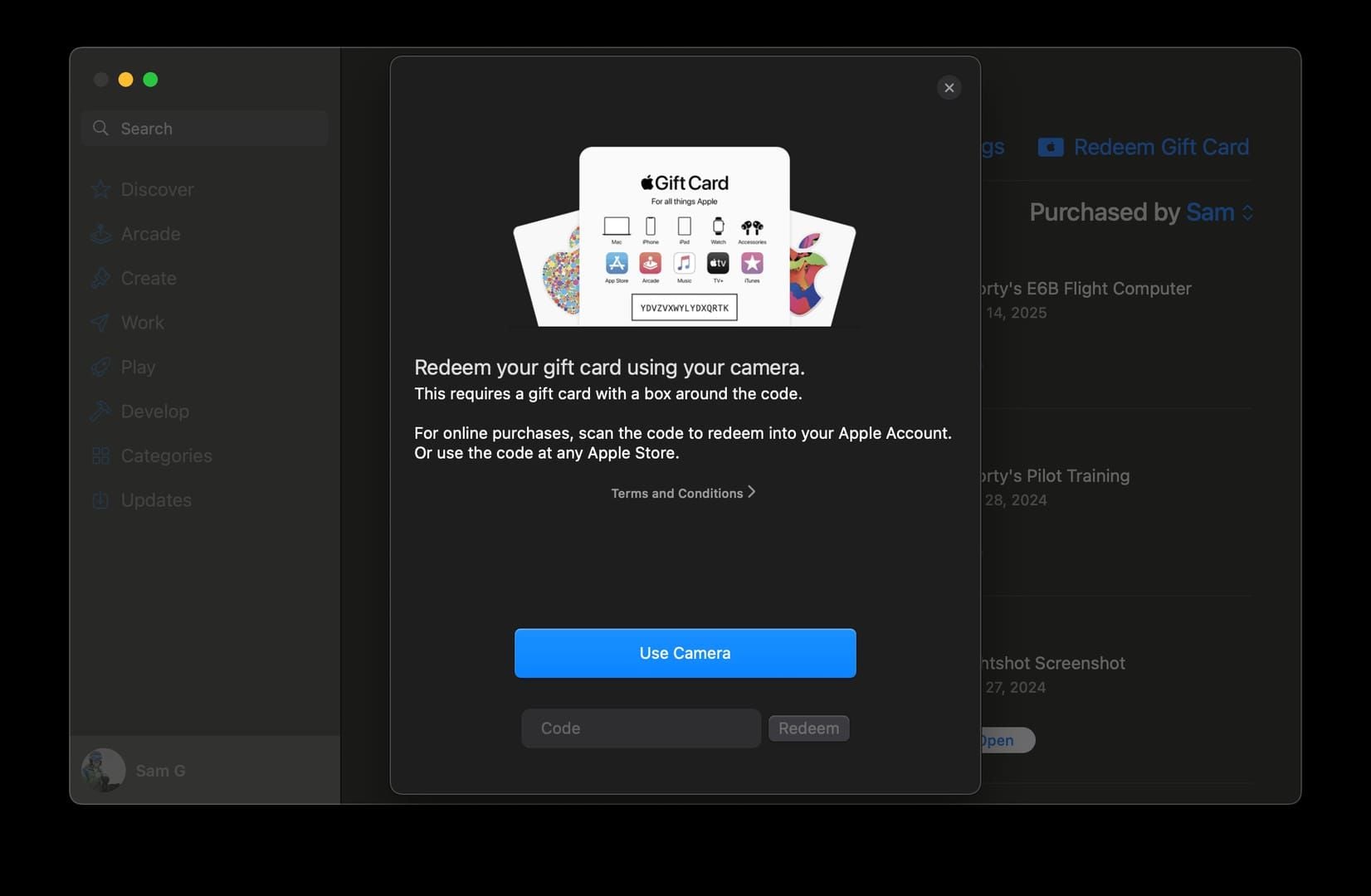
Apple's redemption process never requires a separate activation step. You redeem directly through the App Store (tap your profile icon → Redeem Gift Card or Code), through iTunes, or at apple.com/gift-cards. No third-party verification, no external website.
To confirm you're on the real Apple site: the URL must begin withhttps://www.apple.com. Apple's SSL certificate is issued to Apple Inc. — visible by clicking the padlock icon in your browser.
How Scammers Drain Cards Before You Can Redeem Them
Most scam-warning articles skip this part. Understanding the mechanism changes how you think about card safety.
In-store tampering: Scammers visit retail locations, carefully remove cards from display racks, photograph or scan the number and PIN (sometimes by peeling and re-sealing the scratch strip), then return the card. It looks untouched. A customer buys it, activates it at checkout — and the scammer's monitoring system alerts them instantly. The drain happens within 10–30 minutes of activation. Community testing in 2026 confirmed 26% of received physical Apple Gift Cards had zero balance at redemption.
Your defense: Redeem immediately after receiving any card — physical or digital. Don't store codes in a notes app. Don't check the balance on a third-party site (that exposes your code to additional interception). Redeem via the App Store, then verify the balance through Settings → [Your Name] → Payment & Shipping. That's the only safe balance-check method.
Authentic Apple Gift Cards have serial numbers beginning with GCA, PBH, or EPY. If a card's serial doesn't match one of these prefixes, treat it as suspect.
Pre-Recharge Safety Checklist
Before buying:
Seller is on Apple's official authorized list
Price is at or near face value (no more than 10% below)
Payment via credit/debit, PayPal, or Apple Pay — not crypto or wire
Physical cards: cashier retrieved from behind the counter
Scratch strip fully intact, no peeling or bubbling
After receiving:
Redeem immediately via App Store or Apple's official page
Verify balance through Settings → [Your Name] → Payment & Shipping
Do NOT check balance on any third-party website
If balance shows $0: Call Apple Support at 800-275-2273 immediately. Say gift cards when prompted. Have the card number and PIN ready — speed matters.
To top up your Apple ID without the physical card risk, you can recharge Apple account with gift card through BitTopup — a verified platform that delivers digital codes directly, eliminating the in-store tampering vector entirely.
Already Been Scammed? Do These Three Things Now
Recovery is possible but not guaranteed. Community reports on outcomes from Apple Support are mixed — some users received partial refunds, others received nothing. Prevention is far more reliable than recovery, especially if funds were converted to crypto before you reported.
Step 1 — Call Apple Support immediately. Dial 800-275-2273, say gift cards when prompted. Provide the card number and PIN. Apple may be able to freeze the balance if the fraudulent redemption hasn't fully processed. Every minute counts.
Step 2 — File an FTC report. Go to ReportFraud.ftc.gov with photos of the card, your receipt, and any communications with the scammer. This creates an official record and contributes to enforcement actions.
Step 3 — Pursue a chargeback if you paid by card. Contact your card issuer within 60–120 days to dispute the charge. This window varies by issuer — act quickly. Also consider reporting to your state Attorney General's consumer protection office, especially if the scam involved government impersonation.
How to Safely Recharge Your Apple ID in 2026
The safest channels are Apple's officially recognized retailers: Apple.com/gift-cards, Apple Stores, Best Buy, Target, Walmart, CVS, Walgreens, Kroger, Safeway, and Sam's Club.
For online purchases outside physical retail, look for:
Transparent pricing at or near face value
Verified payment methods (credit/debit, PayPal, Apple Pay — never crypto)
Clear customer support contact and documented refund policy
Digital delivery that eliminates physical tampering risk
No requirement to share codes before receiving your purchase
Apple Gift Cards are officially issued in these denominations only: $15, $25, $50, $100, $200, $500. Any card offered in a non-standard amount is a red flag. And cards purchased after August 22, 2023 carry no expiration dates and no dormancy fees — so don't let anyone manufacture urgency around expiration.
Frequently Asked Questions
Does Apple ever contact customers about gift card issues? No. Apple will never proactively call, email, or message you asking you to purchase gift cards to resolve any account issue. If someone claiming to be Apple Support asks for gift card payment, hang up.
Can a scammer do anything with just the card number, without the PIN? The number alone has limited use. But scammers who get both the number and PIN can redeem the full balance instantly. The PIN is the critical piece — protect it like a bank PIN.
Are digital Apple Gift Cards safer than physical ones? Yes, generally. Digital cards eliminate the in-store tampering risk entirely. Physical cards can be skimmed from retail displays before you ever buy them. Digital cards from an authorized source bypass that attack vector — though phishing risk exists if you're not careful about where you're purchasing.
What should I do if my code shows already redeemed? Call Apple Support at 800-275-2273 immediately with your purchase receipt. Apple can investigate the redemption history. Without a receipt, recovery becomes significantly harder — always keep it.
Why do scammers specifically demand Apple Gift Cards? Speed (codes redeem in seconds), irreversibility (no chargeback on gift card redemptions), and anonymity (redeemed value can be transferred without linking to a real identity). Cash equivalents like wire transfers share some of these properties, but gift cards are uniquely accessible — anyone can buy them at a grocery store without raising flags.
Is it safe to buy discounted Apple Gift Cards online? Only if the discount is modest (5–10%) and the seller is on Apple's authorized list. Anything deeper — especially from social media sellers or anonymous platforms — carries a high fraud probability. Apple's own data shows 62% of gift card fraud originates from non-authorized channels. The math on deals from unknown sellers doesn't work in your favor.