

Apple Gift Card scams cost US consumers $212 million in 2026. The FTC logged 14,200 gift card complaints in Q1 alone — 29% involving Apple cards specifically. Fraud jumped 37% year-over-year, and 62% of cases trace back to non-authorized purchase channels. These seven red flags will tell you immediately whether you're being targeted.
Why Scammers Love Apple Gift Cards
Fast, anonymous, irreversible. That combination makes Apple Gift Cards uniquely dangerous in the wrong hands.
A 16-digit code can be read over the phone and redeemed in under 60 seconds. The receiving Apple account is hard to trace, funds move quickly, and Apple rarely reverses completed transactions. Unlike wire transfers, gift cards bypass bank fraud detection entirely — no 24-hour hold, no callback verification, no suspicious activity flag.
The numbers confirm the scale. Fraud rose 37% year-over-year per Apple's 2025 Trust & Safety Report, and Q1 2026 FTC data shows no reversal. Community reports also flag that 26% of physical Apple Gift Cards received in 2026 had zero balance at redemption — one in four cards, drained before the buyer ever got home.
Two new developments in early 2026: Apple officially ended partnerships with Amazon, eBay, and Etsy as of January 2026, so any listing on those platforms claiming legitimate Apple Gift Cards is now operating outside authorized channels. And AI-generated celebrity deepfake giveaway scams have accelerated on TikTok and Instagram — convincing enough to fool people who consider themselves tech-savvy.
Red Flag #1: Anyone Asks You to Pay a Bill, Fine, or Debt with an Apple Gift Card
Stop. No legitimate organization — not the IRS, not a utility company, not a court, not Apple itself — will ever request payment via gift card. Ever.
The script is consistent: an urgent call claims you owe back taxes, have an outstanding warrant, or face immediate account suspension. The caller creates panic, then offers a solution — buy Apple Gift Cards and read the codes over the phone. The tight window (pay within 30 minutes or face arrest) is designed to prevent you from pausing to think.
The same playbook runs with fake utility shutoff notices and fabricated court warrant calls. The 2026 variation uses text messages with spoofed sender IDs linking to convincing fake government portals that accept gift card payment codes.
If you receive any of these: hang up or close the browser. Call the agency directly using a number from their official website — never a number from the suspicious message. This isn't a gray area. Per official Apple policy and FTC guidance: if someone asks for Apple Gift Card codes to resolve any official matter, you are talking to a scammer.
Red Flag #2: Tech Support Requests Payment via Apple Gift Card
A pop-up freezes your screen. It looks like an official Apple alert — logo, red text, urgent warning — with a phone number. You call. A professional-sounding person tells you the fix requires purchasing Apple Gift Cards to restore your account or pay for the security patch.
These pop-ups are browser-based and can appear on any site. The phone numbers connect to overseas call centers running coordinated scripts, complete with hold music, fake case numbers, and supervisor escalation. Cold call variants skip the pop-up entirely — they call you directly, claiming to be from Apple Support or a security firm, saying they've detected unusual activity.
Apple Support will never ask you to buy gift cards to resolve account issues. Real Apple support happens through support.apple.com or 800-275-2273 — and they will never initiate contact by demanding immediate gift card payment. If you're unsure whether a call is legitimate, hang up and call Apple directly at 800-275-2273 (say gift cards when prompted if you suspect fraud).
Red Flag #3: A Deal That Seems Too Good to Be True
Legitimate discounts on Apple Gift Cards run 5–10% off face value through authorized retailers during promotions. That's the realistic ceiling. Anything significantly beyond that from an unverified source is a stolen or fraudulent card.
The operation works two ways: either the seller physically tampered with cards before selling them, or they're reselling codes from fraudulently obtained cards that Apple will deactivate once the original fraud is detected. The deactivation timeline is brutal — 71% of discounted Apple Gift Cards from unverified sources deactivated within 48 hours per Apple Support logs. You might see the balance appear, then watch it disappear two days later when Apple claws back the funds.
| 5–10% off | Authorized retailer promotion | Safe | | 10–15% off | Unverified reseller | Elevated | | 15–30% off | Marketplace listing | High — likely stolen | | 30%+ off | Any unverified source | Near-certain scam |
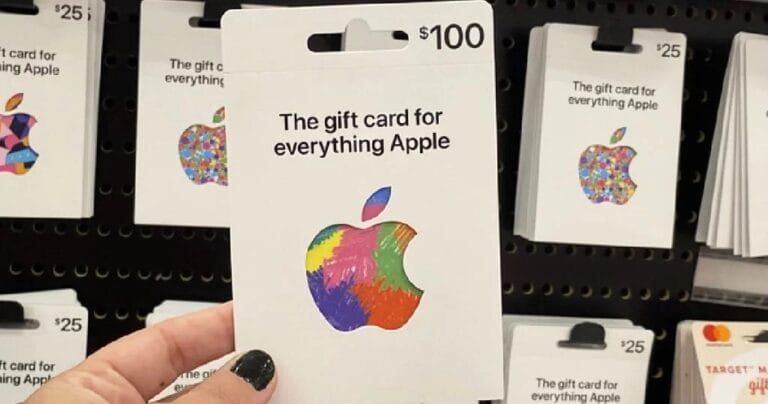
Authorized US retailers: Apple.com/gift-cards, Apple Stores, Best Buy, Target, Walmart, CVS, Walgreens, Kroger, Safeway, Sam's Club. Promotional discounts from these specific retailers are legitimate. The same card on an unauthorized marketplace at a steeper discount is not.
To buy Apple Gift Card digital code online safely, look for transparent pricing near face value, clear delivery confirmation, and no requirement to share your Apple ID credentials.
Red Flag #4: The PIN Area Is Already Scratched or Tampered With
This is the one most people miss — and it leads directly to that zero-balance discovery at redemption.
Card draining is more sophisticated than most people realize. A thief visits a retail display rack, removes a card, photographs the card number and PIN (after carefully scratching the panel), reseals the packaging with heat or adhesive, and returns it to the rack. When you purchase that card and the cashier activates it, the thief's monitoring script detects the activation. Community reports confirm balances drain within 10–30 minutes of activation. By the time you get home, it's gone.
Before leaving the register, check:
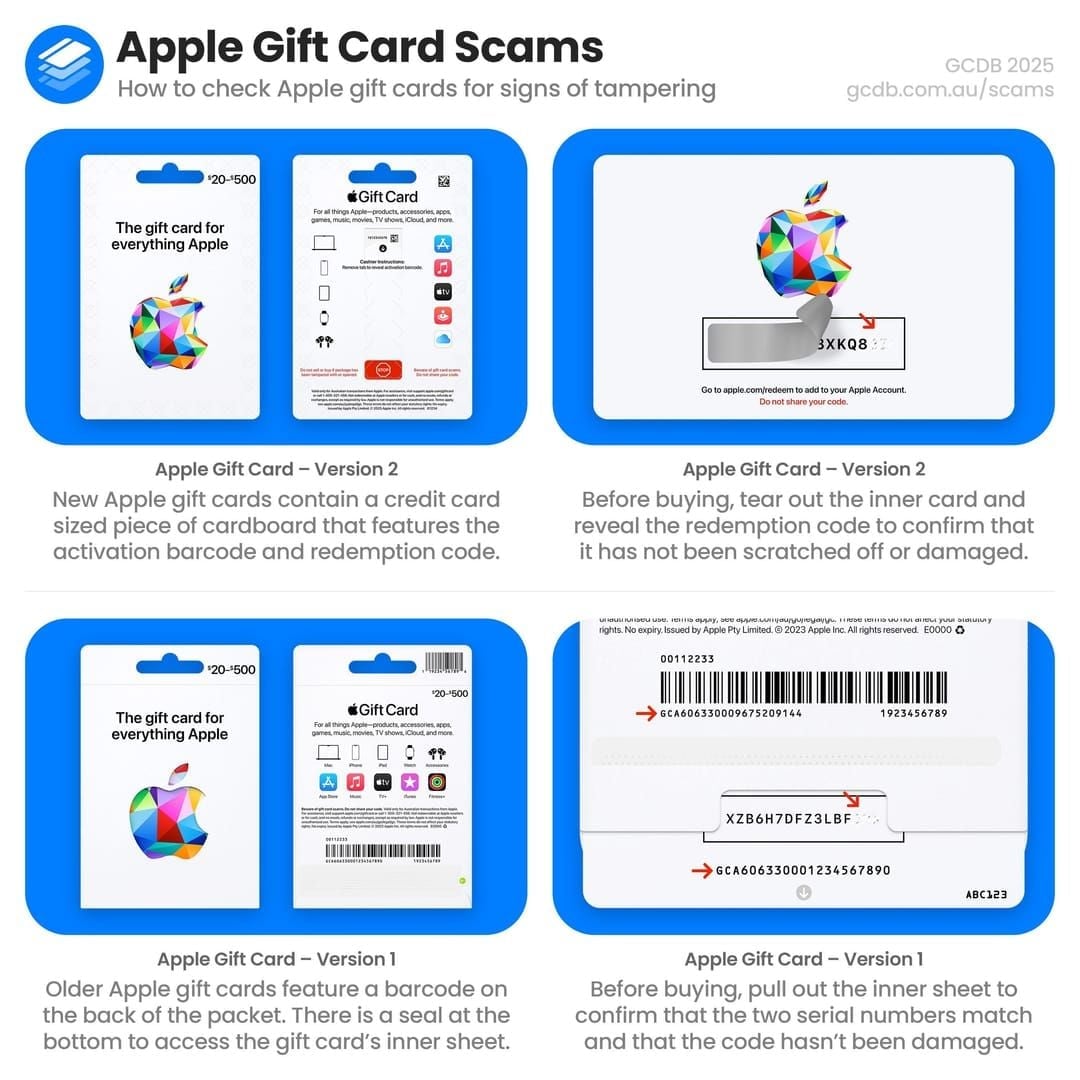
PIN sticker: Fully intact, no peeling, bubbling, or signs of reapplication
Scratch-off panel: Zero scratching — any partial scratch is a red flag
Packaging: No tears, resealing marks, or evidence the card was removed and replaced
Card surface: No residue, tape marks, or discoloration around the PIN area
Authentic Apple Gift Cards have serial numbers beginning with GCA, PBH, or EPY. Different format? Don't buy it.
If you find a tampered card, don't purchase it. Hand it to the store manager, then request a card from behind the counter or a sealed display unit — those haven't been sitting on an open rack accessible to anyone.
Red Flag #5: You Get an 'Already Redeemed' Error Right After Purchase
This error has two completely different causes, and most victims can't tell which one they're dealing with.
Card draining: The code was stolen before you purchased. You'll see already redeemed immediately, balance shows $0, and the redemption timestamp predates your purchase.
Activation system lag: Rare, but Apple's systems occasionally take a few minutes to sync a newly activated card. Waiting 15–30 minutes and trying again resolves it.
Triage immediately: check your Apple ID balance in Settings → [Your Name] → Payment & Shipping. If the balance didn't increase and the error was instant, assume card draining and act fast. One less-known step: sign out and back into the App Store and iTunes on all your devices to force a balance refresh — sometimes the display lags even when credit applied correctly.
If it's draining:
Don't leave the store — you need the receipt and physical card
Call Apple Support at 800-275-2273, say gift cards — they can attempt a balance freeze if funds haven't moved
Photograph the card front, back, and receipt before anything else
Ask the store manager to pull transaction records showing the card was unactivated before your purchase
Apple rarely refunds redeemed gift card balances — but community experience shows fast action with documentation meaningfully improves your odds compared to reporting days later.
Red Flag #6: Social Media Giveaways, Lottery Wins, or Romance Partners Want Gift Cards
The 2026 version of fake giveaway scams uses AI-generated video of recognizable tech figures announcing Apple ecosystem giveaways. The production quality is convincing. Comment sections are populated by fake accounts confirming they already received their cards. The ask is always the same: send gift card codes to verify your identity or cover processing fees.
Real giveaways never require you to send anything to receive a prize. That requirement is the scam, full stop.
Romance scams follow a predictable arc: weeks of trust-building, then a financial crisis only gift cards can solve. The request comes after significant emotional investment — which is exactly why it works. Increasingly, these are AI-assisted personas running multiple targets simultaneously. Recognizing the pattern before that emotional investment builds is the only reliable protection.
Red Flag #7: Phishing Emails or Texts Asking for Your Apple Gift Card Code
Never share your Apple Gift Card code outside the official Apple redemption interface. Once you read a code to someone, paste it into a non-Apple form, or photograph it and send it anywhere, it can be redeemed instantly — and it cannot be reversed.
Legitimate Apple communications come from @apple.com domains only. Watch for:
Sender addresses like @apple-support.com, @appleID-verify.net, or @apple.co
Urgent language: Your account will be suspended in 24 hours
Links that don't resolve to apple.com on hover
Any request for your gift card code, Apple ID password, or 2FA codes
Apple Gift Card codes are 16-digit alphanumeric strings starting with X. No legitimate Apple communication will ask you to provide this via email or text.
A common and costly mistake: sharing a photo of your card (front and back) before the transaction is complete. Scammers specifically request photos because the number and PIN are visible. Photograph your card for your own records only — never send that photo to anyone.
Enable two-factor authentication before redeeming any gift card: Settings → [Your Name] → Password & Security.
How to Buy Apple Gift Cards Safely
Digital cards eliminate in-store tampering risk entirely — no physical card to drain, no scratch panel to compromise. Community consensus is consistent: digital Apple Gift Cards are safer than physical cards.
Official denominations: $15, $25, $50, $100, $200, $500. Cards issued after August 22, 2023 carry no expiration dates or dormancy fees.
For App Store credit top-ups, you can purchase Apple Gift Card instant delivery through BitTopup — authenticated digital codes, no physical card handling, no Apple ID credential sharing required.
One habit worth building: before scratching any PIN, photograph the card front, back, and receipt. Redeem via App Store → profile → Redeem Gift Card or Code (16-digit code starting with X). Verify the balance landed in Settings → [Your Name] → Payment & Shipping. Takes 90 seconds and creates the documentation trail you'd need if anything goes wrong.
When entering codes manually, watch for character confusion: B/8, D/O, E/3, G/6, O/Q/0, S/5, U/V, Z/2 — these cause most invalid code errors that aren't actually fraud.
Think You've Been Scammed? Do This Now
Speed is everything. The intervention window is minutes to hours, not days.
Stop all contact — don't respond, don't send more cards
Call Apple Support at 800-275-2273, say gift cards — have your receipt, card photos, and card number ready. Apple can attempt a balance freeze if funds haven't moved
File with the FTC at ReportFraud.ftc.gov — include photos, receipt, and any scammer communications
Request a chargeback from your credit card issuer if you paid by card (window: typically 60–120 days). This is why paying with credit — not cash or debit — matters
File with IC3 at ic3.gov for organized fraud cases
Apple rarely refunds redeemed balances. But refunds are possible under specific conditions: funds haven't transferred out yet, you have documentation, and you act within hours. Cases reported days later have much lower success rates.
FAQ
Why do scammers specifically demand Apple Gift Cards? Speed, anonymity, irreversibility. A code redeems in under a minute, the receiving account is hard to trace, and Apple rarely reverses completed transactions. Functionally cash — but transferable over the phone.
Already redeemed error — is it always a scam? Not always. Card draining (stolen code) shows an instant $0 balance with a redemption timestamp before your purchase. Activation lag (rare technical delay) resolves after 15–30 minutes. Check your Apple ID balance immediately to triage.
Can Apple trace who redeemed a stolen card? Yes — Apple can identify which Apple ID redeemed it. But scammers use throwaway accounts and move funds quickly. Recovery depends on how fast you report, not on Apple's ability to identify the account.
Is it safe to buy from third-party websites? Depends on the platform. Digital cards from verified sources eliminate physical tampering risk. Key signals: pricing near face value, no Apple ID credential requirement, transparent delivery to your own email. Avoid anything 15%+ below face value from unverified sources.
How do I check my balance officially? Settings → [Your Name] → Payment & Shipping, or the App Store profile page. Don't use third-party balance-checking sites — some are phishing tools designed to capture card codes.
What's the regional restriction? Cards must be redeemed in the country of purchase. A card bought in France won't work on the US App Store. Match the card region to the recipient's App Store region.
The $212 million lost in 2026 didn't happen because victims were careless. These scams are built by professionals who understand urgency, trust, and fear. Knowing these seven red flags — and the mechanics behind each one — is the most effective protection available. When in doubt: slow down, verify independently, and remember that no legitimate organization will ever ask you to pay with a gift card.