Quick Answer: Apple Gift Card scams cost US consumers $212 million in losses, with fraud spiking every tax season from January through April. Scammers impersonate the IRS, tech support agents, and gaming community members to steal redemption codes. Here are 7 red flags every iOS gamer must recognize in 2026 — plus a safe recharge checklist to protect your balance.
Why Scams Explode Every Tax Season
Gift card fraud follows predictable patterns. Q1 is consistently the most dangerous window for US consumers, with scams peaking January–April 2026. Fraudsters exploit financial anxiety around filing deadlines, refund expectations, and IRS penalty fears.
The scale is staggering: $212 million lost in a single reporting period, up from $110 million in just the first half of 2023. For iOS gamers who top up frequently, the risk compounds — you're conditioned to enter codes fast and trust digital transactions, habits scammers actively exploit.
For safe recharges, platforms like BitTopup let you buy apple gift card online instant delivery through a verified channel that eliminates third-party fraud risk.
Why Q1 works for scammers: They hit two emotional states simultaneously — fear of penalties and hope for refunds. Both impair rational thinking. That manufactured panic is the primary tool. Gaming communities have also become prime targets in 2026, with fraudsters embedding themselves in Discord servers, multiplayer platforms, and social media groups.
Red Flag #1 – Payment Demanded via Apple Gift Card
This is the single most reliable fraud indicator. No legitimate government agency, utility, hospital, debt collector, or business will ever request Apple Gift Card payment. Ever.
Apple Gift Cards are restricted to Apple products and services only. They can't legally pay taxes, immigration fees, social security obligations, utility bills, or hospital invoices. Any entity claiming otherwise is running a scam.
The classic IRS play: A caller claims to be an IRS agent, invents a tax debt, threatens immediate arrest or account seizure, then instructs you to buy Apple Gift Cards to settle the balance. The IRS does not call demanding gift card payments. Neither does any legitimate government agency. End the call immediately.
Scammers reach victims via phone, text, email, and social media DMs. Contact is always unsolicited. The caller sounds professional, may reference partial personal info to seem credible, and escalates pressure if you hesitate.
Red Flag #2 – Extreme Urgency and High-Pressure Scripts
Urgency is the scammer's most powerful weapon. Artificial time pressure — Pay within 30 minutes or your account is permanently suspended — prevents you from pausing to verify anything.
This scripting is deliberate and rehearsed. Scammers provide precise instructions: which store to visit, which denomination to buy, exactly how to read the code back. The specificity feels authoritative. It isn't.
Legitimate organizations give you time to verify, consult, and decide. Scammers do the opposite. If any communication demands immediate gift card payment — regardless of how official it looks — treat it as fraud by default.
Tech support variant: Fraudsters impersonate Apple support, claiming your Apple ID is compromised. Real Apple support will never demand gift card payment to restore account access.
Red Flag #3 – Damaged or Tampered Card Packaging
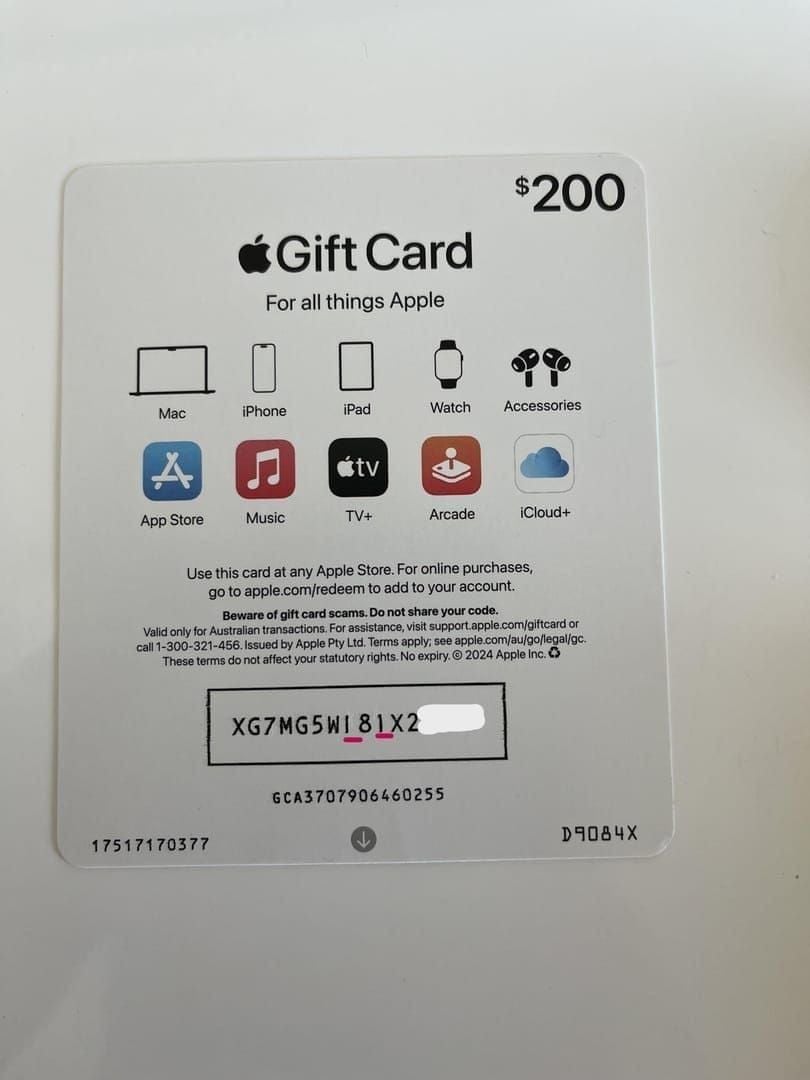
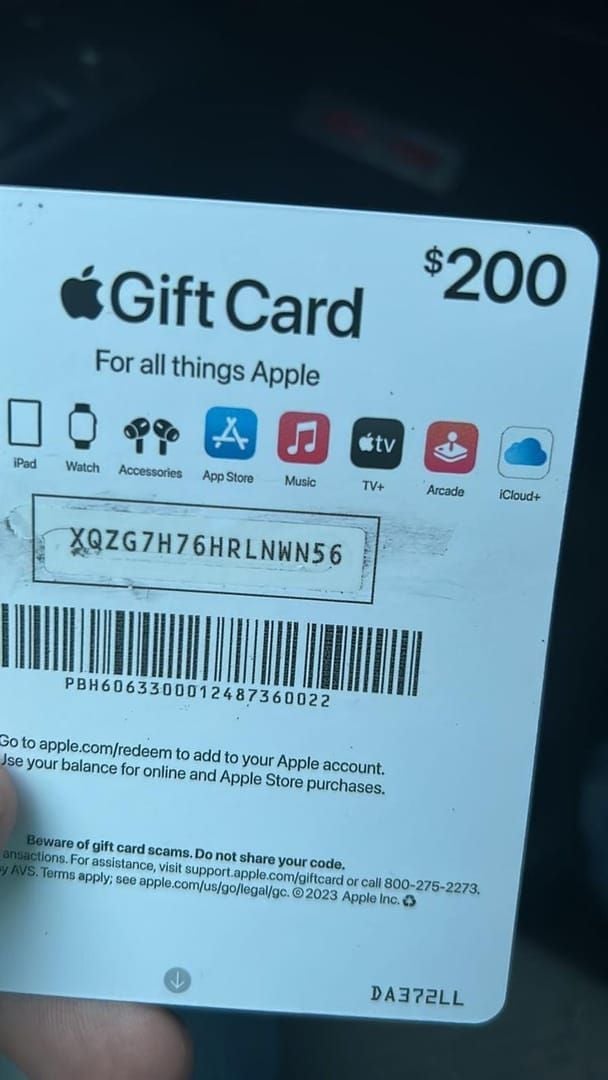
Fraudsters remove cards from store racks, photograph the PIN beneath the scratch-off panel, reseal the packaging, and return the card to the shelf. You buy what looks like a valid card — but the balance drains the moment it's activated.
Before purchasing any physical card, check:
PIN sticker is fully intact with no peeling or reapplication
Scratch-off panel is undamaged and hasn't been pre-scratched
Packaging shows no tears, resealing, or adhesive residue
Card was stored behind the counter, not on an open display rack
Always request cards from behind the counter when possible. Pay with a credit card — not cash or debit — to retain chargeback rights. Photograph the front, back, and receipt immediately after purchase. You'll need this documentation for any fraud report.
Red Flag #4 – Code Shows Already Redeemed Immediately
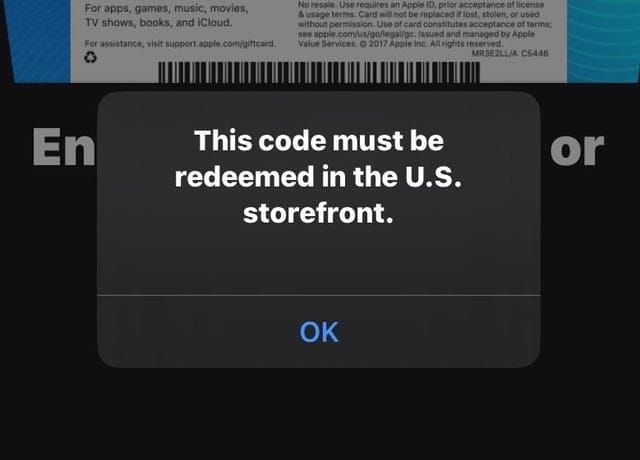
An already redeemed error on a freshly purchased card means a scammer got your code first — either through tampered packaging or a fraudulent digital channel — and redeemed it before you could. This isn't rare: 26% of gift cards in fraud-related cases showed zero balance on first redemption attempt.
Act immediately if this happens:
Don't discard the card or receipt — both are required for any fraud claim
Call Apple Gift Card Support at 800-275-2273 (say gift cards when prompted)
Request a balance freeze and refund investigation
Screenshot the error message if using a digital code
Report at ReportFraud.ftc.gov
Acting within the first hours gives you the best chance of recovery.
Red Flag #5 – No Verifiable Trust Signals from the Seller
Auction sites and peer-to-peer platforms are high-risk environments. Codes sold there are frequently invalid, already redeemed, or obtained fraudulently.
Avoid any seller showing these signs:
Prices significantly below standard denominations ($25, $50, $100)
No clear refund or dispute resolution policy
No verifiable business identity or contact information
Payment limited to cryptocurrency, wire transfer, or prepaid cards
No independently verifiable user reviews
Price-too-good-to-be-true deals are structurally always a trap. Discounts beyond normal promotional ranges signal stolen codes or outright fraud.
For regular recharges, BitTopup offers a reliable way to recharge apple store credit safely with competitive pricing, instant delivery, and a dedicated customer service team.
Red Flag #6 – Phishing Emails or Texts Mimicking Apple
Phishing is one of the most technically sophisticated scam vectors in 2026. Fraudsters replicate Apple's design language, sender names, and formatting to direct you to fake redemption pages or extract codes directly.
Common phishing scenarios:
Fake gift card received notifications prompting you to click a link to claim your balance
Fabricated Apple security alerts claiming your account requires gift card verification
Spoofed Apple receipts for purchases you didn't make, with a dispute this charge link leading to a credential-harvesting page
Before clicking anything: Never follow links in unsolicited emails or texts claiming to be from Apple. Type Apple's official domain manually. Check sender addresses carefully — scammers use domains with subtle misspellings or extra characters.
Pro tip: Enable two-factor authentication (2FA) on your Apple ID before redeeming any gift card. This single step dramatically reduces account takeover risk even if your credentials are compromised.
Red Flag #7 – Scam Offers Inside Gaming Communities
iOS gaming communities are active hunting grounds for Apple Gift Card fraud. Scammers infiltrate Discord servers, Reddit gaming communities, and in-game chat posing as generous players offering free codes, exclusive top-up deals, or emergency financial help.
Three dominant social engineering patterns:
Romance scams: A fellow gamer builds rapport over weeks, then requests Apple Gift Cards for a fabricated emergency
Lottery promises: You've won a gaming prize redeemable only after sending codes as a verification fee
Free code exchanges: Scammer offers to trade codes, receives yours first, then disappears
Any unsolicited offer involving Apple Gift Cards in a gaming community should be treated as fraudulent until verified through official channels.
Safe Recharge Checklist: How to Top Up Without Risk in 2026
Follow this process every time to eliminate the majority of fraud risk.
Before every redemption:
Purchase only from verified, reputable channels — never auction sites or peer-to-peer platforms
For physical cards: inspect PIN sticker, scratch-off condition, and packaging before leaving the store
Pay with a credit card to retain chargeback rights
Photograph card front, back, and receipt immediately after purchase
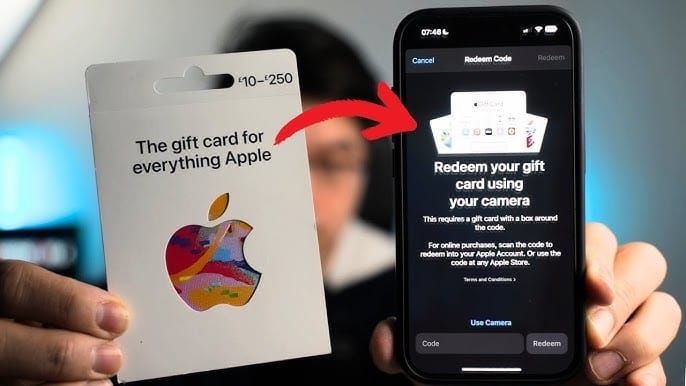
Enable 2FA on your Apple ID before entering any redemption code
Redeem promptly — don't leave activated codes unused
Never share your redemption code with anyone outside Apple's official redemption interface
If you've been scammed:
Call Apple Gift Card Support at 800-275-2273 immediately — request a balance freeze
File a fraud report at ReportFraud.ftc.gov
Contact your payment provider to dispute the original purchase
Document all scammer communications for law enforcement
Recovery isn't guaranteed, but acting within 24 hours significantly improves outcomes.
Frequently Asked Questions
Can I recover funds lost to an Apple Gift Card scam? Possible but not guaranteed. Call Apple at 800-275-2273 immediately and request a balance freeze and refund investigation. File at ReportFraud.ftc.gov. Acting within hours gives you the best chance of partial or full recovery.
Are digital Apple Gift Cards safer than physical ones? Digital cards eliminate tampered-packaging risk but introduce phishing and fake-seller risks. Either way, purchase exclusively through verified channels with transparent security practices and instant delivery confirmation.
Can the IRS legally request Apple Gift Card payment? No — categorically impossible. Apple Gift Cards can't pay government fees, taxes, immigration costs, or any official obligation. Any such request is fraud, regardless of how official the contact appears.
My code says already redeemed right after purchase. What now? Don't discard the card or receipt. Call Apple at 800-275-2273 immediately, request a balance freeze, file at ReportFraud.ftc.gov, and return to the original purchase location with your receipt.
How do scammers get codes before victims use them? Two primary methods: physically tampering with store cards to photograph PINs before resealing, and operating fraudulent digital reseller sites that collect payment without delivering valid codes. Both are defeated by purchasing through verified channels only.
Are scams more common at certain times of year? Yes. Activity peaks sharply during tax season — January through April — when IRS impersonation scams are most effective. Stay especially vigilant during Q1, and follow the safe recharge checklist year-round.