

This guide analyzes cooldown mechanics, distance calculations, and strategic applications of Flywheel Effect versus Blink in Identity V Season 39. You'll discover which ability delivers optimal chase efficiency based on cooldown-to-benefit ratios, map advantages, and persona synergies for ranked matches.
Hunter Secondary Abilities in Season 39
Hunter secondary abilities determine chase outcomes in competitive matches. Season 39 (launched September 17, 2025) maintains core ability framework with subtle balance adjustments affecting cooldown management.
Flywheel Effect and Blink operate on identical 150-second default cooldowns but deliver vastly different tactical advantages. Hunters typically access these abilities 2-3 times per five-minute match—wasting a cooldown can cost the entire game as survivors complete ciphers during recharge.
For premium resources, Identity V Echoes top up through BitTopup provides fast, secure access to seasonal personas and character unlocks enhancing cooldown reduction builds.
Season 39 Meta Shifts
Current ranked meta emphasizes early-game pressure over late-game comebacks. Hunter persona paths prioritize Primary Path Tier 1 for Blink/Teleport access, with Tier 2 Trump Card reducing cooldowns by 10%. This 15-second reduction on Blink's 150-second timer creates 135-second cycles, allowing three uses in extended matches versus two without optimization.
Why Cooldown Management Matters
Ability cooldown efficiency directly correlates with elimination speed. Hunters securing first elimination within 60 seconds gain overwhelming map pressure. Hunters exhausting cooldowns without securing downs face 150-second vulnerability windows where survivors operate with near-immunity from ability catches.
Flywheel Effect: Mechanical Breakdown
Critical distinction: Flywheel Effect is a 129 persona path talent exclusively for survivors, not hunters. It grants 0.5 seconds damage immunity on 150-second cooldown—a defensive reset tool, not mobility enhancement.
Cooldown Timings and Frame Data
Cooldown: 150 seconds (matches Blink)
Immunity window: 0.5 seconds (15 frames at 30 FPS)
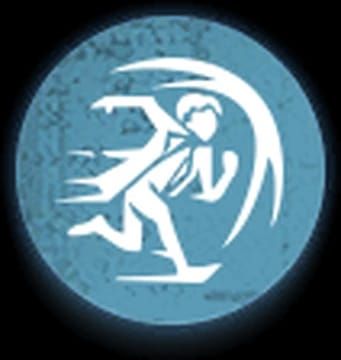
Effect: Absorbs one hunter attack without health state loss
Quick Message systems auto-fill Flywheel Effect cooldown status, enabling coordinated teams to track when rescuers possess immunity for safe unhooks. The 129 build combines Flywheel Effect with Knee Jerk Reflex (40-second cooldown) and Borrowed Time, creating layered defenses forcing hunters to commit multiple abilities per elimination.
Movement and Distance
Flywheel Effect doesn't modify movement speed—survivors maintain standard 3.8 m/s. During the 0.5-second immunity window, survivors cover exactly 1.9 meters (3.8 m/s × 0.5s). This distance alone won't escape chases—value emerges when combined with environmental obstacles forcing hunters into extended pathing.
Comparing to Blink's 3.7-meter tap or 4.25-meter hold distance reveals the fundamental difference: Blink creates instant positional advantages for hunters, while Flywheel Effect extends chases through damage negation.
Persona Synergies
The 129 build optimizes Flywheel Effect through complementary talents maximizing chase extension. Knee Jerk Reflex provides secondary 40-second cooldown ability, ensuring defensive options when Flywheel Effect is on cooldown. No persona talents directly reduce Flywheel Effect's 150-second cooldown, preventing cooldown stacking exploits.
Blink: Technical Specifications
Blink is the hunter-exclusive active trait accumulating one charge per cooldown cycle. This teleportation ability bypasses environmental obstacles and creates Terror Shock opportunities during survivor vault animations.
Cooldown Duration and Recharge
Initial cooldown: 60 seconds at match start
Default cooldown: 150 seconds for subsequent uses
With Trump Card: 135 seconds (10% reduction)
This enables three uses in standard five-minute matches versus two without reduction. Cooldown begins immediately upon activation, regardless of success—misused Blinks require full 150-second cycle even after failed teleports.
Maintain your competitive edge with Identity V global recharge through BitTopup—secure transactions, 24/7 support, never miss seasonal persona updates.
Teleport Range and Applications
Distance options:
Tap Blink: 3.7 meters in camera direction
Hold Blink: 4.25 meters in drag direction

The 0.55-meter difference proves critical in tight corridors for Terror Shock positioning. Hold Blink allows directional control independent of camera orientation, enabling teleports around corners or through complex obstacles blocking tap Blink's linear pathing.
Both variants bypass pallets and windows completely, ignoring collision detection. This creates Terror Shock opportunities during survivor vaulting animations—teleport places hunters directly opposite windows mid-vault, triggering instant downs on survivors locked in animation frames.
Animation Frames and Vulnerability
Blink execution requires ~0.3 seconds (9 frames at 30 FPS) from input to completion. During this window, hunters remain vulnerable to pallet stuns and can't cancel once initiated. However, Blink dodges Wildling boar stuns and Forward rugby ball stuns if timed precisely during projectile travel frames.
A glowing circle indicates Blink destination in hunter POV, providing visual confirmation before committing. PC players must avoid holding the button down—this input method causes Blink failures.
Loud noise alerts broadcast across the entire map when hunters activate Blink, informing all survivors of cooldown state. Coordinated teams track when hunters regain Blink access and adjust kiting strategies accordingly.
Cooldown Reduction Through Personas
Hunter Primary Path Tier 1 enables Blink/Teleport selection. Tier 2 Trump Card provides critical 10% cooldown reduction while enabling mid-match trait swapping—versatility allowing hunters to adapt to survivor compositions discovered during early chases.
Confined Space talent blocks vaulted windows for 20 seconds, synergizing with Blink's Terror Shock potential by eliminating survivor escape routes. This forces survivors into pallet-dependent kiting, consuming limited resources faster than window-loop rotations.
Trump Card's mathematical advantage: 150-second base reduced to 135 seconds allows three Blink uses at 0, 135, and 270 seconds versus two uses at 0 and 150 seconds. This additional charge often determines critical late-game eliminations before exit gates power.
Mathematical Comparison
Direct comparison requires acknowledging role difference—Flywheel Effect serves survivors defensively while Blink provides hunters offensive mobility. Analyzing cooldown efficiency reveals strategic insights for both roles.
Chase Time Efficiency Formula
Blink Value:
Distance gained: 4.25 meters instant teleport
Cooldown cost: 135 seconds (with Trump Card)
Value per second: 4.25m ÷ 135s = 0.0315 meters per cooldown second
Flywheel Effect Value:
Benefit gained: 0.5 seconds immunity (extends chase ~3-5 seconds with hunter attack recovery)
Cooldown cost: 150 seconds
Value per second: 4s chase extension ÷ 150s = 0.0267 seconds per cooldown second
Blink delivers superior cooldown efficiency (0.0315 vs 0.0267), though comparison crosses role boundaries. Critical insight: Flywheel Effect-equipped survivors force hunters to commit multiple Blink charges per elimination.
Cooldown-to-Benefit Ratio
The 129 Flywheel Effect build creates defensive rotation challenging hunter ability economies. With Flywheel Effect (150s), Knee Jerk Reflex (40s), and Borrowed Time available, survivors possess defensive options every 40-50 seconds on average. Hunters using Blink on 135-second cooldowns face scenarios where survivors regenerate defensive tools faster than hunters regenerate offensive abilities.
This cooldown asymmetry explains why Hermit and Clerk hunters—possessing Blink-like abilities in base kits—struggle against 129 Flywheel builds. Survivor defensive rotation outpaces hunter offensive rotation, creating mathematical disadvantages skilled survivors exploit.
Cumulative Distance Over 5-Minute Matches
In standard 300-second ranked matches, hunters with Trump Card-optimized Blink access ability at:
0 seconds (initial 60s cooldown expires before first chase)
135 seconds
270 seconds
Three Blink uses deliver 12.75 meters instant teleportation (4.25m × 3), effectively removing 3.35 seconds chase time per match (12.75m ÷ 3.8 m/s). This advantage compounds across multiple chases—eliminating one survivor 3-5 seconds faster creates cascading pressure preventing cipher completion.
Survivors with Flywheel Effect access immunity at similar intervals (0s, 150s, 300s), but 0.5-second immunity extends chases ~3-4 seconds per activation when accounting for hunter attack recovery. Two Flywheel uses per match add 6-8 seconds total chase time, directly counteracting Blink's time-saving potential.
Strategic Interaction
The interaction creates a cooldown management metagame where timing determines outcomes. Hunters who Blink into Flywheel Effect immunity waste their 135-second cooldown for zero benefit. Survivors who trigger Flywheel Effect against non-Blink attacks preserve immunity for critical moments.
Optimal play requires tracking opponent cooldown states through visual and audio cues. Survivors hearing Blink's loud noise know hunters possess gap-closing potential for next 135 seconds, informing pallet conservation. Hunters observing Flywheel Effect activation via Quick Message auto-fill know that survivor lacks immunity for 150 seconds, creating vulnerability windows for aggressive chases.
Decision Framework: Choosing the Right Ability
Hunter ability selection depends on base kit mobility, map architecture, and survivor team composition. Blink provides universal value, but certain hunters gain disproportionate advantages from teleport's obstacle-bypassing properties.
Hunter-Specific Recommendations
High Blink Synergy:
Geisha: Blink complements Dash ability, providing secondary gap-closer when Dash enters cooldown
Wu Chang: White Guard's umbrella teleport combined with Blink creates dual-teleport options confusing survivor pathing
Sculptor: Blink allows instant repositioning to statue locations, maximizing map control
Low Blink Priority:
Hermit: Base kit already includes Blink-equivalent ability
Clerk: Possesses built-in teleportation overlapping with Blink functionality
Hunters with limited base mobility gain maximum value from Blink's instant teleportation. Hunters with existing teleport mechanics should consider alternative traits like Teleport for cross-map cipher control.
Map Analysis
Blink's obstacle-bypassing property delivers disproportionate value on maps with dense window-pallet configurations:
High Blink Value Maps:
Hospital: Multi-story structure with numerous vault points Blink bypasses for Terror Shock opportunities
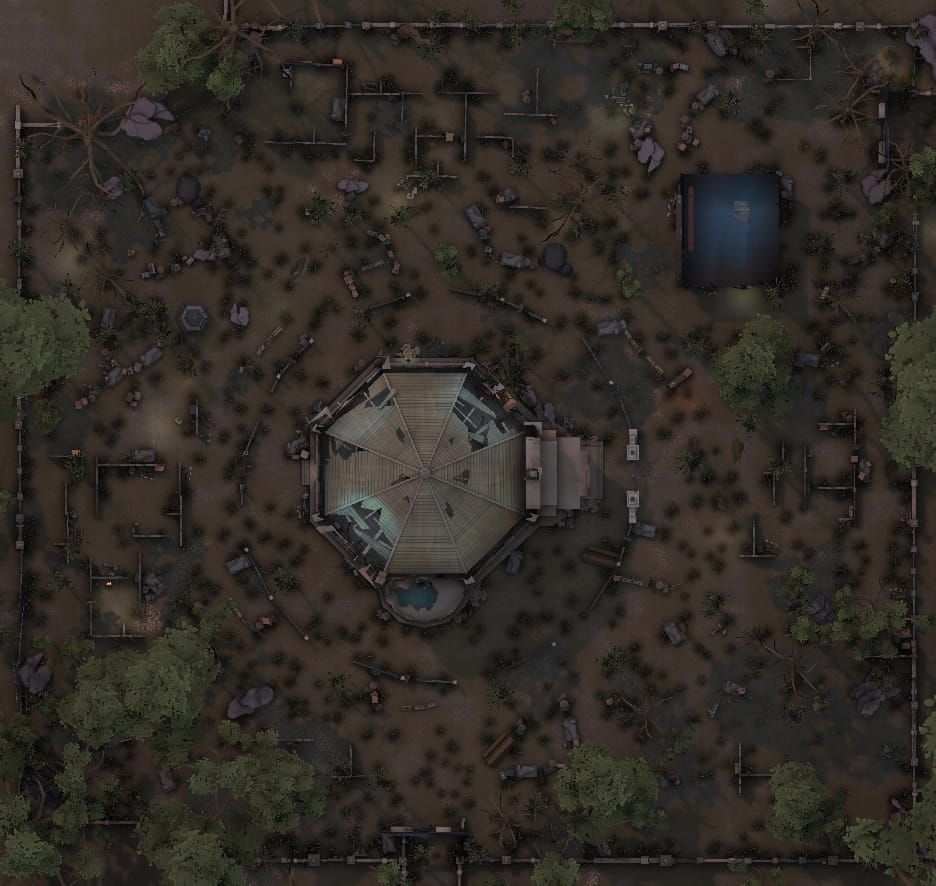
Moonlit River Park: Central building's tight corridors enable precise hold Blink positioning
Asylum: Long corridors with predictable survivor pathing create consistent Blink catch scenarios
Reduced Blink Value Maps:
Lakeside Village: Open spaces with minimal obstacles reduce Blink's bypass advantage
Arms Factory: Wide sightlines allow survivors to pre-drop pallets, negating Terror Shock potential
Map selection in ranked should inform ability choices during pre-match loadout configuration, though most competitive players default to Blink for universal applicability.
Survivor Composition Considerations
Teams running multiple 129 Flywheel Effect builds force hunters into cooldown management dilemmas. Each survivor possesses 0.5-second immunity on 150-second cooldowns, creating four potential immunity activations negating Blink's Terror Shock attempts.
Against Flywheel-heavy teams:
Track immunity cooldowns through Quick Message auto-fill notifications
Bait immunity activations with basic attacks before committing Blink
Focus survivors without Flywheel Effect first to reduce team defensive options
Teams without Flywheel Effect lack damage immunity, making Blink's Terror Shock potential significantly more reliable for securing quick eliminations.
Advanced Cooldown Management
Mastering ability cooldowns separates competent hunters from top-ranked players. Cooldown tracking, optimal usage timing, and animation canceling transform Blink from simple teleport into strategic tool controlling match tempo.
Tracking Cooldowns During Multi-Survivor Chases
Mental cooldown tracking becomes critical when juggling multiple survivor chases. Blink's 135-second timer with Trump Card requires hunters to maintain internal countdown awareness while processing survivor positions, cipher progress, and rescue timing.
Practical tracking methods:
Audio cue awareness: Blink's loud noise provides timestamp for cooldown start
Visual confirmation: Glowing circle indicator appears only when Blink is available
Match timer correlation: Note Blink usage at specific cipher completion percentages to estimate next availability
Survivors employ similar tracking for Flywheel Effect, using Quick Message auto-fill to coordinate rescue attempts when immunity becomes available. This creates a cooldown information war where both roles exploit opponent vulnerability windows.
Optimal Usage Timing
Blink delivers maximum value during survivor animation locks:
Window vaults: Teleport mid-vault for guaranteed Terror Shock
Pallet drops: Blink through dropped pallet to continue chase without breaking
Cipher interactions: Catch survivors locked in machine calibration animations
Rescue attempts: Teleport to chair during unhook animation for instant re-down
Wasting Blink on open-field chases where survivors maintain full movement control yields minimal value—the 3.7-4.25 meter distance gain disappears within 1-2 seconds of standard kiting. Reserve Blink for scenarios where teleport creates unavoidable catch situations.
Presence Point Allocation
Hunters prioritizing Blink efficiency should allocate Presence Points toward Tier 2 Trump Card quickly. The 10% cooldown reduction compounds over multiple uses, and trait-swapping capability provides adaptability against unexpected survivor compositions.
Standard progression:
First Presence: Tier 1 Blink unlock
Second Presence: Tier 2 Trump Card for cooldown reduction
Third Presence: Confined Space or Detention depending on match state
This prioritizes ability access and efficiency over late-game comeback mechanics, aligning with Season 39's early-pressure meta.
Animation Canceling Techniques
Blink remains usable while picking up survivors or holding downed survivors, enabling animation canceling saving critical seconds. After downing a survivor, hunters can activate Blink during pickup animation to teleport toward nearest rocket chair while simultaneously securing elimination.
This requires precise timing—activating Blink too early cancels pickup, too late wastes teleport after pickup completes. Optimal window occurs during final 0.3 seconds of pickup animation, allowing teleport to execute immediately upon securing survivor.
PC players must use tap Blink for this technique—holding the button down causes Blink failures interrupting pickup sequence entirely.
Common Mistakes and Misconceptions
Understanding ability mechanics prevents costly errors wasting cooldowns and losing matches.
Myth: 'Blink Is Always Superior for Mobility'
While Blink provides instant teleportation, its 135-150 second cooldown creates extended vulnerability windows where hunters lack gap-closing tools. Hunters over-relying on Blink neglect fundamental chase mechanics like pathing prediction and pallet mind-games, resulting in poor performance when ability enters cooldown.
Effective hunters use Blink as chase finisher rather than chase initiator. Building pressure through standard movement and prediction forces survivors into positions where Blink guarantees catches, rather than using teleport speculatively.
Overusing Abilities: When to Save Cooldowns
The 150-second Blink cooldown means each use must deliver tangible value—either health state damage or significant positional advantage. Using Blink to close minor distance gaps wastes cooldown for minimal benefit, leaving hunters vulnerable during critical late-game scenarios.
Save Blink when:
Survivor is already injured and within basic attack range
Multiple survivors remain healthy, requiring cooldown preservation for future chases
Exit gates are powered and Detention provides one-hit downs regardless of Blink usage
Conversely, survivors should trigger Flywheel Effect immunity only when facing guaranteed hits—wasting the 150-second cooldown on speculative hunter attacks leaves them vulnerable during rescue scenarios.
Misunderstanding Cooldown Reduction Stacking
Trump Card's 10% reduction applies to base cooldown values, not cumulative reductions. Players sometimes assume multiple cooldown reduction sources stack multiplicatively, but Identity V applies reductions additively to prevent exponential cooldown compression.
With Trump Card, Blink's calculation: 150s × 0.9 = 135s. No additional persona talents further reduce this timer, maintaining 135 seconds as minimum achievable Blink cooldown in Season 39.
Ignoring Map-Specific Advantages
Blink's value fluctuates dramatically based on map architecture. On open maps with minimal obstacles, the 3.7-4.25 meter teleport provides marginal advantage over standard movement. On dense maps with complex structures, Blink's obstacle-bypassing property creates Terror Shock opportunities unavailable through normal pathing.
Hunters selecting Blink universally without considering map-specific effectiveness miss opportunities to optimize ability selection for environmental advantages.
Season 39 Updates: Balance Changes Impact
Season 39 launched September 17, 2025, maintaining core ability mechanics while introducing subtle adjustments affecting cooldown management strategies.
Official Balance Changes
Season 39 preserved Blink's 150-second default cooldown and 60-second initial cooldown, maintaining consistency with previous seasons. Trump Card's 10% reduction remains unchanged, ensuring existing persona builds retain effectiveness without requiring reconfiguration.
Flywheel Effect similarly maintained its 150-second cooldown and 0.5-second immunity duration, preventing defensive power creep that could invalidate hunter offensive abilities. The 129 persona path structure remains optimal for survivors prioritizing chase extension through layered defensive talents.
Stability in cooldown values reflects developer intent to maintain ability balance while allowing meta evolution through hunter releases and map additions rather than numerical adjustments.
Meta Shifts in Top-Tier Ranked
Current high-rank meta emphasizes early elimination pressure over late-game comebacks. Hunters prioritize Blink for Terror Shock potential during critical first 120 seconds when survivors possess maximum health states and defensive resources.
Prevalence of 129 Flywheel Effect builds among coordinated survivor teams forces hunters to adopt cooldown tracking discipline. Top-ranked hunters mentally track each survivor's Flywheel cooldown status, baiting immunity activations with basic attacks before committing Blink to ensure Terror Shock success.
This cooldown management metagame elevates mechanical skill requirements—hunters must process cooldown states for four survivors simultaneously while executing precise Blink positioning and maintaining cipher pressure awareness.
Future-Proofing Strategy
Anticipated balance adjustments in future seasons will likely target cooldown reduction stacking and persona synergies rather than base ability values. Developers historically preserve core mechanics while adjusting peripheral systems, suggesting Blink's 150-second cooldown will remain stable through Season 40 and beyond.
Hunters should invest practice time into cooldown tracking and optimal usage timing rather than memorizing specific numerical values that may shift with patches. The strategic framework of save Blink for animation-locked catches and track Flywheel Effect through Quick Messages transcends specific balance states, providing durable skill development.
Optimization Tools and Resources
Maximizing Blink efficiency requires systematic practice and resource utilization.
Cooldown Tracking Method
Mental math for cooldown tracking becomes automatic with practice. Tracking Blink availability requires noting activation timestamp and adding 135 seconds (with Trump Card) to determine next availability.
Practical calculation:
Note cipher completion percentage when Blink activates (e.g., 60% complete)
Estimate 135 seconds of cipher progress (approximately 1.5 additional ciphers)
Blink becomes available around 3.5 total ciphers completed
This cipher-based tracking provides intuitive cooldown awareness without requiring precise second counting during high-pressure chases.
Persona Web Builder
Optimal persona configurations prioritize Trump Card access while maintaining essential talents like Confined Space and Detention.
Standard hunter build:
Primary Path: Tier 1 Blink → Tier 2 Trump Card
Secondary Path: Confined Space for window blocking
Tertiary Path: Detention for endgame pressure
This maximizes Blink efficiency through cooldown reduction while preserving critical chase control and comeback mechanics.
In-Game Practice Drills
Custom matches against AI survivors provide low-pressure environments for practicing Blink timing and cooldown tracking.
Recommended drills:
Terror Shock Practice: Repeatedly Blink through windows during survivor vaults to develop muscle memory for optimal timing
Cooldown Tracking: Use Blink at match start and practice estimating 135-second intervals without checking ability icon
Animation Canceling: Practice Blink activation during survivor pickup animations to master advanced techniques
Consistent practice transforms cooldown management from conscious calculation into automatic awareness, freeing mental resources for strategic decision-making during ranked matches.
Enhance Your Hunter Experience with BitTopup
Competitive Identity V play requires access to seasonal personas, limited-time hunters, and cooldown optimization items. BitTopup provides secure, fast delivery of Echoes and premium resources with competitive pricing and 24/7 customer support. Whether you need persona web unlocks for Trump Card access or seasonal character releases, BitTopup ensures you maintain cutting-edge loadouts without interruption.
FAQ
What is the exact cooldown time for Blink in Season 39?
Blink operates on 60-second initial cooldown at match start, then 150-second default cooldown for subsequent uses. With Trump Card persona talent, this reduces to 135 seconds (10% reduction), allowing three uses in standard five-minute matches versus two without optimization.
How does Flywheel Effect cooldown compare to Blink?
Flywheel Effect matches Blink's 150-second cooldown exactly, but functions as survivor defensive talent providing 0.5 seconds damage immunity rather than hunter mobility. No persona talents reduce Flywheel Effect's cooldown, maintaining consistent 150-second recharge across all survivor builds.
Can Blink bypass Flywheel Effect immunity?
No—Flywheel Effect's 0.5-second damage immunity negates all hunter attacks including Terror Shocks from Blink teleports. Hunters must track Flywheel cooldowns through Quick Message auto-fill and bait immunity activations with basic attacks before committing Blink to ensure successful catches.
Which hunters benefit most from Blink's cooldown reduction?
Hunters with limited base mobility like Geisha and Sculptor gain maximum value from Blink's instant teleportation and Trump Card cooldown reduction. Hunters with existing teleport mechanics like Hermit and Clerk receive minimal benefit as their base kits already provide similar functionality.
Does map selection affect Blink's cooldown efficiency?
While cooldown duration remains constant across all maps, Blink's value per use fluctuates based on environmental density. Maps with numerous windows and tight corridors like Hospital maximize Terror Shock opportunities, delivering superior cooldown efficiency compared to open maps like Lakeside Village.
How do I track Blink cooldown during intense chases?
Correlate Blink usage with cipher completion percentages rather than precise second counting. Blink's 135-second cooldown with Trump Card equals approximately 1.5 cipher completions, allowing intuitive tracking through game state progression rather than mental timers during high-pressure scenarios.