

Third-party Genshin crystal sites offer lower prices primarily through regional pricing arbitrage, where they exploit currency differences and GDP-based pricing variations. While Ukraine offers 61.6% savings and Turkey provides 16.4% discounts compared to USD baseline, these savings come with significant risks including account bans, chargebacks, and Terms of Service violations that can result in negative Primogem balances requiring expensive repurchases.
Look, I get it. You're browsing Reddit or Discord and someone drops a link claiming 30% off Genesis Crystals. Your wallet's already crying from the last banner, and suddenly there's hope.
But here's what's actually happening behind those too-good-to-be-true prices.
Third-party platforms exploit regional pricing disparities and currency arbitrage to undercut official Genesis Crystal prices by 20-25%. The catch? These savings carry substantial risks including 10-year account bans and forced repurchases exceeding $400.
For legitimate savings, Genshin Impact top up deals provide competitive pricing through authorized channels, ensuring account security while maintaining cost efficiency.
The Economics Behind Third-Party Crystal Pricing
Regional Price Arbitrage Explained
HoYoverse isn't running a charity – they've built a sophisticated pricing model that adjusts costs based on local economic conditions. And honestly? It creates some wild disparities that resellers absolutely love to exploit.
The Discount Goldmines:
Ukraine: 61.6% savings vs USD baseline
Turkey: 16.4% discount
Japan: 21.1% savings
Vietnam: 20.1% cost reduction
The Premium Markets (where you probably live):
United Kingdom: 25.2% markup
Mexico: 25.9% premium
Poland: 21.6% markup
Eurozone: 14% average increase
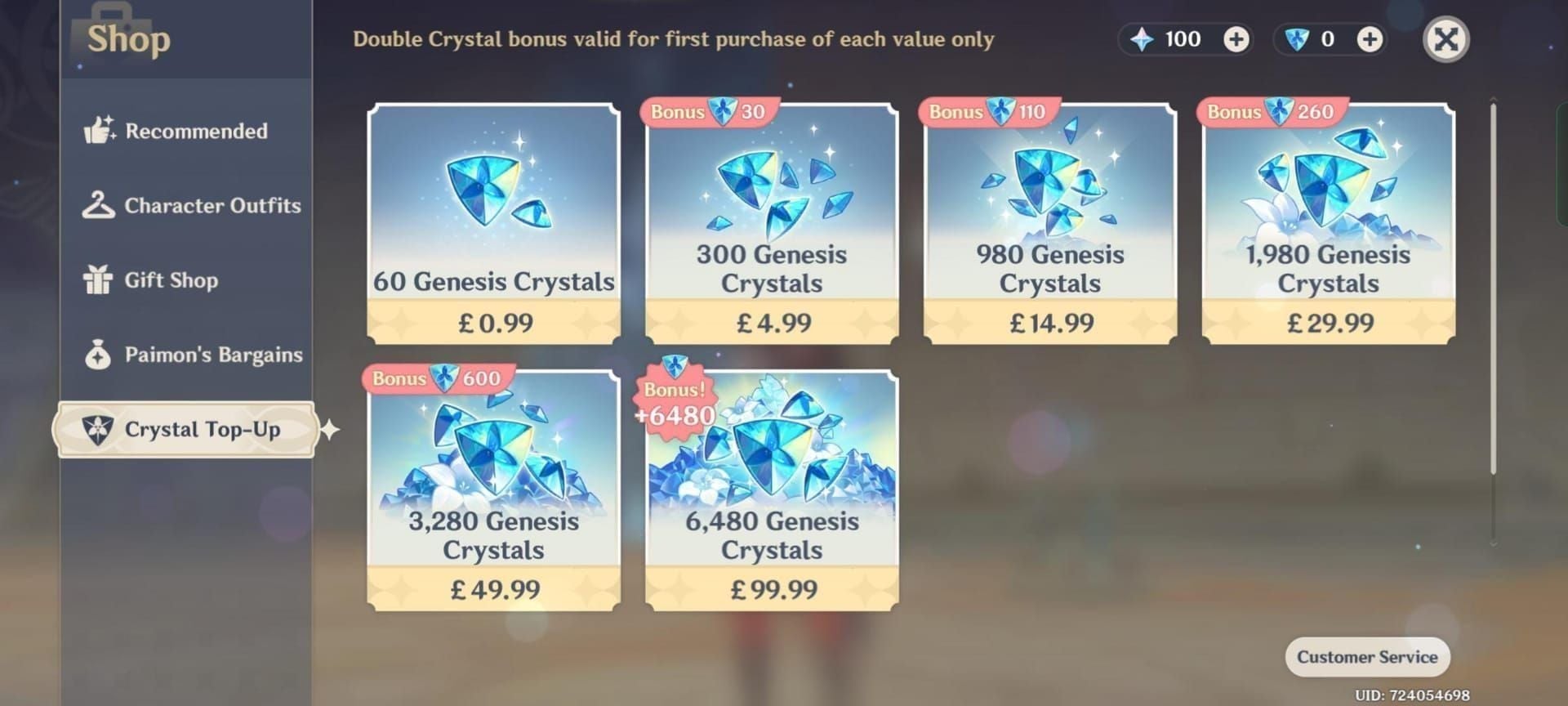
Third-party resellers have turned this into an art form. They're not magicians – they're just buying crystals in Ukraine and selling them to players in the UK. Simple arbitrage, but it works.
What's particularly telling is how quickly these prices shift. November 2020 was brutal – HoYoverse slammed Brazil, Russia, India, and Indonesia with 70-80% price increases practically overnight when their currencies tanked. Experienced players know these adjustments aren't random; they're calculated responses to economic instability.
Currency Exchange and Bulk Purchasing
Here's where it gets interesting from a business perspective. Exchange rate fluctuations can double or triple regional advantages when local currencies weaken against USD. I've watched resellers time their purchases around currency crashes – it's genuinely impressive from a purely economic standpoint.
The math gets even better with bulk operations. Official pricing already rewards large purchases: 60 crystals cost $0.99 (that's 60.61 per dollar) while 8080 crystals cost $99.99 (80.81 per dollar). Resellers amplify these advantages by purchasing maximum-tier packages during optimal exchange periods.
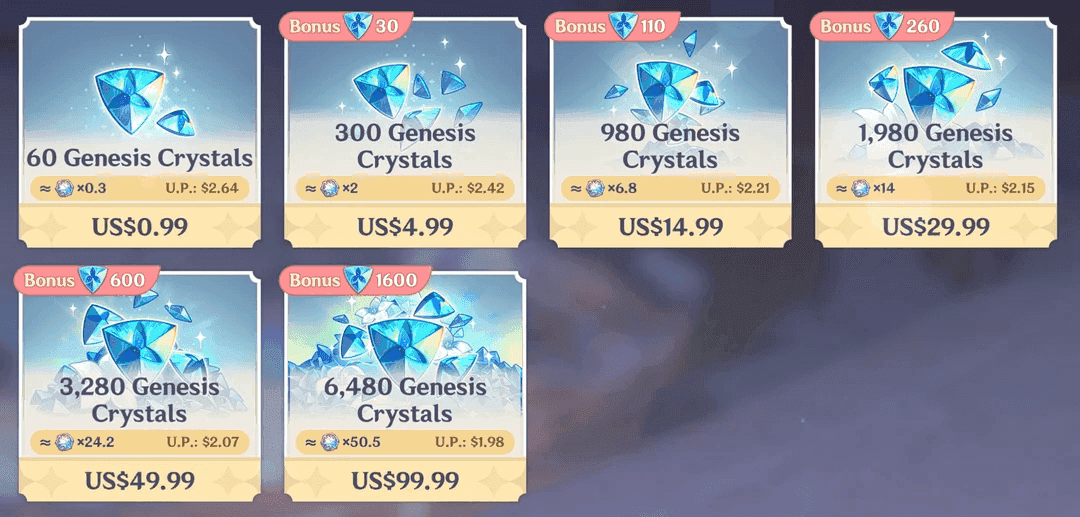
When you're operating at scale across dozens of accounts? Those profit margins can exceed 100% while still undercutting official prices.
How Third-Party Crystal Resellers Actually Work
The operation is more sophisticated than most players realize. These aren't basement dwellers with a single account – we're talking about organized networks that maintain accounts across multiple low-cost regions.
Their playbook looks something like this: establish accounts in markets like Ukraine or Turkey, purchase maximum-tier packages during favorable exchange periods, maintain inventory across multiple accounts, then fulfill orders through various transfer methods.
When Ukraine's 61.6% savings reduce that $99.99 crystal package to $38.40 acquisition cost, resellers can sell at $74.99-$89.99 and still make bank. The problem? Every step of this process violates HoYoverse's Terms of Service.
And here's a pro tip these operations exploit: the annual first-time bonus reset around September 10th. Doubled crystal amounts across their entire account network effectively halves acquisition costs during these periods. It's brilliant. It's also completely against the rules.
Official Store vs Third-Party Pricing Structure
HoYoverse's pricing isn't arbitrary – it's purchasing power parity in action. They're trying to make crystals accessible in developing markets while maximizing revenue in wealthy regions. The US baseline structure shows clear psychological pricing: $0.99 for 60 crystals (gets you hooked), $29.99 for 1980 crystals (the sweet spot), and $99.99 for 8080 crystals (maximum efficiency).
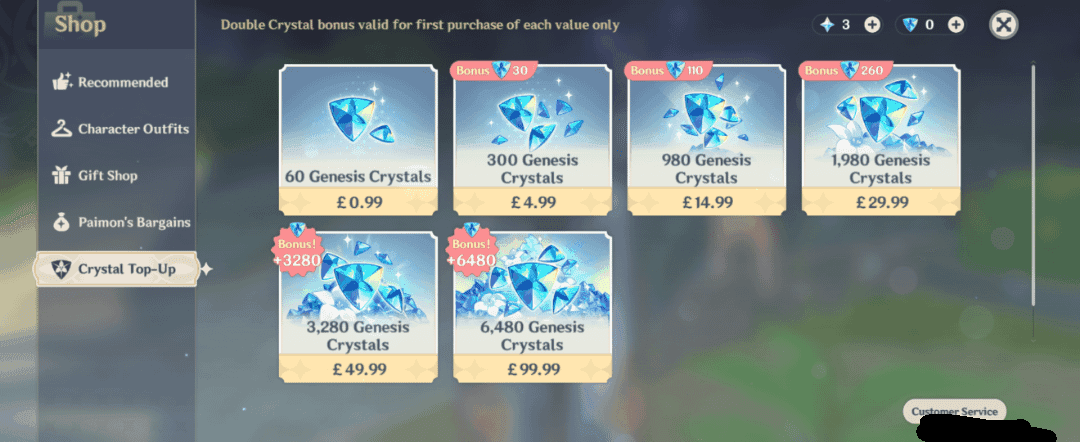
But platform fees complicate everything. iOS prices run 10-15% higher because Apple takes their 30% cut, while PC Direct offers the cleanest experience with no middleman fees. Version 5.8's cross-platform crystal compatibility helped, but those underlying cost differences remain.
For competitive pricing without the legal headaches, cheap Genshin top up site options provide authorized access to some regional pricing advantages.
Regional Pricing Differences and Currency Impact
The regional variations go way deeper than simple currency conversion. We're talking GDP per capita, gaming market maturity, regulatory environments, competitive landscapes – HoYoverse considers all of it.
Currency strength relative to USD drives most of the dramatic differences. Strong currencies like EUR and GBP result in markups that make European players wince, while weaker emerging market currencies create the discount opportunities that resellers target.
Payment processing adds another layer. Bank transfers and debit cards incur the lowest fees, standard credit cards add 1-3% for international transactions, and PayPal international hits you for 3-4%. Third-party resellers often absorb these fees to maintain their competitive edge.
Risk vs Reward Analysis
Let's be brutally honest about the math here. Those 20-25% savings look tempting until you factor in the potential consequences.
Account bans can last up to 10 years. Chargeback penalties create negative Primogem balances that you'll need to fix with official purchases. I've seen cases where players faced negative balances requiring $400+ in legitimate purchases just to restore their accounts to zero.
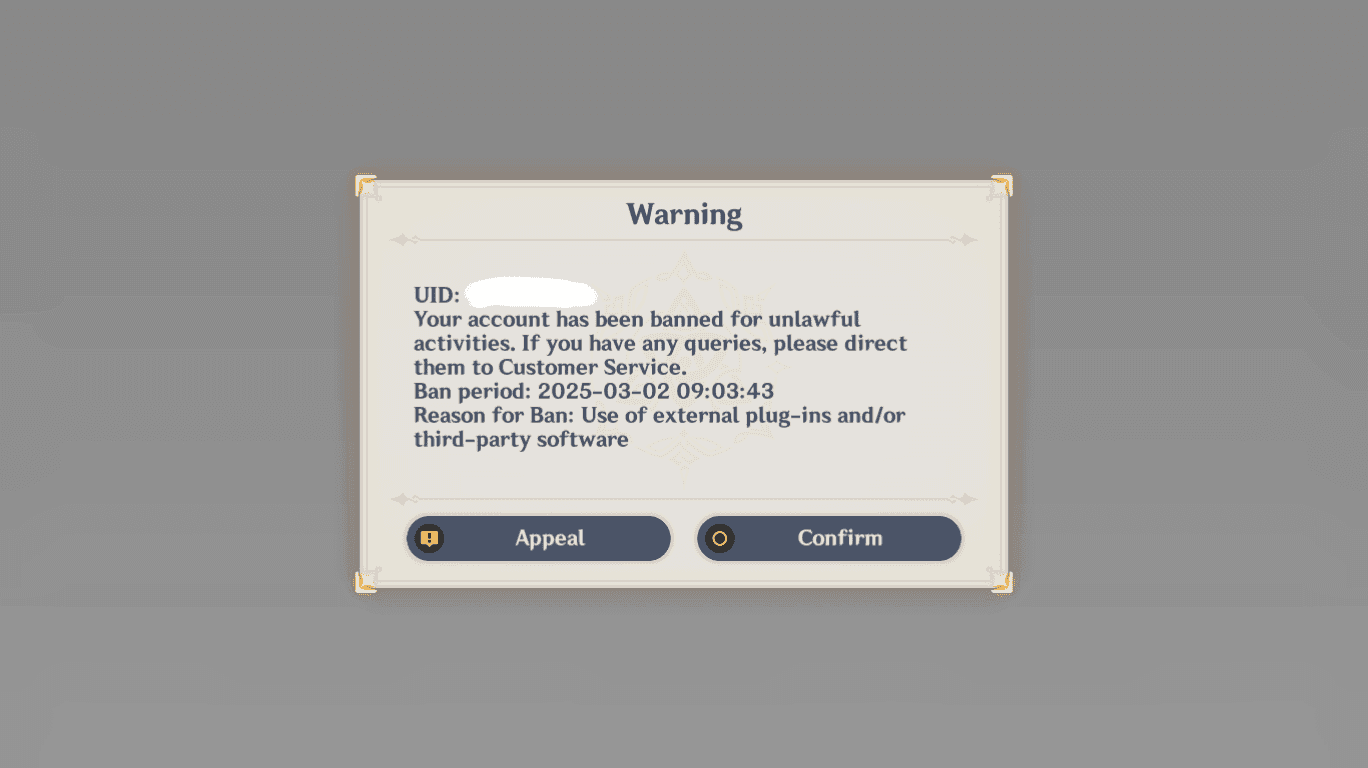
For high-investment accounts – and if you're reading this, yours probably qualifies – modest crystal savings rarely justify the risk of losing everything. The apparent savings evaporate pretty quickly when you're staring at a banned account.
Making Smart Purchase Decisions
Effective comparison means looking at total costs, not just base prices. Factor in taxes, fees, and potential penalties. The real cost of cheap crystals includes the probability-weighted cost of penalties.
Safe purchasing prioritizes official channels, but there are legitimate optimization strategies. Strategic timing during first-time bonus periods, favorable exchange rate windows, promotional events, and Welkin Moon optimization (3.75 wishes per dollar versus 0.81 for large crystal packages) can provide meaningful savings without the risks.
September 10th's annual first-time bonus reset remains the single best legitimate opportunity for crystal value.
Frequently Asked Questions
Why do third-party sites sell Genshin crystals cheaper? They're exploiting regional pricing differences – buying in markets like Ukraine (61.6% savings) or Turkey (16.4% discount) and reselling globally. Add bulk purchasing advantages and currency exchange timing, and you've got their business model.
Is it safe to buy crystals from third-party websites? No. The risks include 10-year account bans, chargeback penalties that create negative Primogem balances, and Terms of Service violations. These consequences often cost more than you'd save.
How much can you actually save with reseller sites? Typical savings are 20-25% below official pricing. But penalty costs from chargebacks or restrictions can result in net losses of 120-150% when you factor in required repurchases to fix your account.
What causes these regional price differences? HoYoverse uses purchasing power parity – adjusting prices based on GDP per capita, currency stability, and local market conditions to maintain accessibility across global markets while maximizing revenue.
Can buying cheap crystals actually get my account banned? Yes. Third-party purchases violate Terms of Service and can result in temporary restrictions, negative Primogem balances, or permanent bans. HoYoverse actively monitors suspicious acquisition patterns and they're getting better at detection.
How do exchange rates affect crystal pricing? When local currencies weaken against USD while regional prices stay stable, effective discounts increase for international buyers. Resellers monitor these fluctuations and time their purchases accordingly – it's basically currency speculation with gaming items.