

Delta Force Season 8 Morphosis introduces earthquake mechanics on Aftershock Warfare map, launching February 3, 2026. This guide covers seismic patterns, structural collapse mechanics, and tactical exploitation strategies. Master earthquake timing, identify safe zones, and leverage environmental chaos with expert analysis of Aftershock's dynamic destruction system featuring 95% destructible buildings and 550 object types.
Understanding Aftershock Earthquake Mechanics
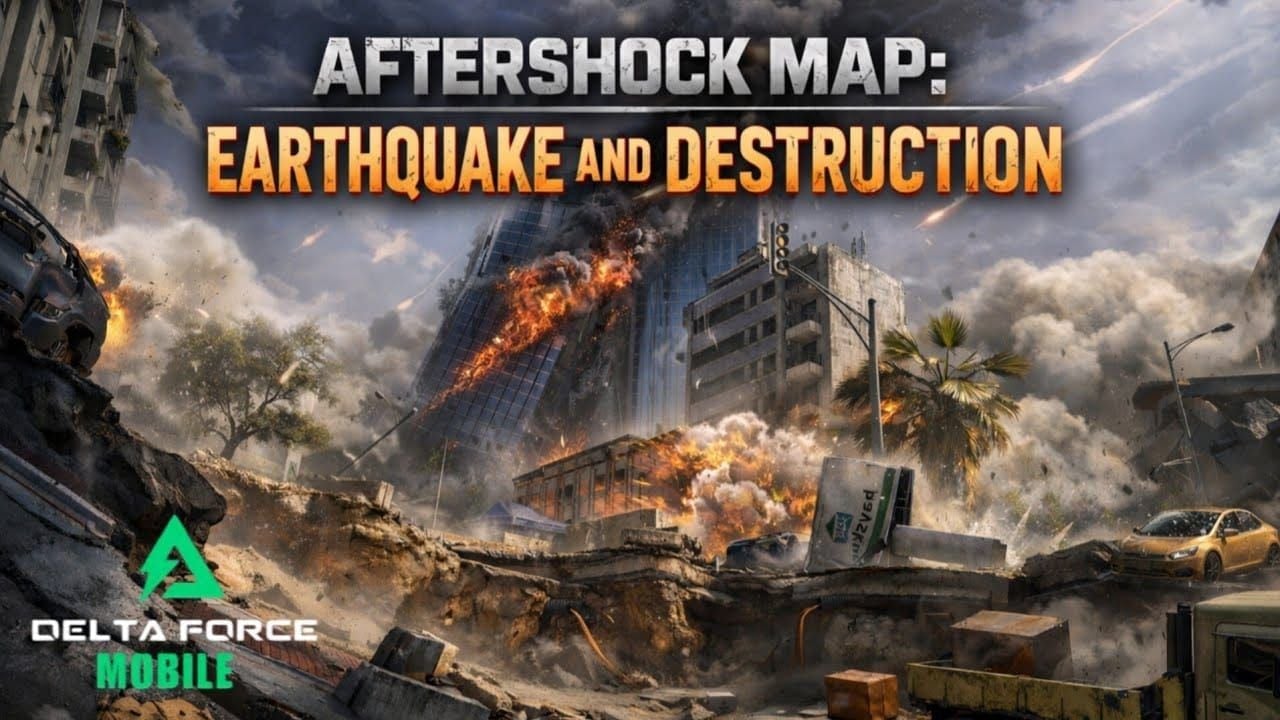
Aftershock integrates seismic activity as core gameplay, fundamentally altering combat flow and positioning. The map features two CBD skyscrapers and 95% destructible building ratio with 550 destructible object types. Earthquakes split roads, trigger staged building collapses, and generate 15-20 second dust clouds that obscure vision—creating tactical windows for repositioning or aggressive plays.
For premium gear and Battle Pass progression, Delta Force top up at BitTopup provides fast, secure transactions trusted by millions worldwide.
What Makes Aftershock's Earthquake System Unique
Seismic activity triggers cascading structural failures based on building material, explosive damage accumulation, and fault line proximity. CBD skyscrapers serve as landmark collapse events, creating massive debris fields that permanently alter sightlines and rotation routes.
Falling debris causes direct health damage scaling with debris size and impact velocity. Purple armor enemies absorbing 60-80% more damage from conventional weapons remain equally vulnerable to environmental crush damage, creating equalization opportunities.
Dust clouds mask audio cues from gunfire and movement, enabling aggressive flanking or emergency extractions. Experienced players synchronize squad movements with dust cloud timing for undetected repositioning.
Earthquake Frequency and Trigger Conditions
Major earthquakes occur at 8-12 minute intervals during standard Warfare matches, with increased frequency during mid-match phases (minutes 10-20) when player density concentrates around objectives. Consecutive major earthquakes never occur within 6 minutes.
Environmental indicators precede major events by 8-12 seconds: ground texture vibrations, low-frequency rumbling (60-120 Hz), and minor debris dislodgement from buildings. CBD skyscraper window cracking provides magnitude indicators—minor cracks signal localized tremors, spiderweb fractures indicate major events affecting 60-80% of structures.
Staged collapse system: initial tremors weaken structural integrity, followed by progressive failure of load-bearing elements, culminating in catastrophic collapse. This creates dynamic decision points: evacuate immediately, seek interior cover, or exploit chaos to eliminate opponents.
Impact on Gameplay and Combat Dynamics
Earthquakes force constant tactical adaptation. Pre-planned rotation routes become death traps when roads split or buildings collapse. Teams must maintain structural integrity awareness while managing combat threats.
Rubble from collapses creates new cover positions with unpredictable angles for ambushes but lacks durability of intact structures. Smart players memorize pre-quake building positions to anticipate post-quake rubble placement.
Resource distribution shifts dramatically post-earthquake. Loot containers buried under rubble become inaccessible, while newly exposed interior spaces reveal previously hidden supply caches.
Earthquake Event Timeline
Pre-Quake Warning Phase (60-Second Countdown)
Environmental cues begin 60 seconds before major collapses. First indicator: subtle camera shake during ADS. Audio warnings escalate from distant rumbling to pronounced ground vibration, penetrating combat noise.
Visual changes include swaying vegetation, rippling water surfaces, and dust dislodging from buildings. CBD skyscrapers exhibit visible stress through window cracking patterns and exterior panel separation—severe stress signals imminent catastrophic collapse.
Active Earthquake Phase
Active phase lasts 25-40 seconds depending on magnitude. Buildings collapse in stages based on structural material and accumulated damage.
Material vulnerability:

Wooden structures fail first, requiring only single C4 or 2-3 RPG impacts normally. Earthquake stress causes spontaneous collapse of already-weakened wooden buildings
Concrete structures demonstrate greater resilience, typically requiring 2-3 C4 charges. Concrete buildings with prior explosive damage become critical collapse risks
Metal-reinforced buildings offer highest earthquake resistance but aren't invulnerable. Structures requiring 4-6 grenade launcher hits or two C4 charges can still collapse if earthquake epicenters align with foundations
Road splits occur along predetermined fault lines, creating impassable chasms that segment the battlefield. Fault line patterns remain consistent across matches, enabling experienced players to predict split locations.
Post-Quake Map Changes
The 15-20 second dust cloud phase creates highest-value tactical window. Vision obstruction affects all players equally, but prepared squads with pre-planned strategies execute coordinated movements while opponents remain disoriented.
Rubble fields from collapsed structures create new cover geometry persisting for match remainder. Debris piles offer height advantages for sniping and concealment for close-quarters ambushes. However, rubble cover lacks durability—small arms fire penetrates loose debris, explosives create secondary fragmentation.
Newly exposed building interiors reveal loot opportunities previously inaccessible. Collapsed exterior walls open sightlines into rooms containing high-value equipment.
Map stabilizes approximately 90 seconds post-earthquake, with minor aftershocks causing cosmetic debris shifts but no additional structural collapses.
Audio and Visual Cue Recognition
Initial warning rumble registers at low frequencies (60-120 Hz), distinguishable from explosion bass (200-400 Hz) and vehicle engines (150-250 Hz). Players using audio equalizer settings boosting low-frequency ranges detect earthquakes 3-5 seconds earlier.
Visual cues follow hierarchical priority: CBD skyscraper stress indicators provide earliest warnings, followed by ground texture distortion, then ambient object movement.
Camera shake intensity during warning phase predicts magnitude. Subtle vibration during ADS indicates minor seismic activity affecting 20-30% of structures. Pronounced shake disrupting aim indicates major events with 60-80% structure involvement and guaranteed CBD skyscraper collapse.
Structural Damage Patterns and Collapse Mechanics
Building Vulnerability by Structure Type
Wooden structures: Highest collapse risk. Single C4 or 2-3 RPG impact failure threshold normally. During earthquakes, wooden buildings with any prior explosive damage collapse spontaneously. Even undamaged wooden structures fail when earthquake epicenters occur within 50 meters.
Optimal C4 placement targets wall-floor junctions where vertical supports meet horizontal beams. Press [6] to equip C4, featuring 3-second arming sequence before remote detonation. Single charges at junction points guarantee wooden structure collapse.
Concrete structures: Require 2-3 C4 charges for wall penetration, with single RPG impacts compromising non-reinforced walls. Demonstrate partial collapse behavior during earthquakes—exterior walls fail while interior support columns remain intact, creating dangerous partially-collapsed states.
Metal-reinforced structures: Demand two C4 charges for guaranteed breaches or 3-4 RPG impacts for metal reinforcement penetration. Survive most earthquake events unless directly positioned over fault lines. Feature visible reinforcement indicators: exposed steel beams at support column bases and load-bearing beam intersections.
Predictable vs Random Collapse Zones
Fault line positions remain consistent across matches, creating predictable road split locations and high-collapse-probability zones. Buildings within 30 meters of fault lines face 80%+ collapse rates during major earthquakes, while structures 100+ meters from fault lines demonstrate 20-30% collapse rates.

CBD skyscrapers collapse during every major earthquake event, creating massive debris fields covering approximately 150-meter radii. Collapses follow directional patterns based on earthquake epicenter location—skyscrapers fall away from epicenters, enabling prediction of safe zones on epicenter-facing sides.
Random collapse elements include secondary structural failures triggered by debris impact. Collapsing buildings may damage adjacent structures through falling debris, creating chain reaction collapses.
Debris Field Navigation and Hazards
Post-collapse debris fields contain three hazard categories:
Crush zones: Active falling debris persisting 8-12 seconds post-collapse. Players entering crush zones face 60-80 damage per debris impact, with multiple simultaneous impacts causing instant elimination.
Unstable rubble piles: Exhibit visible movement—shifting debris, dust emissions, settling sounds. Remain dangerous for 30-45 seconds post-collapse. Walking across unstable rubble triggers secondary collapses dealing 20-40 damage and creating audio signatures revealing player positions.
Settled debris: Provides legitimate cover but with limitations. Rubble piles offer concealment from visual detection but minimal ballistic protection. Small arms fire penetrates loose debris. Explosive damage creates fragmentation effects, turning debris into shrapnel extending grenade kill radius by 30-40%.
Navigation through debris fields: standard sprint speed decreases 15-20% when traversing rubble due to uneven terrain geometry.
Damage Values and Health Impact
Direct earthquake damage:
Small debris (window frames, roof tiles): 15-25 damage per impact
Medium debris (wall sections, support beams): 40-60 damage
Large debris (roof collapses, multi-story sections): 80-100 damage with instant-elimination potential from multiple simultaneous impacts
Purple armor enemies receive no protection against environmental crush damage. Earthquake damage bypasses armor damage reduction mechanics entirely.
Road split falls:
Shallow splits (2-3 meter drops): 20-30 damage with movement impairment
Deep splits (5+ meter drops): 60-80 damage, require climbing equipment or alternate routes
Dust cloud exposure doesn't deal direct health damage but creates indirect threats through vision impairment. Players blinded by dust clouds suffer 70-80% accuracy reduction and can't identify threats beyond 5-meter ranges.
Safe Zone Identification and Survival Strategies
Experienced players maintain 80%+ survival through proper safe zone utilization while unprepared players face 40-50% earthquake-related elimination rates.
Permanent Safe Structures
Metal-reinforced buildings with visible structural reinforcements at all critical load-bearing points offer highest earthquake survival probability. Identify by exterior reinforcement beams at support column bases and load-bearing beam intersections.
Open-air structures with minimal overhead coverage provide paradoxical safety. While offering no protection from gunfire, these positions eliminate falling debris risks. Experienced players evacuate enclosed buildings during warnings and position in open courtyards, parking areas, or street intersections.
Fault line avoidance represents most reliable survival strategy. Buildings positioned 100+ meters from visible fault lines demonstrate 70-80% lower collapse rates.
Open Terrain vs Building Shelter
Open terrain positioning eliminates structural collapse risks but maximizes combat exposure. Optimal solution: position at open terrain edges adjacent to stable structures, enabling rapid building entry if combat threats emerge while maintaining earthquake evacuation options.
Height considerations: ground-floor positions offer faster evacuation but face higher debris accumulation from upper floor collapses. Upper-floor positions provide superior combat sightlines but require longer evacuation times. Experienced players favor second-floor positions as compromise—adequate elevation with manageable evacuation times.
For competitive advantages through premium equipment, buy Delta Force recharge online at BitTopup for instant CP delivery, Battle Pass upgrades, and exclusive bundles.
Emergency Evacuation Routes
Evacuation timing determines survival probability:
Warning phase evacuation (60 seconds pre-quake): 95%+ survival rates
Active earthquake phase evacuation: 60-70% survival rates
Primary evacuation routes target shortest path to open terrain, prioritizing ground-floor exits over stairwell descents. Stairwells become debris funnels during collapses. Players on upper floors should utilize window exits when available, accepting minor fall damage (20-30 health) as preferable to stairwell crush risks.
Secondary evacuation routes require pre-planning. Players entering buildings should immediately identify minimum two exit paths, noting structural weak points that might collapse and block routes.
Movement speed: maintain tactical sprint (70% max speed) to preserve stamina for emergency maneuvers if debris blocks routes.
Squad Positioning for Maximum Survival
Squad dispersion during earthquakes prevents total team elimination. Optimal squad positioning maintains 40-60 meter separation during warning phases, ensuring building collapses affect maximum one squad member.
Designated safe zone coordinators improve squad survival rates. One squad member assumes responsibility for earthquake monitoring and safe zone callouts.
Rally point establishment before earthquakes provides regrouping locations post-collapse. Squads designate open terrain rally points at fault line intersections or landmark positions where all members converge after surviving seismic events.
Communication protocols: implement earthquake silence—minimal communication during dust clouds except emergency threat callouts, followed by structured status reports once visibility returns.
Tactical Advantages: Weaponizing Earthquake Events
Using Earthquakes to Ambush Enemy Squads
Earthquake warning phases create predictable opponent behavior. Most players evacuate buildings during warnings, creating concentrated movement toward open terrain along predictable routes. Experienced squads position along evacuation corridors, establishing crossfire angles.
The 15-20 second dust cloud phase provides maximum ambush effectiveness. Squads with pre-planned dust cloud positions execute coordinated attacks while opponents remain disoriented.
Audio masking during active earthquake phases enables aggressive repositioning without detection. Earthquake rumble (90-100 decibels) completely drowns out footstep audio (40-50 decibels) and weapon switching sounds (30-40 decibels).
Post-earthquake confusion periods lasting 30-45 seconds create vulnerability windows. Opponents assessing new terrain geometry exhibit reduced combat readiness.
Forcing Opponents into Collapse Zones
Explosive destruction mechanics enable tactical manipulation of building collapse timing. Players using C4 at wall-floor junctions, support column bases, or load-bearing beam intersections can trigger collapses synchronized with earthquake events.
Wooden structures requiring only single C4 charges become controllable traps. Squads pre-damage wooden buildings with single C4 charges during pre-earthquake phases, creating critically weakened structures that appear intact. When opponents occupy these buildings during subsequent earthquakes, combined stress triggers collapses.
Concrete wall penetration using 2-3 C4 charges creates structural weak points that earthquake stress exploits. Rather than immediately collapsing concrete buildings, experienced players create strategic breaches at support columns, then bait opponents into occupying compromised structures.
Post-Quake Loot Rush Strategies
Newly exposed building interiors from collapsed exterior walls reveal high-value loot previously inaccessible. Squads monitoring building collapse patterns execute immediate post-quake rushes before opponents recognize opportunities.
Dust cloud loot collection provides risk-reduced farming during 15-20 second vision obstruction. Players memorizing loot container positions pre-earthquake navigate to high-value items during dust clouds, collecting resources while remaining undetectable.
Rubble cover positions near loot concentrations enable defensive farming strategies. Squads establish positions in settled debris overlooking newly exposed loot areas, creating kill zones.
Audio Masking During Seismic Activity
Active earthquake audio registers at volumes that completely mask tactical sounds. Footstep audio, weapon reloads, healing item usage, and equipment switching become undetectable during earthquake phases.
Flashbang deployment during earthquakes creates compounded disorientation. Standard 8-10 second flashbang effect combines with earthquake camera shake and dust cloud vision impairment, extending effective disorientation to 15-18 seconds.
C4 arming sequences featuring 3-second timers become undetectable during earthquake audio. Players can position C4 at strategic breach points during active seismic phases without opponents hearing distinctive arming beep.
Advanced Earthquake Prediction Techniques
Reading Environmental Indicators
Ground texture distortion provides earliest visual earthquake warning, appearing 60-90 seconds before major seismic events. Manifests as subtle rippling in asphalt textures and displacement of ground debris.
CBD skyscrapers function as earthquake magnitude indicators through progressive window damage. Minor window cracks indicate localized tremors affecting 20-30% of structures. Spiderweb fracture patterns across multiple floors signal major events with 60-80% structure involvement.
Water surface rippling in fountains, puddles, and decorative water features provides reliable earthquake confirmation. Concentric ripple patterns radiating from water centers indicate active seismic activity. Fast ripples (3-4 per second) indicate minor tremors, slow pronounced ripples (1-2 per second) signal major events.
Timing Patterns Across Multiple Matches
Major earthquakes occur at approximate 8-12 minute intervals during standard Warfare matches, with minor tremors filling intermediate periods. Match phase correlation shows increased earthquake frequency during mid-game phases (minutes 10-20) when player density concentrates around objective zones.
Consecutive earthquake intervals demonstrate minimum cooldown periods. Major earthquakes never occur within 6 minutes of previous major events, creating guaranteed safe windows for extended building occupation.
Fault line activation patterns rotate across matches. While fault line positions remain geographically consistent, specific fault lines triggering road splits during each earthquake vary.
Using Earthquake Timers for Rotation Planning
Rotation timing synchronized with earthquake cycles maximizes safety. Players initiating rotations immediately post-earthquake during 6-minute minimum cooldown window complete movements before next major event probability increases.
Objective timing coordination with earthquake predictions creates tactical advantages. Squads can delay objective pushes until earthquake warning phases, then execute attacks during opponent evacuation confusion.
Extraction timing becomes critical in raid modes. Players must maintain awareness of earthquake probability windows when planning extraction routes and timing.
Equipment and Loadout Optimization
Best Mobility Gear for Earthquake Evasion
Mobility-focused loadouts prioritize lightweight weapons that maximize sprint speed. Submachine guns and pistols as primary weapons reduce movement penalties compared to LMGs and sniper rifles. Sprint speed differential (15-20% faster with lightweight loadouts) translates to 3-5 second evacuation time improvements.
Stamina management equipment becomes critical for sustained evacuation sprints. Gear increasing stamina regeneration rate or maximum stamina capacity enables longer evacuation distances without movement speed penalties.
Grappling equipment and mobility tools enable vertical evacuation from multi-story buildings, bypassing stairwell debris accumulation risks. Players equipped with vertical mobility tools achieve 90%+ survival rates from upper-floor positions compared to 60-70% survival rates for players relying on stairwell evacuations.
Healing Items Priority During Seismic Events
Healing item selection should prioritize fast-use consumables over high-value slow-healing items. Debris impact damage occurs in rapid succession (5-8 impacts over 3-5 seconds), requiring immediate healing responses. Fast-use healing items with 2-3 second consumption times enable mid-evacuation healing.
Over-heal mechanics gain importance. Players maintaining maximum health plus over-heal buffers survive debris impact sequences that eliminate players at base health. Difference between 100 health and 150 health with over-heal determines survival against medium debris impacts (40-60 damage) occurring in clusters.
Healing item quantity becomes critical. Standard loadouts carrying 3-4 healing items prove insufficient in matches with multiple major earthquakes. Experienced players allocate 6-8 healing item slots for Aftershock matches.
Communication Tools for Squad Coordination
External voice communication applications provide critical advantages over in-game audio during earthquakes. The 90-100 decibel earthquake audio drowns out in-game voice communication. Squads using external voice maintain clear communication during seismic events.
Ping system utilization becomes essential for non-verbal communication during audio-compromised earthquake phases. Establish pre-planned ping protocols: danger pings indicate collapse zones, movement pings designate evacuation routes, defensive pings mark rally points.
Minimap awareness increases in importance during dust cloud phases when visual communication becomes impossible. Squad members monitoring minimap positions maintain formation cohesion during 15-20 second vision obstruction periods.
Frequently Asked Questions
How often do earthquakes occur in Delta Force Aftershock map?
Major earthquakes occur at 8-12 minute intervals during standard Warfare matches, with minor tremors filling intermediate periods. Frequency increases during mid-match phases (minutes 10-20) when player density concentrates around objectives. Consecutive major earthquakes never occur within 6 minutes, creating guaranteed safe windows.
What are the warning signs before an Aftershock earthquake?
Warning signs begin 60 seconds before major earthquakes: subtle camera shake during ADS, low-frequency rumbling audio (60-120 Hz), ground texture distortion, swaying vegetation, and CBD skyscraper window cracking. Minor cracks signal localized tremors while spiderweb fractures indicate major events affecting 60-80% of structures.
Can you survive building collapse during Delta Force earthquakes?
Survival depends on building material, fault line proximity, and evacuation timing. Metal-reinforced buildings with visible structural reinforcements demonstrate 75-85% survival rates. Wooden structures show only 10-20% survival rates. Players initiating evacuation during 60-second warning phases achieve 95%+ survival rates, while those waiting until active earthquake phase face 60-70% survival probability.
Where are the safest zones during Aftershock earthquakes?
Open terrain positions 100+ meters from fault lines provide maximum safety. Metal-reinforced buildings with reinforcements at all load-bearing points offer safe indoor alternatives. Avoid CBD skyscrapers (collapse during every major earthquake), wooden structures, and buildings within 30 meters of fault lines showing 80%+ collapse rates.

How to use earthquakes for tactical advantage in PvP?
Exploit 15-20 second dust cloud phase for aggressive close-quarters attacks while opponents remain vision-impaired. Position along opponent evacuation routes during warning phases to ambush enemies fleeing buildings. Use earthquake audio (90-100 decibels) to mask footsteps and repositioning sounds. Pre-damage buildings with C4 at support columns, then bait opponents into occupying compromised structures before earthquakes trigger collapses.
Do earthquakes change the Aftershock map permanently?
Earthquake terrain changes persist for match remainder but reset between matches. Road splits, building collapses, and rubble fields remain in altered states after earthquakes, permanently changing rotation routes and tactical positions for that match instance. Map returns to original state at match start, though fault line positions and building layouts remain consistent across all matches.
Maximize your Delta Force Season 8 progression! Get instant CP, Battle Pass upgrades, and exclusive bundles at BitTopup—trusted by millions for fast, secure top-ups with competitive pricing and excellent customer service. Unlock premium gear and dominate Aftershock's earthquake chaos!